Forestry Harvester Specs: The Core of Heavy Equipment Digital Marketing
Discover how deep technical specs and CAN bus telematics in forestry harvesters are revolutionizing heavy equipment digital marketing for B2B dealers.
B2B buyers of high-capital forestry assets do not convert on generic social media ads or glossy stock photography. When a logging contractor is evaluating a $650,000 single-grip harvester or a 25-tonne forwarder, purchasing decisions are driven entirely by verifiable mechanical data, hydraulic throughput, and telematics. This reality has fundamentally shifted how OEMs and dealers approach heavy equipment digital marketing. Modern forestry machinery are essentially rolling data centers, and leveraging their exact technical specifications via digital APIs is the only way to capture high-intent B2B leads.
The Mechanical Reality of Forestry Harvesters: Specs That Sell
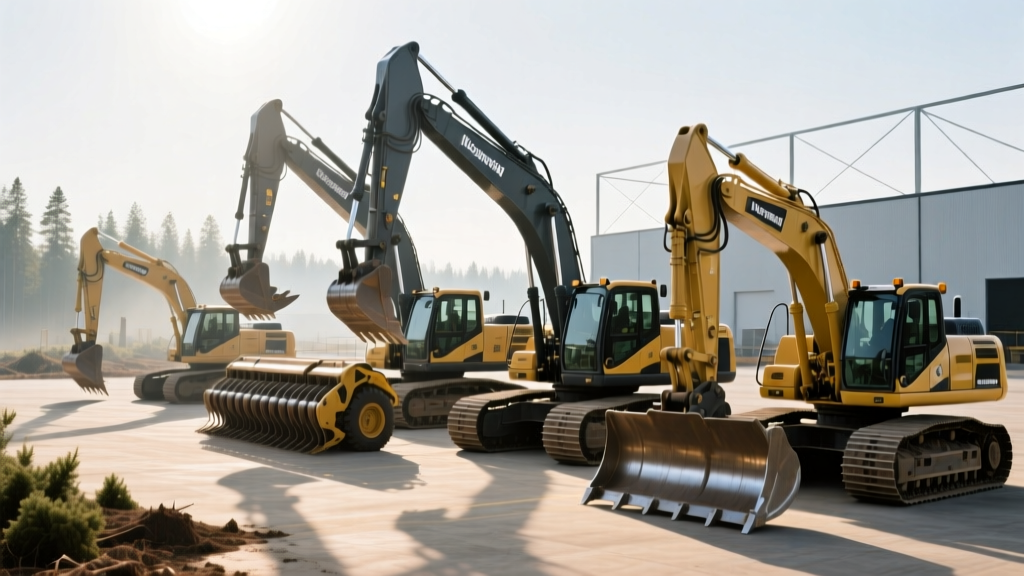
To market a harvester effectively online, digital storefronts must move beyond basic brochure dimensions and expose the machine’s core hydraulic and kinematic capabilities. Take the John Deere 1270G or similar 12-tonne class harvesters. These machines rely on a 9.0L Stage V diesel engine producing approximately 275 kW (369 hp) and peak torque of 1,800 Nm at 1,500 rpm.
In a traditional marketing setup, a dealer might list "high engine power." In a spec-driven digital marketing framework, the landing page features an interactive torque curve graph. The user slides an RPM digital dial to see exactly how much hydraulic flow (up to 540 L/min via dual load-sensing pumps) remains available for the harvester head when the boom is fully extended at 10 meters. This level of granular, interactive technical transparency drastically reduces the sales cycle for fleet managers.
Harvester Head Specification Matrix
The harvester head is the primary revenue-generating attachment. Digital marketing campaigns targeting logging operations must compare feed force, measuring accuracy, and hydraulic requirements. Below is a technical comparison matrix designed for integration into B2B digital configurators.
| Technical Parameter | Waratah HTH622B (Dangle Head) | Ponsse H73HD (Heavy Duty) | Digital Marketing Application |
|---|---|---|---|
| Max Opening (Top Cut) | 810 mm (31.9 in) | 720 mm (28.3 in) | Interactive timber diameter calculator |
| Feed Force | 33 kN (7,418 lbf) | 30 kN (6,744 lbf) | ROI calculator for steep-slope pulling power |
| Measuring System Accuracy | ±2 mm via dual measuring wheels | ±1.5 mm via optical/magnetic encoders | Highlighting yield optimization in digital case studies |
| Hydraulic Flow Requirement | 350-400 L/min at 350 bar | 300-380 L/min at 380 bar | Base carrier compatibility matching tool |
| Weight (w/o Rotator) | 1,360 kg (2,998 lbs) | 1,450 kg (3,196 lbs) | Boom lift-capacity stress test visualizer |
Translating CAN Bus Telematics into Digital Storefronts
The most significant advancement in heavy equipment digital marketing for forestry is the integration of live telematics into the buyer’s journey. Modern harvesters utilize the SAE J1939 CAN bus protocol to transmit machine data. By mapping specific Parameter Group Numbers (PGNs) to web-based widgets, dealers can prove machine efficiency before a buyer ever steps into the cab.
Engineering Insight: Mapping PGNs to Marketing APIsTo build a live "Fuel Burn vs. Payload" widget on a product landing page, marketing developers should pull data from the machine's TimberManager or JDLink API. Specifically, request PGN 61444 (Electronic Engine Controller 1) for real-time RPM and engine load, and cross-reference it with PGN 65262 (Engine Temperature 1) to demonstrate how the machine's cooling package maintains optimal fuel mapping during high-load delimbing cycles.
When a logging contractor visits a dealer’s website, they can view an anonymized, live data feed from a demo machine operating in a local forest. They see the exact liters-per-hour fuel consumption while processing 45cm DBH (Diameter at Breast Height) pine. This transforms abstract fuel-efficiency claims into undeniable, mathematically verified digital assets.
Forwarder Ground Pressure: The Hidden Digital Selling Point
While harvesters process the timber, forwarders extract it. In soft-soil or peatland logging operations, ground pressure (measured in kPa or PSI) is the single most critical specification. A machine that sinks destroys the root systems of remaining trees and violates environmental compliance standards.
Consider the Ponsse ElephantKing or the Tigercat 1055C forwarder. These machines utilize wide-track bogie axles and high-flotation tires (e.g., 710/75 R34) to distribute a 20,000 kg payload over a massive footprint.
- Static Ground Pressure (Empty): Typically 45-55 kPa (6.5-8.0 PSI).
- Dynamic Ground Pressure (Fully Loaded): Spikes to 90-110 kPa (13-16 PSI) depending on tire deflation systems.
- CTIS Integration: Central Tire Inflation Systems allow the operator to drop tire pressure to 1.0 bar on the fly, increasing the tire contact patch by up to 22%.
Digital Execution: The Heat Map Strategy
In digital marketing campaigns targeting environmental compliance officers and sustainable forestry managers, dealers should replace standard product photos with interactive ground-pressure heat maps. By allowing the user to input their specific soil shear strength and select a tire configuration, the website dynamically calculates the forwarder's footprint and ground pressure. This shifts the digital conversation from "machine price" to "environmental risk mitigation," a highly effective B2B conversion tactic.
Warning: Telematics Data Latency in Live DemosWhen embedding live hydraulic pressure or boom-extension telemetry into a digital storefront for virtual trade shows, ensure your API polling rate is optimized. Standard CAN bus logging records at 100ms intervals, but pushing this to a web frontend via WebSockets can cause UI lag. Throttle the frontend update rate to 500ms to maintain a smooth user experience without sacrificing the perception of real-time mechanical feedback.
Actionable Framework: Building a Spec-Driven Digital Campaign
For heavy equipment dealers and OEM marketing teams looking to overhaul their forestry equipment digital presence, follow this technical integration framework:
- Audit the Hydraulic Envelopes: Map the exact hydraulic flow (L/min) and pressure (bar) requirements of every harvester head you sell against the auxiliary hydraulic outputs of your base carriers. Build a digital "Compatibility Matrix" tool on your website to prevent buyers from mismatching carriers and heads.
- Implement API-Driven ROI Calculators: Stop using static PDF spec sheets. Build web-based calculators that ingest the machine’s specific fuel burn rate at 1,800 RPM and the head’s processing speed (meters/second) to output a localized cost-per-tonne calculation based on the user's regional diesel prices.
- Deploy 3D Kinematic Visualizers: Utilize WebGL to render the harvester boom’s working envelope. Allow B2B buyers to input their average tree spacing and digitally simulate the machine's slewing (swing) time between cuts. This highlights the value of parallel crane booms over traditional straight booms.
- Leverage Telematics for Remarketing: Use JDLink or TimberManager API data to trigger automated digital marketing emails. If a prospect’s demo machine data shows high engine idle times, automatically send them a digital whitepaper on how the specific harvester’s Eco-mode hydraulic mapping can reduce idle fuel burn by 14%.
By anchoring heavy equipment digital marketing strategies in the uncompromising reality of mechanical engineering, hydraulic physics, and CAN bus telemetry, forestry equipment dealers can build digital ecosystems that command authority, justify premium pricing, and drastically shorten the enterprise sales cycle.