Heavy Equipment Brake Supply: Earthmoving Case Studies & Types
Explore earthmoving equipment types through real-world brake supply heavy equipment case studies, failure modes, and strategic sourcing frameworks.
The Physics and Economics of Earthmoving Braking Systems
Earthmoving machinery operates in high-inertia, high-contaminant environments where braking systems serve as primary operational components, not just safety features. In hydrostatic drives, swing circuits, and heavy-duty axles, the braking architecture absorbs massive kinetic and potential energy. When fleet managers evaluate earthmoving equipment types and applications, the stopping torque requirements often exceed 15,000 Nm per axle on articulated haulers and 40,000 Nm on large excavator swing drives. Consequently, the friction materials and hydraulic release mechanisms endure extreme thermal cycling.
In the current 2026 market, global logistics constraints have transformed component procurement. Navigating the brake supply heavy equipment pipeline requires shifting from reactive purchasing to predictive inventory modeling. A single missing friction disc or piston seal can ground a $650,000 machine, bleeding up to $2,500 per day in lost production and standby labor costs. Understanding the specific brake architectures across different earthmoving categories is the first step in building a resilient maintenance strategy.
Earthmoving Equipment Profiles & Brake Architecture Matrix
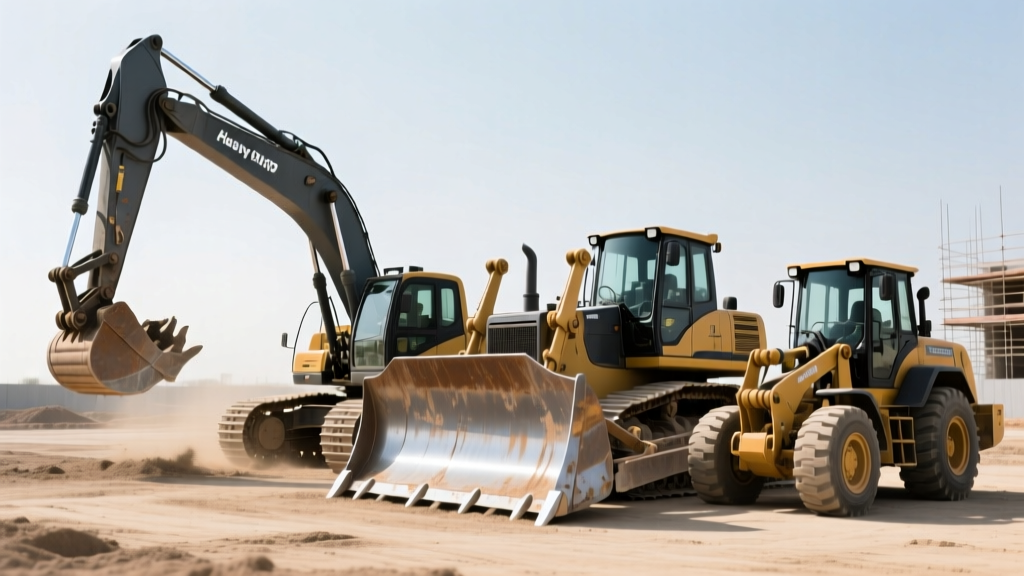
Different earthmoving applications dictate vastly different braking solutions. High-speed roading requires dynamic service brakes, while static holding requires spring-applied parking mechanisms. The table below outlines the standard braking configurations for primary earthmoving equipment types, alongside current OEM lead times and average rebuild costs.
| Equipment Type | Model Example | Primary Brake Architecture | Peak Stopping Torque | Avg. Rebuild Kit Cost | 2026 OEM Lead Time |
|---|---|---|---|---|---|
| Articulated Dump Truck (ADT) | Volvo A40G | Wet Multi-Disc (Axle-mounted) | 18,500 Nm per axle | $3,800 - $4,500 | 35 - 50 Days |
| Hydraulic Excavator | Komatsu PC360LC-11 | Wet Multi-Disc (Swing & Travel) | 42,000 Nm (Swing) | $5,200 - $6,800 | 60 - 90 Days |
| Crawler Dozer | Caterpillar D8T | Steering Clutches & Wet Brakes | 12,000 Nm per side | $6,500 - $8,200 | 45 - 70 Days |
| Wheel Loader | Cat 980M | Wet Disc (Axle) + Dry Caliper | 24,000 Nm per axle | $4,100 - $5,000 | 30 - 45 Days |
Compliance with rigorous safety standards is non-negotiable. According to the MSHA Part 77 Mobile Equipment Standards, surface mining mobile equipment must maintain specific braking performance thresholds, mandating regular retardation testing. Similarly, the SAE J1026 Braking Performance for Off-Road Work Machines standard dictates minimum stopping distances and parking brake grade-holding capabilities, which directly influence the engineering tolerances of the friction materials sourced by OEMs.
Case Study 1: Wet Brake Degradation in Articulated Haulers
Operational Scenario: A Nevada-based limestone quarry operating a fleet of six Volvo A40G ADTs on 12% downhill grades.The Problem: Premature wet brake wear resulting in a 30% reduction in Mean Time Between Rebuilds (MTBR). The local dealer's brake supply heavy equipment inventory was depleted, with OEM friction discs backordered for 14 weeks.
Downtime Cost: $1,800 per day, per grounded truck.
Anatomy of the Failure Mode
Wet multi-disc brakes rely on a continuous flow of cooling oil to dissipate the heat generated during dynamic braking. In this case study, the quarry's maintenance team was utilizing a standard TO-4 transmission fluid rather than a specialized wet brake fluid (WB-101 equivalent). The standard fluid lacked the necessary friction modifiers and thermal stability. Under the heavy loads of the 12% downgrade, the oil temperature exceeded 135°C, causing the fluid to shear and lose viscosity.
- Glazing: The excessive heat glazed the sintered bronze friction discs, reducing the coefficient of friction from 0.09 to 0.04.
- Seal Extrusion: High thermal expansion caused the piston O-rings to extrude into the clearance gaps, leading to hydraulic pressure bleeding and brake drag.
- Spline Fretting: The drag created micro-vibrations, accelerating wear on the drive hub splines.
The Resolution: Unable to wait 14 weeks for OEM parts, the fleet manager sourced ISO 9001-certified aftermarket sintered bronze friction discs and upgraded to a synthetic, high-viscosity index wet brake coolant. The aftermarket brake supply heavy equipment vendor delivered the discs in 6 days at a 35% cost reduction. The synthetic fluid kept operating temperatures below 95°C, restoring the MTBR to the OEM baseline of 6,000 hours.
Case Study 2: Excavator Swing Brake Supply Crisis
"The swing brake on a 36-ton excavator isn't just holding the house; it's absorbing the kinetic shock of a 4-ton rock load stopping mid-swing. When the hydraulic release pressure drops, the brake drags, and the separator plates warp within hours."
— Senior Field Engineer, Heavy Machinery Diagnostics
In a large-scale earthmoving application in Western Australia, a fleet of Komatsu PC360LC-11 excavators experienced recurring swing brake failures. The swing brake is a spring-applied, hydraulically released wet disc brake. The failure mode was traced to a localized restriction in the hydraulic pilot line, which delayed the brake release by 400 milliseconds during swing initiation. This micro-drag generated localized temperatures exceeding 180°C, warping the steel separator plates and destroying the friction discs.
Sourcing the complete OEM swing brake assembly (a $9,500 component) carried a 16-week lead time in 2026. Instead of stockpiling complete assemblies, the site reliability engineer shifted to a component-level sourcing strategy. By identifying the exact dimensions of the separator plates (310mm OD, 245mm ID, 4mm thickness) and the friction discs, they contracted a specialized industrial clutch manufacturer to machine the separator plates from high-carbon, high-chromium tool steel locally. This reduced the separator plate cost from $180 each (OEM) to $65 each (local machine shop) and eliminated the international shipping delay entirely.
Strategic Sourcing Framework for Earthmoving Brake Components
To optimize the brake supply heavy equipment pipeline, fleet managers must categorize components by risk and criticality. Applying a tiered sourcing matrix prevents over-reliance on constrained OEM supply chains while maintaining safety compliance.
| Sourcing Tier | Component Category | Recommended Source | Rationale & Edge Cases |
|---|---|---|---|
| Tier 1: Critical Safety | Parking brake springs, primary hydraulic release valves, ABS/EBS control modules. | OEM Exclusive | Liability and MSHA/OSHA compliance. Aftermarket metallurgy in spring steel is often unverified for exact fatigue limits. |
| Tier 2: High-Wear Friction | Friction discs, separator plates, piston seals, wear pins. | Premium Aftermarket / Specialized Friction Manufacturers | High OEM markup (often 300%+). Premium aftermarket sintered materials frequently match or exceed OEM thermal thresholds. |
| Tier 3: Hardware & Fluids | Banjo bolts, bleeder valves, cooling oils, retaining rings. | Commercial Off-The-Shelf (COTS) / Industrial Fluid Suppliers | Standardized metric hardware and bulk fluid procurement drastically reduces inventory carrying costs. |
Calculating Economic Order Quantity (EOQ) for Friction Materials
Relying on gut feeling for brake part inventory leads to either stockouts or bloated warehouses. Use the Economic Order Quantity (EOQ) formula to determine the exact number of friction discs to order per purchase cycle.
Formula: EOQ = √((2 × D × S) / H)
- D (Annual Demand): If you rebuild 4 axles a year, and each axle requires 6 friction discs, D = 24.
- S (Order Cost): The administrative and shipping cost per order (e.g., $120).
- H (Holding Cost): The cost to store one unit for a year (e.g., $35, factoring in warehouse space and insurance).
Calculation: EOQ = √((2 × 24 × 120) / 35) = √(5760 / 35) = √164.57 = 13 discs.
By ordering 13 discs per cycle, you mathematically minimize the combined costs of ordering and holding inventory, ensuring the brake supply heavy equipment pipeline remains lean but fully capable of supporting scheduled rebuilds.
Proactive Maintenance: Extending Brake Life in Harsh Applications
Supply chain resilience is only half the equation; extending the life of the installed components reduces overall demand. Implement these three field-proven protocols to maximize earthmoving brake longevity:
- Implement Inline Cooling Oil Filtration: Factory wet brake cooling circuits often rely on passive splash or low-micron return filters. Installing a dedicated 3-micron offline kidney-loop filtration system on ADT axles removes silica dust and metallic wear particles before they embed into the friction disc matrix, increasing disc life by up to 40%.
- Calibrate Retarder Integration: Modern wheel loaders and dozers feature electronic retarders. Ensure the machine's ECM is programmed to engage the hydraulic or engine retarder *before* the foundation friction brakes during downhill tramming. This offloads 70% of the thermal burden from the wet discs.
- Monitor Piston Travel via Hydraulic Volume: As friction discs wear, the caliper pistons must travel further, requiring more hydraulic fluid volume. By installing flow meters on the brake apply circuits, maintenance teams can track the exact milliliter displacement per apply cycle. A 15% increase in fluid volume per apply is a precise, data-driven indicator that the friction stack has reached 80% wear, allowing for scheduled rebuilds before catastrophic spline failure occurs.