Comparing Heavy Construction Equipment Rental Rates for Demolition
Compare heavy construction equipment rental rates for demolition excavators, skid steers, and attachments to optimize your teardown project budgets.
Selecting the right teardown machinery requires balancing brute force with precise cost control. When analyzing heavy construction equipment rental rates for demolition projects, the most common financial mistake is renting a dedicated high-reach demolition carrier for a job that a standard excavator with specialized attachments could handle—or conversely, underestimating the hydraulic flow requirements of heavy processing attachments. In 2026, rental fleets have heavily integrated Tier 4 Final and Stage V emissions-compliant machines, which command a premium but offer the fuel efficiency necessary to offset higher daily rental costs on multi-week strip-out projects.
Base Machine Economics: Standard Excavators vs. Purpose-Built Demolition Carriers
The foundation of any demolition cost analysis begins with the base carrier. Rental houses typically segment excavators into standard earthmoving configurations and purpose-built demolition configurations (featuring straight booms, heavy counterweights, and FOPS/FOGS cab guarding).
| Machine Type | Example Models | Daily Rate Range | Weekly Rate Range | Primary Use Case |
|---|---|---|---|---|
| Standard Crawler Excavator | CAT 336, Volvo EC350E | $950 - $1,250 | $2,800 - $3,600 | Low-rise teardowns, slab removal, loading out rubble |
| Purpose-Built Demo Carrier | CAT 340 UHD, Komatsu PC360LC-11 | $1,600 - $2,200 | $4,500 - $6,000 | Multi-story structural demolition, high-reach shearing |
| Compact Track Loader (CTL) | Bobcat T770, CAT 299D3 XE | $280 - $380 | $850 - $1,100 | Interior strip-outs, confined space concrete breaking |
For single-story commercial or residential teardowns, a standard 33,000 to 40,000-pound excavator paired with a quick coupler is the most cost-effective alternative. You avoid the 40% to 60% daily premium charged for ultra-high-reach (UHD) demolition carriers. However, if the project involves shearing structural steel above 20 feet, OSHA regulations and site safety mandates require the specialized stability and cab guarding of a purpose-built demo carrier. Refer to the OSHA demolition safety guidelines for specific engineering survey requirements prior to selecting high-reach machinery.
The Attachment Multiplier: Pricing and Hydraulic Requirements
Base machines only provide the chassis; the actual demolition is performed by the attachments. Renting attachments separately from the base machine introduces complex compatibility variables, specifically regarding auxiliary hydraulic flow (GPM) and operating pressure (PSI).
Hydraulic Breakers (Hammers)
Breakers are priced based on their impact energy class (measured in foot-pounds). A mid-sized 30-ton excavator typically requires a 7,500 to 10,000 ft-lb class breaker.
- Epiroc (formerly Atlas Copco) HB 2000 / HB 3000: $300 to $450 per day.
- Montabert SC 42: $350 to $500 per day.
- Operating Requirement: Requires 60 to 90 GPM at 2,400 PSI. Standard auxiliary circuits on most 30-ton rental excavators can handle this without requiring a high-flow upgrade.
Concrete Pulverizers and Crushers
Used for secondary demolition (crushing slabs and separating rebar from concrete). These require continuous bi-directional flow.
- LaBounty UP 30 or Trevi Benne P30: $450 to $650 per day.
- Operating Requirement: Requires 80 to 110 GPM. Cycle times will severely lag if the base machine's auxiliary pump cannot meet the minimum GPM threshold, leading to stalled jaw movement and excessive hydraulic heat generation.
Multi-Processor and Shear Attachments
Primary demolition tools for cutting steel I-beams and processing mixed debris.
- CAT MP324 or NPK S21X: $600 to $900 per day.
- Operating Requirement: High-flow auxiliary circuits are mandatory. Machines must deliver 115+ GPM at 5,000 PSI. Renting a shear without verifying the base machine's high-flow capability is the most frequent cause of project delays in the demolition sector.
When renting attachments from a third-party vendor to mount on a rented base machine, pressure relief valves must be calibrated to the attachment's exact specifications. Over-pressurizing a rented hydraulic breaker will blow the nitrogen diaphragm and score the piston. Most rental damage waivers explicitly void coverage for 'dry firing' (operating the breaker without the tool bit pressed firmly against material) and pressure-spike damage caused by mismatched auxiliary circuits.
Scenario Analysis: Matching Equipment to the Teardown Scope
To maximize ROI on heavy construction equipment rental rates, project managers must map the equipment package directly to the structural makeup of the target building. The Association of Equipment Manufacturers (AEM Construction Sector) emphasizes that utilization rates drop significantly when contractors over-spec machinery for light demolition tasks.
Scenario A: 5,000 Sq. Ft. Tilt-Up Concrete Warehouse (Slab-on-Grade)
Optimal Fleet: One 36-ton standard excavator (CAT 336) with a hydraulic thumb and a 9,000 ft-lb breaker. One CTL (Bobcat T770) with a pallet fork and grapple bucket for interior sorting.
Cost Breakdown: The standard excavator handles the primary wall panel toppling and slab fracturing. Because the structure is single-story, a high-reach demo carrier is unnecessary. The CTL operates inside the footprint to push sorted scrap (copper, aluminum, clean wood) into roll-off bins. Total estimated daily base and attachment rental cost: $1,400 - $1,700.
Scenario B: Multi-Story Steel Frame Office Building (Selective Interior Strip-Out)
Optimal Fleet: Two compact excavators (e.g., Volvo ECR58 or CAT 305) with low-ground-pressure pads, equipped with hydraulic shears and concrete crushers.
Cost Breakdown: Standard 30-ton machines cannot meet the floor-load capacities of elevated concrete decks. Compact excavators (weighing under 12,000 lbs) are mandatory. While the daily rental rate for compact demo setups ($600 - $800 per machine) seems high relative to their size, the alternative—using manual labor with handheld pneumatic breakers—increases project timelines by 300% and drastically inflates labor and insurance costs.
Hidden Rental Costs and Contract Gotchas
Published daily rates rarely reflect the final invoice. When negotiating demolition equipment rentals, scrutinize the contract for the following specific line items:
- Wear Part Consumption: Rental agreements for hydraulic breakers and pulverizers require the renter to replace moil points, chisels, and shear blades if they are worn beyond a specific millimeter threshold upon return. Budget $400 to $800 per week for consumable ground engaging tools (GET) on heavy breaker projects.
- Quick Coupler Compatibility: If you are renting an attachment to use on your own owned fleet, verify the pin diameter and stick width. A rental house providing a LaBounty pulverizer with a 90mm pin configuration will not fit a standard 80mm quick coupler without renting an adapter bracket or swapping the coupler entirely.
- Environmental and Fluid Spill Fees: Demolition inherently risks puncturing underground storage tanks or severing unknown hydraulic lines. Rental contracts now include strict environmental clauses; if a rented excavator leaks hydraulic fluid due to a blown hose during a teardown, the renter is liable for the fluid recovery and soil remediation, which can exceed $15,000 for a single incident.
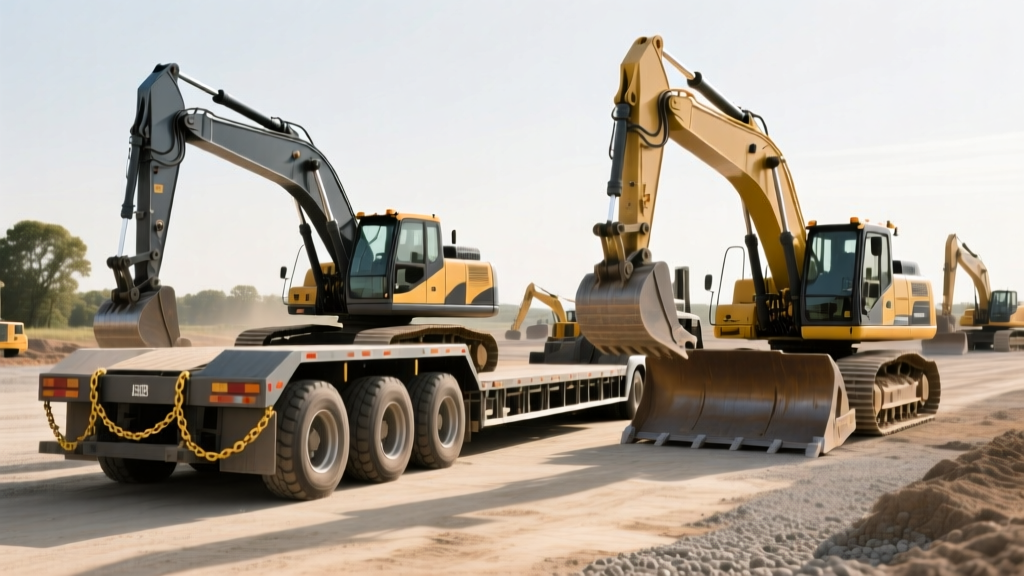
- Transport and Lowboy Surcharges: A 36-ton excavator and a 10,000 ft-lb breaker require a specialized multi-axle lowboy trailer. Delivery and pickup fees for heavy demolition packages routinely add $800 to $1,500 per trip, depending on local permitting requirements for overweight loads.
By systematically comparing base machine capabilities against specific attachment flow requirements, and factoring in the hidden consumable costs of high-impact tools, contractors can accurately forecast true project costs rather than relying solely on the advertised daily rate.