Compact vs Full-Size Selection for Heavy Equipment Machining
Master compact vs full-size construction equipment selection for heavy equipment machining sites. Learn operator training, tolerances, and 3D control.
The Evolution of Earthmoving: Defining Heavy Equipment Machining
In modern site preparation and pavement rehabilitation, the line between traditional earthmoving and precision manufacturing has blurred. When contractors undertake projects requiring heavy equipment machining—such as precision asphalt cold planing, 3D-controlled fine grading, and utility trenching to sub-millimeter tolerances—they are effectively using construction machinery to machine the earth. Achieving tolerances of ±2mm to ±5mm requires more than just an experienced operator; it demands a rigorous scientific approach to compact vs full-size construction equipment selection.
For fleet managers and lead operators, selecting the right machine class is the first critical step in maintaining these machined-level tolerances. A compact track loader (CTL) equipped with a 3D machine control system behaves fundamentally differently than a 30-ton motor grader. Understanding the physics, hydraulic response times, and footprint dynamics of each class is essential for operator training and project success in 2026.
⚠️ Tolerance Failure Warning: Attempting to hold ±3mm machining tolerances with a compact machine on a high-camber surface without accounting for track slip and pitch-yaw sensor drift will result in costly rework. Always match the machine's wheelbase and mass to the required Z-axis stability.Defining the Scope: What Qualifies as Machined Precision?
Before selecting equipment, operators must understand the baseline metrics. Standard rough grading accepts tolerances of ±15mm to ±25mm. However, heavy equipment machining operations demand far stricter parameters:
- Precision Cold Planing (Milling): ±2mm to ±4mm depth control for asphalt overlay preparation.
- 3D Machine Control Fine Grading: ±5mm to ±10mm for concrete sub-base preparation.
- Laser-Guided Trenching: ±5mm slope consistency for gravity-fed municipal piping.
According to Topcon Positioning Systems, the integration of multi-constellation GNSS (GPS, Galileo, GLONASS, BeiDou) and ultra-high-frequency IMUs (Inertial Measurement Units) in 2026 allows even compact machines to receive RTK corrections at 100Hz. However, the sensor data is only as good as the physical stability of the machine carrying it.
Compact Equipment: Agility in Confined Machining Zones
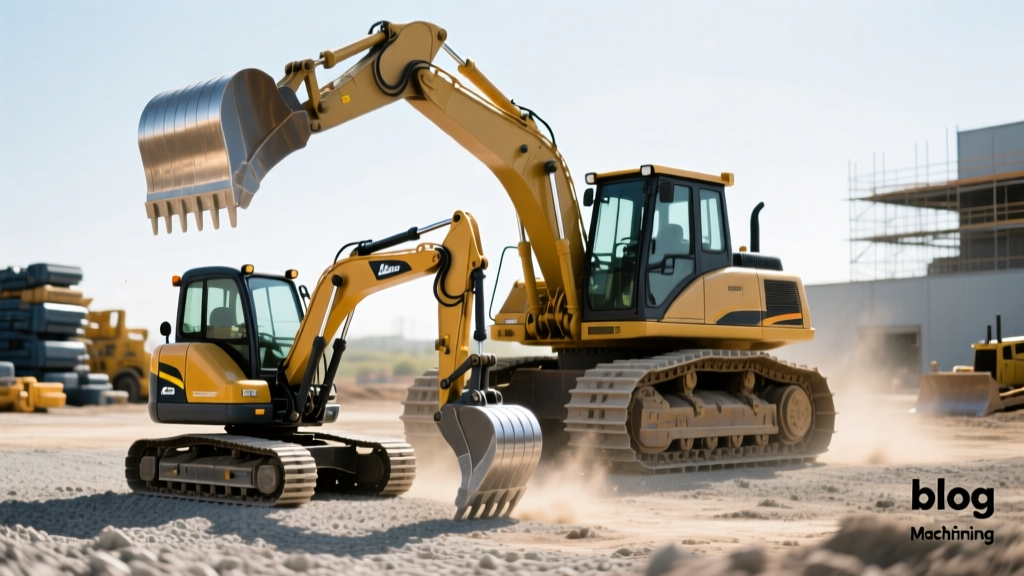
Compact equipment—specifically Compact Track Loaders (CTLs), skid steers, and mini excavators in the 8,000 to 12,000 lb operating weight range—excels in confined geometries. When heavy equipment machining is required inside existing industrial facilities, tight urban corridors, or around complex utility stub-outs, full-size machinery simply cannot access the work area.
Top Compact Models for Precision Work
- Caterpillar 299D3 XE: Features an advanced electro-hydraulic system that allows operators to program specific hydraulic flow rates (measured in gpm) directly to the cutting edge or planer attachment, reducing the 'jerky' movements that ruin machined surfaces.
- Wirtgen W 35 Fi Compact Cold Planer: Specifically designed for urban milling, this machine utilizes the Mill Assist system to automatically adjust drum speed and travel speed, holding ±3mm depth tolerances even in stop-and-go traffic.
- Bobcat T770 CTL: When paired with a laser-guided grading attachment, its rigid torsion axle undercarriage provides surprising Z-axis stability for small-pad concrete prep.
The Physics of Compact Limitations
The primary challenge operators face when using compact machinery for heavy equipment machining is the short wheelbase (or track length). A short wheelbase amplifies pitch and roll. If a CTL encounters a 1-inch depression, the grading blade or planer drum will instantly mimic that deviation before the 3D machine control system can hydraulically correct it. Operators must be trained to 'pre-read' the ground and maintain a consistent, ultra-slow travel speed (typically under 1.5 mph) to allow the hydraulic valves to react to IMU data.
Full-Size Machinery: Mass, Stability, and Broad-Scale Milling
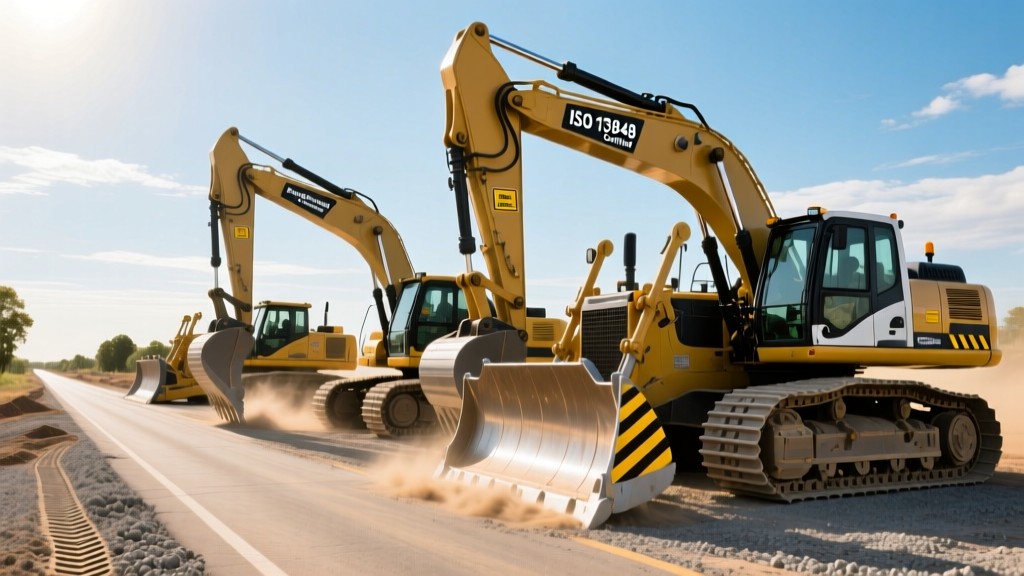
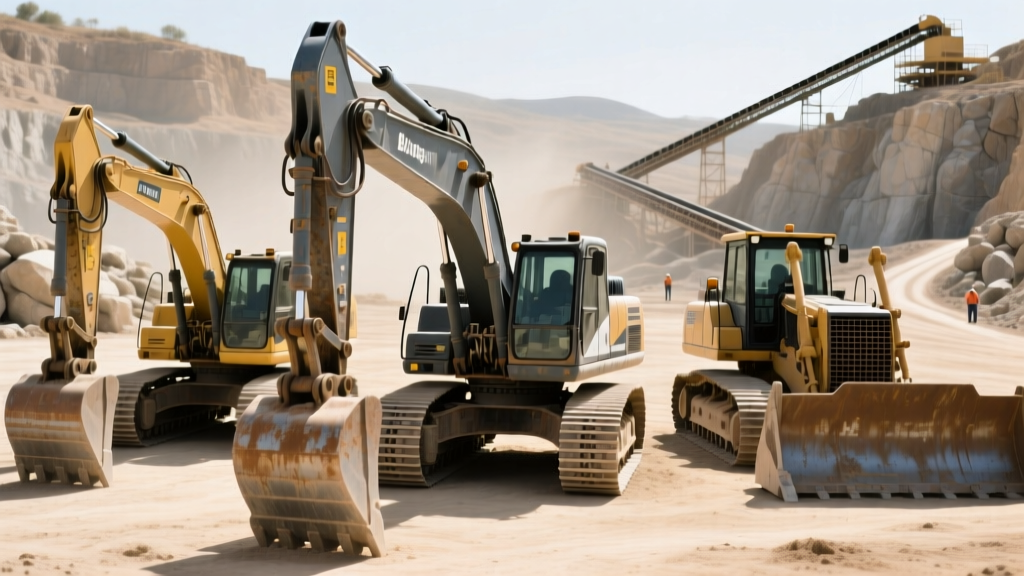
When the project scale expands to highway milling, large-scale commercial pad grading, or airport runway rehabilitation, full-size construction equipment becomes mandatory. Machines in the 30,000 to 100,000+ lb range utilize sheer mass to maintain cutting depth, effectively ignoring minor surface irregularities that would derail a compact machine.
Full-Size Fleet Staples
- Caterpillar 18M3 Motor Grader: The 14-foot moldboard and long wheelbase provide an averaging effect, smoothing out high-frequency ground undulations. When equipped with Cat Grade with 3D, it can hold ±5mm tolerances at travel speeds up to 4 mph.
- Wirtgen W 250 Fi Large Cold Planer: Weighing over 70,000 lbs, this machine uses active track tensioning and a massive milling drum to achieve true heavy equipment machining tolerances of ±2mm across a 12-foot cutting width, regardless of underlying asphalt hardness variations.
Comparative Matrix: Compact vs. Full-Size Capabilities
The following matrix should be used by fleet managers during the bid and planning phase to align equipment selection with project tolerances and site constraints.
| Feature | Compact Class (CTLs, Mini Planers) | Full-Size Class (Graders, Large Planers) |
|---|---|---|
| Optimal Tolerance Range | ±5mm to ±10mm (±2mm with specialized planers) | ±2mm to ±5mm consistently |
| Max Precision Travel Speed | 0.5 to 1.5 mph | 2.0 to 4.5 mph |
| Pitch/Roll Sensitivity | High (requires constant hydraulic micro-corrections) | Low (mass and wheelbase dampen surface irregularities) |
| GNSS Antenna Separation | Narrow (limits yaw calculation accuracy) | Wide (highly accurate 3D blade/drum positioning) |
| Estimated 2026 System Cost | $90,000 - $140,000 (Machine + 3D Retrofit) | $450,000 - $850,000+ (Fully Integrated) |
Operator Training: Mastering the Physics of Machined Grades
Transitioning an operator from standard 'dirt moving' to heavy equipment machining requires specialized training. The margin for error is virtually zero. According to industry insights published by For Construction Pros, the most common cause of tolerance failure in 3D-controlled grading is not satellite dropout, but operator-induced hydraulic shock and track slip.
Core Training Modules for Precision Operators
- Hydraulic Deadband Calibration: Operators must learn to map the joystick deadbands. In machining applications, the hydraulic response must be instantaneous. Train operators to use the machine's digital display to increase pilot pressure sensitivity, eliminating the 'lag' between joystick movement and blade/drum reaction.
- Managing Track Slip on CTLs: When a compact track loader turns or pushes into a heavy cut, the tracks slip. This slip destroys the IMU's spatial awareness. Operators must be trained to execute 'radius turns' rather than zero-radius counter-rotations, and to maintain a minimum 2-inch clearance between the track frame and the material being machined to prevent drag-induced sensor errors.
- Understanding GNSS Multipath Errors: When working near tall structures or inside partially enclosed machining facilities, satellite signals bounce, causing 'multipath' errors. Operators must be trained to monitor the PDOP (Position Dilution of Precision) values on their Trimble or Topcon displays. If PDOP exceeds 1.8, the machine must be stopped, or the operator must switch to a localized robotic total station for guidance.
- Cutting Edge Wear Compensation: In heavy equipment machining, a worn grader blade edge or missing planer teeth will result in a surface that is physically lower than the digital model. Operators must manually input tool wear offsets into the control box every 4 hours of continuous operation.
The 2026 Selection Framework: When to Deploy Which Class
To streamline the selection process, site superintendents should apply the following decision matrix during the pre-construction phase:
- Deploy Compact Equipment When: The working envelope is restricted (under 12 feet wide), floor load limits prohibit heavy machinery (e.g., indoor warehouse slab machining), or the project involves intricate utility trenching where maneuverability outweighs the need for high-speed production.
- Deploy Full-Size Equipment When: The project requires continuous, high-speed production (e.g., highway milling), the tolerance must be held at ±2mm over distances exceeding 500 feet, or the material hardness (like heavily reinforced concrete or high-PSI asphalt) requires the downward force and mass that only a full-size chassis can provide.
'Heavy equipment machining is no longer just about the cutting tool; it is about the stability of the platform carrying the sensor. If the machine pitches, the sensor lies, and the grade fails. Match the mass to the tolerance.' — Senior Machine Control Specialist, AGC of America.
Summary: Precision is a System, Not Just a Machine
Selecting between compact and full-size construction equipment for heavy equipment machining sites requires a holistic view of the project's physical constraints and tolerance requirements. While compact machinery offers unparalleled access and lower capital expenditure, it demands highly trained operators who can mitigate the physics of short wheelbases and track slip. Full-size machinery provides the mass and stability necessary for broad-scale, high-speed machined tolerances, but requires significant logistical planning and capital. By utilizing 3D machine control systems, adhering to rigorous hydraulic calibration protocols, and selecting the correct machine class for the specific spatial geometry, contractors can consistently deliver machined-level precision in the field.