Compact vs Full-Size: Heavy Equipment Casters & Shop Mobility
Master compact vs full-size construction equipment selection with operator best practices for shop mobility, maintenance, and heavy equipment casters.
The Footprint Dilemma: Compact vs. Full-Size Fleet Selection
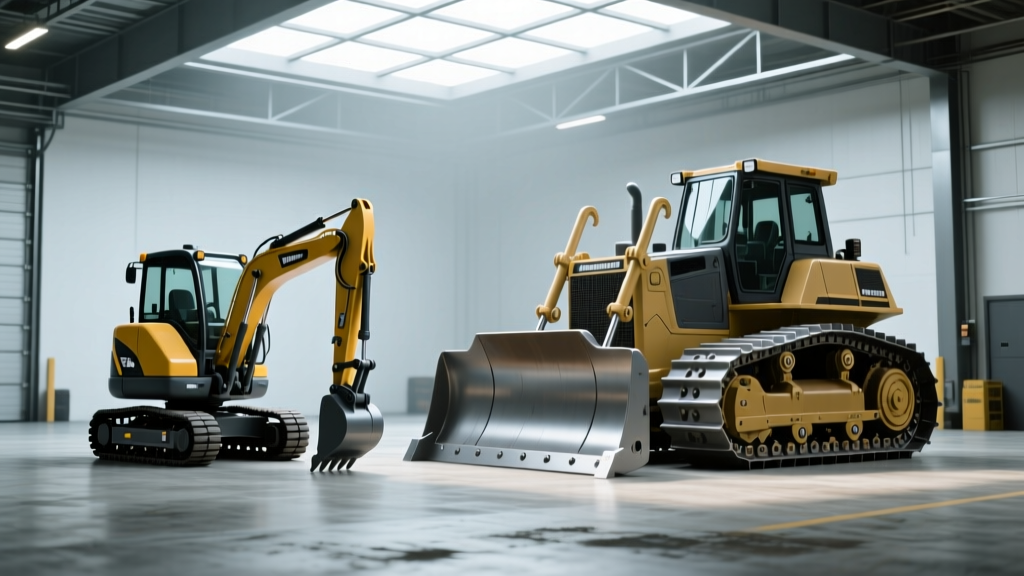
Fleet sizing in 2026 is a capital-intensive puzzle. Choosing between compact machinery, like the Bobcat MT100 compact track loader, and full-size beasts, like the Caterpillar 950 GC wheel loader, dictates not only job site productivity but also the physical infrastructure of your maintenance facility. While most selection guides focus on dig depth or breakout force, they ignore a critical operational bottleneck: shop-floor mobility. Moving multi-ton attachments, maintenance jigs, and out-of-service powertrains requires specialized transport dollies equipped with industrial-grade heavy equipment casters. The decision to scale your fleet up or down directly impacts the load ratings, ergonomic requirements, and facility layouts necessary to keep that equipment operational.
Pros and Cons: Fleet Sizing & Maintenance Impact
- Compact Equipment (e.g., Bobcat MT100, Cat 259D3): Lower initial capital cost ($60,000–$95,000). Requires smaller maintenance bays. Attachment swaps are frequent but involve lighter loads (1,000–3,500 lbs), allowing for standard heavy-duty polyurethane casters on shop dollies.
- Full-Size Equipment (e.g., Cat 950 GC, John Deere 824L): High capital expenditure ($350,000+). Demands reinforced concrete shop floors and specialized heavy equipment casters (forged steel, kingpinless, 5,000+ lb capacity per caster) to move massive buckets, hydraulic hammers, and drivetrain components during overhauls.
Shop-Floor Mobility: The Role of Heavy Equipment Casters
When a full-size excavator requires a track motor rebuild, or a massive rock bucket needs to be swapped in the yard, technicians rely on heavy-duty transport dollies. These dollies are only as effective as their mobility hardware. Heavy equipment casters are engineered to withstand extreme static loads, shock loading from dropped components, and debris ingress. Selecting the wrong caster for your fleet's maintenance profile leads to catastrophic kingpin failure, seized swivel bearings, and severe ergonomic injuries for your shop technicians.
For compact fleets, maintenance stands and attachment caddies typically utilize 8-inch diameter forged steel or high-durometer polyurethane wheels. For full-size fleets, shops must invest in 12-inch to 16-inch diameter kingpinless casters with sealed precision bearings to manage the immense rolling resistance of 20,000+ lb attachment loads.
Caster Selection Matrix for Equipment Maintenance Dollies
| Equipment Class | Dolly Application | Caster Material | Load Rating (Per Caster) | Swivel vs. Rigid Setup |
|---|---|---|---|---|
| Compact Track Loaders | Attachment Caddies | Polyurethane (95A Durometer) | 1,200 lbs | 4 Swivel with Lock |
| Mini Excavators (3-5 ton) | Hydraulic Pump Stands | Forged Steel | 2,500 lbs | 2 Rigid / 2 Swivel |
| Full-Size Wheel Loaders | Bucket & Blade Dollies | Kingpinless Forged Steel | 5,000+ lbs | 4 Rigid (Directional) |
| Large Excavators (30+ ton) | Powertrain Transport | V-Groove Steel (Track) | 10,000+ lbs | N/A (Rail Mounted) |
Operator Training: Ergonomics and Push/Pull Thresholds
Operator and technician training must extend beyond the cab and into the maintenance bay. According to OSHA's ergonomic guidelines, the initial push force required to set a heavy load in motion should not exceed 50 pounds for a single operator, and rolling resistance should stay below 25 pounds of sustained force. When managing full-size equipment attachments on heavy equipment casters, exceeding these thresholds is a primary cause of lower back and shoulder injuries in maintenance staff.
Training Insight: Never allow technicians to 'jerk' or ram a stalled heavy-duty dolly. Shock loading a 5,000-lb capacity caster can instantly fracture the top plate or warp the swivel raceway. Train staff to use mechanical assists, such as shop winches or tugger attachments, when moving full-size loader buckets on caster-equipped dollies.Step-by-Step Dolly Maneuvering Protocol
- Pre-Move Inspection: Verify all four heavy equipment casters are free of shop debris (wire, weld slag). Check that swivel locks are fully disengaged.
- Load Centering: Ensure the attachment's center of gravity is positioned exactly over the dolly's geometric center to prevent caster overload on a single corner.
- Initial Breakaway: Use a pry bar or mechanical tugger to overcome static friction. Never push with the lower back; use leg drive.
- Directional Control: For dollies equipped with 2 rigid and 2 swivel casters, always push from the swivel end to maintain steering control.
- Securing: Engage total-lock brake mechanisms on all casters before technicians begin wrenching or unbolting the attachment.
Facility Infrastructure Costs: 2026 Pricing Breakdown
Data from the Association of Equipment Manufacturers (AEM) highlights that facility adaptation is a hidden cost of fleet upsizing. Transitioning from a compact-only fleet to a mixed or full-size fleet requires significant capital reallocation to the shop floor.
- Compact Shop Setup: Standard 4-inch thick concrete slab is sufficient. Heavy-duty polyurethane casters cost between $150–$300 per unit. Total dolly fabrication and mobility hardware for a 10-bay compact shop averages $18,000.
- Full-Size Shop Setup: Requires 6-inch to 8-inch reinforced concrete with steel trowel finishes to prevent heavy equipment casters from spalling the floor surface. Industrial kingpinless forged steel casters cost $800–$1,500 per unit. Outfitting a heavy-duty maintenance bay with proper transport dollies and jigs easily exceeds $65,000.
Furthermore, NIOSH research on occupational ergonomics emphasizes that poor floor conditions exponentially increase the push/pull force required to move heavy loads. A full-size equipment caster rolling over cracked, unsealed concrete can require up to 300% more initial push force than rolling over an epoxy-coated, steel-troweled surface.
Preventative Maintenance for Heavy-Duty Casters
Just as you track engine hours on a Cat 950 GC, you must track the service life of your shop's mobility hardware. Heavy equipment casters operate in brutal environments, exposed to hydraulic fluid, fine silica dust, and extreme point loads.
Quick-Reference Maintenance Checklist
- Weekly: Blow out swivel raceways with compressed air to remove silica dust and metal shavings. Wipe down polyurethane wheels to remove hydraulic fluid, which degrades the bond between the wheel core and the tread.
- Monthly: Inspect the top plate welds on all transport dollies. Look for micro-fractures around the caster mounting holes, a common failure point when moving unbalanced full-size excavator buckets.
- Annually: Re-grease the swivel bearings using a high-moly EP2 lithium complex grease. Replace sealed precision bearings on rigid casters if any lateral play is detected.
Final Decision Framework
Selecting between compact and full-size construction equipment is not just about the dirt you move; it is about the ecosystem required to sustain the iron. If your operation demands high-volume, heavy earthmoving, the investment in full-size machinery must be matched by an equal commitment to shop infrastructure, including reinforced floors and premium heavy equipment casters for maintenance mobility. Conversely, if your work is characterized by tight urban footprints and high attachment turnover, a compact fleet paired with agile, high-cycle polyurethane caster systems will yield a faster ROI and a safer, more ergonomic environment for your technicians. Align your fleet sizing with your facility's physical capabilities to eliminate bottlenecks before they reach the shop floor.