San Diego Heavy Truck & Equipment Repair Inc: Diagnostic Tech & Specs
Explore the technical specifications, diagnostic workflows, and machining tolerances utilized by San Diego Heavy Truck & Equipment Repair Inc.
J1939 Data Bus Diagnostics & Telematics Interrogation
When evaluating the technical capabilities of a premier regional facility like San Diego Heavy Truck & Equipment Repair Inc, the diagnostic workflow begins at the data link connector (DLC). Modern heavy-duty diesel platforms, from the Cummins X15 to the Caterpillar C15, rely entirely on the SAE J1939 Controller Area Network (CAN) bus for powertrain and chassis communication. Top-tier repair facilities do not simply plug in a code reader; they interrogate the physical and data layers of the network.
Technicians utilize RP1210-compliant diagnostic adapters, such as the NEXIQ USB-Link 3, paired with advanced oscilloscopes like the PicoScope 4425A. This allows for physical layer validation before attempting software-level troubleshooting. A healthy J1939 network requires a precise 120-ohm termination resistance across the CAN High and CAN Low circuits. When measured at the DLC with the ignition off and batteries disconnected, a reading of 60 ohms indicates both terminating resistors are intact. Readings of 120 ohms signify a dropped resistor, while infinite resistance indicates a complete open circuit.
Diagnostic Callout: J1939 vs. J1708 Protocol Specs
J1939 (CAN Bus): Operates at 250 kbps or 500 kbps. Differential voltage at idle sits at 2.5V for both CAN H and CAN L. During dominant bit transmission, CAN H rises to 3.5V and CAN L drops to 1.5V.
J1708 (Serial): Legacy protocol operating at 9600 baud. Uses a single-wire differential setup with an idle voltage of roughly 2.5V, swinging to 0V and 5V during transmission. Most 2026-compliant heavy trucks have phased out J1708 in favor of J1939 and J1939-71 for PGN (Parameter Group Number) data mapping.
When a technician encounters an active fault code, such as SPN 100 FMI 18 (Engine Oil Pressure Low - Data Valid but Below Normal Operational Range), the workflow mandates verifying the physical sensor voltage (typically 0.5V to 4.5V scaling) against the ECM broadcast value before condemning the mechanical oil pump or the sensor itself.
Hydraulic Test Bench Specifications for Pump & Motor Rebuilds
Heavy equipment repair extends far beyond Class 8 trucks. Earthmoving and material handling machinery rely on complex closed-loop and open-loop hydraulic systems. Facilities equipped to handle these rebuilds utilize industrial-grade hydraulic test benches capable of simulating extreme operational loads. Testing an axial piston pump, such as a Rexroth A4VSO series, requires precise measurement of volumetric and mechanical efficiency under load.
| Test Parameter | Standard Specification | Failure Threshold |
|---|---|---|
| Maximum System Pressure | 5,000 PSI (350 bar) | Relief valve chatter below 4,800 PSI |
| Flow Rate Capacity | 120 GPM (450 L/min) | Inability to maintain 100 GPM at 3,000 PSI |
| Case Drain Flow (Axial Piston) | < 8% of Input Flow | > 12% indicates excessive internal bypass |
| Fluid Temperature Control | 120°F - 140°F (49°C - 60°C) | Viscosity breakdown above 180°F |
During a rebuild, the pump is mounted to the test bench and subjected to a staged pressure increase. The critical metric is case drain flow. If the pump's internal slipper pads or swashplate are worn, high-pressure fluid bypasses internally and exits through the case drain port. A case drain flow exceeding 10% of the theoretical input flow at rated pressure mandates a complete rotating group replacement, as volumetric efficiency has dropped below acceptable limits for heavy-cycle earthmoving applications.
Precision Machining Tolerances for Heavy Diesel Overhauls
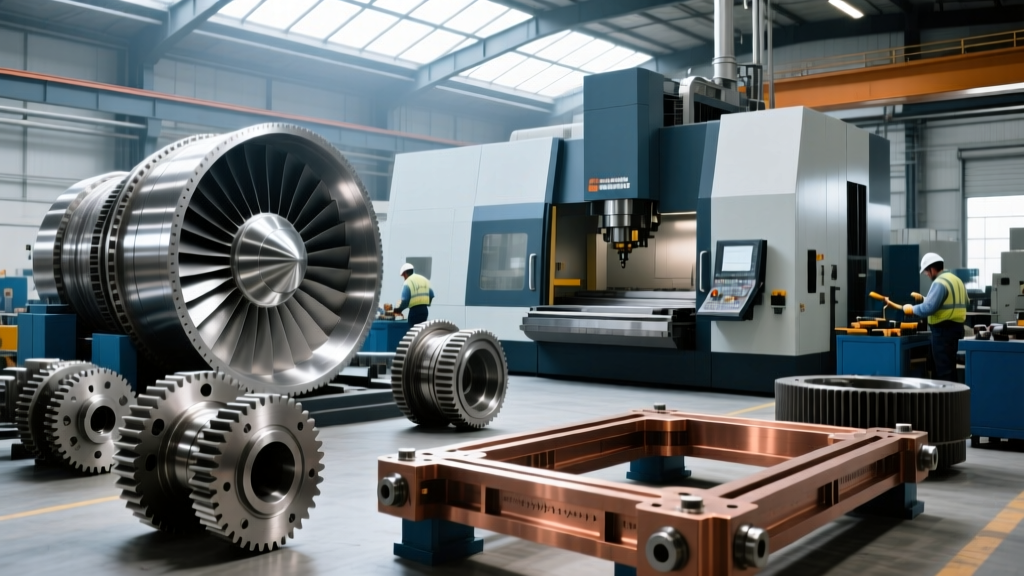
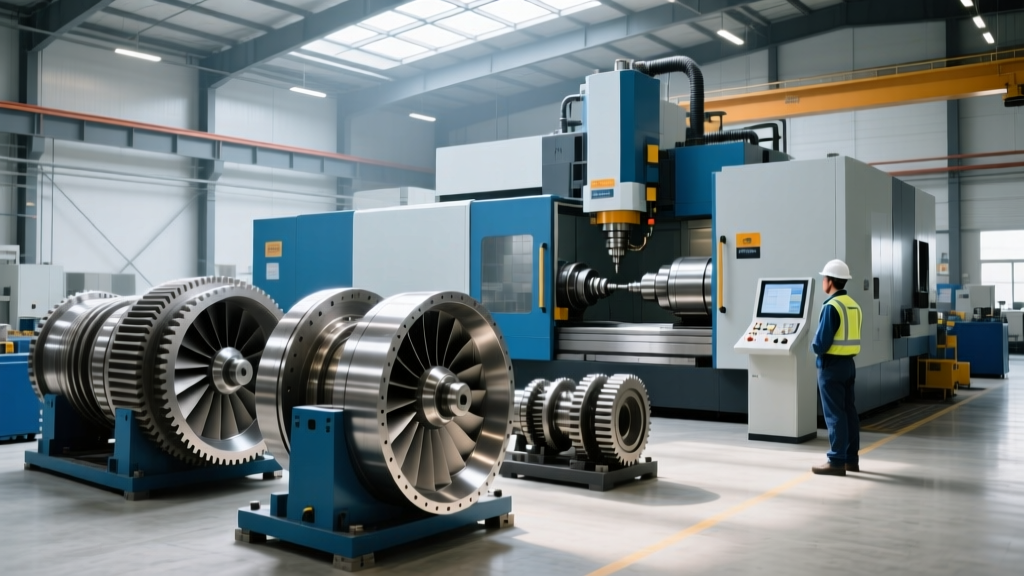
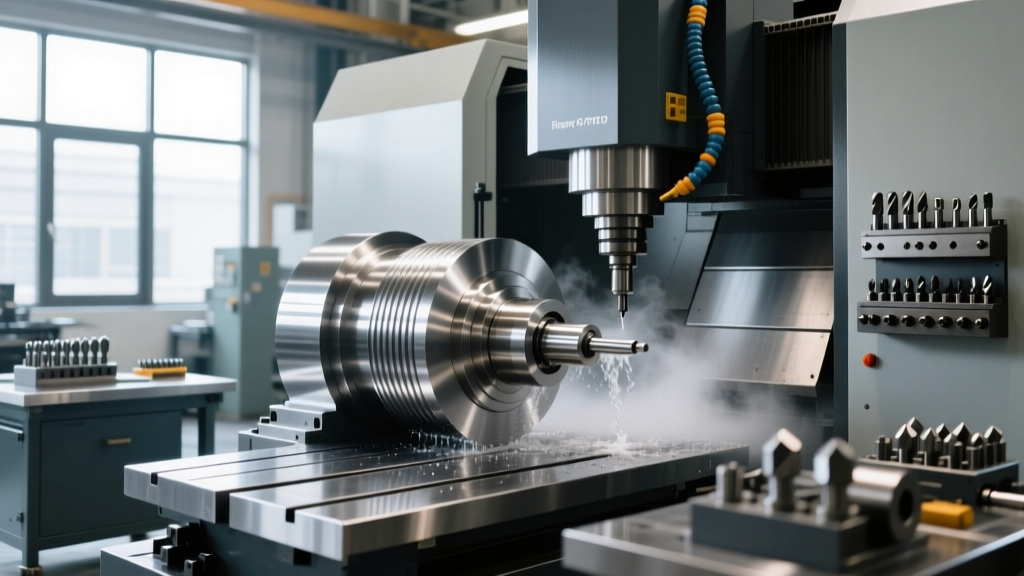
Engine rebuilding requires strict adherence to OEM machining tolerances. The transition from composite cylinder head gaskets to Multi-Layer Steel (MLS) gaskets in modern heavy-duty diesels has drastically altered the required surface finish specifications. Facilities performing in-house machining must utilize programmable CNC surfacing mills or high-precision belt grinders equipped with digital profilometers to measure surface roughness.
Cylinder Head Resurfacing Workflow for MLS Gaskets
- Initial Deck Measurement: Use a precision straightedge and feeler gauges to check for warpage. The maximum allowable out-of-flat tolerance for a Cummins X15 or Cat C15 block deck is typically 0.002 inches (0.05 mm) across the entire length.
- Cutting & Surfacing: Machine the surface using a CBN (Cubic Boron Nitride) insert or a fine-grit abrasive. The target surface finish for an MLS gasket is 20 to 30 microinches (µin) Ra. This is significantly smoother than the 60-100 µin Ra required for older composite gaskets.
- Profilometer Verification: Measure the Ra value at three distinct points on the deck. If the finish is too rough (>35 µin), the micro-sealing beads on the MLS gasket will fail to seat, leading to combustion gas blow-by and coolant intrusion.
- Fastener Preparation: Heavy-duty cylinder head bolts are predominantly Torque-to-Yield (TTY). Technicians must measure bolt stretch using a micrometer. If a bolt has stretched beyond the OEM maximum yield limit (often an increase of 0.015 to 0.020 inches over stock length), it must be discarded. Reusing TTY bolts risks clamping force loss and catastrophic head gasket failure under high cylinder pressures.
Aftertreatment System (DEF/DPF) Thermal & Flow Diagnostics
With stringent EPA and heavy-duty emission standards dictating near-zero NOx and particulate matter outputs, the aftertreatment system is often the primary source of equipment downtime. Technical repair centers utilize specialized thermal imaging and flow-bench testing to diagnose Selective Catalytic Reduction (SCR) and Diesel Particulate Filter (DPF) faults.
When diagnosing a DEF dosing system, technicians perform a quantitative dosing test. The doser valve is removed from the exhaust stream and directed into a graduated cylinder. The ECM is commanded to run the dosing pump at a specific duty cycle. The acceptable flow rate for most heavy-duty Bosch or Cummins dosing units is between 4.5 and 5.5 milliliters per minute at standard test pressure. A flow rate below this threshold indicates crystallization inside the injector tip or a failing pump diaphragm.
For DPF diagnostics, facilities measure the ash loading capacity. While soot is burned off during active regeneration, incombustible ash (derived from engine oil additives) accumulates permanently. According to FMCSA vehicle maintenance guidelines and OEM specifications, a DPF typically requires professional pneumatic or aqueous cleaning when ash loading reaches 35 to 40 grams per liter of filter volume. Technicians calculate this by comparing the clean filter baseline weight against the current removed weight, subtracting the estimated soot load based on the differential pressure sensor mapping.
Chassis Dynamometer & Load Bank Validation
A rebuilt engine or repaired drivetrain is not cleared for return-to-service until it has been validated under load. Street testing is insufficient for verifying thermal stability and parasitic losses. Advanced repair bays utilize eddy-current chassis dynamometers for Class 8 trucks and resistive load banks for stationary power generation equipment.
"Static idle testing reveals nothing about the thermal dynamics of a heavy-duty diesel. A 600-horsepower engine must be subjected to a minimum of 80% rated load for at least 45 continuous minutes to validate piston cooling gallery flow, turbocharger bearing stability, and EGR cooler thermal exchange rates before the warranty is activated."
— Senior Master Technician, Heavy Duty Powertrain Division
The standard break-in and validation protocol on a chassis dyno involves a staged load application. The engine is brought to operating temperature at 1,200 RPM under no load. The dyno then applies 25% load for 15 minutes, monitoring coolant and oil temperatures for delta spikes. The load is increased in 25% increments every 10 minutes until reaching 100% peak torque load. During this peak hold, technicians monitor the J1939 broadcast for intake manifold pressure (boost), fuel rail pressure, and exhaust gas temperatures (EGTs). EGTs must remain stable and below 1,350°F (732°C) pre-turbo to ensure the valve seats and piston crowns are not subjected to thermal degradation.
Aligning with Industry Standards for Fleet Reliability
The technical rigor applied by specialized entities like San Diego Heavy Truck & Equipment Repair Inc ensures that repaired assets meet or exceed OEM performance metrics. By relying on physical layer CAN bus diagnostics, strict hydraulic volumetric efficiency thresholds, micron-level machining tolerances, and dynamometer load validation, heavy equipment repair transitions from a reactive parts-swapping exercise into a predictive, data-driven engineering discipline. Fleet managers evaluating repair partners should always request documentation of these specific test parameters to ensure their capital assets are being serviced to the highest mechanical standards, aligning with the best practices outlined by the Technology & Maintenance Council (TMC).