Heavy Equipment DIY Service: Safe Limits for Owner-Operators
Learn the financial and mechanical limits of heavy equipment DIY service. Discover which owner-operator repairs are profitable and which require certified techs.
The Financial Reality of Owner-Operator Maintenance
In 2026, authorized dealer service rates for heavy earthmoving machinery average between $185 and $245 per hour, excluding travel time and diagnostic hook-up fees. For an owner-operator running a mid-size excavator like a Cat 320 or a John Deere 210G, a standard 500-hour preventive maintenance (PM) service can easily exceed $3,200 when factoring in OEM fluids, filters, and shop labor. Executing this same heavy equipment DIY service in your own yard drops the cost to approximately $750 for premium aftermarket components like Donaldson filters and Shell Tellus S2 VX 46 hydraulic fluid.
However, the boundary between highly profitable DIY maintenance and catastrophic machine failure is defined by hydraulic pressure, electronic control module (ECM) telemetry, and structural load paths. Misjudging this boundary does not just void warranties; it creates severe safety hazards and secondary component damage that can total a powertrain.
Information Gain: The 20% Rule of DIY ProfitabilityIndustry data indicates that owner-operators who restrict their heavy equipment DIY service to Tier 1 (fluids, filters, wear parts, and external hoses) save an average of 22% on annual operating costs. Those who attempt Tier 3 repairs (internal hydraulics, ECM flashing, and high-pressure fuel systems) experience a 40% increase in secondary failure rates, entirely negating the labor savings.
The Wrench-or-Call Decision Matrix
Before unbolting a single guard, evaluate the repair against this risk-reward matrix. This framework separates routine owner-operator maintenance from dealer-mandatory interventions.
| Component / System | DIY Viability | Required Tooling & Specs | Risk Factor |
|---|---|---|---|
| Hydraulic Hose Fabrication | High | Parker crimp dies, ORFS fittings, 5,000 PSI test bench | Low (if routed correctly) |
| Final Drive Motor Rebuild | Very Low | Class 100 clean room, specialized bearing pullers | Extreme (contamination risk) |
| DEF / Aftertreatment | Moderate | OEM diagnostic software (e.g., Cat ET, JD Service Advisor) | High (EPA compliance / DPF damage) |
| Undercarriage Track Tensioning | High | Grease gun, tape measure, OEM sag specs (usually 1-2 inches) | Low |
| HPCR Fuel Injector Replacement | None | High-pressure line capping tools, clean room environment | Severe (30,000 PSI injection risk) |
Tier 1: Safe and Profitable DIY Heavy Equipment Service
The most lucrative area for owner-operators is mastering hydraulic hose assembly and preventive fluid analysis. Modern heavy machinery relies heavily on O-ring face seal (ORFS) fittings to prevent high-pressure leaks. Fabricating your own hoses eliminates the $85 to $150 per assembly markup charged by mobile service trucks.
Mastering the ORFS Hydraulic Connection
When replacing a blown boom hose on a skid steer or excavator, never reuse the O-ring. The O-ring in an ORFS fitting (SAE J1453 standard) provides the actual seal, while the flat face and threads only provide clamping force. A reused, flattened O-ring will inevitably extrude under 4,500 PSI operating pressures.
- Inspection: Check the mating flat face for radial scratches. Even a hairline scratch across the O-ring groove will cause a leak at high pressure.
- Lubrication: Coat the new Buna-N or Fluorocarbon O-ring with clean hydraulic fluid before assembly to prevent pinching during thread engagement.
- Torque Specs: Use a calibrated torque wrench. A 3/4-inch ORFS fitting typically requires 145 to 165 lb-ft of torque. Under-torquing causes leaks; over-torquing crushes the O-ring and strips the swivel nut threads.
Fluid Cleanliness and ISO 4406 Standards
Changing hydraulic fluid is not just about draining and refilling; it is about managing particulate contamination. According to Machinery Lubrication, over 70% of hydraulic component failures are traced back to fluid contamination. When performing a DIY fluid change on a wheel loader, use a portable particle counter to verify your new fluid meets the OEM's ISO 4406 cleanliness code (typically 18/16/13 or better for proportional valves). Always pump new fluid through a 10-micron offline kidney-loop filter before introducing it to the machine's main reservoir.
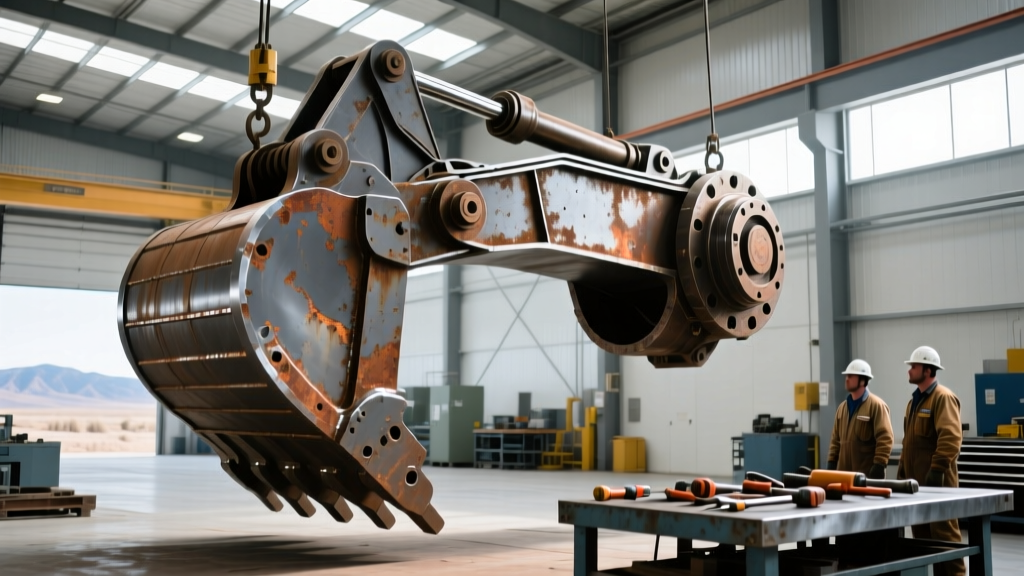
Safety Protocol: Lockout/Tagout (LOTO)Never perform heavy equipment DIY service involving stored energy without strict adherence to OSHA's Control of Hazardous Energy (Lockout/Tagout) standards. Hydraulic accumulators must be manually bled down, and implements must be physically blocked or lowered to the ground. A suspended 4,000-pound excavator bucket held only by a locked hydraulic control valve is a fatal hazard waiting for a seal to bypass.
Tier 2: High-Risk Repairs That Demand Certified Technicians
While mechanical linkages and external plumbing are fair game for DIY, modern Tier 4 Final and Stage V emissions systems represent a hard boundary for owner-operators. The integration of Selective Catalytic Reduction (SCR) and Diesel Particulate Filters (DPF) requires proprietary software to reset soot load models and perform forced regenerations.
The Hidden Cost of ECM Telematics and Warranties
Manufacturers like Caterpillar, Komatsu, and John Deere utilize advanced telematics (e.g., VisionLink, JDLink) that log every fault code, operating parameter, and maintenance interval directly to the cloud. If you attempt to clear a derate code using an unauthorized third-party tuning tool or by physically tampering with the DEF dosing module, the ECM permanently flags the machine's serial number. This 'tamper flag' will immediately void any remaining powertrain warranty and can result in the manufacturer refusing to sell proprietary replacement parts to your account.
Furthermore, High-Pressure Common Rail (HPCR) fuel systems operate at pressures exceeding 30,000 PSI. A microscopic fracture in a high-pressure fuel line, or the improper torquing of an injector clamp, can result in fuel atomizing and igniting against the hot turbocharger housing, leading to a catastrophic engine bay fire. Leave HPCR and aftertreatment diagnostics to certified dealer networks.
Building Your In-House Diagnostic Arsenal
To execute Tier 1 heavy equipment DIY service effectively, you must move beyond basic hand tools and invest in professional diagnostic equipment. The return on investment for these tools is typically realized within the first two major PM services.
- J1939 Data Link Adapter: The NEXIQ USB-Link 3 (approximately $950) is the industry standard for bridging the gap between your machine's SAE J1939 CAN bus network and a ruggedized laptop. It allows you to read live engine data, monitor hydraulic pump swashplate angles, and view active fault codes without paying a $250 dealer diagnostic fee.
- Digital Multimeter with AutoHOLD: A Fluke 87V Max (approx. $450) is essential for tracing 24-volt electrical gremlins, testing PWM (Pulse Width Modulation) solenoid signals on hydraulic control valves, and performing voltage drop tests across heavy-duty battery cables.
- Inline Hydraulic Flow Meter: A Webtec 30-gpm portable flow meter allows you to test hydraulic pump degradation dynamically. By measuring flow at 0 PSI and then loading the system to 3,000 PSI via a restrictor valve, you can calculate volumetric efficiency. A drop of more than 15% from the baseline specification indicates severe internal gear or piston wear, allowing you to plan a pump rebuild before the machine fails on a job site.
Frequently Asked Questions (FAQ)
Can I legally delete the DEF system on my older heavy equipment to save on repair costs?
No. Under the EPA Emission Standards Reference Guide, tampering with, removing, or rendering inoperative any emissions control device (including DEF/SCR systems) on non-road heavy equipment is a federal violation. Fines for operators and shops performing 'DEF deletes' can exceed $45,000 per incident. Furthermore, deleting the system often causes the ECM to severely derate the engine, destroying productivity.
Is it safe to mix different brands of ISO VG 46 hydraulic fluid?
While the base oil viscosity (ISO 46) might be identical, the additive packages (anti-wear, anti-foam, and demulsibility agents) vary wildly between brands like Mobil, Shell, and Chevron. Mixing them can cause the additives to cross-link and form a sludge, or cause the fluid to fail the Vickers 35VQ25 vane pump test. Always flush the system or stick strictly to one OEM-approved brand when topping off.
How do I properly tension the tracks on a steel-tracked excavator?
Never tension tracks by measuring the physical length of the grease cylinder. Instead, raise the track off the ground, clean the bottom run, and measure the sag (deflection) between the front idler and the first bottom roller. Consult your specific operator's manual, but standard sag is typically between 1.0 and 1.5 inches. Over-tensioning to 'zero sag' will destroy the idler bearings and accelerate link-and-bushing wear by up to 60% due to the lack of a shock-absorbing buffer.