Union Heavy Equipment Operator Salary vs Mechanic Pay: Career Guide
Compare the union heavy equipment operator salary against mechanic pay. Explore diagnostic duties, tooling, and career paths in heavy machinery repair.
The Diagnostic Divide: Cab vs. Shop Floor
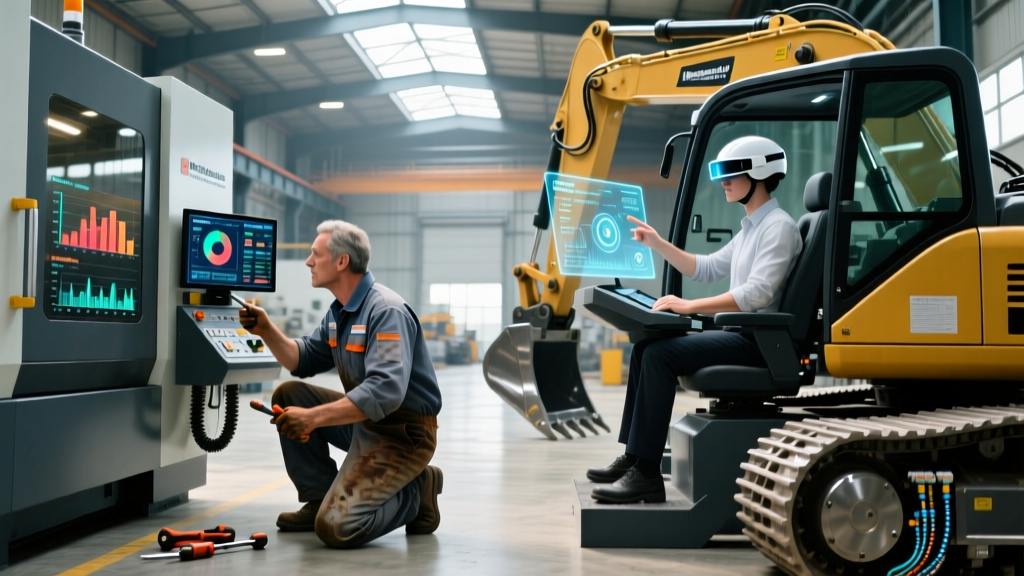
The heavy machinery industry relies on a strict division of labor when equipment fails. While both roles require deep mechanical empathy, the troubleshooting scope differs drastically. Operators serve as the first line of defense, executing Tier 1 diagnostics via cab monitors and physical inspections. Mechanics, conversely, handle Tier 2 through Tier 4 interventions, requiring advanced electrical diagnostics, hydraulic flow testing, and proprietary software integration. Understanding this divide is critical when choosing between running the iron and fixing it.
Tier 1 Troubleshooting: The Operator's Domain
Modern heavy equipment is essentially a rolling network of electronic control modules (ECMs). An operator's troubleshooting begins the moment a warning lamp illuminates on the primary display—such as the Caterpillar Advanced Productivity Electronic Control System (APECS) or John Deere's CommandView. Operators are trained to interpret active fault codes, perform visual walk-arounds to check for blown hydraulic hoses or leaking final drives, and execute basic software resets. Crucially, operators manage the machine's physical state to prevent catastrophic secondary damage, such as shutting down a dozer immediately if the transmission sump temperature spikes above 240°F.
Deep System Diagnostics: The Mechanic's Realm
Once a machine is tagged out and sent to the shop, the mechanic takes over. This role requires moving beyond symptom identification to root-cause analysis. Mechanics utilize the J1939 CAN bus protocol to pull historical freeze-frame data, test individual solenoid resistances with a multimeter, and measure hydraulic pump flow rates using inline flow meters. If an operator reports a sluggish boom cylinder, the mechanic doesn't just replace the cylinder; they test the main hydraulic pump's compensator setting, check the pilot pressure network, and verify the spool valve's deadband via diagnostic software.
Financial Breakdown: Union Heavy Equipment Operator Salary vs. Mechanic Pay
When mapping out a career in heavy machinery, the union heavy equipment operator salary often serves as the primary benchmark. According to the International Union of Operating Engineers (IUOE) and prevailing wage data, operators benefit from highly structured, predictable pay scales tied to the Davis-Bacon Act on federal projects. However, master mechanics—particularly those certified in high-voltage EV systems or advanced Tier 4 Final emissions diagnostics—frequently out-earn operators due to severe industry-wide talent shortages.
Compensation Reality Check
While the base union heavy equipment operator salary provides exceptional stability and robust pension structures, mechanics who obtain OEM certifications (like Cummins INSITE or CAT ET) can command massive overtime premiums. A master diagnostic mechanic working on a weekend shutdown at a mining site can easily clear $120+ per hour with site-specific multipliers.
| Compensation Metric | Union Operator (IUOE) | Union Mechanic (IAM/IUOE) |
|---|---|---|
| Base Hourly Rate (2026 Avg) | $38.00 - $54.00 | $42.00 - $68.00 |
| Overtime Multiplier | 1.5x (Standard) | 1.5x to 2.0x (Emergency Callouts) |
| Tool Allowance | Rare (Basic hand tools provided) | $1,500 - $3,500 Annual Stipend |
| Certification Bonuses | CDL / Crane Rigging (+$2-$5/hr) | OEM Master Tech (+$4-$10/hr) |
| Primary Income Driver | Hours logged / Shift differentials | Specialized diagnostic capability |
Tooling and Technology Matrix
The physical tools of the trade dictate the daily reality of each career path. Operators rely on ergonomics, spatial awareness, and basic maintenance gear. Mechanics rely on digital interfaces, precision measurement tools, and high-pressure testing rigs.
- Operator Core Tooling: Grease guns (manual and 18V cordless), torque wrenches (for track pad bolts), infrared thermometers (for checking bearing temps), and digital tire pressure gauges.
- Mechanic Core Tooling: OEM diagnostic laptops (running CAT Electronic Technician, JPRO Professional, or John Deere Service Advisor), digital multimeters (Fluke 87V), hydraulic flow meters (Webtec or Hedland), and oscilloscopes for reading PWM (Pulse Width Modulation) signals to solenoids.
Real-World Scenario: Troubleshooting a Tier 4 Final DPF Fault
To understand the day-to-day reality of both roles, consider a common field failure: a Tier 4 Final excavator throwing an SPN 3251 fault (Aftertreatment Diesel Particulate Filter Differential Pressure). Here is how the diagnostic responsibility is split in a union environment.
- The Operator's Response (Tier 1): The operator sees the check engine light and a derate warning on the monitor. They check the exhaust temperature gauge, note that the machine is failing to initiate an automatic regeneration cycle, and safely park the machine. They perform a visual check of the exhaust piping for soot leaks and radio the shop foreman to report the active SPN 3251 code.
- The Mechanic's Intervention (Tier 2): The mechanic arrives with a ruggedized laptop and connects to the machine's diagnostic port. They pull the freeze-frame data and notice the differential pressure sensor is reading 0 kPa even at high RPMs.
- Root Cause Analysis (Tier 3): Instead of just replacing the expensive DPF, the mechanic physically inspects the sensor hoses. They find that the high-temperature silicone tube leading to the sensor has melted against the turbocharger heat shield, causing a loss of pressure signal. The ECM falsely assumed the DPF was completely unplugged, triggering the derate.
- The Fix: The mechanic replaces the $40 silicone hose, routes it away from the heat source using high-temp zip ties, clears the fault code, and forces a stationary regen to burn off the accumulated soot.
Career Decision Framework: Which Path Fits You?
Choosing between the cab and the shop floor requires an honest assessment of your physical limits, intellectual preferences, and financial goals. The Bureau of Labor Statistics notes that while operator roles are highly competitive and often require long travel for pipeline or highway projects, mechanic roles offer more localized, shop-based stability with higher ceilings for technical specialization.
Physical vs. Mental Fatigue
Operators endure whole-body vibration, extreme weather exposure during walk-arounds, and the mental fatigue of maintaining intense spatial awareness for 10-hour shifts. Mechanics endure awkward physical postures (working inside engine bays or under tracks), exposure to carcinogenic diesel soot and DEF fluid, and the high-stress mental burden of diagnosing intermittent electrical gremlins that halt million-dollar production schedules.
Next Steps for Aspiring Professionals
If you are pursuing the operator route, focus on securing your NCCER (National Center for Construction Education and Research) credentials and logging hours on diverse iron—from motor graders to hydraulic cranes. If the diagnostic side appeals to you, invest in your own digital multimeter, study the SAE J1939 communication protocol, and seek an apprenticeship with an OEM dealer where you can gain access to proprietary software. According to NCCER certification standards, formalized training in either discipline drastically reduces the time required to reach journey-level pay scales.
Ultimately, the union heavy equipment operator salary provides a highly lucrative, structured entry into the middle class, but the mechanic's path offers a technically complex, software-driven career that is increasingly insulated from automation and offshoring. Evaluate your tolerance for physical environments versus digital diagnostics, and choose the side of the iron that aligns with your long-term capabilities.