Fleet Managers: Sourcing Heavy Equipment Operator Training in Texas
Discover how fleet managers integrate heavy equipment operator training in Texas into equipment acquisition budgets to protect capital investments and boost ROI.
The Fleet Manager's Dilemma: Protecting Capital Investments Through Training
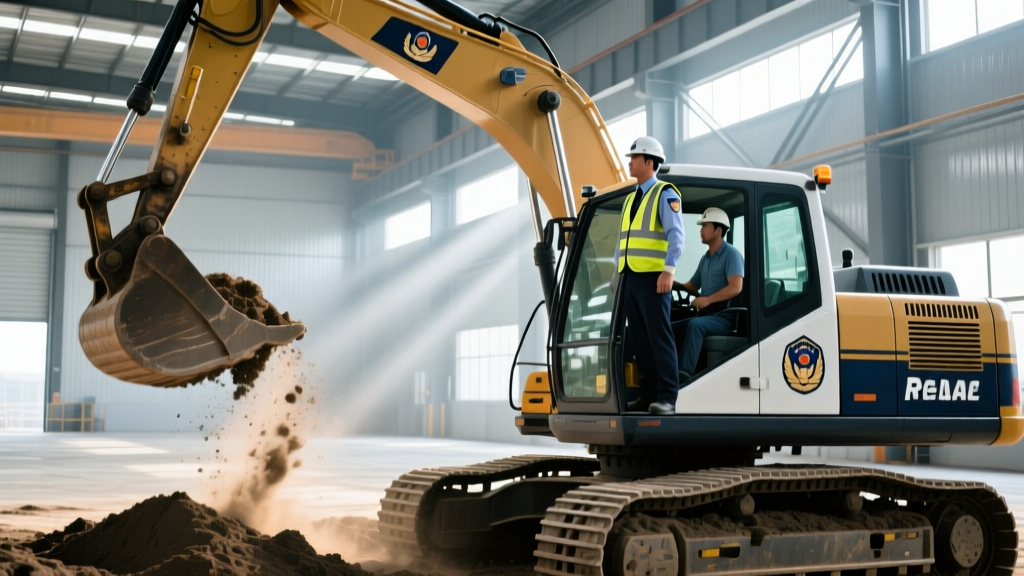
When spec'ing out a new fleet of earthmoving machinery, the capital expenditure is only the beginning of the financial lifecycle. A fleet manager purchasing a 2026 Caterpillar 336 Excavator (MSRP range $420,000 to $480,000) or a Komatsu PC210LC-11 is not just buying iron; they are buying productivity. However, the most advanced hydraulic systems and Tier 4 Final engines are entirely at the mercy of the person in the cab. For fleets operating in the harsh, abrasive soils of the Lone Star State, integrating comprehensive heavy equipment operator training in Texas into your procurement strategy is not an HR initiative—it is a critical asset protection protocol.
WARNING: The Hidden Cost of Untrained OperatorsImproper operation of modern Stage V / Tier 4 Final engines frequently leads to excessive idling and lugging. This causes Diesel Particulate Filter (DPF) clogging and Diesel Exhaust Fluid (DEF) crystallization. Replacing a DPF assembly on a late-model excavator costs between $4,500 and $7,500, while premature hydraulic pump cavitation from improper relief valve usage can result in $8,500+ rebuild bills. Training is your first line of defense against these preventable CapEx drains.
Integrating Training into Your Equipment Acquisition Budget
Forward-thinking fleet managers no longer treat training as an ad-hoc operational expense. Instead, it is baked directly into the equipment acquisition budget. The industry standard for heavy civil and mining fleets is to allocate 2% to 4% of the total equipment purchase price toward initial onboarding and specialized site training. When sourcing heavy equipment operator training in Texas, fleet managers must evaluate programs based on their ratio of simulator hours to live-iron seat time, ensuring operators understand both the digital interfaces and the physical soil dynamics of local Texas terrain, such as reactive clays and abrasive caliche.
| Equipment Model (2025/2026) | Approx. Acquisition Cost | Recommended Training Budget (3%) | Primary Training Focus Area |
|---|---|---|---|
| Caterpillar 336 Excavator | $450,000 | $13,500 | Grade control systems, Cat Connect telematics, trenching safety |
| John Deere 850L Dozer | $385,000 | $11,550 | Undercarriage preservation, blade load management, GPS dozing |
| Komatsu PC210LC-11 | $320,000 | $9,600 | Intelligent Machine Control (iMC), fuel-efficient swing modes |
Evaluating Texas Training Facilities for Fleet Onboarding
Not all training programs yield the same ROI. When issuing an RFP for operator training, fleet managers must look beyond basic safety certifications. The curriculum must address the specific failure modes of the exact equipment models being procured. In Texas, programs accredited by the National Center for Construction Education and Research (NCCER) provide a standardized, rigorous baseline that fleet managers can trust.
Vendor Selection Matrix: What Fleet Managers Must Demand
- Simulator vs. Live Iron Ratio: Look for a minimum 20/80 split. Simulators (like CM Labs Vortex) are excellent for teaching muscle memory and digital monitor navigation, but they cannot replicate the shock loads and ground resonance experienced when ripping Texas limestone.
- Telematics Integration: The training facility must teach operators how to read and respond to onboard telematics (e.g., JDLink, KOMTRAX). Operators need to understand how their actions trigger fault codes and impact fleet-wide utilization metrics.
- Undercarriage Management: A specialized module on track tensioning and high-speed travel avoidance is mandatory. Abrasive Texas soils can accelerate undercarriage wear by up to 40%, turning a standard $18,000 track replacement into a $25,000+ emergency repair if operators spin the tracks unnecessarily.
Leveraging State Grants to Offset Training Procurement
One of the most underutilized strategies for fleet managers operating in this region is tapping into state-subsidized workforce programs. The Texas Workforce Commission (TWC) frequently offers Skills Development Fund grants that can reimburse a significant portion of customized training costs for heavy equipment fleets. By partnering with local technical colleges or NCCER-certified private vendors, fleet managers can design a bespoke curriculum tailored to their specific fleet makeup (e.g., a mixed fleet of Volvo articulated haulers and Liebherr cranes) while having the state subsidize the instructional hours.
Pro-Tip: Align Delivery with TrainingNever take delivery of new iron before the operators are certified. Negotiate with your OEM dealer to hold the equipment at the yard or schedule a delayed site-delivery until the 4-to-6 week Texas training cohort is complete. This prevents the 'we need it on the dirt tomorrow' panic that forces untrained laborers into multi-hundred-thousand-dollar cabs.
Step-by-Step: Building a Fleet Training Procurement Strategy
- Audit Telematics Data: Pull 90 days of idle time, fuel burn, and fault code data from your existing fleet. Identify the specific operational bad habits (e.g., riding the swing brake, improper boom lowering techniques) that are costing you money.
- Draft the Training Scope of Work (SOW): Specify the exact machine models, the required NCCER modules, and the mandatory live-iron hours. Require the training vendor to include a module on your company's specific daily inspection (walk-around) checklists.
- Secure TWC Grant Pre-Approval: Work with your chosen Texas training partner to submit the grant application to the Texas Workforce Commission before signing the final training contract.
- Implement Post-Training KPIs: Establish a 6-month review period. Compare the telematics data and maintenance ticket volume of the newly trained operators against the fleet average. A successful heavy equipment operator training in Texas program should yield a minimum 15% reduction in fuel consumption and a 20% drop in minor maintenance tickets within the first two quarters.
The Bottom Line on Fleet Lifecycle ROI
Equipment selection is only half the battle. A meticulously spec'd machine with the wrong operator will depreciate twice as fast and generate a fraction of the expected revenue. By treating heavy equipment operator training in Texas as a core component of your equipment buying guide and acquisition budget, you transform your operators from a liability into your most effective asset protection system. The Associated Equipment Distributors (AED) Foundation consistently highlights that fleets investing in structured, continuous operator education see vastly higher resale values at the 5-year mark, simply because the iron has been operated within its engineered parameters. Protect your capital, fund the training, and let the ROI follow.