Average Salary Heavy Equipment Operator: 2026 Tech & Automation Impact
Discover how GPS, telematics, and automation impact the average salary heavy equipment operator professionals earn in 2026. Explore tech-driven pay scales.
The integration of advanced digital systems into earthmoving and lifting machinery has fundamentally altered the compensation structure for construction and mining professionals. Historically, operator pay was dictated primarily by seat time, union scales, and the physical size of the machine. In 2026, the Bureau of Labor Statistics data reveals a stark bifurcation: the divergence between traditional manual operators and tech-enabled systems operators has created a multi-tiered wage landscape where digital fluency directly correlates with earning potential.
2026 Baseline Compensation Data
National Median (All Operators): $58,400 / $28.07 per hour
Traditional Manual Operators (Bottom 25%): $44,100 / $21.20 per hour
Tech-Enabled Systems Operators (Top 10%): $98,500+ / $47.35+ per hour
Source: U.S. Bureau of Labor Statistics, Occupational Employment and Wage Statistics (OES) for Operating Engineers and Other Construction Equipment Operators.
The Bifurcation of Operator Pay: Traditional vs. Tech-Enabled
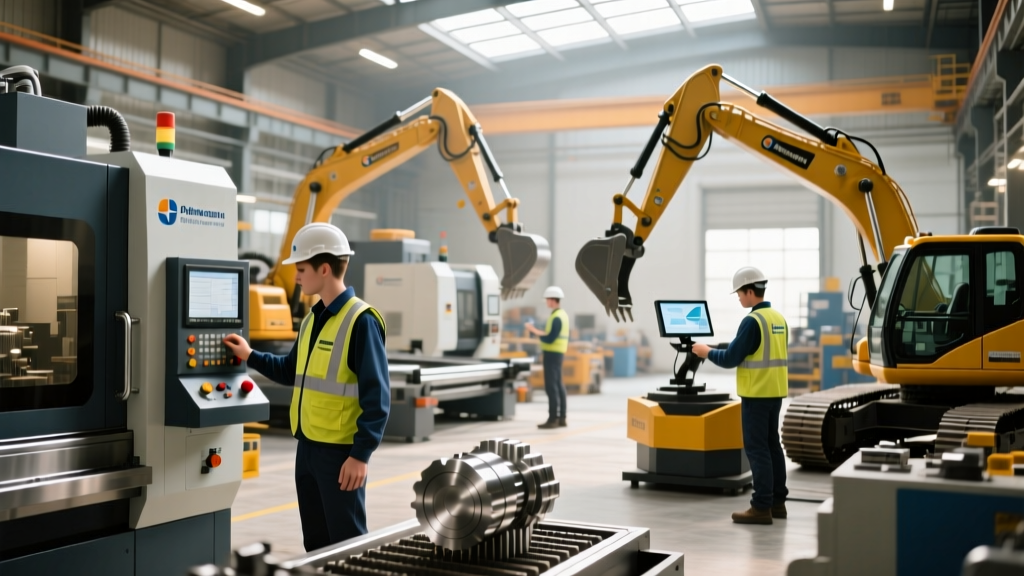
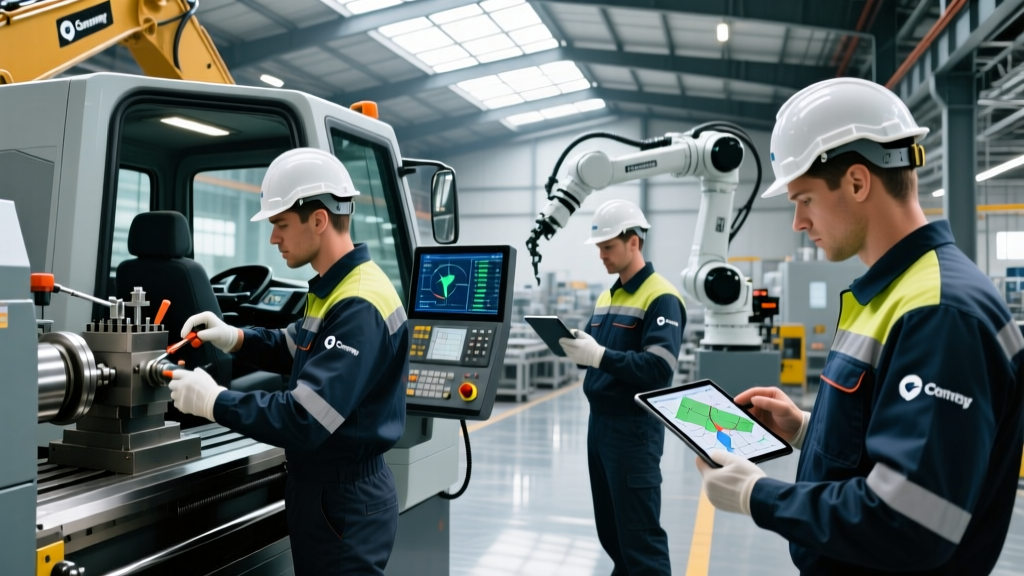
The modern heavy equipment cab is effectively a mobile data center. Contractors are no longer paying operators merely to move dirt; they are paying them to execute digital design models with millimeter precision, minimize fuel consumption via telematics, and manage autonomous fleet cycles. This shift has decoupled the average salary heavy equipment operator earners receive from simple hourly union baselines, introducing substantial 'tech premiums' for specialized skills.
According to workforce development analyses by the National Center for Construction Education and Research (NCCER), contractors face severe margins when rework occurs. An operator utilizing 3D machine control eliminates grade-checking downtime and reduces material overages by up to 15%. Because the financial return on investment (ROI) for tech-enabled operators is immediate and measurable, employers are aggressively bidding up their wages to secure talent capable of running $300,000+ technology packages on $500,000 dozers.
| Operator Tier | Core Technology Competencies | Hourly Premium | 2026 Est. Annual Salary |
|---|---|---|---|
| Tier 1: Manual | Hydraulic control, traditional grading via stakes/stringlines | Base Rate | $44,000 - $58,000 |
| Tier 2: 2D/Basic GPS | Laser receivers, basic GPS indicate-only systems | + $3.00 - $5.00 | $60,000 - $72,000 |
| Tier 3: 3D Machine Control | GNSS RTK, IMU sensors, Trimble Earthworks / Topcon MC-X | + $8.00 - $14.00 | $78,000 - $95,000 |
| Tier 4: Remote / Fleet Mgr | Cat® Command, multi-machine telematics, autonomous oversight | + $18.00 - $25.00+ | $105,000 - $130,000+ |
Core Technologies Driving the Wage Premium
1. 3D Machine Control and GNSS Integration
The transition from 2D laser systems to full 3D Global Navigation Satellite System (GNSS) machine control represents the largest single wage multiplier in the current market. Systems like Trimble Earthworks and Topcon MC-X rely on Real-Time Kinematic (RTK) corrections from base stations or cellular networks (NTRIP) to achieve sub-centimeter accuracy.
Operators who understand how to calibrate Inertial Measurement Units (IMUs), manage GNSS multipath errors near heavy canopy or highwalls, and troubleshoot base station radio telemetry are classified as 'Systems Operators.' When an operator can autonomously lock the blade to a complex 3D civil design model (e.g., a superelevated highway curve) and execute the cut/fill without manual intervention, they save the contractor thousands of dollars daily in surveyor time and diesel fuel. This direct impact on the bottom line justifies the $8 to $14 per hour premium these professionals command.
2. Remote-Controlled and Semi-Autonomous Systems
In mining, quarrying, and hazardous demolition, remote operation has moved from niche to standard. Platforms like Caterpillar Cat® Command for Dozing and Loading allow operators to run 100-ton class machines from climate-controlled trailers or off-site command centers. The skill set required here shifts from physical 'feel' to digital interpretation.
Remote operators must master camera array blind-spot management, interpret haptic feedback from joysticks, and manage network latency. Furthermore, senior remote operators are now managing 'fleets'—overseeing three to four semi-autonomous loaders simultaneously as they execute pre-programmed dig cycles. This role blends traditional heavy equipment operation with IT network monitoring and logistics management, pushing salaries well past the $110,000 threshold.
3. Telematics and Payload Optimization
Wheel loader and excavator operators are increasingly evaluated on data output via systems like Cat® Production Measurement (CPM) or LOADRITE on-board weighing scales. Tech-savvy operators use in-cab payload displays to optimize truck-loading cycles, ensuring every haul truck leaves at exactly 98% capacity without triggering overload fines at the site scale.
Operators who can interface with fleet management software (such as JDLink or Cat VisionLink) to track machine health codes, monitor fuel burn rates per cubic yard moved, and schedule preventative maintenance based on actual hydraulic pump strain are highly sought after by large-scale earthmoving firms. These operators act as field-level data analysts, and their compensation reflects this dual operational/analytical role.
Certification ROI and Upskilling Economics
For operators looking to break out of the median wage bracket, targeted technology certifications offer the fastest return on investment in the heavy equipment sector. Unlike general safety certifications, vendor-specific technology training directly correlates to immediate hourly bumps.
"The bottleneck in modern earthmoving isn't the availability of GPS-equipped machines; it's the shortage of operators who can troubleshoot a dropped RTK signal or recalibrate a machine sensor in the field. Contractors will pay a 20% premium for an operator who can fix the tech without calling the dealer technician and losing four hours of production."
— Field Operations Director, Top 50 ENR Earthmoving Contractor
Typical Certification Costs vs. Wage Gains:
- Vendor-Specific Machine Control Training (e.g., Trimble Certified Operator): Costs between $800 and $1,500 for a 3-day intensive course. With a conservative $6/hour wage increase, the ROI is realized in less than 60 working hours (roughly two weeks).
- Drone / UAS Site Mapping (FAA Part 107): Costs ~$500 for testing and study materials. Operators who can fly a DJI Matrice or Phantom 4 RTK to generate daily site topography updates and import those point clouds directly into the machine control system can negotiate an additional $3 to $5 per hour.
- OSHA Safety & Tech Integration: Understanding the specific OSHA construction standards regarding proximity detection systems and blind-spot radar (e.g., Cat Detect) is increasingly mandatory for lead operators on federally funded infrastructure projects.
Strategic Action Plan for Operators in 2026
To maximize earning potential and transition into the top 10% of the wage bracket, heavy equipment operators should execute the following technical upskilling roadmap:
- Master the Data Model, Not Just the Joysticks: Learn to read and manipulate 3D CAD models (Civil 3D or Carlson) in the cab. Understand how to build offset surfaces, manage vertical alignments, and adjust grade tolerances on the fly.
- Become the Field IT Troubleshooter: Learn how to set up and troubleshoot local GNSS base stations, configure UHF radio frequencies, and manage cellular NTRIP mount points. The operator who keeps the network running is indispensable.
- Leverage Telematics for Negotiation: Use your machine's payload and cycle-time data during annual reviews. Proving that your specific loading techniques yield a 5% higher daily tonnage than the fleet average provides objective leverage for wage increases.
- Cross-Train on Autonomous Oversight: Seek internal transfers or specialized training on semi-autonomous tamping, dozing, or drilling rigs. The transition from 'driver' to 'fleet systems manager' is the most reliable path to six-figure compensation in the heavy equipment sector.
The era of the purely manual heavy equipment operator is not ending, but its earning ceiling has been firmly established. The average salary heavy equipment operator professionals achieve in 2026 is inextricably linked to their ability to interface with the digital ecosystems surrounding their machinery. By investing in machine control fluency, telematics analysis, and remote fleet management, operators can secure their position at the top of the industry's evolving pay scale.