How Much Money Does a Heavy Equipment Operator Make vs. Tech Sales?
Compare how much money a heavy equipment operator makes against tech-driven dealer sales careers, exploring 2026 telematics and AI compensation trends.
The Earning Ceiling: Cab vs. Showroom in the Telematics Era
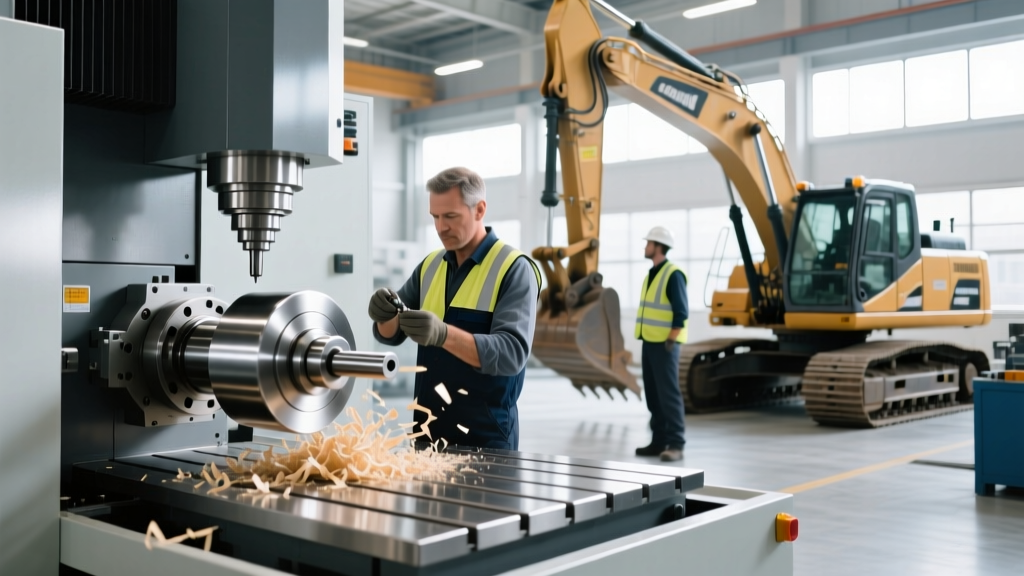
When evaluating career trajectories in the heavy machinery sector, the most common baseline question is: how much money does a heavy equipment operator make? While operating a 50-ton articulated dump truck or a GPS-guided dozer offers solid middle-class wages, the integration of AI, telematics, and autonomous systems has fundamentally altered the earning potential across the industry. For those looking past the cab, heavy equipment dealer sales—specifically tech-enabled dealer careers—have evolved from simple hardware transactions into high-margin, software-driven ecosystems.
2026 Compensation Snapshot
- Senior Machine Control Operator: $75,000 – $92,000 (Wage-capped by regional scales)
- Tech-Enabled Dealer Sales Representative: $130,000 – $260,000+ OTE (On-Target Earnings)
- Key Differentiator: Operators trade time for hourly wages; tech-sales reps leverage recurring software revenue and enterprise API integrations.
The Baseline: How Much Money Does a Heavy Equipment Operator Make?
To understand the dealer sales opportunity, we must first establish the operator baseline. According to the U.S. Bureau of Labor Statistics, the median pay for operating engineers and construction equipment operators hovers around $50,000 to $65,000 annually, with the top 10% pushing past $85,000.
However, raw BLS data often lags behind field realities. In 2026, an operator certified in 3D machine control (using systems like Topcon FC-60 or Trimble Earthworks) commands a premium. Contractors pay an additional $4 to $8 per hour for operators who can manipulate digital terrain models (DTMs) directly from the cab of a Cat D8 or Komatsu D65 dozer. Even with this tech premium, an operator's income is strictly bound by physical hours worked, union prevailing wage caps, and regional construction cycles. There is no equity, no recurring revenue, and a hard ceiling on annual earnings.
The Paradigm Shift: Heavy Equipment Dealer Sales as a Tech Career
The Associated Equipment Distributors (AED) has repeatedly highlighted that modern heavy equipment dealerships are transitioning into technology companies. Selling a $450,000 excavator is no longer just about hydraulics and breakout force; it is about selling an uptime ecosystem.
Heavy equipment sales representatives in 2026 must possess a hybrid skill set. They are expected to understand soil mechanics and cycle times, but they must also demonstrate how a machine’s native telematics (like Cat VisionLink or John Deere JDLink) integrates via API into a contractor’s enterprise resource planning (ERP) software or project management platforms like Procore and Autodesk Construction Cloud.
The Modern Dealer Tech Stack
A successful tech-sales career at a major dealer requires fluency in the following platforms:
- Fleet Telematics: Monitoring fuel burn, idle times, and predictive maintenance alerts.
- Machine Control Licensing: Selling and renewing annual software subscriptions for GNSS/RTK grade control.
- Autonomous Readiness: Advising quarry and mining clients on retrofitting semi-autonomous haulage systems.
- Digital Twin Integration: Bridging the gap between the physical machine's sensor data and the site's BIM (Building Information Modeling) environment.
Compensation Matrix: Operator vs. Tech-Sales Specialist
The financial divergence between running the iron and selling the tech ecosystem is stark. Below is a comparative breakdown of compensation structures in the current market.
| Compensation Metric | Machine Control Operator | Tech-Enabled Dealer Sales Rep |
|---|---|---|
| Base Salary / Hourly | $32 - $45 / hour | $65,000 - $85,000 / year |
| Commission / Bonus | None (Overtime only) | 3% - 8% of gross margin + Tech Spiffs |
| Recurring Revenue Cut | N/A | 10% - 15% of Year 1 SaaS/Telematics renewals |
| Average OTE (Year 3) | $82,000 | $185,000 - $240,000+ |
| Earning Ceiling | Hard cap (Union/Market rates) | Uncapped (Scaled by fleet size & software attach) |
The SaaS-ification of Heavy Iron: How Commissions Changed
The most significant innovation in dealer compensation is the introduction of Monthly Recurring Revenue (MRR) models into heavy iron sales. Historically, a sales rep made a one-time commission on the hardware sale. Today, the hardware margin on a highly competitive model like a 5-ton mini excavator might be razor-thin. The real profit—and the rep's commission—lies in the software attach rate.
"We don't just sell a wheel loader anymore; we sell a data-generating node on a construction network. Reps who can prove to a CFO that our telematics suite will reduce fleet idle time by 14% and integrate directly with their fuel-tax reporting software are the ones clearing $250,000 a year."
— Regional Sales Director, Midwest Heavy Equipment Dealership Group
Dealerships now offer "Tech Multipliers" on commission checks. If a rep sells a paver with the standard hardware package, they might earn a 4% commission on the margin. If they bundle a 3-year machine control subscription, thermal imaging mapping software, and a predictive maintenance API license, the dealership applies a 1.5x multiplier to the entire deal's commission payout. This incentivizes reps to act as technology consultants rather than order-takers.
Actionable Roadmap: Transitioning from the Cab to Tech Sales
For senior operators who understand the physical limitations of the machines and the frustrations of the job site, transitioning to dealer tech sales offers a massive competitive advantage. Contractors trust reps who have actually pushed dirt and graded pads. Here is the exact blueprint to make the pivot:
Step 1: Master the Software, Not Just the Joysticks
Stop viewing the in-cab monitor as just a backup camera and grade indicator. Learn how to export the as-built data from the machine to the site rover. Familiarize yourself with .DXF and .TTM file formats. Dealers hire operators who can troubleshoot a lost RTK correction signal on a job site, not just dig a trench.
Step 2: Acquire Industry Tech Certifications
Heavy equipment dealers look for verifiable tech competency. Before applying for a sales role, acquire certifications that bridge construction and IT:
- Procore Certified (Construction Project Management): Proves you understand how machine data flows into the general contractor's cloud environment.
- Trimble or Topcon Machine Control Training:Many dealers will pay for this post-hire, but having a foundational certificate from a community college or vendor program puts your resume at the top of the pile.
Step 3: Build a "Pain-Point" Portfolio
When interviewing with a dealer principal or sales manager, do not just talk about your operating hours. Present a documented case study from your current job site. Show how you used machine control to reduce surveyor stake-out time by 30%, or how you utilized telematics idle-reports to save the fleet manager $12,000 in annual diesel costs. This proves you already think like a tech-sales consultant.
Summary: The Verdict on Earning Potential
If your goal is a predictable, hourly wage with strong union benefits and localized work, operating remains a highly respectable and stable career. However, if you are asking how much money does a heavy equipment operator make because you are frustrated by the earning ceiling, the tech-driven dealer sales track is the logical evolution. By leveraging your dirt-level experience and layering on SaaS, telematics, and API integration knowledge, you transition from a depreciating labor asset to a high-margin technology consultant, easily doubling or tripling your lifetime earning potential.