Heavy Equipment Operator License Requirements vs Mechanic Certifications
Compare heavy equipment operator license requirements with mechanic certifications. Discover troubleshooting duties, salaries, and career paths.
First-Line vs. Deep-Dive: Defining the Troubleshooting Boundary
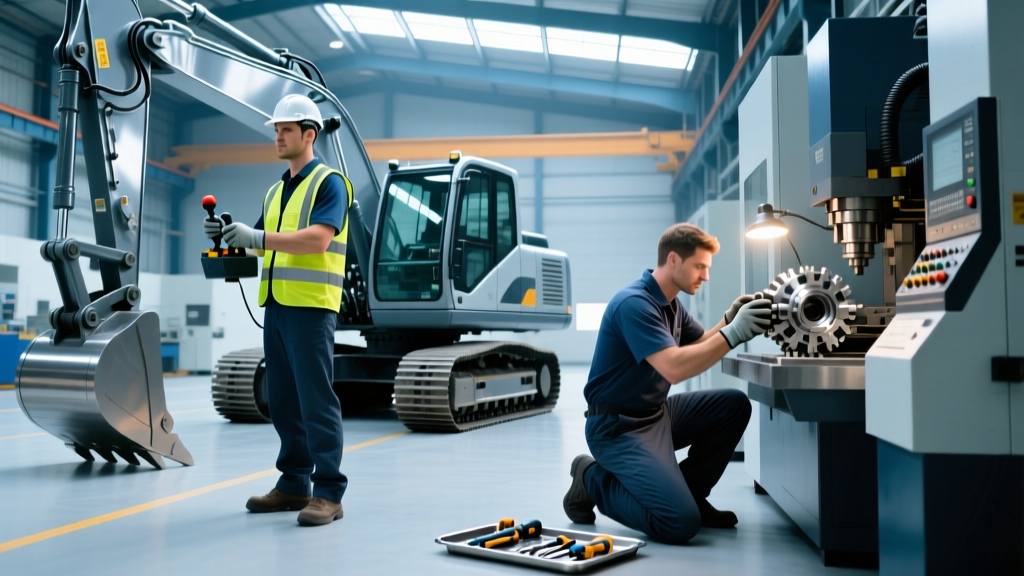
When a Tier 4 Final engine derates on a John Deere 944L wheel loader, the operator sees a flashing amber light on the digital dash. The mechanic sees a 30-page Electronic Control Module (ECM) log detailing exhaust gas temperature anomalies. In the modern heavy machinery sector, the line between operating and repairing has blurred, yet the legal and practical boundaries remain strictly defined by industry credentials. Understanding the difference between heavy equipment operator license requirements and heavy-duty mechanic certifications is critical for anyone navigating a career in equipment troubleshooting and repair.
This guide breaks down the day-to-day diagnostic realities of both roles, the specific tools they wield, and the exact credentials required to keep millions of dollars in iron running.
⚠️ Legal Liability Warning: Under OSHA and MSHA regulations, operators who attempt Tier-2 mechanical repairs without proper mechanic certifications risk severe corporate fines and personal liability. Operators are legally cleared for pre-shift inspections and basic fault clearing; structural, hydraulic, and high-voltage electrical repairs strictly require credentialed mechanics.Heavy Equipment Operator License Requirements for Maintenance Duties
Most aspiring operators focus entirely on the mechanics of moving dirt or lifting steel. However, modern heavy equipment operator license requirements increasingly mandate documented competency in first-line troubleshooting. While a Commercial Driver’s License (CDL) or National Commission for the Certification of Crane Operators (NCCCO) ticket proves you can move the machine safely, site-specific operator certifications now require mastery of preventative maintenance.
The Operator’s Diagnostic Scope (Tier-1 Troubleshooting)
- Emissions Management: Manually initiating stationary Diesel Particulate Filter (DPF) regenerations and monitoring Diesel Exhaust Fluid (DEF) dosing rates to prevent engine derates.
- Fluid & Thermal Checks: Using infrared thermometers to identify overheating hydraulic pump housings or failing planetary hub bearings before catastrophic seizure occurs.
- Telematics Triage: Reading basic fault codes via the cab monitor (e.g., Cat ET dashboard displays) and clearing ghost codes caused by transient sensor voltage drops.
- Undercarriage & Track Tension: Measuring track sag to exact OEM specifications (usually 1.5 to 2.5 inches) and adjusting grease valves to prevent premature idler wear.
The Mechanic’s Diagnostic Arsenal: Beyond the Cab
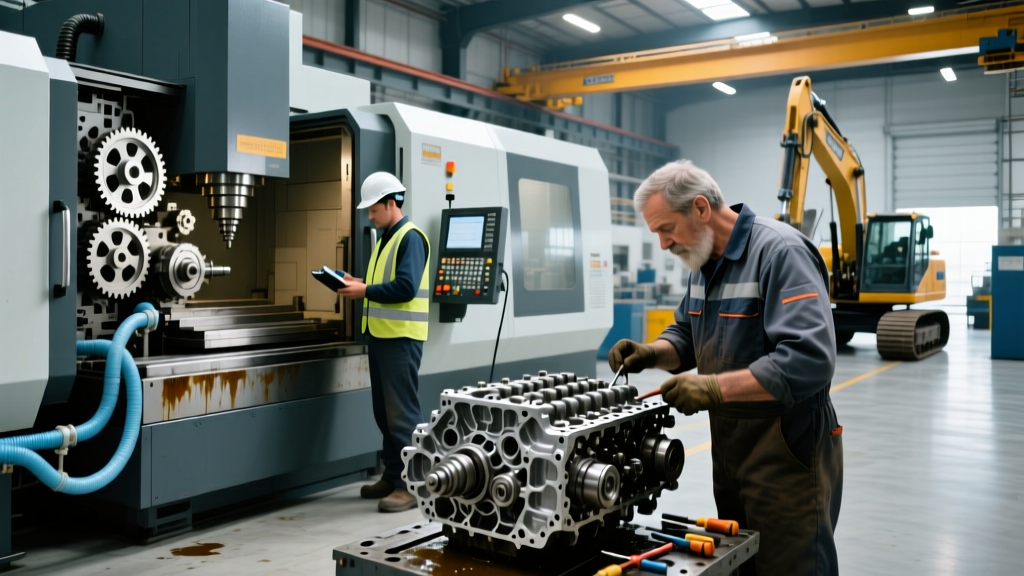
Heavy duty diesel mechanics operate in the realm of deep-dive diagnostics. When an operator’s Tier-1 troubleshooting fails to resolve a fault code, the machine goes to the shop. Mechanics do not just fix broken parts; they analyze failure modes to prevent recurrence. Their credentialing, governed by organizations like the National Institute for Automotive Service Excellence (ASE), requires rigorous testing in hydraulic schematics, electrical multiplexing, and powertrain teardowns.
The Mechanic’s Diagnostic Scope (Tier-2 & 3 Repair)
- ECM Flashing & Parameter Tuning: Laptops equipped with proprietary software (like John Deere Service Advisor or Volvo Tech Tool) to reflash engine maps and calibrate joystick hydraulic flow rates.
- Hydraulic Bench Testing: Using hydraulic flow meters and pressure transducers to test Rexroth or Kawasaki axial piston pumps, measuring case drain flow to determine internal bypass wear.
- Spectrometric Oil Analysis: Interpreting lab results for parts per million (PPM) of iron, copper, and silica to predict gear and bearing failures thousands of hours before they happen.
Common Failure Modes: Who Fixes What?
To understand the career divide, look at how each profession handles specific machine failures on a 50-ton excavator.
| Failure Mode | Operator Action (Tier-1) | Mechanic Action (Tier-2/3) |
|---|---|---|
| DPF Soot Accumulation | Initiates active regen via dash switch; monitors exhaust temp gauge. | Removes DPF canister for ultrasonic baking; replaces cracked dosing injectors. |
| Hydraulic Cylinder Drift | Measures drift rate over 15 minutes; reports exact drop to shop foreman. | Pulls cylinder, replaces polyurethane U-cups and rod seals, hones barrel scoring. |
| Swing Drive Gearbox Noise | Checks planetary hub oil level; listens for rhythmic clicking under load. | Takes oil sample; disassembles swing circle to inspect sun gear for spalling. |
| CAN Bus Communication Error | Performs hard battery reset; checks for pinched harnesses near cab hinge. | Uses oscilloscope to read CAN-High and CAN-Low voltage waveforms; solders broken nodes. |
Career Matrix: Credentials, Tools, and Compensation
The financial and physical realities of these two career paths diverge significantly. While operators endure whole-body vibration and environmental exposure, mechanics face chemical hazards, heavy lifting, and the mental fatigue of complex electrical diagnostics.
| Attribute | Heavy Equipment Operator | Heavy Duty Mechanic |
|---|---|---|
| Primary Certifications | CDL, NCCCO, MSHA Part 48, OSHA 30 | ASE Medium/Heavy Truck (T-Series), OEM Certs (Cat, Deere, Komatsu) |
| Primary Tools | Grease gun, IR thermometer, multimeter, telematics tablet | OEM diagnostic laptops, hydraulic flow meters, bore gauges, oscilloscopes |
| Training Timeframe | 3 to 12 months (Trade school + apprenticeship) | 18 to 36 months (Degree + OEM internship) |
| 2026 Avg Salary Range | $62,000 – $88,000 (Union scales push higher) | $68,000 – $105,000+ (Field techs with OEM certs earn top tier) |
| Physical Toll | Spinal compression, joint wear from cab vibration, UV exposure | Rotator cuff tears, chemical burns, hearing loss from impact wrenches |
The Crossover Advantage: Hybrid Skillsets in 2026
The most valuable professionals in the heavy equipment sector are those who bridge the gap between the cab and the shop. Operators who understand hydraulic schematics and electrical routing make better diagnosticians. When an operator can accurately describe a fault—stating that a hydraulic pump is 'cavitating under load and whining at 2,200 RPM' rather than just saying 'it sounds broken'—they save the mechanic hours of diagnostic time.
💡 Career Strategy: If you are an operator looking to increase your hourly rate, invest in a basic heavy-duty electrical diagnostics course. Understanding how to read a wiring schematic and use a digital multimeter to trace a blown fuse back to a chafed CAN bus wire will make you indispensable on remote job sites where a certified mechanic is hours away.Conversely, mechanics who spend time operating the machinery they repair develop a 'seat-of-the-pants' diagnostic feel. Feeling the exact moment a torque converter locks up or sensing a micro-stutter in a hydrostatic drive provides diagnostic data that no laptop software can capture. Whether you are pursuing diesel technician pathways or operator certifications, mastering the intersection of operation and repair is the ultimate career safeguard in an era of increasingly complex, computerized heavy iron.