Heavy Equipment Operator Schooling to Fleet Manager: Cost & ROI
Analyze the ROI of heavy equipment operator schooling for a fleet manager career. Discover certification costs, salary jumps, and TCO budget frameworks.
The Financial Leap: From the Cab to the Boardroom
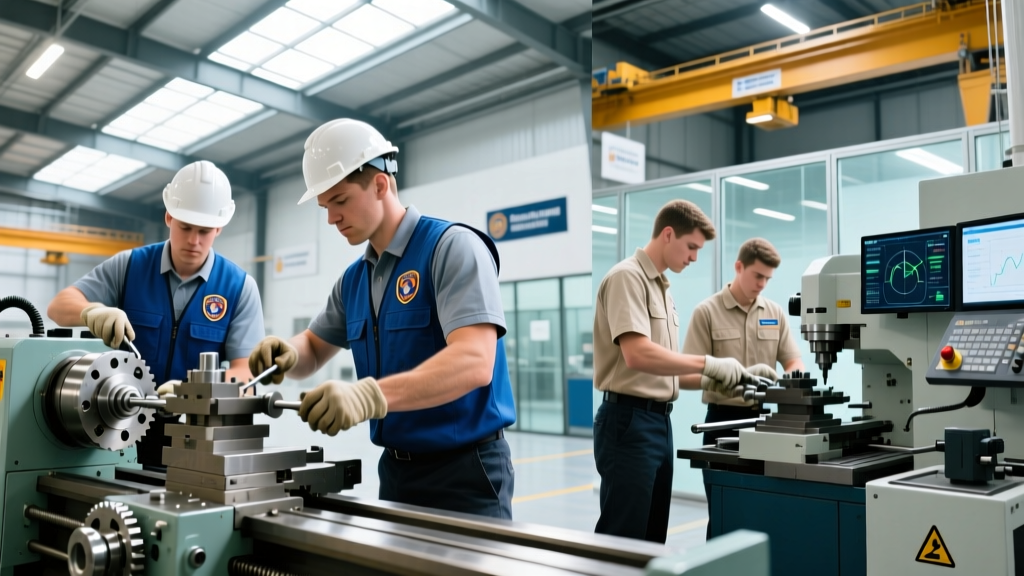
Transitioning from a heavy equipment operator to a fleet manager is one of the most lucrative career pivots in the construction and mining sectors. While operators focus on daily production and machine control, fleet managers are responsible for the financial lifecycle of millions of dollars in iron. The bridge between these two roles is built on a deep, mechanical understanding of the equipment—a foundation typically laid during heavy equipment operator schooling.
However, moving into fleet management requires a shift from hourly wages to salaried strategic planning, accompanied by a new set of educational and certification expenses. This guide breaks down the exact costs, budget planning strategies, and return on investment (ROI) required to navigate this career path in 2026.
Calculating the ROI of Heavy Equipment Operator Schooling
Many aspiring fleet managers question whether their initial heavy equipment operator schooling holds long-term value once they leave the cab. The financial return on this foundational education is massive when applied to fleet budgeting.
Quality operator schooling (whether through an NCCER-accredited trade school, a union apprenticeship, or a specialized heavy equipment college) typically costs between $6,000 and $15,000. This training teaches the physics of machine stress, hydraulic limitations, and ground engaging tool (GET) wear patterns.
The Vendor Negotiation Advantage
When a fleet manager without operator training receives a $22,000 quote for a premature undercarriage replacement on a CAT 320 excavator, they often approve it based on trust. A fleet manager who completed rigorous operator schooling and spent years in the dirt recognizes that the wear profile might indicate operator misuse (e.g., excessive reverse travel or track spinning) rather than end-of-life failure. By leveraging this foundational knowledge to audit vendor repair quotes and implement operator retraining, a competent fleet manager routinely saves their company $50,000 to $100,000 annually in avoided or deferred maintenance costs. The initial schooling pays for itself in the first month of management.
Budgeting for the Fleet Manager Career Path
To officially transition into a fleet management role, you must acquire credentials that prove your competency in asset lifecycle management, telematics, and financial forecasting. Below is a precise budget breakdown of the transition costs.
| Investment Category | Specific Credential / Tool | Estimated Cost | Time Commitment |
|---|---|---|---|
| Industry Certification | AEMP Certified Equipment Manager (CEM) | $1,200 - $1,800 | 120 hours study |
| Telematics Training | Caterpillar VisionLink / Trimble Fleet Advanced | $600 - $950 | 40 hours |
| Software Proficiency | HCSS HeavyJob / HeavyEquipment Management | $800 - $1,200 | 60 hours |
| Financial Acumen | Construction Accounting & TCO Certificate | $1,500 - $2,500 | 8 weeks (part-time) |
| Total Transition Budget | Comprehensive Fleet Management Prep | $4,100 - $6,450 | ~300 hours |
According to occupational data tracked by the Bureau of Labor Statistics, construction and equipment management roles require a blend of field experience and specialized technical knowledge. The $4,100 to $6,450 investment outlined above is typically recouped within the first 45 days of securing a fleet manager salary, assuming a conservative $40,000 annual pay increase over a senior operator role.
Mastering the TCO: Your First Fleet Budget Framework
The ultimate test of a new fleet manager is the creation of the Total Cost of Ownership (TCO) budget. If you are stepping into this role, you must immediately implement a structured budgeting framework to justify your position to the C-suite.
The 70/20/10 Maintenance Budget Rule
When allocating the annual maintenance and repair (M&R) budget for a mixed fleet (e.g., excavators, wheel loaders, and motor graders), structure your financial planning around this industry-standard ratio:
- 70% Preventative Maintenance (PM): Scheduled fluid sampling, filter changes, and planned undercarriage overhauls. This is predictable, scheduled downtime.
- 20% Predictive/Condition-Based: Budget allocated for repairs flagged by telematics and oil analysis before catastrophic failure (e.g., replacing a hydraulic pump showing elevated copper and iron particulates in spectrometric oil analysis).
- 10% Reactive/Emergency: Unplanned failures. If your reactive budget exceeds 15%, your PM intervals are misaligned with your operational severity.
"The most expensive component on a 20-ton excavator isn't the engine; it's the undercarriage, which can represent up to 50% of total maintenance costs over the machine's life. A fleet manager who doesn't track track-shoe wear rates against specific soil abrasiveness indices is essentially burning capital."
— Industry Standard Telematics Guideline
Calculating Hourly Operating Costs (The Real Metric)
To bid jobs accurately, operations managers rely on the fleet manager's hourly cost data. You must budget for the following variables per machine class:
- Capital Recovery: Depreciation, interest, insurance, and taxes.
- Operating Costs: Fuel, DEF (Diesel Exhaust Fluid), grease, and filters.
- Wear Items: GET (teeth, cutting edges), tracks/tires, and hydraulic hoses.
- Labor Burden: The cost of the mechanic's time to perform PMs, allocated to the specific machine's hourly rate.
For example, a 2025 model John Deere 850K Crawler Dozer operating in high-silica rock will require a GET and undercarriage budget allocation nearly 35% higher than the exact same machine working in soft clay. A fleet manager uses their historical operator knowledge to adjust these TCO budgets based on the specific job site geology.
Strategic Next Steps for the Transitioning Operator
If you are currently an operator looking to manage the fleet, begin by auditing your own machine's daily costs. Request access to your company's telematics portal (such as Komatsu CARE or Volvo ActiveCare) and study the fault codes and idle-time metrics.
Next, allocate a personal budget of $1,500 to enroll in an introductory equipment lifecycle management course. By combining the tactile, mechanical empathy gained from your heavy equipment operator schooling with hard financial data analysis, you position yourself not just as a mechanic who moved to a desk, but as a strategic asset manager capable of protecting millions in corporate capital.