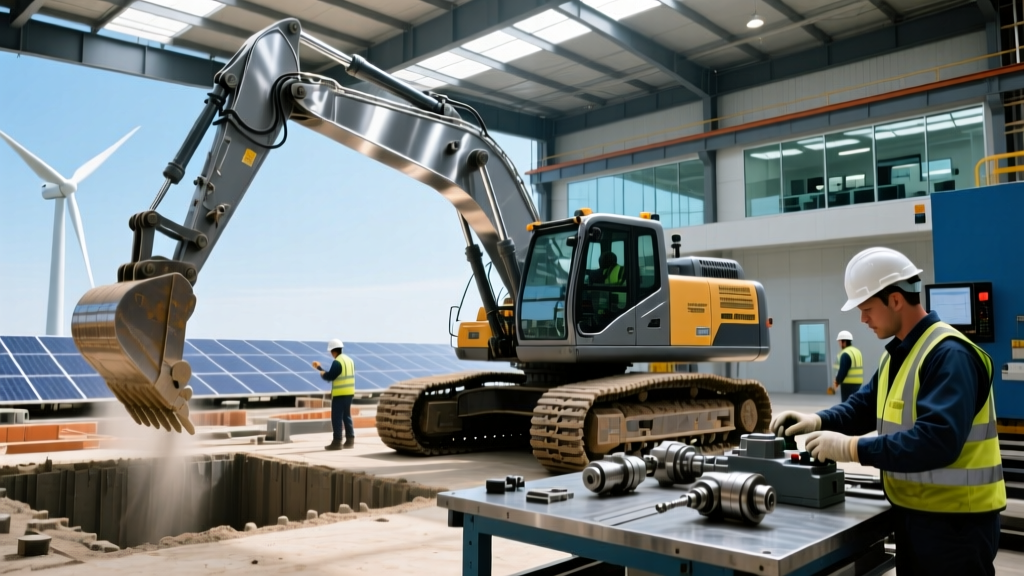
Designing a Heavy Equipment Apprenticeship: Instructor Case Studies
Explore how lead instructors design and scale heavy equipment apprenticeship programs using real-world union and corporate fleet case studies.
The Shift from Cab to Classroom: The Instructor's Role
For senior operators, transitioning into a heavy equipment instructor role represents a critical career pivot. It requires shifting focus from personal cycle-time efficiency to the systemic development of a heavy equipment apprenticeship program. Instructors and training coordinators are tasked with bridging the gap between theoretical safety protocols and the visceral reality of moving 40 tons of earth on a blind grade. In 2026, the most successful training programs do not rely on 'seat time' alone; they integrate high-fidelity simulation, telematics-based grading, and structured mentorship. Below, we examine two distinct case studies—one union-driven and one corporate—that demonstrate how lead instructors architect modern apprenticeship pipelines.
Case Study 1: The Union Joint Apprenticeship Committee (JAC) Model
The International Union of Operating Engineers (IUOE) and their associated contractor groups utilize Joint Apprenticeship Committees to standardize training across diverse job sites. A premier example is the approach taken by regional training centers that manage a 3-to-4-year, 4,000-hour apprenticeship track.
Lead instructors at these facilities face a unique challenge: standardizing skill acquisition when apprentices are dispatched to different contractors with varying machine fleets. To solve this, instructors have integrated standardized simulator curricula before an apprentice ever touches a physical joystick.
Simulator Integration and Standardized Metrics
Instructors utilize advanced systems like the Cat® Simulators (e.g., the 1460i Excavator or 950GC Wheel Loader models) paired with SimScholars™ curriculum. Instead of subjective evaluations, instructors pull objective data reports from the simulator. An apprentice cannot progress from Phase 1 (Basic Controls) to Phase 2 (Trenching and Shoring) until the simulator software registers a minimum 85% proficiency in safety protocols, such as proper track positioning and swing-radius awareness.
'The simulator removes the financial risk of a $400,000 machine and the safety risk of a novice operator. As an instructor, I can pause a simulation mid-cycle to explain hydraulic cavitation or load-sensing failure modes in real-time—something impossible to do safely on a live commercial site.'
— Mark T., Lead Simulator Instructor, Midwest Regional Training Center
The 'Sim-Seat-Soil' Training Framework
Top-tier instructors design their heavy equipment apprenticeship modules around this three-tier progression:
- Sim (Hours 1-50): Muscle memory, control patterns (ISO/SAE), and dashboard warning light recognition in a zero-risk virtual environment.
- Seat (Hours 51-200): Closed-yard operations. Moving dirt in a controlled stockpile environment. Instructors focus on machine preservation, track/undercarriage wear awareness, and daily maintenance routines.
- Soil (Hours 201+): Live job site deployment. Focus shifts to production metrics, grade control integration (e.g., Trimble Earthworks), and spatial awareness around ground personnel.
Case Study 2: Corporate Fleet Telematics-Driven Onboarding
Unlike union models that span years, large corporate earthmoving and waste management fleets often require accelerated, highly specific onboarding. A major national civil contractor recently overhauled its internal heavy equipment apprenticeship to address a severe shortage of qualified dozer and motor grader operators.
Their Lead Training Coordinator shifted the evaluation paradigm from instructor observation to telematics data analysis. By utilizing platforms like Cat® VisionLink® and Trimble Pulse, instructors now grade apprentices based on empirical machine data rather than subjective field notes.
Data-Driven Instructor Evaluations
In this corporate case study, instructors monitor specific KPIs during an apprentice's first 500 hours. If an apprentice's telematics data shows excessive idle time (over 15% of shift) or high fuel burn relative to cubic yards moved, the instructor intervenes with targeted coaching on throttle management and blade load optimization. This approach allows one lead instructor to effectively monitor and mentor up to 25 apprentices simultaneously across multiple job sites, a ratio that was impossible with traditional 'ride-along' evaluations.
| Phase | Hour Range | Primary Machine Focus | Instructor Evaluation Metric |
|---|---|---|---|
| Foundation | 0 - 250 | Skid Steers, Compact Track Loaders | Simulator safety scores; daily walk-around inspection pass rates. |
| Intermediate | 251 - 750 | Wheel Loaders, Articulated Trucks | Telematics: Load weight consistency, cycle times, idle percentage. |
| Advanced | 751 - 1500 | Dozers, Motor Graders, Excavators | GPS Grade Control accuracy (tolerance within ±0.05 ft); trench safety. |
| Journeyman | 1500+ | Multi-machine fleet management | Overall fleet efficiency, mentorship of Phase 1 apprentices, zero OSHA recordables. |
Common Failure Modes in Apprenticeship Design
When transitioning from operator to instructor, many new trainers make critical errors in program design. Understanding these failure modes is essential for building a robust heavy equipment apprenticeship:
- The 'Sink or Swim' Fallacy: Placing apprentices on live production sites too early to meet project deadlines. This results in high undercarriage wear, hydraulic shock damage, and severe safety liabilities.
- Ignoring Control Pattern Fluidity: Failing to teach operators how to switch between ISO and SAE control patterns. Instructors must ensure apprentices are ambidextrous in control logic, as they will encounter different machine brands and legacy setups throughout their careers.
- Neglecting Maintenance Integration: Treating operation and maintenance as separate disciplines. Modern instructors mandate that apprentices perform fluid sampling, grease distribution analysis, and track tensioning as part of their daily operational grading.
Career Roadmap: Becoming a Heavy Equipment Training Coordinator
For operators looking to formalize their transition into instruction, obtaining the right pedagogical and safety credentials is non-negotiable. The industry has moved past the era where '20 years in the seat' is the only required qualification. According to the Bureau of Labor Statistics, career and technical education roles require a blend of field expertise and formal instructional certification.
Required Certifications & Salary Expectations
To design and lead a recognized apprenticeship program, instructors should pursue the following credentials:
- NCCER Craft Instructor Certification: The National Center for Construction Education and Research (NCCER) provides the gold standard for curriculum delivery, teaching instructors how to manage training modules, document apprentice progress, and conduct standardized performance tests.
- OSHA 500 (Trainer Course for Construction): Offered through the OSHA Outreach Training Program, this certification allows instructors to teach OSHA 10-hour and 30-hour courses, a mandatory component of most heavy equipment apprenticeships.
- Manufacturer-Specific Train-the-Trainer: Certifications from Cat, John Deere, or Komatsu focusing on advanced machine systems, Tier 4 Final/Stage V emissions aftertreatment, and proprietary diagnostic software.
2026 Compensation Data:
Heavy Equipment Instructors at regional trade schools or union centers typically earn between $75,000 and $95,000 annually. However, Lead Training Coordinators or Fleet Training Managers for large corporate civil contractors command salaries ranging from $115,000 to $145,000, often including vehicle allowances, performance bonuses tied to fleet damage-reduction metrics, and comprehensive benefits.
Actionable Next Steps for Aspiring Instructors
If you are a senior operator aiming to build or lead a heavy equipment apprenticeship, begin by documenting your own operational processes. Create standard operating procedures (SOPs) for complex tasks like trench box placement or steep-slope dozing. Pitch a formalized 'Lunch and Learn' safety and technique series to your current fleet manager. Demonstrating the ability to break down complex, intuitive physical skills into teachable, repeatable data points is the ultimate proof of concept for your transition from the cab to the classroom.