Average Wage for Heavy Equipment Operator vs Mechanic: Tech Trends
Compare the average wage for heavy equipment operator and mechanic careers. Discover how 2026 tech trends like telematics and AI impact earning potential.
2026 Earning Snapshot: Tech-Integrated Roles
- Standard Operator Base: $54,000 – $68,000
- Tech-Certified Operator (Machine Control/Drone): $82,000 – $98,000+
- Standard Mechanic Base: $58,000 – $74,000
- Master Diagnostics Tech (Telematics/AI): $95,000 – $125,000+
The heavy machinery sector is undergoing a rapid digital transformation. GPS machine control, remote-operated fleets, and AI-driven predictive maintenance are fundamentally redefining job site roles. For professionals weighing their career options, understanding how these innovations impact the average wage for heavy equipment operator roles versus heavy equipment mechanic careers is critical. The days of relying solely on physical endurance and mechanical intuition are fading; today, digital literacy dictates your earning ceiling.
The Operator's Evolution: From Joysticks to Tablets
Modern heavy equipment operators are transitioning from pure machine drivers to on-site data managers. The integration of 3D machine control systems, such as Trimble Earthworks and Topcon MC-X1, allows operators to execute grading and excavation tasks with sub-inch accuracy directly from digital BIM (Building Information Modeling) files. This eliminates the need for traditional survey stakes and drastically reduces material overuse.
Furthermore, the rise of semi-autonomous and remote-controlled platforms, like Cat Command for dozing and mining trucks, means operators are increasingly stationed in climate-controlled command centers rather than the cab. This shift reduces physical fatigue and extends career longevity. However, it also raises the technical barrier to entry. Operators who master drone topography (using tools like the DJI Matrice 350 RTK) and can interpret point-cloud data to adjust machine control models on the fly command a massive premium over their peers. This specialized skill set is the primary driver pushing the top-tier average wage for heavy equipment operator well past the $90,000 mark in major infrastructure markets.
The Mechanic's Shift: Wrenches to Diagnostics Laptops
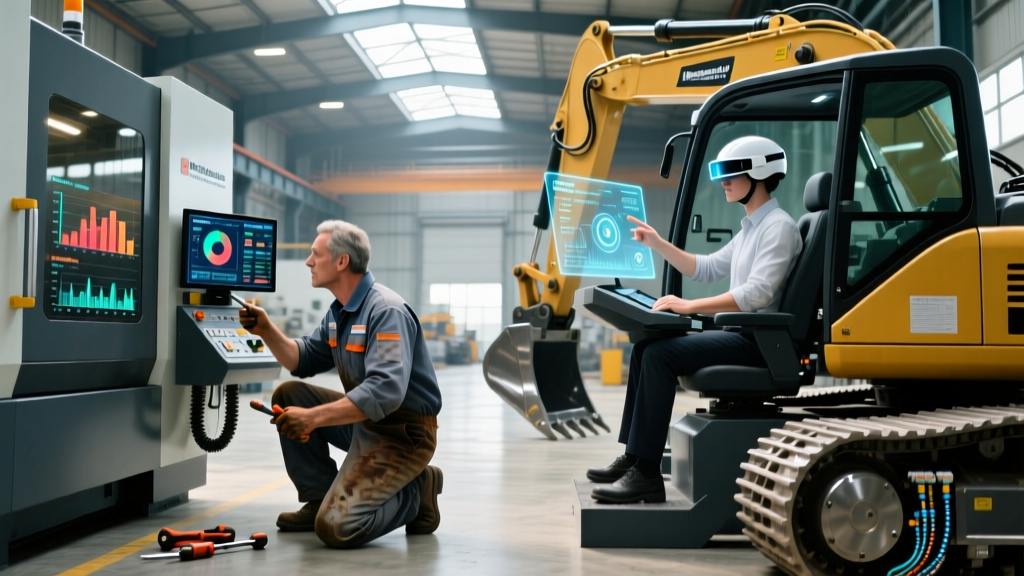
While operators manage the machine's output, mechanics manage its uptime. The modern heavy equipment technician spends as much time analyzing CAN bus data streams as they do turning wrenches. OEM telematics platforms like John Deere JDLink and Cat Product Link stream real-time engine, hydraulic, and transmission data to cloud-based dashboards.
In 2026, the most valuable mechanics are those who specialize in predictive maintenance. Instead of waiting for a hydraulic pump to fail, advanced AI algorithms flag microscopic anomalies in pressure curves, allowing technicians to schedule replacements during planned downtime. Additionally, field mechanics are increasingly utilizing Augmented Reality (AR) headsets, such as the RealWear Navigator 500, to collaborate live with OEM engineers thousands of miles away. This ability to diagnose complex Tier 4 Final and Tier 5 emissions systems remotely makes the master diagnostics technician one of the most highly compensated and fiercely recruited roles in the heavy equipment industry.
Role Comparison Matrix: Operator vs. Mechanic
| Metric | Heavy Equipment Operator | Heavy Equipment Mechanic |
|---|---|---|
| Primary Tech Stack | Machine control, drones, BIM software, remote consoles | Telematics dashboards, AR headsets, multimeters, OEM diagnostic laptops |
| Physical Strain | Low to Moderate (vibration, cab ergonomics) | High (heavy lifting, confined spaces, environmental exposure) |
| Barrier to Entry | Moderate (CDL, NCCCO, apprenticeship) | High (Diesel tech degree, OEM certifications, ASE) |
| Wage Trajectory | Steady; spikes with tech/machine control certs | Exponential; master techs with electrical/diagnostics skills earn top dollar |
| Automation Risk | Moderate (remote/autonomous fleets require fewer on-site operators) | Very Low (complex physical repairs and nuanced diagnostics require human intervention) |
Breaking Down the Numbers: Wage Trajectories & Premiums
When analyzing the average wage for heavy equipment operator positions, the baseline median sits at approximately $54,000 to $62,000 annually, according to the U.S. Bureau of Labor Statistics. However, this figure is heavily skewed by entry-level and non-union roles. Operators who secure positions with heavy civil contractors utilizing GPS-guided fleets routinely see compensation packages ranging from $85,000 to over $100,000 when factoring in overtime and per diems.
Conversely, the heavy equipment mechanic faces a severe industry-wide talent shortage. The BLS reports a median pay of around $58,000 to $68,000 for general mobile equipment technicians. But the real financial divergence happens at the master technician level. A field mechanic certified in high-voltage hybrid drive systems (like those in modern electric excavators) and advanced telematics can easily command $110,000 to $135,000 annually. Dealerships and mining operations are currently offering massive sign-on bonuses and tool allowances exceeding $15,000 just to attract mid-level technicians with basic electrical diagnostic skills.
"The wage gap between a standard operator and a tech-enabled mechanic is widening. An operator maximizes their wage by mastering the software that guides the blade; a mechanic maximizes their wage by mastering the code that keeps the engine running."
Decision Framework: Which Path Fits Your Profile?
Choose the Operator Path IF:
- You prefer spatial reasoning, 3D visualization, and real-time execution.
- You want a career with lower physical degradation over a 30-year span.
- You are interested in cross-training into surveying, drone mapping, or site management.
Choose the Mechanic Path IF:
- You possess a strong aptitude for electrical systems, fluid dynamics, and logical troubleshooting.
- You prefer problem-solving in a shop or field environment over repetitive production tasks.
- You want maximum job security; a broken $800,000 excavator will always require a human to fix it, regardless of AI advancements.
Future-Proofing: Certifications That Actually Move the Needle
Generic experience is no longer enough to break into the top earning percentiles. To push your compensation past the industry median, targeted, technology-focused certifications are mandatory.
For Operators
- NCCCO (National Commission for the Certification of Crane Operators): Essential for heavy lift operators. According to the NCCCO, certified crane operators consistently out-earn non-certified peers by 20-30%.
- OEM Machine Control Certifications: Completing specialized training through Trimble or Topcon to become a certified machine control site supervisor.
- FAA Part 107 Drone License: Allows operators to legally capture site topography data and generate the 3D models they will later use in the cab.
For Mechanics
- OEM Master Technician Status: Achieving top-tier certification from Caterpillar, John Deere, or Komatsu, specifically focusing on electrical and hydraulic schematics.
- ASE Medium/Heavy Truck & Equipment Certifications: Specifically the T-series (Medium/Heavy Truck) and E-series (Electronic Diesel Engine Diagnosis).
- AEMP (Association of Equipment Management Professionals) Credentials: For mechanics looking to transition into fleet management and telematics data analysis.
The heavy equipment industry is no longer just about moving dirt and turning bolts. It is a highly technical ecosystem where digital fluency directly correlates with financial reward. Whether you choose to command the machine from a tablet or diagnose its nervous system via a laptop, aligning your skills with 2026's technological realities is the only way to secure top-tier compensation.