Fitness Gear to Buy Before a Course for Heavy Equipment Operator
Discover the exact physical fitness requirements and the best training equipment to buy before enrolling in a course for heavy equipment operator.
Operating a 50-ton articulated dump truck or a 36-ton hydraulic excavator demands far more than just technical knowledge; it requires elite physical resilience. When preparing for a course for heavy equipment operator, most candidates focus entirely on stick time, hydraulics, and certifications. However, the physical toll of whole-body vibration (WBV), sustained isometric muscle contractions, and cognitive fatigue dictates that equipment selection—both the machinery you choose to operate and the fitness gear you buy to prepare your body—must be highly strategic.
Before you invest thousands of dollars into operator training, you must evaluate your physical baseline and purchase the correct ergonomic support gear and fitness equipment. This guide bridges the gap between human biomechanics and heavy machinery selection, ensuring you are physically equipped to handle the demands of the job site.
The Biomechanical Reality of Heavy Equipment Operation
Heavy equipment operation is an athletic endeavor disguised as a sedentary job. According to research on occupational ergonomics, operators are subjected to complex physical stressors that lead to high rates of musculoskeletal disorders (MSDs). The National Institute for Occupational Safety and Health (NIOSH) identifies Whole-Body Vibration (WBV) as a primary catalyst for spinal compression and lower back degeneration in earthmoving professionals.
Warning: WBV and Spinal CompressionOperating older machinery without active suspension seats can expose the lumbar spine to vertical vibration doses exceeding the ISO 2631-1 health guidance caution zone (0.45 m/s²). Over a 10-hour shift, this micro-trauma compounds, leading to early-onset disc herniation if the operator lacks the core stabilization strength to absorb the kinetic energy.
Beyond vibration, operators face severe isometric loading. Holding a joystick in a suspended position while tracking a trench line requires sustained contraction of the forearm flexors, trapezius, and cervical stabilizers. If you lack the specific muscular endurance for these tasks, fatigue sets in within hours, drastically increasing the risk of a catastrophic site accident.
Selecting Heavy Machinery Based on Operator Physical Profiles
Not all heavy equipment demands the same physical profile. When planning your career path post-certification, you must select the machinery that aligns with your physical strengths and mitigates your biomechanical weaknesses. Use the matrix below to guide your equipment selection and identify the specific ergonomic features you must look for when buying or renting a machine.
| Machine Type | Primary Physical Demand | Required Ergonomic Features to Look For | Best Suited For Operators With... |
|---|---|---|---|
| Hydraulic Excavator | High cervical rotation; sustained shoulder flexion; fine motor wrist control. | 360-degree camera systems (e.g., Cat Detect); pilot-operated low-effort joysticks; heated/cooled air-suspension seats. | Strong core and grip endurance; limited lower back flexibility. |
| Crawler Dozer | High forward neck flexion; severe WBV; heavy foot pedal actuation. | Active-damping suspension seats (e.g., Grammer MSG95G/731 NTS); angled rear-view mirrors; automated blade assist. | High lower-back pain tolerance; strong leg and calf musculature. |
| Motor Grader | Static posture; extreme visual strain; micro-adjustments in the wrists. | Multi-axis adjustable armrests; low-glare glass; ergonomic steering levers replacing traditional wheels. | Elite visual acuity; high forearm endurance; low shoulder strain. |
| Articulated Hauler | Full-body jolting; climbing ingress/egress; sustained attention. | ROPS/FOPS certified cabs with acoustic dampening; 3-point harnesses; automated retarders. | High cardiovascular stamina; excellent joint mobility for cab entry. |
The Pre-Course Fitness Equipment Buying Guide
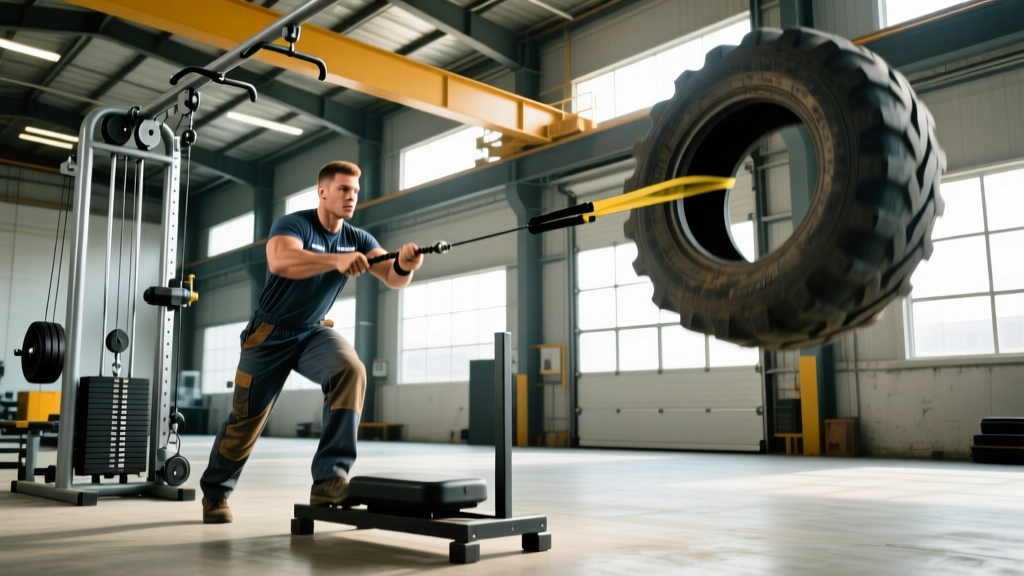
To survive and excel in a rigorous course for heavy equipment operator, you must train your body for the specific loads it will encounter. Standard bodybuilding routines will not prepare you for the isometric and stabilizing demands of the cab. Here is the specialized fitness equipment you should buy to build an operator-specific home gym.
1. Grip and Forearm Endurance Gear
Mechanical lever machines require immense grip strength, while modern pilot-operated joysticks require high repetitive endurance.
- Jamar Hydraulic Hand Dynamometer ($250 - $300): The gold standard for measuring grip strength. Your target benchmark should be >110 lbs of force for older mechanical machines, and >70 lbs for modern joystick setups.
- Captains of Crush Grippers ($25 each): Buy the No. 2 (195 lbs) and No. 3 (280 lbs) models. Focus on high-repetition, low-rest intervals to build the slow-twitch muscle fibers required for 10-hour shifts.
- Rogue Fitness Farmer's Handles ($150): Use these for heavy farmer's carries to build trap endurance and grip stamina simultaneously, mimicking the sustained tension of holding heavy control levers.
2. Core Stabilization and WBV Mitigation Tools
Your core acts as the secondary suspension system for your spine when the machine's mechanical suspension bottoms out.
- Power Plate or Vibration Training Platform ($1,500 - $3,000): While expensive, training on a vibration plate forces your deep spinal stabilizers (multifidus and transversus abdominis) to fire rapidly. This conditions your nervous system to handle the chaotic frequencies of WBV on a dozer or scraper.
- Rogue Fitness GHD (Glute Ham Developer) ($600): Essential for building the posterior chain. Strong glutes and hamstrings anchor the pelvis, preventing the anterior pelvic tilt that exacerbates lower back pain during long hours in the seat.
3. Biometric and CNS Fatigue Trackers
Cognitive fatigue leads to reaction-time delays, which cause accidents. Monitoring your Central Nervous System (CNS) recovery is critical during intense training courses.
- Garmin Fenix 7 Pro or WHOOP 4.0 ($400 - $700): Use these to track Heart Rate Variability (HRV) and sleep architecture. If your HRV drops significantly during your operator course, it indicates CNS overload, signaling that you need to prioritize sleep and hydration over extra practice hours.
Ergonomic PPE and Support Wearables to Purchase
The Occupational Safety and Health Administration (OSHA) heavily emphasizes the hierarchy of controls for ergonomics, but personal protective equipment (PPE) remains a vital last line of defense. Do not rely on the generic gear provided by training centers; invest in your own high-tier ergonomic wearables.
Pro-Tip: Footwear and Pedal FatigueOperating the right-foot travel and brake pedals on a loaded scraper requires hundreds of micro-actuations a day. Standard work boots often lack the arch support needed to prevent plantar fasciitis under these repetitive loads.
Buy These Specific Ergonomic Upgrades:
- Superfeet Carbon or Powerstep Pinnacle Insoles ($50 - $60): Drop these into your Red Wing or Timberland PRO work boots. The rigid carbon fiber or high-density EVA foam prevents arch collapse during heavy pedal actuation, reducing kinetic shock traveling up to the knees and lower back.
- Ergodyne ProFlex 7100 Back Support ($40 - $60): While you should not rely on a brace 100% of the time, wearing a suspended-suspension back brace during high-vibration tasks (like ripping rock with a dozer) provides tactile feedback to maintain neutral spine posture and limits extreme flexion.
- UVEX Genesis XC Safety Glasses with Ratchet Hinge ($25): Neck strain is often caused by operators tilting their heads back to keep safety glasses from sliding down their nose while looking up at the boom. A ratchet-hinge frame ensures a locked fit, allowing you to move your eyes, not your cervical spine.
Physical Fitness Benchmarks to Pass Your Operator Course
Before enrolling, ensure you can meet or exceed the physical benchmarks typically required by heavy civil contractors and DOT-affiliated training programs. Use this checklist to assess your readiness:
- Visual Acuity: 20/20 corrected vision, with a minimum of 140 degrees of peripheral vision. Depth perception is non-negotiable for trenching and grading.
- Choice Reaction Time (CRT): Under 400 milliseconds. (You can test this via digital reaction-time apps; it measures how fast your brain processes a visual stimulus and sends a motor command to your foot or hand).
- Grip Endurance: Ability to maintain a 50 lb grip force on a dynamometer for 60 continuous seconds without a drop of more than 10% in force output.
- Cervical Mobility: Ability to rotate the neck 80 degrees left and right without torso compensation, crucial for checking blind spots in articulated haulers and scrapers.
- Ingress/Egress Agility: Ability to climb a 3-point ladder system to a 10-foot cab height while maintaining three points of contact, carrying a 20 lb tool bag, without excessive cardiovascular spike (Heart rate remaining under 130 BPM).
By strategically selecting the right fitness equipment to build your biomechanical armor, and understanding the ergonomic profiles of the machines you intend to operate, you transform your body from a liability into an asset. A course for heavy equipment operator will teach you how to move the dirt; your physical preparation dictates how long your body will survive the effort.