CDL Transport Compliance in Heavy Equipment Mechanic Schooling
Discover why heavy equipment mechanic schooling must include CDL transport compliance, FMCSA tie-down math, and CVSA safety standards for field techs.
The Liability Blind Spot in Trade Curricula
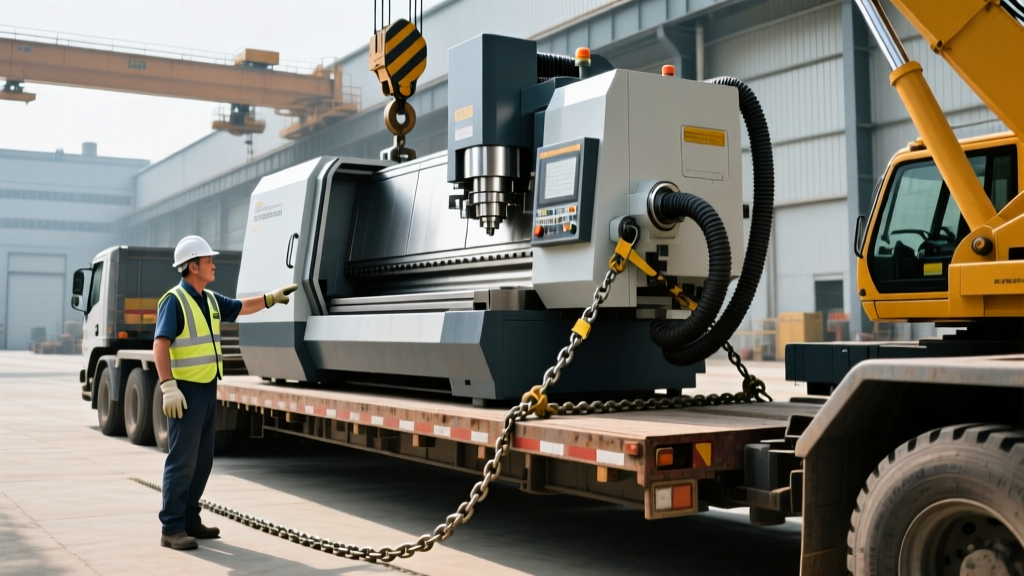
A field mechanic who can flawlessly rebuild a Cummins QSL9 engine but cannot legally secure a 45,000-pound excavator to a lowboy trailer is a massive liability. Across the industry, heavy equipment mechanic schooling programs heavily index on hydraulics, electrical diagnostics, and powertrain repair. However, they frequently ignore the Department of Transportation (DOT) and Federal Motor Carrier Safety Administration (FMCSA) regulations governing the transport of the very machines these technicians are hired to fix.
When mobile service techs or delivery mechanics transport repaired equipment, they cross the threshold from repair technicians to commercial motor vehicle (CMV) operators. Failing to integrate Commercial Driver’s License (CDL) requirements and cargo securement standards into trade school curricula leaves graduates vulnerable to severe fines, out-of-service (OOS) orders, and catastrophic highway accidents.
CDL Thresholds: When a Mechanic Becomes a Commercial Driver
The most common compliance failure occurs when mechanics assume their employer’s service truck does not require a CDL. Licensing is dictated by the Gross Combination Weight Rating (GCWR) and the Gross Vehicle Weight Rating (GVWR), not the physical size of the truck. If a mechanic is dispatched to move a repaired skid steer on a trailer, the combined weight of the truck, trailer, cargo, and fuel dictates their legal requirement to hold a CDL.
| License Class | Weight Thresholds (FMCSA) | Common Mechanic Scenario |
|---|---|---|
| Class A CDL | GCWR of 26,001+ lbs, provided the towed unit exceeds 10,000 lbs. | F-350 dually or Kenworth T880 towing a 35,000-lb equipment trailer carrying a CAT 320 Excavator. |
| Class B CDL | GVWR of 26,001+ lbs, towed unit is under 10,000 lbs. | Single-axle heavy wrecker or a fully loaded 30,000-lb mobile lube/service truck. |
| Non-CDL (Class D) | GCWR under 26,000 lbs. | Pickup truck towing a lightweight trailer with a mini-excavator or skid steer. |
⚠️ The Air Brake Endorsement Trap
Many mechanics hold a Class B CDL but fail to remove the 'L' restriction (Air Brakes). If a trade school does not explicitly train students on air brake systems and pre-trip inspection protocols, graduates will be legally barred from driving the heavy-duty service trucks equipped with air brakes that dominate modern fleet inventories.
FMCSA Part 393: The Math of Cargo Securement
Under 49 CFR Part 393, heavy equipment securement is not based on guesswork; it is strict mathematics. The FMCSA mandates that the Aggregate Working Load Limit (AWLL) of all tie-downs must be at least 50% of the equipment's total weight. Furthermore, any single piece of equipment weighing over 10,000 pounds requires a minimum of four tie-downs.
🧮 Real-World Securement Calculation
Equipment: John Deere 210G LC Excavator (Operating weight: ~48,000 lbs)
- Minimum AWLL Required: 24,000 lbs (50% of 48,000 lbs)
- Minimum Tie-Downs Required: 4 (due to weight > 10,000 lbs)
- Hardware Selected: 3/8-inch Grade 70 Transport Chain
- Chain WLL: 6,600 lbs per chain
- Calculation: 4 chains × 6,600 lbs = 26,400 lbs AWLL.
Result: Compliant. The 26,400 lbs AWLL exceeds the 24,000 lbs minimum, and the 4-chain count satisfies the physical tie-down minimum.
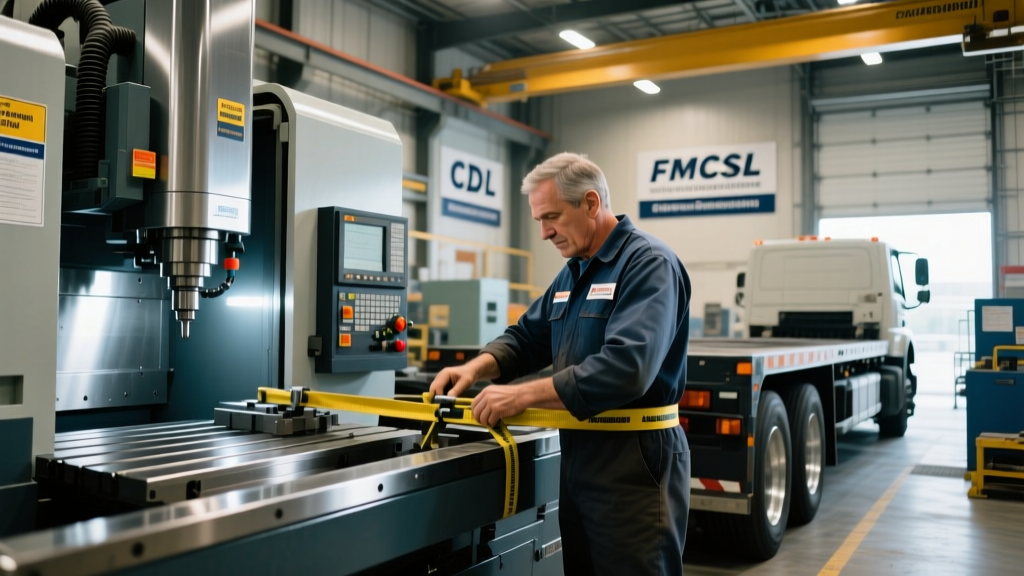
Trade schools must teach students how to read the WLL tags on synthetic straps and the stamped markings on chain links. A mechanic who uses a 20,000-lb rated ratchet strap that has been degraded by UV exposure or chemical burns is operating illegally, regardless of the strap's original rating.
Hardware Failure Modes Inspectors Look For
During CVSA North American Standard Inspections, DOT officers do not just count the chains; they inspect the metallurgical and structural integrity of the securement hardware. Mechanic schooling must cover the following failure modes:
- Chain Elongation (Stretch): Grade 70 chains subjected to repeated shock loads elongate. If a chain link shows visible necking or exceeds a 5% stretch in length, it must be destroyed and discarded. Inspectors carry calipers to measure link wear.
- Lever Binder Fatigue: Lever binders store immense kinetic energy. If the handle is bent, or the pivot points show micro-fractures, the binder can snap under tension, causing fatal whiplash injuries. Schools should train mechanics to prefer ratchet binders for heavy, high-center-of-gravity loads.
- Synthetic Strap Edge Protection: Heavy equipment tracks and steel buckets feature sharp edges. FMCSA regulations require edge protectors for synthetic webbing. A strap routed directly over a steel excavator bucket tooth will fail under highway vibration and is an automatic OOS violation.
Integrating Transport Compliance into Mechanic Schooling
To close the gap between workshop repair and highway transport, heavy equipment mechanic schooling programs should adopt a dedicated 40-hour DOT Compliance Module. This module must move beyond textbook theory and require physical, hands-on assessments.
- Pre-Trip Inspection Drills: Students must perform a full Class A or B pre-trip inspection on a loaded lowboy, identifying intentionally placed defects (e.g., missing cotter pins on chain hooks, cracked binder handles, expired DOT medical cards).
- Weight Distribution Practicums: Using scale pads, students must load asymmetrical machinery (like asphalt pavers or cranes) and calculate axle weight distribution to ensure they do not exceed the 34,000-lb tandem axle limit.
- Permitting and Routing Basics: While dispatchers usually pull permits, mechanics must understand standard legal dimensions (8.5 feet wide, 13.5 feet high). Training should cover how to measure equipment with attachments to determine if an oversize permit and escort vehicle are required.
Heavy Equipment Transport FAQ
Do I need a CDL to test-drive repaired equipment on public roads?
If the equipment itself (e.g., an articulated dump truck or a wheel loader) meets the GVWR threshold of 26,001 pounds or more and is operated on a public roadway, a CDL is legally required, even for a short test drive. Operating heavy machinery on private property or closed job sites generally exempts the operator from CDL requirements, but the moment the tires touch a public right-of-way, FMCSA jurisdiction applies.
What happens if my securement fails a DOT inspection?
Under CVSA guidelines, a single defective tie-down on a heavy equipment load can result in an Out-of-Service (OOS) order. This means the truck cannot move until the hardware is replaced. Fines typically range from $300 to over $1,000 per violation. More importantly, the violation is logged against the fleet’s Compliance, Safety, Accountability (CSA) score, which can increase insurance premiums and trigger federal audits.
Can I use recovery straps to tie down equipment?
No. Recovery straps (snatch straps) are designed to stretch and absorb kinetic energy during vehicle recovery. They lack the static Working Load Limit ratings required by FMCSA Part 393 for cargo securement and do not feature the necessary identification tags. Using a recovery strap as a tie-down is an immediate safety violation and an OOS offense.