Safety Compliance for Heavy Equipment Operator Schools in California
Explore instructor careers at heavy equipment operator schools in California. Learn Cal/OSHA safety compliance, certification requirements, and salary data.
The Regulatory Core: Transitioning from Operator to Compliance Instructor
Transitioning from a heavy equipment operator to an instructor at heavy equipment operator schools in California requires a fundamental shift in mindset. You are no longer solely responsible for your own safety; you are legally and financially accountable for the safety of every student in your training yard. California maintains the most stringent occupational safety framework in the United States, governed by the Division of Occupational Safety and Health (DOSH), commonly known as Cal/OSHA.
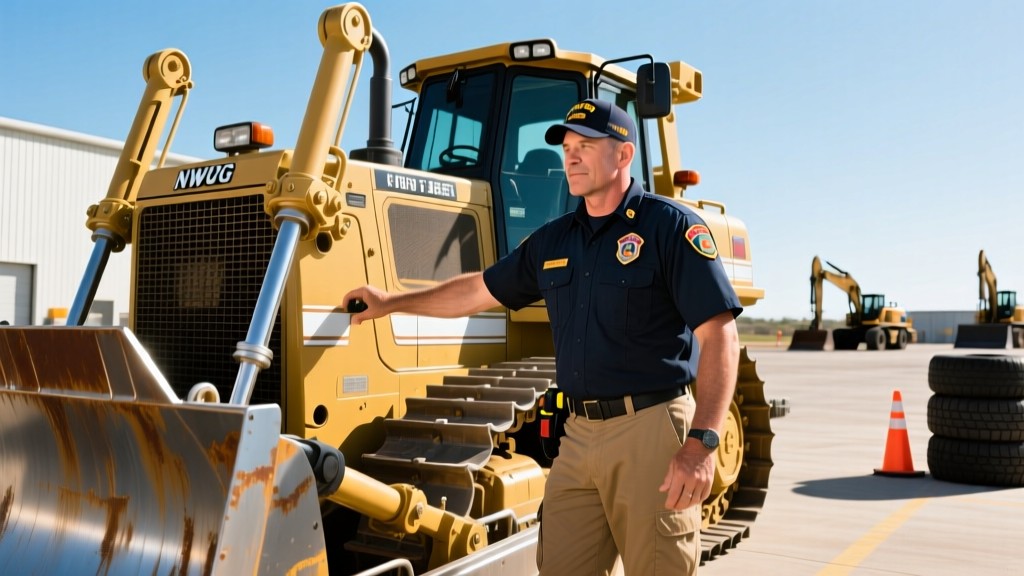
Instructors at California trade schools and union apprenticeship programs must master Title 8 of the California Code of Regulations. Unlike federal OSHA standards, Title 8 includes specific, often stricter mandates for construction and earthmoving. For example, while federal guidelines provide baseline trenching rules, Cal/OSHA Construction Safety Orders under Subchapter 4 dictate precise shoring, sloping, and benching requirements that instructors must drill into students before they ever touch the levers of a Caterpillar 320 excavator or a Komatsu D65 dozer.
Liability Alert: In California, if a student is injured during a training exercise, the school and the instructor can face severe penalties under Title 8, Section 3203 (Injury and Illness Prevention Program). Instructors must maintain meticulous, time-stamped documentation of every student's pre-operation safety briefing and equipment inspection.Mandatory Certifications for California Instructors
Operating a machine for 10,000 hours does not legally qualify you to teach others in a formal California training program. To issue recognized safety credentials and lead compliant heavy equipment operator schools in California, instructors must secure specific train-the-trainer certifications.
The OSHA 500 Requirement
The gold standard for safety instruction in construction and heavy equipment is the OSHA 500: Trainer Course in Occupational Safety and Health Standards for Construction. This certification allows you to issue OSHA 10-hour and 30-hour student completion cards. According to the OSHA Training Institute Education Centers, prerequisites for the OSHA 500 course include:
- Five years of verifiable construction or heavy equipment industry experience.
- A current OSHA 30-hour Construction card (must be less than four years old).
- Successful completion of the OSHA 510 prerequisite course (if lacking the required degree/safety certifications).
The OSHA 500 course typically costs between $950 and $1,150 and requires 26 hours of classroom instruction. Instructors must renew this authorization every four years by completing the OSHA 502 update course (approximately $400).
State-Specific Apprenticeship Credentials
If you intend to teach within a state-sponsored union apprenticeship program (such as the International Union of Operating Engineers), you must align with the California Division of Apprenticeship Standards (DAS). DAS requires instructors to hold a valid journeyman-level certification, possess a minimum of five years of verifiable field experience, and complete a state-approved vocational instructor training program, which covers adult learning theory and curriculum compliance.
Private Trade School vs. Union Apprenticeship Instructor: A Comparison
Career trajectories, compensation, and regulatory oversight differ significantly depending on where you teach.
| Feature | Private Trade School Instructor | Union Apprenticeship Instructor (e.g., IUOE) |
|---|---|---|
| Base Salary Range (2026) | $75,000 - $88,000 | $105,000 - $125,000+ |
| Benefits | Standard PTO, 401(k) match | Comprehensive pension, full family medical, annuity |
| Curriculum Autonomy | High (Adaptable to local contractor needs) | Low (Strictly governed by state DAS guidelines) |
| Equipment Fleet | Often older, mixed-brand, high-hour machines | Modern, late-model, tech-integrated fleet |
| Primary Safety Focus | General site safety, basic OSHA 10/30 prep | Advanced Title 8 compliance, NCCCO crane prep |
Designing a Defensible Training Curriculum
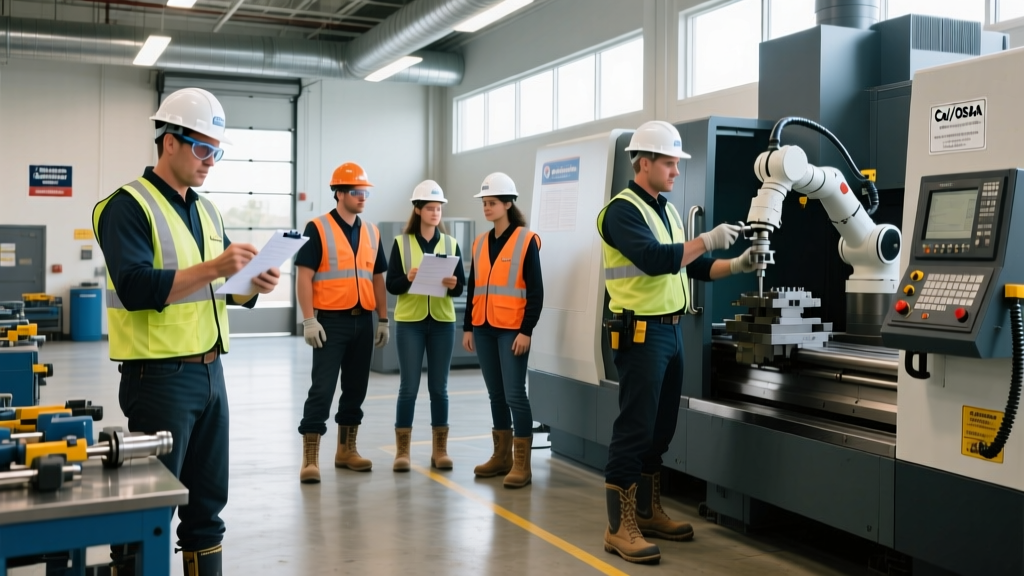
A compliant curriculum at heavy equipment operator schools in California goes beyond teaching students how to dig a trench or grade a pad. It must systematically integrate hazard recognition and regulatory compliance into every practical exercise. Use this four-step framework to build your lesson plans:
- Pre-Task Planning (PTP) Integration: Before any student starts a machine, they must fill out a site-specific PTP form. Grade these forms. If a student fails to identify overhead power lines (Title 8, Section 1543) or underground utilities, they do not get the keys.
- The 360-Degree Walkaround Protocol: Mandate a documented, timed walkaround. Students must physically point out ROPS (Roll-Over Protective Structures) integrity, hydraulic line weeping, track tension, and fire extinguisher pressure. Use a standardized checklist that requires a signature.
- Simulated Hazard Recognition: Set up controlled hazards in the training yard. Place a dummy load near an excavator's swing radius or create a minor trench lip instability. Evaluate the student's ability to halt operations and report the hazard to the 'Competent Person' (you).
- Post-Operation Securing: Training does not end when the bucket hits the ground. Grade students on proper shutdown procedures: lowering attachments to the ground, engaging parking brakes, cycling hydraulic levers to relieve pressure, and executing proper lockout/tagout (LOTO) if maintenance is simulated.
Equipment-Specific Safety Modules
Different machines require distinct safety modules based on California regulations:
- Hydraulic Excavators: Focus heavily on Title 8, Section 1541 (Excavations). Students must learn how to calculate soil type (Type A, B, or C) and determine the correct slope ratios before using the excavator to dig. Teach the physics of the machine's center of gravity when lifting pipes near the trench edge.
- Bulldozers and Motor Graders: Emphasize blind spot management and ground pressure limits. Instructors must teach the exact protocols for operating on slopes exceeding 15 degrees, including the proper use of seatbelt interlocks and ROPS certification tags.
- Articulated Dump Trucks (ADTs): Focus on load distribution, dump site stability, and the strict enforcement of Title 8, Section 1593 regarding dump body blocks when students perform inspections under raised beds.
Managing Liability and Student Negligence
Even with rigorous training, students will make mistakes. The difference between a minor yard incident and a career-ending lawsuit is your documentation. Instructors must maintain a 'Defensible Training File' for every cohort.
'In California, if it is not written down, it did not happen. An instructor's verbal warning to a student about keeping their hands clear of a hydraulic pinch point means nothing in a DOSH hearing unless that warning was documented, signed by the student, and filed in their training record.' - Senior Safety Director, Northern California Heavy Equipment Apprenticeship Program.
To protect yourself and your school, implement a 'Three-Strike Safety Matrix':
- Strike 1 (Minor Procedural Error): Verbal correction, documented in the daily instructor log. Example: Failing to sound the horn before reversing.
- Strike 2 (Safety Protocol Violation): Written warning, student removed from the machine for one hour to review the specific Title 8 section violated. Example: Exiting the cab without lowering the bucket to the ground.
- Strike 3 (Imminent Danger Act): Immediate dismissal from the practical yard. Example: Bypassing a safety interlock, operating under the influence, or ignoring a direct stop-work order from the instructor.
Frequently Asked Questions for Prospective Instructors
Do I need a college degree to teach at heavy equipment operator schools in California?
No. While a degree in Occupational Safety and Health can expedite your approval for the OSHA 500 course, it is not mandatory. Verifiable field experience (usually five years) and holding an OSHA 30 card are the primary requirements. However, private career colleges accredited by the Bureau for Private Postsecondary Education (BPPE) may require instructors to hold a vocational teaching credential, which involves completing a specific number of adult education pedagogy hours.
How often must I update my instructor certifications?
OSHA 500 authorization expires every four years, requiring the OSHA 502 update course. Additionally, if you teach crane operations, your NCCCO (National Commission for the Certification of Crane Operators) credentials must be renewed every five years, which requires passing a recertification exam and proving continued industry involvement.
Can I teach forklift operations alongside heavy earthmoving equipment?
Yes, but forklift instruction falls under a different regulatory standard (Title 8, Section 3651 for general industry, or Section 1684 for construction). You must hold a specific Train-the-Trainer certification for powered industrial trucks (PIT), as earthmoving experience does not legally qualify you to certify students on Class 1 through Class 7 forklifts.