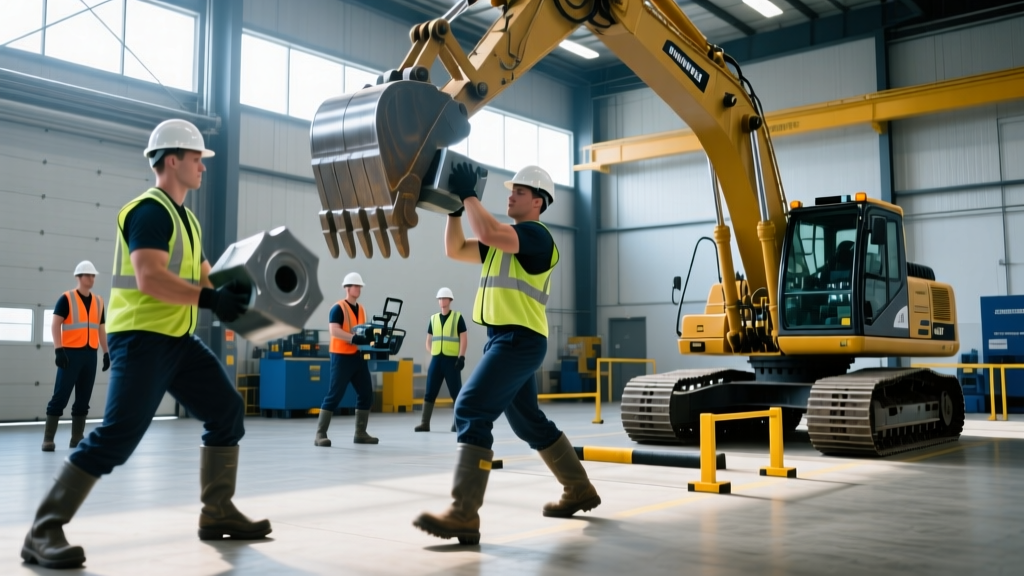
Army Heavy Equipment Operator: MOS 12N Specs & Machine Training
Explore the technical specs, machinery, and training of an army heavy equipment operator (MOS 12N). Learn how military construction equipment works.
Technical Architecture of the Army Heavy Equipment Operator Role
The role of an army heavy equipment operator extends far beyond standard civilian earthmoving. Military construction engineers—primarily designated under MOS 12N (Horizontal Construction Engineer) and MOS 12B (Combat Engineer)—operate highly specialized, militarized heavy machinery designed to function in austere, combat-degraded environments. Unlike municipal Department of Public Works (DPW) operators who rely on paved staging areas and standard diesel supply chains, army operators must master machines equipped with Central Tire Inflation Systems (CTIS), blackout lighting arrays, and Nuclear, Biological, and Chemical (NBC) overpressure cab environments.
Understanding the technical specifications and operational mechanics of this fleet is critical for both active-duty personnel and transitioning veterans targeting federal or municipal government equipment roles.
Core Fleet: Technical Specifications & Powertrain Data
The U.S. Army Corps of Engineers and combat engineer battalions rely on a specific matrix of heavy equipment. These machines are heavily modified from their commercial counterparts to meet MIL-SPEC (Military Specification) durability and survivability standards.
High Mobility Engineer Excavator (HMEE)
Manufactured by JCB, the HMEE is the backbone of modern tactical earthmoving. It replaces the older Case 860 Tractor Loader Backhoe. The HMEE merges a front loader bucket with a rear excavator arm on a single, high-speed chassis.
- Engine: Cummins 4.5L Tier 4 Final diesel, producing approximately 100 hp (75 kW).
- Drivetrain: 4-wheel drive, 4-wheel steer (crab steering capability for lateral movement in tight urban combat zones).
- Hydraulics: Load-sensing axial piston pump system operating at peak pressures of 3,600 PSI.
- Road Speed: Capable of 50 mph (80 km/h) on improved surfaces, allowing it to self-deploy to forward operating bases without lowboy trailers.
M9 Armored Combat Earthmover (ACE)
The M9 ACE, built by BAE Systems, is a fully tracked, amphibious, armored dozer designed to prepare firing positions and clear obstacles under direct fire.
- Engine: Cummins 8.3L diesel, generating 295 hp.
- Transmission: Hydrostatic drive system allowing infinite speed variations and pivot steering.
- Blade Capacity: 8.7-cubic-yard universal blade with a hydraulically actuated scarifier.
- Survivability: Aluminum armor hull with an integrated NBC overpressure system and an earth anchor for stability during heavy dozing operations.
MIL-SPEC vs. Civilian Equipment Matrix
| Specification | JCB HMEE (Military) | Standard Civilian Backhoe |
|---|---|---|
| Steering Architecture | 4-Wheel Steer (Front, Rear, Crab) | Front-Wheel Steer Only |
| Tire Management | Run-flat with CTIS | Standard Pneumatic |
| Electrical System | 24V DC with Blackout Arrays | 12V DC Standard Lighting |
| Convoy Speed | 50 mph (Self-Deployable) | 25 mph (Requires Transport) |
Data sourced from U.S. Army fielding manuals and JCB defense specifications. For more on military ground systems, refer to GlobalSecurity.org.
Hydraulic and Powertrain Mechanics in Austere Environments
The fundamental difference in how an army heavy equipment operator works compared to a civilian counterpart lies in environmental adaptability. Military machines utilize load-sensing hydraulic circuits. Instead of a fixed-displacement pump constantly bleeding off excess pressure through a relief valve (generating massive heat), load-sensing systems vary the pump swashplate angle to deliver only the exact flow and pressure demanded by the joystick inputs. This reduces fuel consumption by up to 18% and lowers hydraulic fluid temperatures, which is critical when operating in desert environments where ambient temperatures exceed 120°F.
Furthermore, the powertrains are integrated with Engine Mounted Compressors (EMAC) and pneumatic systems that feed the CTIS. An operator can adjust tire pressure from inside the cab via a digital manifold. Lowering tire pressure to 15 PSI increases the footprint for soft sand or mud traversal, while inflating to 60 PSI on the fly allows for high-speed highway convoy movements.
"In combat engineering, machine downtime is a tactical vulnerability. The hydraulic systems on the M9 ACE and HMEE are routed internally through the chassis frame rails wherever possible to protect high-pressure lines from shrapnel and small arms fire—a design constraint rarely found in commercial DPW fleets."
The Training Pipeline: From Simulator to Live Seat Time
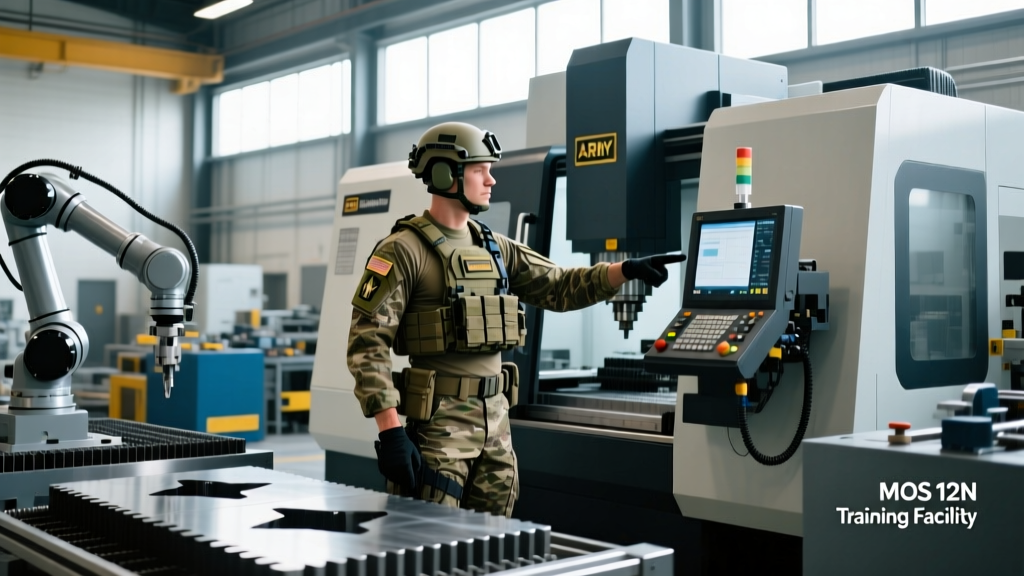
Aspiring army heavy equipment operators undergo a rigorous technical pipeline. Following 10 weeks of Basic Combat Training, soldiers attend Advanced Individual Training (AIT) at Fort Leonard Wood, Missouri. The MOS 12N AIT course spans approximately 20 weeks and is heavily weighted toward technical machine operation and mechanical troubleshooting.
Simulator and Practical Hours
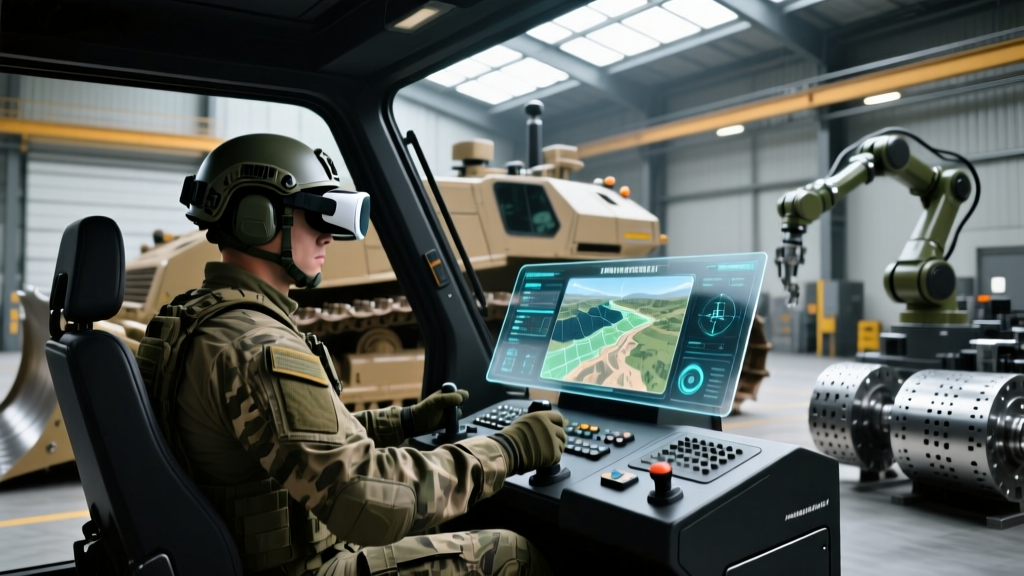
- Virtual Operations (Weeks 1-4): Trainees utilize the Heavy Equipment Simulator Complex. These motion-base simulators replicate the exact cab ergonomics, joystick resistance, and blind spots of the CAT D7R dozer and John Deere 170D excavator. Instructors program virtual soil densities (clay vs. loose sand) to teach trainees how to read hydraulic load feedback.
- Controlled Seat Time (Weeks 5-12): Operators transition to live machines on the Fort Leonard Wood land navigation and earthwork ranges. Training focuses on mass excavation, grading to laser-level tolerances, and trenching for utility lines.
- Tactical Employment (Weeks 13-20): Integration of the equipment into combat scenarios. Operators learn to dig anti-tank ditches, construct helicopter landing zones (HLZs) under simulated artillery fire, and operate using only blackout drive markers at night.
Preventive Maintenance and Diagnostics (PMCS)
An army heavy equipment operator is also a level-one mechanic. Before every operation, the soldier must execute Preventive Maintenance Checks and Services (PMCS) as dictated by the equipment's Technical Manual (TM). This is documented on the DA Form 5988-E (Equipment Inspection and Maintenance Worksheet).
Critical technical checks include:
- AOAP (Army Oil Analysis Program): Drawing fluid samples from the hydraulic reservoir, engine crankcase, and planetary final drives. These samples are sent to a lab to detect microscopic metal wear (e.g., high iron content indicating cylinder scoring, or high copper indicating bearing degradation) before catastrophic failure occurs.
- Track Tension Calibration: On tracked vehicles like the M9 ACE or CAT D8T, operators must measure track sag (typically 1.5 to 2.5 inches depending on the shoe width) and adjust the grease-operated track adjuster. Incorrect tension leads to accelerated idler wear or track throwing during high-speed maneuvers.
- Hydraulic Cavitation Checks: Listening for a distinct 'marbles in a can' sound at the hydraulic pump, which indicates air ingestion or fluid starvation, often caused by clogged suction strainers in dusty environments.
Safety Protocol Warning: Military vs. OSHA Standards
While military operations sometimes necessitate bypassing standard safety interlocks during combat emergencies, stateside training and post-military municipal jobs strictly adhere to OSHA heavy equipment regulations. Army operators transitioning to civilian government roles must re-acclimate to strict ROPS (Roll-Over Protective Structures) seatbelt interlocks and standardized hand-signal protocols, which may differ from tactical convoy hand signals used in the military.
Career Translation: Government and Municipal DPW Roles
The technical mastery required of an army heavy equipment operator makes them highly competitive for federal and municipal government roles. Agencies such as the U.S. Army Corps of Engineers (USACE), FEMA Urban Search and Rescue (USAR) task forces, and city DPW departments actively recruit veterans with MOS 12N and 12B backgrounds.
When applying for municipal heavy equipment roles, veterans should translate their military technical experience into civilian equivalents on their resumes and USAJobs profiles:
- Military: "Operated JCB HMEE in austere environments."
- Civilian Translation: "Operated 4x4x4 articulated backhoe loaders with load-sensing hydraulics and CTIS for emergency road repair and disaster debris clearance."
- Military: "Executed PMCS and AOAP fluid sampling."
- Civilian Translation: "Performed comprehensive pre-trip DOT inspections, predictive fluid analysis, and Tier 1 mechanical troubleshooting to maintain 95% fleet readiness."
For a comprehensive breakdown of military occupational specialties and their technical requirements, personnel can reference the official Army MOS directory to align their specific machine certifications with state-level CDL and heavy equipment licensing boards.
Summary of Technical Competencies
The army heavy equipment operator is a hybrid professional: part heavy-construction artisan, part tactical mechanic, and part combat engineer. Mastery of load-sensing hydraulics, hydrostatic drives, and predictive maintenance protocols ensures that whether they are building a forward airstrip in the Pacific or grading a municipal road in the Midwest, the technical execution remains precise, efficient, and uncompromising.