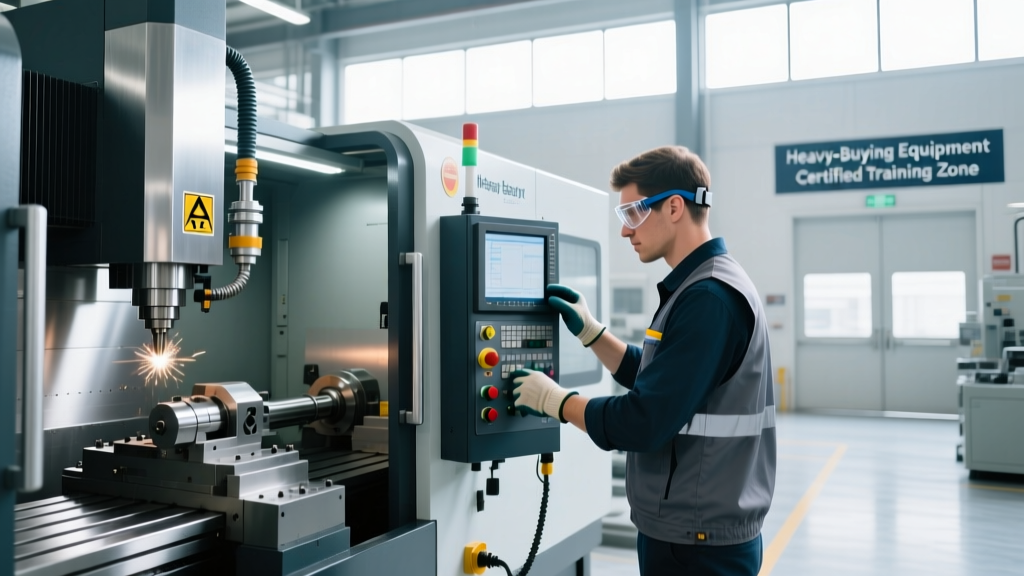
How Operator Training Directly Lowers Heavy Equipment Cost
Discover how targeted operator training reduces total heavy equipment cost by minimizing fuel waste, preventing premature wear, and protecting resale value.
The Hidden Lever in Equipment Procurement
When fleet managers and procurement officers evaluate the heavy equipment cost of a new acquisition, the focus typically narrows to the sticker price, financing rates, and initial warranty terms. However, the true total cost of ownership (TCO) is not determined on the dealer lot; it is dictated by the person sitting in the cab. An untrained or poorly trained operator can inflate annual operating expenses by 15% to 30%, entirely erasing the marginal savings negotiated during the purchasing phase.
From a buying perspective, integrating operator training into your procurement strategy is one of the most effective methods to control long-term capital expenditure. Whether you are purchasing a new Caterpillar 336 excavator, leasing a John Deere 824L wheel loader, or bidding on used machinery at a Ritchie Bros auction, understanding the financial impact of operator competency is critical to protecting your bottom line.
The 80/20 Rule of Equipment TCO: Industry data consistently shows that the initial purchase price accounts for only 20% to 30% of a machine's total lifecycle cost. The remaining 70%+ is driven by fuel, maintenance, downtime, and depreciation—all of which are directly influenced by operator behavior.The Multipliers: How Poor Technique Inflates Costs
To accurately forecast your heavy equipment cost, you must account for the specific mechanical abuses that occur when operators rely on intuition rather than OEM-certified best practices. The financial bleed happens in three primary areas:
1. Fuel Inefficiency and Excessive Idling
Modern Tier 4 Final and Stage V diesel engines are highly sensitive to operational habits. According to the U.S. Department of Energy, heavy-duty diesel engines consume between 0.8 and 1.0 gallons of fuel per hour while idling. An untrained operator who leaves a 20-ton excavator idling during lunch breaks, trenching delays, or truck-waiting periods can easily waste 3 to 5 gallons of diesel daily. At an average off-road diesel price of $4.20 per gallon, a single operator's idle habits can add over $4,500 in unnecessary annual fuel costs per machine.
2. Premature Undercarriage and Attachment Wear
The undercarriage represents roughly 20% of a tracked machine's total repair costs. Untrained operators frequently engage in 'dry steering' (counter-rotating tracks while the machine is stationary) and 'track spinning' to clear mud. These practices accelerate the wear on track chains, idlers, and sprockets. Replacing a full undercarriage on a mid-size excavator like a Komatsu PC210LC-11 costs between $16,000 and $22,000. Proper training extends undercarriage life from an average of 3,500 hours to over 6,000 hours, effectively halving the annualized heavy equipment cost for track maintenance.
3. Hydraulic Shock Loading
Dropping loads from height or using the boom to 'bump' the bucket against rock faces causes hydraulic shock loading. This sends pressure spikes through the system, degrading hydraulic hoses, scoring cylinder rods, and eventually fracturing the main hydraulic pump housing. A single catastrophic main pump failure on a 30-ton machine costs upwards of $12,000 in parts and labor, not including the $2,500 per day in lost productivity during downtime.
Cost Variance Matrix: Trained vs. Untrained Operators
The table below illustrates the projected annual operating cost variance for a standard 20-ton class excavator (e.g., Cat 320 or Volvo EC220) operating 1,500 hours annually, comparing an OEM-trained operator against an untrained 'on-the-job' hire.
| Cost Category | Trained Operator (Annual) | Untrained Operator (Annual) | Variance (Loss) |
|---|---|---|---|
| Fuel & DEF Consumption | $18,500 | $22,200 | +$3,700 |
| Undercarriage Amortization | $4,200 | $8,900 | +$4,700 |
| Hydraulic/Hose Maintenance | $1,100 | $3,400 | +$2,300 |
| Unplanned Downtime (Lost Rev) | $2,000 | $8,500 | +$6,500 |
| Total Annual Operating Impact | $25,800 | $43,000 | +$17,200 |
Many fleet buyers attempt to save on training costs by assigning new hires to shadow veteran operators. Unless the veteran is a certified OEM instructor, this often results in the transfer of bad habits, shortcut workarounds, and unsafe practices. Always verify that in-house training aligns with NIOSH and CDC safe equipment operation guidelines rather than relying solely on institutional muscle memory.
Negotiating Training into the Purchase Agreement
When procuring new heavy machinery, buyers should shift training from an afterthought to a negotiated line item. Most major OEMs and their dealer networks offer structured training packages that can be bundled into the equipment financing agreement. By rolling the training cost into the capital loan, you amortize the expense over the life of the machine rather than taking an immediate hit to your operational budget.
What to Demand in the Purchase Contract:
- Simulator Hours: Request 10 to 20 hours of advanced simulator training for your operators. Modern simulators (like the Cat Simulators) provide haptic feedback and telemetry scoring without burning fuel or risking machine damage.
- On-Site Field Training: Negotiate for an OEM-certified field instructor to spend 2 to 3 days on your specific job site. This ensures operators learn to handle the machine in your actual soil conditions and grading tolerances.
- Telematics API Access: Ensure the purchase includes full access to the machine's telematics data (e.g., John Deere JDLink or Cat VisionLink). You need this data to monitor idle time, fault codes, and hydraulic pressure abuses in real-time.
Protecting Resale Value at Auction
The heavy equipment cost equation does not end when the machine is retired; it concludes at the auction block. Used equipment appraisers and auction inspectors are highly trained to spot the physical signatures of operator abuse. Scored cylinder rods, blown final drive seals, and cracked boom welds will immediately flag a machine as 'abused,' resulting in a 15% to 25% penalty on the final hammer price.
"A machine with 6,000 hours operated by a certified, disciplined crew will consistently out-earn a 3,500-hour machine that was abused by untrained hands. Buyers at auction look past the hour meter and inspect the grease points, hydraulic fluid cleanliness, and track tension." — Senior Heavy Equipment Appraiser
Actionable Training ROI Framework for Fleet Buyers
To justify the upfront investment in formal operator certification (such as NCCCO or OEM-specific credentials, which typically cost between $1,200 and $2,500 per operator), fleet managers should use the following framework to calculate ROI:
- Establish a Baseline: Pull the last 90 days of telematics data for the specific machine model. Record the average daily idle percentage, fuel burn rate, and fault code frequency.
- Calculate the Abuse Tax: Multiply the idle hours by the current cost of off-road diesel. Add the estimated premature wear cost for undercarriage and ground-engaging tools (GET) based on your current replacement intervals.
- Subtract Training Costs: Deduct the cost of the certification course, simulator time, and the operator's paid time away from the job site.
- Measure Post-Training Variance: Re-evaluate the telematics data 90 days post-training. In most cases, the reduction in fuel burn and maintenance intervals will yield a positive ROI within 6 to 8 months.
Safety and Compliance: The Ultimate Cost Avoidance
Beyond mechanical wear, the most catastrophic heavy equipment cost stems from job site accidents. Struck-by and caught-between incidents involving heavy machinery routinely result in multi-million dollar litigation, OSHA fines, and skyrocketing insurance premiums. According to OSHA's Focus Four hazards guidelines, proper equipment operation and spatial awareness training are mandatory for mitigating these fatal risks. Investing in rigorous, documented operator training is not merely a mechanical safeguard; it is a vital legal and financial shield for the equipment owner.
Ultimately, controlling your heavy equipment cost requires looking beyond the initial invoice. By strategically bundling OEM training into your purchase agreements, leveraging telematics to enforce best practices, and treating operator competency as a core asset, you transform the cab from your biggest financial liability into your most reliable source of operational efficiency.