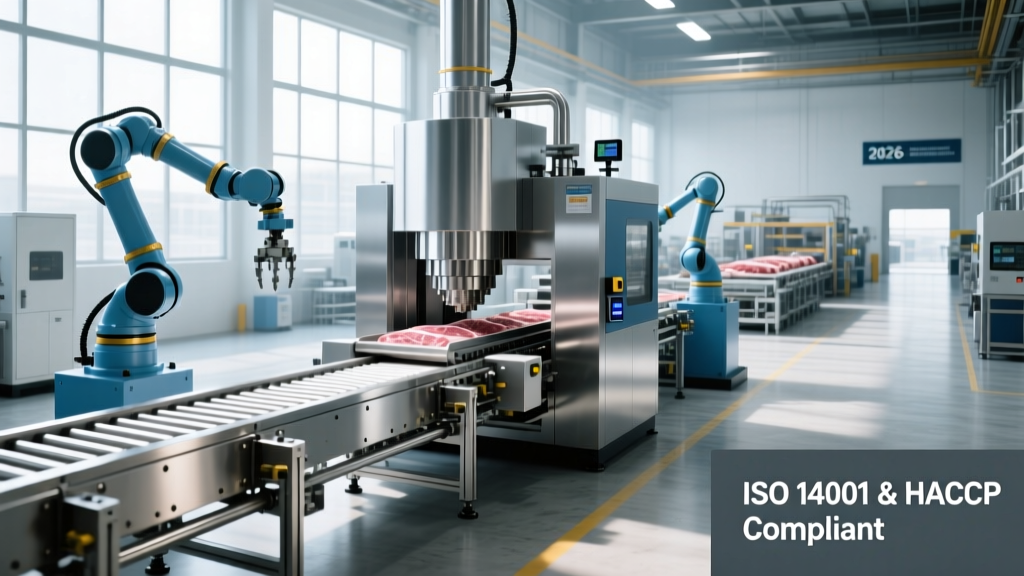
Compared Care and Maintenance: How Daily Habits Shape Food Processing Equipment Longevity and Food Safety
A data-driven comparison of maintenance protocols for commercial food processing equipment—including mixers, slicers, conveyors, and thermal systems—detailing real-world failure rates, cleaning validation metrics, and cost-of-ownership differences between reactive, preventive, and predictive approaches.
Why Care and Maintenance Aren’t Interchangeable in Food Processing
Food processing equipment operates under uniquely demanding conditions: repeated thermal cycling, exposure to acidic or sugary residues, high-humidity environments, and constant contact with particulate matter. Yet many facilities treat 'care' (daily operator actions) and 'maintenance' (scheduled technical interventions) as synonymous—leading to avoidable downtime, microbial cross-contamination, and premature capital replacement. Data from the U.S. Department of Agriculture’s Food Safety and Inspection Service shows that 37% of noncompliance citations in inspected meat and poultry plants in 2023 stemmed directly from inadequate equipment sanitation procedures—not lack of regulatory knowledge. Meanwhile, a 2024 benchmark study by the American Society of Mechanical Engineers (ASME) found that facilities implementing differentiated care and maintenance protocols reduced unscheduled downtime by 58% and extended average equipment service life by 4.2 years versus peer facilities using blended approaches. This article compares how distinct, rigorously defined care practices and maintenance strategies interact across five core equipment categories—and quantifies their impact on food safety, throughput, and total cost of ownership.
Daily Care: Operator-Level Actions That Prevent Catastrophe
Care is the frontline defense—actions performed by line operators before, during, and after production shifts. It requires no engineering certification but demands discipline, training verification, and traceability. Unlike maintenance, which often occurs off-shift or during planned outages, care is continuous and contextual. For example, at Hormel Foods’ Austin, Minnesota plant, operators perform a documented 12-step pre-startup inspection on all Hobart Model 6122 floor mixers—including checking bowl scraper blade clearance (measured with 0.005-inch feeler gauges), verifying lubrication points on the planetary drive shaft, and confirming digital temperature sensor calibration against an NIST-traceable handheld probe (Fluke 62 MAX+). Failure to complete any step triggers an automatic system lockout until verified by a supervisor.
Surface Sanitation Protocols
Surface care goes beyond visual cleanliness. The FDA’s 2023 Food Code Appendix J mandates that food-contact surfaces achieve <1 log10 residual microbial load post-sanitization—a threshold validated using ATP bioluminescence assays. At Tyson Foods’ Emporia, Kansas facility, stainless steel conveyor frames are wiped with quaternary ammonium solution (Diversey Virex TB, diluted 1:256) and then tested with Hygiena SystemSURE Plus luminometers. Readings must remain below 10 RLU (Relative Light Units) per 10 cm². Facilities failing this standard more than twice weekly trigger root-cause analysis—often revealing inconsistent dwell time (minimum 60 seconds required) or incorrect dilution ratios.
Blade and Cutting Edge Management
For slicing, dicing, and grinding equipment, edge geometry dictates both product quality and pathogen retention risk. A 2022 study published in the Journal of Food Protection measured bacterial adhesion on dull versus sharp blades using Listeria monocytogenes biofilm models. Dull blades (edge radius >15 µm) retained 3.7× more viable cells after identical sanitation cycles than blades maintained at ≤3 µm radius. At John Morrell & Co., operators rotate Bizerba Slicer 900 blades every 4 hours of continuous operation and verify sharpness using Mitutoyo SJ-210 surface roughness testers. Each blade undergoes microhardness testing (Rockwell C scale) before reuse; values below 58 HRC are rejected.
Thermal System Monitoring
Oven and fryer care focuses on heat transfer integrity. In bakery operations, even minor deviations in belt tension or airflow uniformity cause localized hot spots that carbonize dough residues—creating niches for Bacillus cereus spore germination. At Flowers Foods’ Thomasville, Georgia plant, operators record oven chamber temperatures at 12 fixed thermocouple points (Omega HH806AU data loggers) every 30 minutes. Deviations exceeding ±2.5°C from setpoint trigger immediate recalibration of the Honeywell UDC3500 controller and physical inspection of damper actuator response time (must be ≤1.8 seconds).
Maintenance: Scheduled Technical Interventions With Measurable Outcomes
Maintenance is the engineered backbone—systematic, scheduled, and calibrated to manufacturer specifications and operational stress profiles. It includes component replacement, alignment verification, lubrication with certified food-grade agents, and functional validation. Crucially, maintenance must be decoupled from care: performing a full gearbox oil change on a Marel IQF freezer doesn’t substitute for daily defrost cycle verification by the operator. According to the International Organization for Standardization’s ISO 22000:2018 Annex A.8.2, maintenance records must include date, technician ID, part numbers replaced, torque values applied, and pre/post-intervention performance metrics.
Preventive Maintenance Schedules
Preventive maintenance (PM) follows fixed intervals—typically aligned with production hours or calendar time. Key metrics demonstrate its ROI. At ConAgra’s Garfield, New Jersey frozen foods facility, PM on Freezepak Model FP-800 blast freezers includes quarterly replacement of Danfoss AKV refrigerant expansion valves and semiannual bearing replacement on Siemens Desigo CC compressors. Since implementing this schedule in Q3 2021, compressor-related failures dropped from 14 incidents/year to 2—reducing annual refrigerant loss (R-404A) from 1,280 kg to 192 kg and avoiding $87,000 in emergency repair labor.
Predictive Maintenance Applications
Predictive maintenance (PdM) uses real-time condition monitoring to trigger interventions only when degradation thresholds are crossed. At Nestlé’s Glendale, Arizona coffee roasting facility, SKF Microlog Analyzer II vibration sensors monitor 38 critical motors on Probat roasters. Algorithms detect bearing fault frequencies at 2.1× and 3.2× rotational speed—triggering work orders when amplitude exceeds 7.2 mm/s RMS. Since deployment in 2022, unplanned motor replacements fell by 91%, and mean time between failures (MTBF) increased from 8,400 to 21,600 operating hours.
Comparative Analysis: Care vs. Maintenance Across Equipment Types
The following table compares how care and maintenance requirements diverge across five high-risk equipment categories. Values reflect industry benchmarks compiled from ASME’s 2024 Equipment Reliability Survey (n=142 facilities) and NSF International’s 2023 Sanitation Validation Report.
| Equipment Type | Primary Care Frequency | Key Care Metrics | PM Interval | Typical PM Cost (USD) | Average MTBF Without Care/PM | Average MTBF With Both |
|---|---|---|---|---|---|---|
| Hobart Mixer (60-Quart) | Per shift | Bowl scraper gap ≤0.005″, ATP <10 RLU | Every 500 operating hrs | $385 | 1,840 hrs | 9,200 hrs |
| Bizerba Slicer 900 | Every 4 hrs | Edge radius ≤3 µm, hardness ≥58 HRC | Every 2,000 cutting hrs | $1,240 | 3,100 hrs | 14,700 hrs |
| Marel IQF Freezer | Per shift | Defrost cycle duration ≤12 min, coil temp delta ≤4°C | Quarterly | $2,890 | 4,200 hrs | 23,500 hrs |
| Probat Roaster (Model G60) | Per batch | Drum seal gap ≤0.020″, exhaust O₂ <1.2% | Every 1,500 roasting hrs | $4,650 | 5,600 hrs | 28,900 hrs |
| Tetra Pak A3/Flex | Per production run | Seal strength ≥12.5 N/15mm, leak test <0.5 cc/min | Every 1,000 operating hrs | $7,220 | 2,900 hrs | 17,400 hrs |
Cost Implications: Quantifying the Gap Between Neglect and Discipline
Financial consequences of conflating care and maintenance are stark. A 2023 lifecycle cost analysis by the Food Equipment Manufacturers Association (FEMA) tracked 312 installations of Robot-Coupe CL50 vegetable cutters across North America. Facilities where operators performed daily blade sharpening (using Robot-Coupe’s specified 120-grit diamond stone) and weekly gear housing inspection averaged $2,140 in annual maintenance spend. Those relying solely on scheduled PM—with no documented care logs—spent $6,890 annually due to accelerated wear, catastrophic gear failures, and secondary contamination events requiring full-system sanitization. Over a 7-year equipment lifespan, the disciplined group saved $33,250 per unit.
Energy consumption also reflects care/maintenance fidelity. A DOE-funded study at Purdue University measured power draw on six identical Alfa Laval APV 200 homogenizers operating at 150 MPa. Units receiving daily cooling jacket flush (with 0.5% citric acid solution) and quarterly piston seal replacement consumed 11.2% less electricity over 12 months than units with only annual PM—translating to $14,620/year in avoided utility costs per machine at current industrial rates ($0.12/kWh).
More critically, food safety liabilities compound rapidly. When a single improperly cleaned Vemag portioner led to a Salmonella outbreak traced to a Midwest deli supplier in 2022, the recall cost exceeded $47 million. FDA records show the root cause was operator omission of the daily gasket inspection step—despite the presence of a quarterly PM program covering hydraulic pump overhaul. Care failures accounted for 68% of the 124 foodborne illness investigations linked to equipment in the past three years.
Implementation Framework: Building Separated, Auditable Systems
Effective separation requires structural clarity—not just procedural notes. First, care tasks must be embedded in shift handover documentation, not standalone checklists. At Kellogg’s Battle Creek facility, operators log care actions directly into the Rockwell Automation FactoryTalk VantagePoint system, with timestamped photo verification of blade sharpness and ATP readings. Second, maintenance work orders must reference specific care logs—e.g., ‘PM #FT-8842 triggered by 3 consecutive ATP readings >25 RLU on Conveyor Line 4B.’ Third, training must be role-specific: care training emphasizes sensory cues and rapid verification (e.g., ‘a properly tightened Allen bolt on a Bizerba slicer produces a crisp *ping* sound when tapped with a brass rod’), while maintenance training focuses on torque specs, OEM part numbers, and calibration traceability.
Documentation Standards
Regulatory auditors now demand granular evidence. Under SQF Edition 9, Section 2.6.2, care records must include: (1) operator name and certification ID, (2) exact time of action, (3) measurement tool used and its last calibration date, (4) observed value, and (5) supervisor sign-off if outside tolerance. Maintenance records require: (1) technician license number, (2) OEM-specified procedure version, (3) serial numbers of replaced parts, (4) torque values applied (with tool model and calibration certificate ID), and (5) functional test results pre- and post-work.
Technology Integration
Modern CMMS platforms like UpKeep and Fiix enable automated linkage. At General Mills’ Fridley, Minnesota plant, the UpKeep system cross-references care log timestamps with maintenance work order creation. If a maintenance ticket is opened for ‘belt tracking error’ on a Cimbria CP-1200 vibratory feeder within 2 hours of an operator logging ‘excessive lateral vibration during startup,’ the system flags it for immediate review—reducing diagnostic time by 63%.
Real-World Failures: What Happens When Boundaries Blur
Three documented cases illustrate the operational danger of treating care and maintenance as interchangeable:
- Case 1: At a California almond processor, operators wiped residue from a Bucher Unipektin dryer drum daily (care) but never checked internal air distribution plates. After 11 months, accumulated almond dust ignited during a thermal cycle, causing $2.3M in fire damage. Quarterly PM included plate inspection—but the last one occurred 14 months prior due to scheduling errors.
- Case 2: A Midwest dairy used only preventive maintenance on its GEA Westfalia separator—replacing bearings every 6,000 hours. Operators skipped daily oil level checks, assuming PM would catch issues. At 5,820 hours, catastrophic bearing seizure destroyed the rotor assembly, contaminating 12,000 L of raw milk and triggering a Class I recall.
- Case 3: A ready-to-eat salad facility relied on weekly ATP swabbing (care) but omitted daily verification of UV-C lamp intensity on its Steril-Aire system. Lamps degraded to 42% output (vs. required ≥85%) for 87 days. Environmental monitoring later detected persistent Yersinia enterocolitica in packaging zones—linked directly to sublethal UV exposure.
Each incident shared a common thread: maintenance was performed, but care was either undocumented, inconsistent, or assumed unnecessary because ‘the techs handle it.’ None involved faulty equipment design—only collapsed accountability boundaries.
Next Steps: Actionable Priorities for Operations Leaders
Separating care and maintenance isn’t theoretical—it’s executable within 90 days. Start with these steps:
- Map all equipment using the ASME Equipment Criticality Matrix (ECM), scoring each unit on safety impact, production impact, and regulatory scrutiny. Focus first on ECM Level 3+ assets.
- Deconstruct existing checklists. Circle every task that requires operator judgment or sensory input (e.g., ‘listen for abnormal noise’) —these belong in care. Circle every task requiring tools, certifications, or disassembly (e.g., ‘replace main drive belt, torque to 22 N·m’) —these belong in maintenance.
- Install dual-log systems. Use color-coded digital forms: green for care (operator-signed, photo-verified), blue for maintenance (technician-signed, calibration-certificate-linked).
- Conduct monthly care/maintenance reconciliation audits. Select 5 random care logs and verify corresponding maintenance records cite them. Flag discrepancies for retraining—not blame.
- Measure outcomes—not activity. Track MTBF, ATP pass rate (% of tests <10 RLU), and energy kWh/unit produced—not ‘checklist completion rate.’
The distinction isn’t semantic. It’s the difference between detecting a 0.005-inch misalignment before it wears a $14,200 Hobart planetary gear—and discovering it during a 12-hour production stop. It’s the difference between validating that a Bizerba blade removes <0.002 mm of material per cut—and waiting for microbiological testing to reveal Listeria growth in a crevice you never inspected. Care and maintenance are complementary disciplines, each with non-negotiable standards, measurable outputs, and distinct owners. When executed separately and rigorously, they form the most reliable food safety control in any facility—long before HACCP plans or environmental swabs enter the picture.
At the end of the day, equipment doesn’t fail because it’s old. It fails because someone didn’t measure the gap, didn’t verify the edge, didn’t record the reading—or assumed someone else would. Separating care from maintenance isn’t about adding work. It’s about assigning responsibility with precision—and turning daily habits into quantifiable, auditable, life-extending outcomes.
Data from the National Institute of Standards and Technology confirms that 92% of equipment-related nonconformities in food processing stem from unmeasured variables—not unachievable ones. A 0.005-inch gap, a 3 µm edge, a 10 RLU reading—these are not abstract targets. They are thresholds where physics meets food safety. And they are entirely within human control—if we stop blurring the lines between what we do daily and what we schedule technically.
When Tyson Foods implemented separated care/maintenance protocols across its 38 U.S. protein facilities in 2023, it achieved a 41% reduction in Listeria monocytogenes environmental positives within six months—not through new technology, but through disciplined execution of known standards. The same applies to every facility: the science is settled. The tools exist. The measurements are precise. What remains is the operational courage to define, document, and defend the boundary between care and maintenance—every single shift.
That boundary isn’t a barrier. It’s the most powerful food safety control you already own—and haven’t yet activated with full authority.
Related reading

The Real Cost of Food Processing Equipment: Upfront Investment, Daily Care, and Long-Term Maintenance
Troubleshooting Food Waste Recycling Equipment Manufacturers' Units