Cost Guide: Top Bakery Equipment Manufacturers in 2026
Analyze capital costs, hidden fees, and ROI when sourcing from top bakery equipment manufacturers. Compare Revent, Baxter, and Hobart pricing.
Procuring commercial bakery machinery requires moving beyond manufacturer sticker prices to evaluate the true total cost of ownership (TCO). When facility planners and bakery owners evaluate the top bakery equipment manufacturers, the initial capital expenditure (CapEx) is only the first variable. Utility infrastructure upgrades, sanitary compliance engineering, and OEM parts lead times frequently add 20% to 35% to the baseline equipment budget. This cost analysis breaks down the pricing matrices, hidden installation expenses, and long-term maintenance realities of sourcing from premium and mid-tier bakery machinery manufacturers in 2026.
Baseline CapEx Allocation Framework
For a mid-sized wholesale bakery producing 10,000 to 20,000 lbs of dough per week, allocate your total machinery budget across these three core phases:
- Dough Preparation & Mixing (25%): Spiral mixers, ingredient silos, automated scaling systems.
- Makeup & Forming (35%): Dough dividers, rounders, sheeters, automated molding lines.
- Baking & Cooling (40%): Rotating rack ovens, tunnel ovens, spiral cooling towers, blast freezers.
Pricing Matrix: Top Bakery Equipment Manufacturers
The market is heavily segmented between European precision-engineered manufacturers and domestic heavy-duty brands. European models typically command a 30% to 45% premium upfront but offer superior thermal efficiency and dough-handling gentleness, which reduces scrap rates in high-hydration artisan breads. Below is a 2026 cost matrix for standard mid-market wholesale configurations.
| Manufacturer | Category | Model Reference | 2026 Est. Price Range | Avg. Lead Time |
|---|---|---|---|---|
| Revent (Sweden) | Rack Oven | 7264 Double Rack | $78,500 - $89,000 | 16 - 20 Weeks |
| Baxter (USA) | Rack Oven | OV-300 Rotating | $52,000 - $61,000 | 10 - 14 Weeks |
| Diosna (Germany) | Spiral Mixer | SP 120 A (120kg) | $21,500 - $26,000 | 12 - 16 Weeks |
| Hobart (USA) | Planetary Mixer | H600 60-Qt | $13,800 - $16,500 | 6 - 10 Weeks |
| Rondo (Switzerland) | Dough Makeup | Industrial Divider/Rounder | $45,000 - $65,000+ | 18 - 24 Weeks |
| Eberhardt (Germany) | Slicer/Depositor | HS 3000 Ultrasonic | $38,000 - $44,000 | 14 - 18 Weeks |
Hidden Infrastructure & Installation Costs
A common failure mode in bakery budget planning is underestimating the facility upgrades required to support heavy machinery. The top bakery equipment manufacturers design their systems for industrial environments, which rarely match existing retail or light-commercial utility grids.
Electrical and Thermal Upgrades
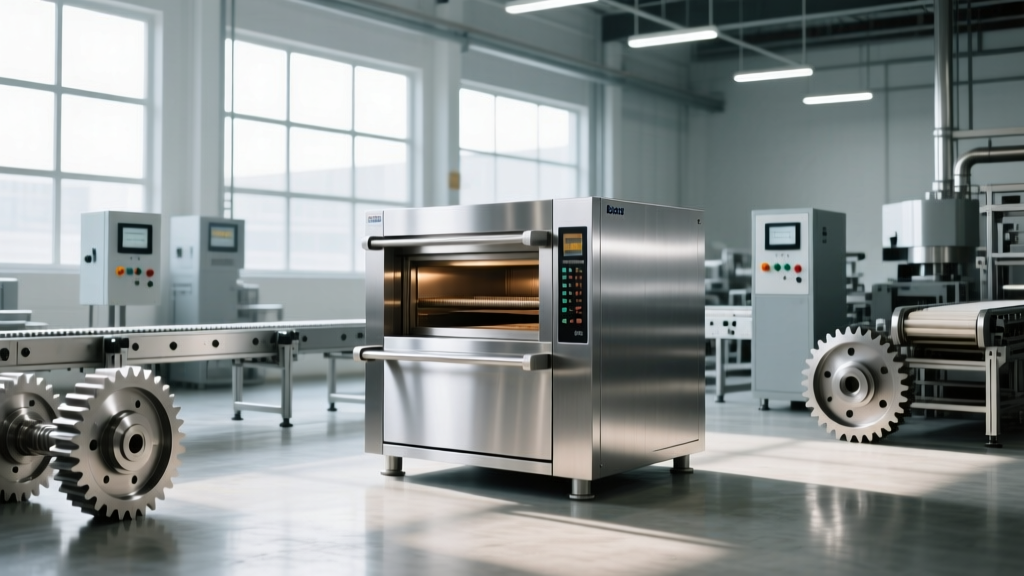
High-capacity spiral mixers like the Diosna SP 120 A and automated sheeters require 480V, 3-phase power. Upgrading a standard 208V/240V commercial space to 480V requires a step-up transformer, which costs between $5,500 and $12,000 depending on the amperage draw and local utility drop fees. Furthermore, gas-fired rack ovens like the Baxter OV-300 demand a minimum 1.5-inch black iron gas line to deliver the required 450,000+ BTUs per hour. Running a new dedicated gas meter and upgrading internal piping typically adds $8,000 to $15,000 to the project.
Ventilation and Makeup Air
Gas ovens and fryers mandate a Type 1 commercial exhaust hood. In 2026, the installed cost for a Type 1 hood, including the exhaust fan, fire suppression system (Ansul), and critical makeup air (MUA) units to prevent negative building pressure, ranges from $1,400 to $1,900 per linear foot. Failing to budget for the MUA unit will result in the oven starving for combustion air, causing soot buildup, failed ignition sequences, and severe product inconsistency.
Warning: Floor Drain and Washdown Compliance
Do not rely on standard residential-style floor drains. High-volume bakeries require trench drains with sediment baskets to catch flour slurry and dough scraps. According to AIB International sanitary design standards, standing water and improper drainage are primary vectors for Listeria and Salmonella in bakery environments. Budget $1,200 to $2,500 per trench drain installation, including core drilling and epoxy flooring patching.
Sanitary Design & Compliance Premiums
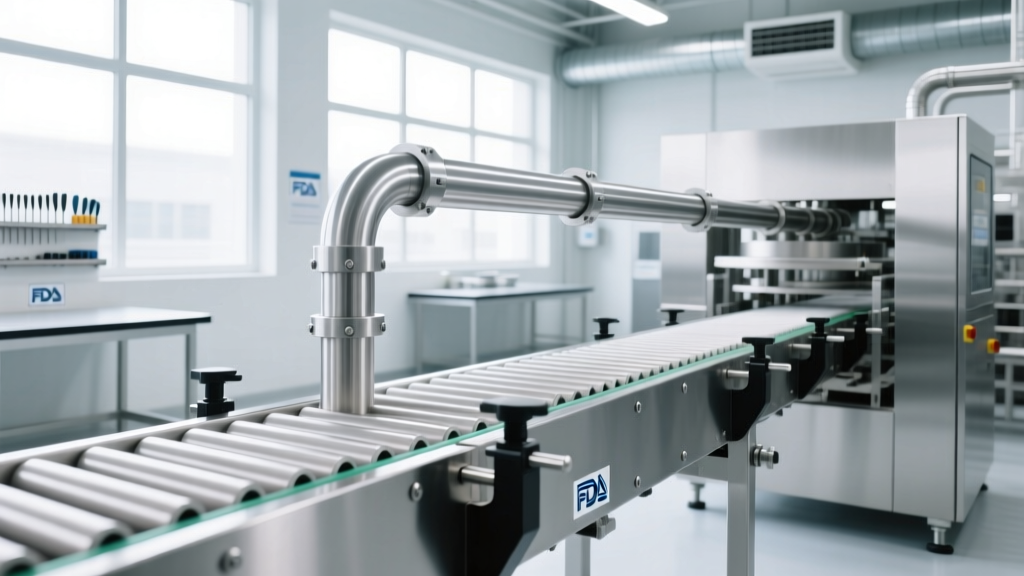
When evaluating equipment, the metallurgy and IP (Ingress Protection) ratings directly impact both the purchase price and long-term compliance. Under FDA FSMA guidelines, bakeries must implement rigorous preventive controls. Equipment manufacturers offer different tiers of sanitary construction:
- Standard Tier (304 Stainless Steel, IP65): Sufficient for dry dough prep areas and packaging rooms. Wipe-down cleaning only.
- Premium Tier (316 Stainless Steel, IP69K): Required for high-moisture, high-sugar, or acidic environments (e.g., fruit filling depositors, cream cheese mixing). 316 steel resists pitting from acidic fruit compounds and harsh quaternary ammonium sanitizers. Expect a 15% to 22% price premium over 304 steel equivalents.
Manufacturers like Rondo and Fritsch offer hygienic design options with tool-less belt removal and open-frame construction, eliminating harborage points for pests. While these hygienic upgrades add 10% to the initial CapEx, they reduce daily sanitation labor by up to 45 minutes per shift, yielding an ROI within 18 months based on current industrial cleaning labor rates.
Total Cost of Ownership: OEM Support & Parts Availability
The geographic origin of the manufacturer dictates your downtime risk. Modern bakery equipment relies heavily on PLCs (Programmable Logic Controllers), variable frequency drives (VFDs), and HMI (Human-Machine Interface) touchscreens.
'The true cost of a European rack oven isn't the purchase price; it's the three-week lead time on a proprietary HMI board when it fails during your holiday bread rush. Domestic brands win on uptime availability, while European brands win on bake consistency and energy efficiency.'
— Facility Engineering Director, Mid-West Wholesale Bakery Cooperative
Domestic manufacturers like Hobart and Baxter maintain massive regional parts depots across North America, often guaranteeing 24-to-48-hour delivery on critical electronic boards and bearings. Conversely, specialized European manufacturers (e.g., Revent, WP Haton, Koenig) may require international shipping for proprietary PLC modules, leading to 10-to-21-day lead times for out-of-warranty electronic components. To mitigate this, budget planners should allocate 3% of the total machinery CapEx to purchase a 'critical spares kit' at the time of initial order, which includes spare VFDs, HMI screens, and thermocouples.
Financing and Depreciation Strategies
Outright cash purchases are increasingly rare for mid-to-large bakery expansions. Most operators leverage equipment financing to preserve working capital for raw ingredients and labor. In the current economic environment, 60-month equipment leases typically carry interest rates between 6.5% and 9.5%, depending on the bakery's credit profile and time in business.
Alternatively, purchasing equipment outright allows operators to leverage Section 179 of the IRS tax code, which permits the full deduction of the equipment purchase price in the year it is placed in service, up to the annual limit. However, this requires significant upfront liquidity. For operators aligned with the Bakery Equipment Manufacturers and Allieds (BEMA) network, many top manufacturers partner with captive financing arms (e.g., Hobart Financial Services) that offer deferred payment plans or step-up leases, allowing the bakery to delay heavy payments until the new production line generates revenue.
When to Buy Used vs. New
To optimize the budget, experienced facility planners mix new and used equipment. Never buy used programmable rack ovens or automated ultrasonic slicers; the degradation of internal insulation, sealed bearings, and proprietary software locks makes refurbishment a severe operational risk. Always buy used for passive or purely mechanical equipment: 304 stainless steel prep tables, manual dough dividers, cooling racks, and proofing cabinets. Refurbished mechanical proofers can be sourced for 40% of the cost of new units, provided the HVAC blower motors and humidity sensors are independently verified prior to installation.