2026 Innovation Trends Reshaping CNC Lathe Machines
Discover how AI-driven tool monitoring, IoT integration, and hybrid manufacturing are transforming CNC lathe machines in 2026.
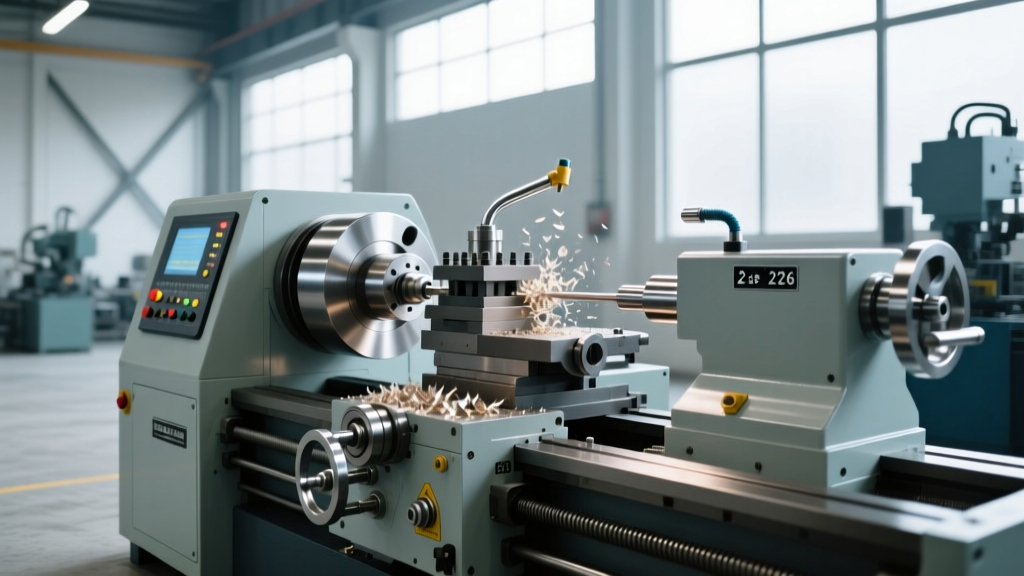
The paradigm of CNC lathe machines has fundamentally shifted from open-loop kinematics to closed-loop, self-correcting ecosystems. In 2026, relying solely on manual G-code optimization and reactive tool changes is a guaranteed path to margin erosion. The modern turning center is now defined by edge-computing AI, hybrid additive-subtractive heads, and standardized IoT protocols that enable true lights-out manufacturing. For production managers and process engineers, understanding these specific technological integrations is critical for capital equipment justification and shop floor competitiveness.
The Shift to Closed-Loop AI Machining
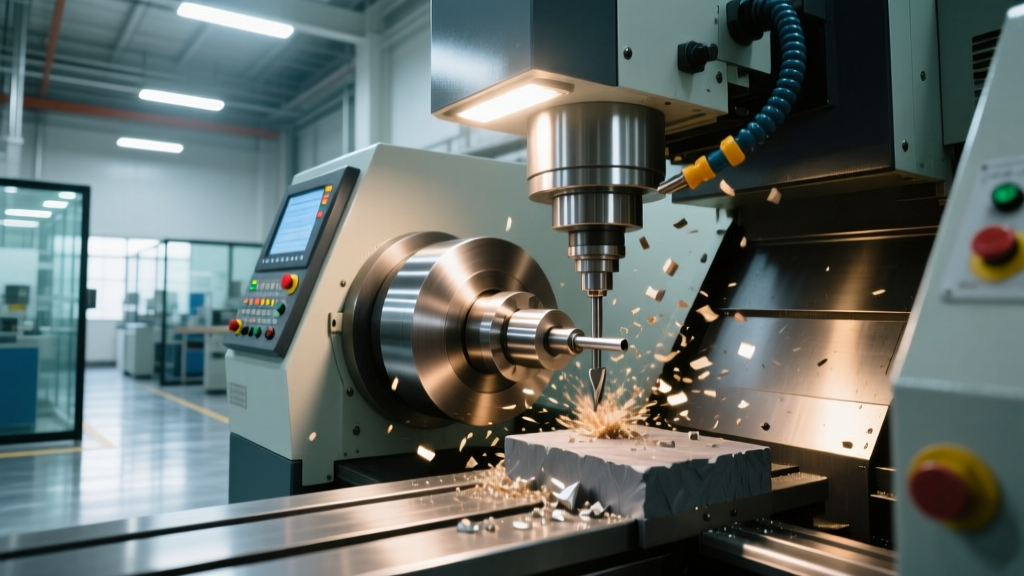
Historically, CNC lathe machines operated on a 'set and forget' philosophy, relying on the operator's intuition to adjust feeds and speeds based on acoustic feedback. Today, controllers like the Siemens Sinumerik ONE and Mazak MAZATROL SmoothAi utilize onboard neural networks to monitor machining dynamics in real time. By integrating piezoelectric force sensors (such as Kistler's multi-component dynamometers) and high-frequency spindle load monitors sampling at 10 kHz, these systems detect micro-chatter and insert wear before they manifest as surface finish defects.
When turning difficult-to-machine alloys like Inconel 718 or Ti-6Al-4V, tool wear is highly non-linear. AI-driven closed-loop systems analyze the specific frequency signature of the cut. If the algorithm detects the harmonic signature of a chipping carbide edge (e.g., a Sandvik Coromant CoroTurn Prime insert), it autonomously reduces the feed rate by 12-15% within milliseconds, preserving the workpiece and preventing catastrophic insert failure. According to data published by Siemens Digital Industries, this closed-loop adaptation reduces scrap rates in aerospace turning operations by up to 22% while extending tool life by an average of 18%.
DATA HIGHLIGHT: AI ROI in High-Volume TurningImplementing AI tool-wear prediction on a fleet of five Okuma GENOS L3000-e lathes yields an average annual savings of $145,000 per machine. This is derived from a 30% reduction in unplanned downtime, a 15% decrease in carbide insert consumption, and the elimination of post-process CMM inspection for first-article validation.
Hybrid Turning: Mill-Turn and Additive Integration
The boundary between subtractive turning and additive manufacturing has dissolved. Hybrid CNC lathe machines now seamlessly integrate Laser Metal Deposition (LMD) heads directly into the turret or upper tool carriage. The DMG MORI LASERTEC 4300 series exemplifies this trend, allowing shops to build up near-net-shape features on a turned shaft using 316L stainless steel or Stellite 6 powder at deposition rates of approximately 1.2 to 1.8 kg/hr, and immediately finish-machine the deposit to a 0.8 µm Ra surface finish using CBN tooling.
Pros and Cons of Hybrid Additive-Subtractive Lathes
- Pros: Eliminates secondary welding setups; enables complex internal cooling channels in rotary tooling; allows for localized repair of high-value oil and gas mandrels rather than full-part scrapping.
- Cons: High initial capital expenditure (typically $950,000 to $1.4M+); requires stringent powder handling and inert gas (Argon) safety protocols; steep learning curve for CAM programmers managing both subtractive toolpaths and additive laser parameters.
IoT Standardization and the Digital Twin Ecosystem
A major bottleneck in early 2020s smart manufacturing was the proprietary nature of machine data. The universal adoption of the MTConnect standard has resolved this, providing a semantic vocabulary for CNC lathe machines to communicate with ERP and MES systems. As outlined by the MTConnect Institute, this open-source standard allows a shop floor to pull standardized XML data streams regarding spindle load, axis position, and alarm states from a mixed fleet of Haas, Doosan, and Mazak machines without expensive custom middleware.
This connectivity feeds the 'Digital Twin'—a virtual replica of the physical lathe. Process engineers can simulate a turning operation in software (such as VERICUT or Siemens NX), accounting for the exact machine kinematics, chuck clamping forces, and tailstock deflection. The verified G-code and setup sheets are then pushed directly to the machine via MTConnect, eliminating 90% of on-machine prove-out time.
2026 Smart Lathe Comparison Matrix
When evaluating capital investments for smart turning cells, it is vital to compare the baseline capabilities of current market leaders. The following matrix contrasts three distinct tiers of CNC lathe machines available in 2026.
| Machine Model | Target Market | AI / Smart Controller | Thermal Compensation | Est. Base Price (USD) |
|---|---|---|---|---|
| Okuma GENOS L3000-e | High-volume production | OSP-P500L with Machining Navi | Thermo-Friendly Concept (±2µm) | $195,000 - $240,000 |
| DMG MORI NLX 2500 Y | Complex mill-turn aerospace | CELOS X with AI Edge computing | Active cooling jackets (±3µm) | $380,000 - $450,000 |
| Mazak INTEGREX i-500S | Done-in-one large format | MAZATROL SmoothAi | Intelligent Thermal Shield | $950,000 - $1.2M+ |
Lights-Out Automation and the Thermal Drift Challenge
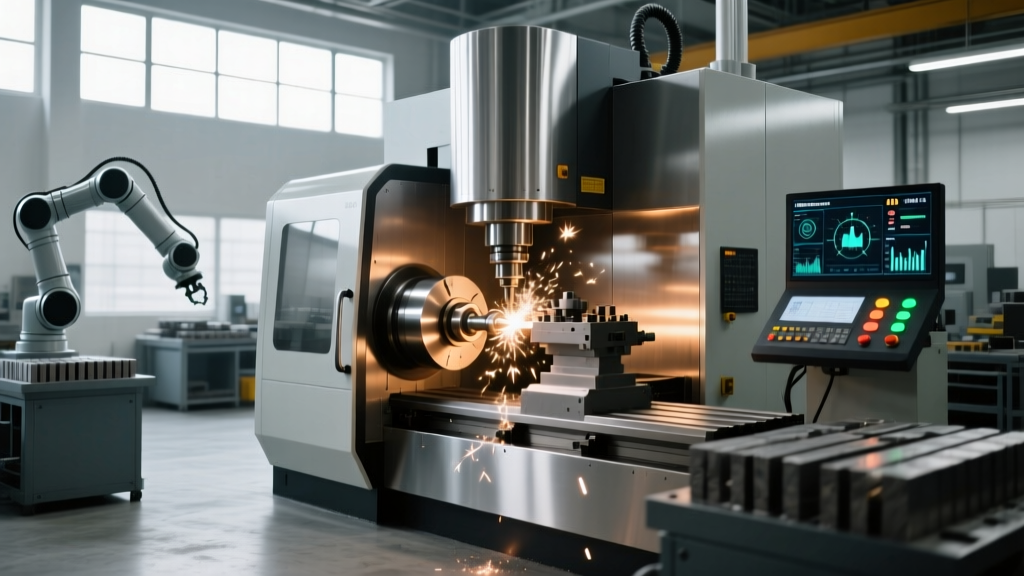
Integrating a 6-axis robot or a cobot (like the Universal Robots UR20 with a 20kg payload) for part loading is only the first step in lights-out turning. The true adversary of unattended CNC lathe machines is thermal drift. As the spindle bearings and ball screws heat up over a 12-hour unattended shift, the Z-axis and X-axis can grow by 15 to 40 microns, pushing tight-tolerance diameters out of spec.
To combat this, modern machines utilize advanced thermal compensation algorithms. Okuma's Thermo-Friendly Concept, for instance, does not just cool the machine; it intentionally designs the cast iron bed to expand symmetrically, while RTD (Resistance Temperature Detector) sensors placed at 14 critical nodes feed real-time thermal expansion data to the controller. The CNC automatically offsets the tool turret position by sub-micron increments to counteract the physical growth of the castings.
Real-World Edge Cases in Unattended Turning
Even with AI and thermal compensation, process engineers must design for physical edge cases to achieve true lights-out success:
- Chip Evacuation Failures: Stringy chips from ductile materials like 304 stainless steel can wrap around the turret and trigger safety interlocks. Solution: Mandatory use of high-pressure coolant (minimum 1,000 PSI / 70 bar) through the toolholder to fracture chips, combined with programmable chip-conveyor reverse-cycling every 45 minutes.
- Raw Material Variance: Bar stock diameter tolerances from the mill can vary by ±0.5mm. If the CNC lathe relies on a fixed G-code roughing pass, a slightly oversized bar will cause excessive tool load and trigger an AI alarm, halting the machine. Solution: Implement a pre-machining probing cycle that measures the raw OD and dynamically adjusts the roughing depth of cut (DOC) on the first pass.
- Tailstock Quill Thermal Growth: When supporting long shafts, the friction between the live center and the workpiece generates localized heat. Shops must utilize programmable hydraulic tailstocks that reduce clamping pressure during finishing passes to prevent shaft bowing.
The integration of these technologies requires a shift in shop floor culture. Operators must transition from manual machinists to process monitors, while programmers must embrace ISO 13399 standardized cutting tool data to feed the AI algorithms accurately. As noted by the National Institute of Standards and Technology (NIST) in their advanced manufacturing frameworks, the shops that successfully map their physical turning processes to digital, data-driven workflows will dictate the pricing and lead-time standards of the late 2020s manufacturing economy.