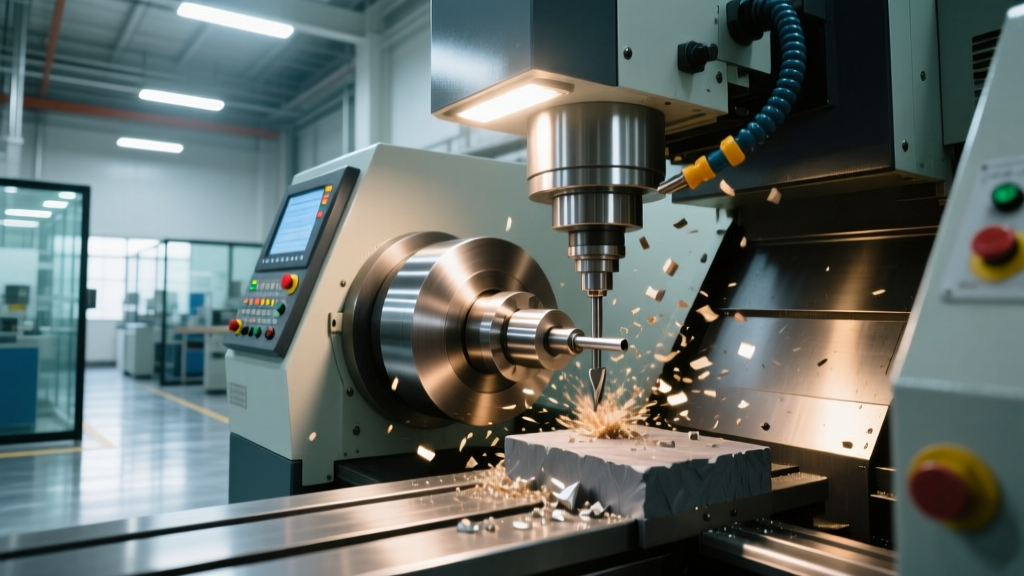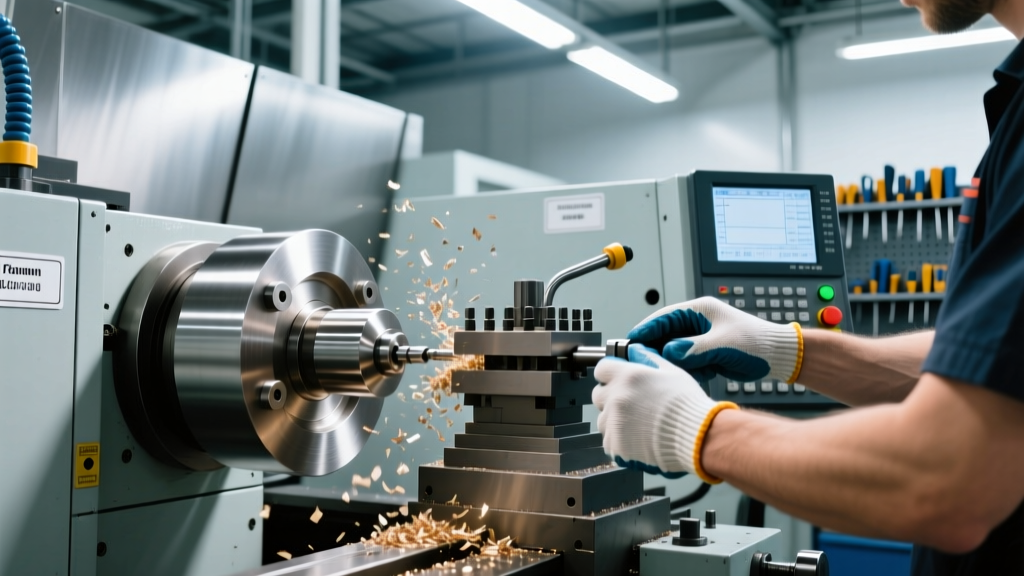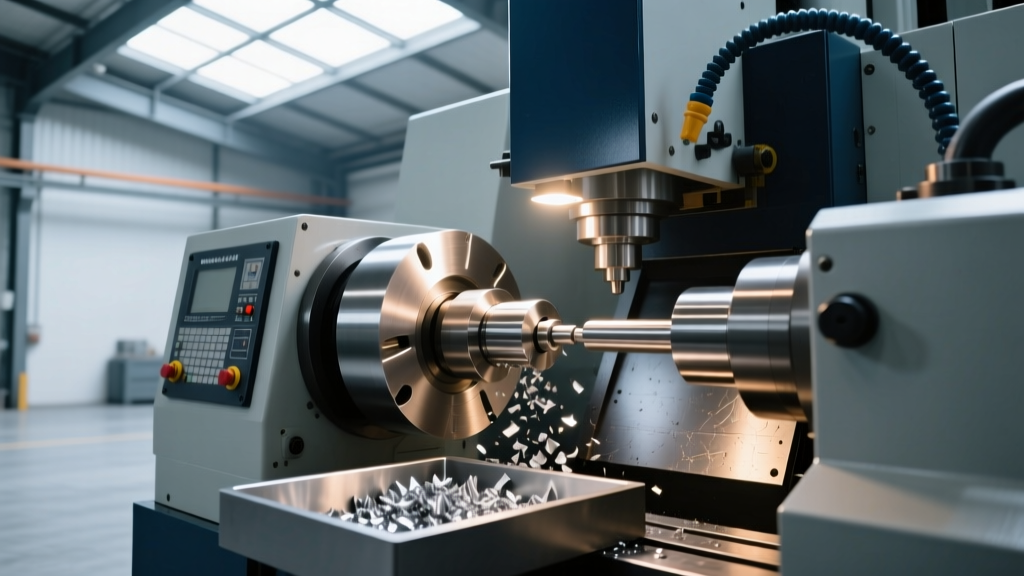
CNC Turning Center Machine Maintenance: Complete Service Schedule
Maximize uptime and precision with our detailed CNC turning center machine maintenance schedule. Learn daily, weekly, and annual service intervals.
A modern CNC turning center machine represents a capital investment ranging from $150,000 for a standard 2-axis model to over $650,000 for a multi-axis mill-turn configuration. Protecting this asset requires moving beyond reactive breakdowns to a rigorous, data-driven preventative maintenance schedule. When way lube degrades or spindle bearings lose their preload, the machine does not just fail catastrophically; it silently degrades part geometry, causing scrap rates to climb long before an alarm triggers.
This guide outlines the exact service intervals, fluid specifications, and diagnostic protocols required to maintain a CNC turning center machine at peak OEM tolerances in 2026.
The True Cost of Deferred Maintenance
Shop floor managers often defer maintenance to meet short-term production quotas. However, the financial math heavily favors scheduled downtime. A catastrophic spindle failure on a mid-sized turning center (such as a DMG MORI CLX or Okuma LT series) typically results in a spindle rebuild costing between $18,000 and $32,000. When factoring in expedited shipping, technician travel, and the $150 to $250 per hour burdened downtime penalty, a single missed annual fluid change can easily cost a shop $45,000 in total losses.
⚠️ Warning: The 'Run-to-Failure' TrapRunning a CNC turning center machine to failure voids most OEM extended warranties. Manufacturers like Mazak and Haas require documented proof of scheduled fluid and filter changes before honoring spindle or servo drive warranties.
Daily Operator Protocol: The First 15 Minutes
Maintenance begins on the shop floor. The daily startup routine should take exactly 12 to 15 minutes and must be completed before the spindle reaches its operating RPM for the first shift.
- Way Lube Verification: Check the sight glass on the way lube reservoir. The system should be charged with ISO VG 68 way oil (e.g., Mobil Vactra Oil No. 2). Verify that the pressure gauge reads between 1.5 and 2.5 bar during the automatic lubrication cycle.
- Refractometer Coolant Test: Draw a sample from the main tank. Standard turning operations require an 8% to 10% concentration. Heavy-duty interrupted cuts on exotic alloys may require up to 12%. Multiply the refractometer reading by the fluid manufacturer's specific correction factor.
- Chuck and Tailstock Inspection: Clean the master jaw serrations with a brass wire brush. Apply a thin coat of molybdenum disulfide (MoS2) based chuck grease. Verify tailstock quill extension and retraction smoothness.
- Hydraulic Pressure Check: Ensure the main hydraulic unit gauge reads the OEM-specified pressure (typically 35 to 70 bar, depending on clamping force requirements).
Weekly and Monthly Preventative Intervals
Weekly tasks focus on contamination control, while monthly tasks address fluid filtration and mechanical wear.
Weekly Tasks
- Chip Conveyor Maintenance: Inspect the hinge belt for trapped bar ends or stringy chips (common when turning ductile iron or certain stainless steels). Grease the conveyor drive chain.
- Coolant Skimming: Run the tramp oil skimmer for at least 4 hours over the weekend. Tramp oil reduces coolant pH, leading to bacterial growth and operator dermatitis.
- Cabinet Air Filters: Remove and wash the electrical cabinet intake filters. Clogged filters cause the servo drives and spindle amplifiers to overheat, triggering thermal shutdown alarms during heavy roughing cycles.
Monthly Tasks
- Way Lube Filter Replacement: Replace the inline way lube filter element. A clogged filter starves the linear guideways, causing stick-slip friction and ruined surface finishes.
- Chuck Cylinder Drawtube Inspection: Check the rotary joint at the rear of the spindle for hydraulic leaks. A leaking drawtube seal will allow hydraulic oil to contaminate the spindle bearings.
The Bi-Annual and Annual Deep Service Matrix
Annual maintenance requires a dedicated 8-to-12-hour machine lockdown. This is when geometric alignments are verified and bulk fluids are replaced.
| Component | Service Task | Interval | Specification / Tolerance | Est. Time |
|---|---|---|---|---|
| Hydraulic Unit | Drain, flush, and replace fluid | Annual | ISO VG 32 or 46 Anti-Wear | 2.5 Hours |
| Spindle Chiller | Clean condenser fins, check refrigerant | Bi-Annual | Temp variance ± 0.5°C | 1.5 Hours |
| Axis Gibs / Preload | Adjust X and Z axis clearance | Annual | Zero backlash via indicator | 3.0 Hours |
| Turret Indexing | Verify curvic coupling alignment | Annual | Tool centerline within 0.005mm | 2.0 Hours |
| Spindle Runout | Test internal and external taper | Annual | < 2.0 microns TIR | 1.0 Hour |
Advanced Diagnostics: Ballbar Testing and Vibration Analysis
In 2026, relying solely on visual inspections is insufficient for high-precision CNC turning center machine upkeep. Integrating advanced diagnostic tools reveals hidden mechanical flaws.
Telescopic Ballbar Testing
Using a device like the Renishaw QC20-W ballbar allows maintenance teams to map the circular interpolation accuracy of the machine. By running a 150mm radius test at a feed rate of 1000 mm/min, the software generates a polar plot that isolates specific errors:
- Servo Mismatch: Appears as an oval shape on the plot, indicating one axis is lagging behind the other. Corrected by adjusting servo loop gains in the CNC parameters.
- Backlash: Shows up as spikes at the axis reversal points. Indicates worn ball screw nuts or loose thrust bearings.
- Stick-Slip: Appears as a jagged, stair-step pattern near the axes, pointing directly to way lube starvation or damaged linear guide blocks.
IoT Vibration Monitoring
Modern turning centers are increasingly equipped with integrated vibration sensors on the spindle housing and turret. By establishing a baseline vibration signature (measured in mm/s RMS), shops can detect bearing degradation months before a failure occurs. A spike in high-frequency acceleration (gE) specifically indicates early-stage spindle bearing pitting, allowing the shop to schedule a rebuild during a planned holiday shutdown rather than mid-production run.
Fluid Management and Environmental Compliance
Proper management of metalworking fluids is not just a machine health issue; it is a regulatory requirement. The EPA guidelines on metalworking fluid management emphasize the need to control bacterial growth and properly dispose of spent coolants. Neglected coolant systems in CNC turning center machines breed mycobacteria, leading to severe respiratory issues for operators and frequent EPA fines for improper wastewater disposal.
Expert Insight: 'Never top off a sump with plain water. As water evaporates from the coolant mixture, it leaves the concentrate behind. Adding only water dilutes the biocides and rust inhibitors, guaranteeing a rancid sump within three weeks. Always top off with a 1% to 2% pre-mixed coolant solution.'
Safety First: Lockout/Tagout (LOTO) Compliance
Maintenance on a CNC turning center machine involves high-voltage electrical cabinets, stored hydraulic pressure, and heavy mechanical components. All annual and deep-service tasks must strictly adhere to OSHA's Control of Hazardous Energy (Lockout/Tagout) standards. Before opening the hydraulic unit to replace filters, the system pressure must be manually bled using the relief valves; otherwise, trapped pressure can cause severe injection injuries when a hose is disconnected.
Frequently Asked Questions
How do I know if my CNC turning center machine way lube is failing?
If you notice a 'chatter' mark on the surface finish of your turned parts, specifically when the tool is moving at low feed rates along the Z-axis, your way lube is likely failing to prevent stick-slip friction. Perform a drop test on the way lube; if it fails to separate cleanly from water-based coolant, the inline filter has bypassed, and the system requires a complete flush.
What is the acceptable spindle runout for high-precision turning?
For standard production turning, a spindle runout of 5 to 8 microns (0.0002" to 0.0003") TIR is acceptable. However, if your CNC turning center machine is utilized for hard turning, micro-machining, or finishing operations requiring Ra < 0.4 µm surface finishes, the spindle runout must be held to less than 2.0 microns (0.00008") TIR at the nose of the spindle taper.
Should I replace the servo motor brushes on my older turning center?
If your machine was built after 2010, it almost certainly utilizes brushless AC servo motors, which require zero brush maintenance. If you are maintaining a legacy DC servo machine, brushes should be inspected every 6 months and replaced when they reach 1/3 of their original length to prevent commutator scoring, which will necessitate a $4,000+ motor rebuild.