Semiconductor CNC Precision Machining for Auto Aftermarket
How automotive aftermarket shops adopt semiconductor CNC precision machining standards for ADAS sensors and EV parts to meet strict safety compliance.
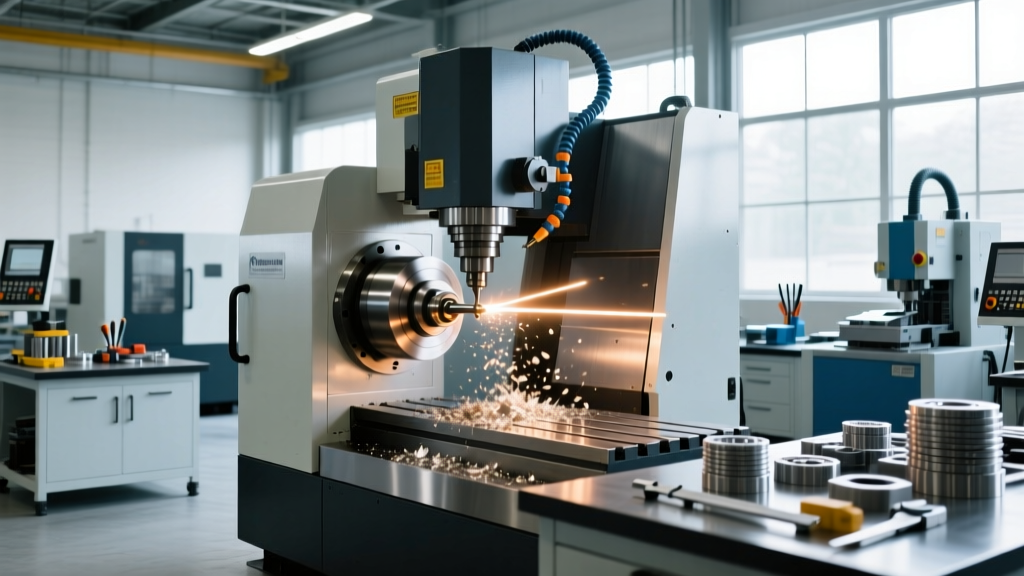
The modern automotive aftermarket is no longer defined solely by cast-iron exhaust manifolds and stamped steel suspension brackets. With the rapid proliferation of Level 3 and Level 4 Advanced Driver-Assistance Systems (ADAS) retrofits, LiDAR integration, and high-voltage EV thermal management systems, aftermarket manufacturers are hitting a strict tolerance wall. Standard automotive machining protocols cannot meet the geometric and surface-finish demands of mmWave radar enclosures, silicon carbide (SiC) inverter heat sinks, and optical sensor housings. To bridge this gap and ensure functional safety, top-tier contract machine shops are adopting semiconductor cnc precision machining methodologies.
The Compliance Gap: Automotive vs. Semiconductor Tolerances
Historically, automotive aftermarket compliance focused on dimensional interchangeability and basic structural integrity. However, when an aftermarket LiDAR housing fails to seal due to a 0.001-inch warpage, the resulting moisture ingress blinds the sensor, creating a catastrophic safety hazard. By importing semiconductor-grade compliance frameworks, machine shops can guarantee the hermetic sealing and EMI (Electromagnetic Interference) shielding required by modern vehicular electronics.
| Compliance Metric | Standard Auto Aftermarket | Semi-Grade Auto Electronics |
|---|---|---|
| Dimensional Tolerance | ±0.005" (127 µm) | ±0.0002" (5 µm) |
| Surface Finish (Ra) | 64 - 125 µin | 8 - 16 µin (Optical mating surfaces) |
| Cleanliness Standard | Visual / Solvent Wipe | ISO Class 7 / Ionic Testing |
| Traceability | Batch / Lot Number | Individual Part Serialization (AS9100/SEMI) |
| Inspection Protocol | Go/No-Go Gauges, Calipers | Zeiss CONTURA CMM, Keyence 3D Macroscopes |
Navigating the Compliance Intersection: SEMI S2 and Automotive Safety
When manufacturing components that house sensitive silicon, the machinery itself must comply with stringent environmental and safety guidelines. The NIOSH guidelines for machining safety primarily address operator exposure to metalworking fluid aerosols. However, in semi-grade auto machining, the safety focus expands to include the component's exposure to the machining environment. Adapting SEMI S2 (environmental, health, and safety guideline for semiconductor manufacturing equipment) principles to automotive CNC centers ensures that coolant mist, tramp oil, and particulate matter do not compromise the micro-electronics that will eventually be mated to the machined housings.
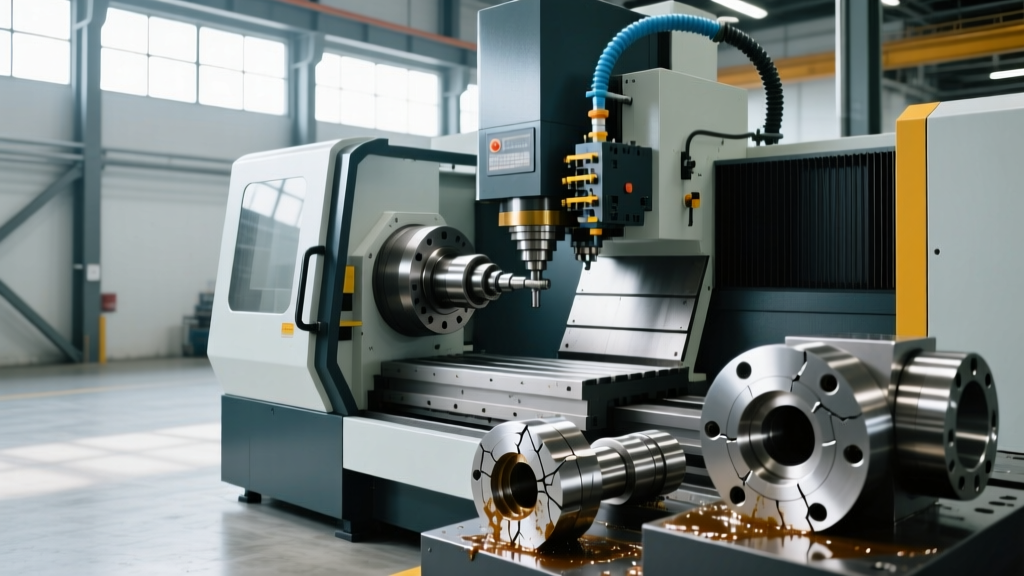
⚠️ Safety Warning: Ionic Contamination in ADAS HousingsStandard water-soluble coolants leave behind ionic residues (sodium, potassium, chlorine). When an aftermarket radar housing is assembled and exposed to high-humidity environments, these ions leach out, causing electrochemical migration (dendrite growth) on the internal PCBs. This leads to micro-shorts and sudden ADAS failure. Shops must implement ultra-pure DI (Deionized) water-based coolants or switch to high-purity synthetic ester fluids for these specific operations.
Contamination Control: Achieving ISO Class 7 for Sensor Assembly
You cannot machine a LiDAR optical mount on a standard shop floor and immediately assemble the laser diode. Particulate contamination as small as 5 microns can scatter laser beams, rendering the aftermarket sensor useless. According to ISO 14644-1:2015 standards for cleanrooms and associated controlled environments, achieving an ISO Class 7 (FED-STD-209E Class 10,000) environment is mandatory for the final machining, cleaning, and packaging of automotive optical and RF components.
Facility Upgrade Economics (2026 Data)
Upgrading an existing 2,000-square-foot precision machining cell to ISO Class 7 compliance requires significant capital expenditure. In 2026, the average cost ranges from $180 to $240 per square foot, totaling $360,000 to $480,000. This includes:
- HEPA terminal filter ceilings (99.99% efficiency at 0.3 µm).
- Positive pressure airlocks with interlocking door systems.
- Sticky mat flooring and anti-static ESD epoxy coatings.
- Stainless steel, non-outgassing CNC enclosures with localized HEPA vacuum extraction.
Step-by-Step: Qualifying an Auto Shop for Semi-Auto Compliance
Transitioning a traditional automotive aftermarket shop to handle semiconductor-grade tolerances requires a systematic overhaul of both hardware and quality management systems (QMS).
- Spindle Thermal Stabilization: Install chiller units capable of maintaining spindle coolant at 20°C ± 0.1°C. Thermal growth in a standard HSK-63 spindle can exceed 0.0008" over a 4-hour shift, destroying semi-grade tolerances.
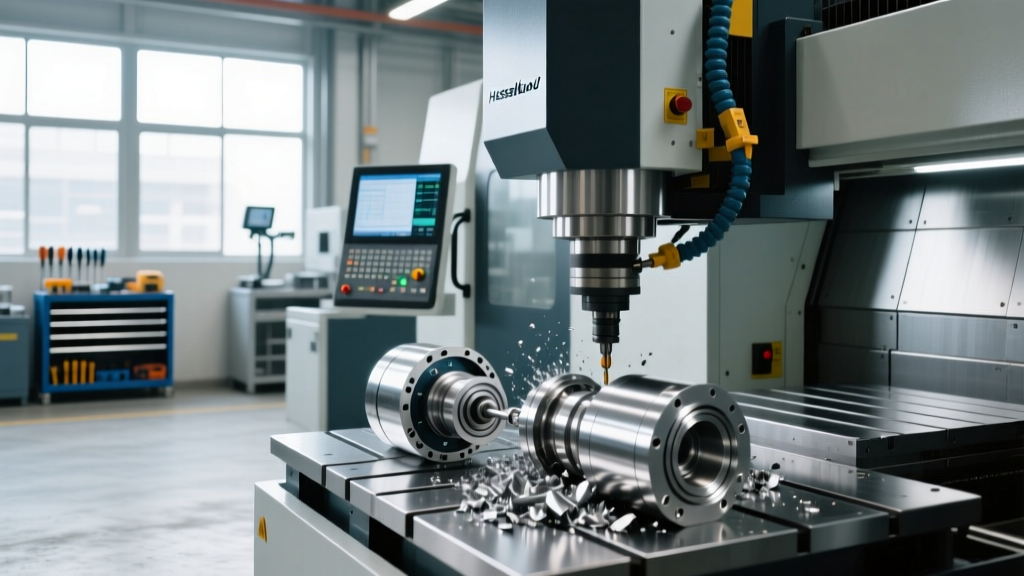
- Tooling Upgrades: Replace standard carbide end mills with PCD (Polycrystalline Diamond) tooling for aluminum 6061-T6 and 7075-T6 radar housings. PCD eliminates built-up edge (BUE) and consistently holds the Ra 16 µin finish required for EMI gasket sealing surfaces.
- Implement Multi-Stage Cleaning: Post-machining, parts must undergo an ultrasonic cleaning cycle in a 15% saponifier solution at 60°C, followed by a cascade of three DI water rinse tanks, and concluding with a vacuum drying oven to prevent water spotting.
- Establish SAE J3016 Alignment: Align your PPAP (Production Part Approval Process) documentation with the functional safety requirements outlined in SAE International's J3016 taxonomy for driving automation systems. Prove that your machining deviations will not cause the ADAS system to violate its operational design domain (ODD).
Cost-Benefit Analysis: In-House Cleanroom vs. Outsource
"Many Tier 2 automotive aftermarket suppliers attempt to machine the raw housing in-house, then ship it to a specialized semiconductor facility for final cleaning and inspection. While this saves upfront CapEx, the logistics of shipping unsealed, raw-machined aluminum across the country introduces oxidation and handling damage that frequently results in a 12% to 18% scrap rate at the receiving cleanroom."
— 2025 Automotive Electronics Manufacturing Report
Pros of In-House Semi-Grade Upgrades
- Complete chain-of-custody and material traceability.
- Higher profit margins (Semi-grade auto parts command 4x-6x standard automotive pricing).
- Elimination of transit-induced oxidation and particulate contamination.
- Faster iteration cycles for aftermarket EV prototype development.
Cons & Operational Risks
- Massive initial CapEx ($400k+ for cleanroom integration).
- Requires specialized metrology technicians (CMM programmers with GD&T expertise).
- Strict HVAC maintenance schedules; filter replacements cost $15,000+ annually.
- Lower spindle utilization rates due to extended setup and inspection times.
The Future of Aftermarket Precision
As vehicles transition into software-defined platforms, the hardware that supports them demands uncompromising precision. The integration of semiconductor cnc precision machining into the automotive aftermarket is no longer a niche capability; it is a fundamental safety requirement. Machine shops that invest in ISO-certified contamination control, DI coolant systems, and sub-micron metrology will dominate the lucrative EV and ADAS retrofit markets, while those relying on legacy automotive tolerances will be engineered out of the supply chain.