Railroads Custom O-Rings: CNC Machining for Maintenance Schedules
Compare CNC rapid prototyping vs production machining for railroad maintenance schedules, focusing on custom O-rings, lead times, and FRA compliance.
Federal Railroad Administration (FRA) Compliance and Seal Failures
Railroad fleet maintenance operates on unforgiving timelines dictated by the Federal Railroad Administration (FRA). Locomotives such as the GE AC4400CW and EMD SD70M-2 are subject to strict 92-day periodic inspections, 368-day annual overhauls, and 5-year heavy repair cycles. During these intervals, pneumatic brake systems—specifically Wabtec 26-L and 30-CDX brake valves—are routinely disassembled, inspected, and resealed.
When a legacy sealing component is discontinued or a specialized gland requires re-machining due to scoring, maintenance depots face a critical bottleneck. Grounding a locomotive (often referred to as a Train on Ground, or TOG) costs freight operators upwards of $1,200 per day in lost revenue and network disruption. Consequently, the decision between CNC rapid prototyping and full production machining becomes a primary lever for maintaining service schedules.
Operational Warning: Never substitute standard hardware-store elastomers for locomotive pneumatic seals. FRA regulations mandate that replacement seals meet original equipment manufacturer (OEM) specifications for pressure cycling and temperature resistance. Improvised sealing materials can lead to catastrophic brake valve failure during emergency pneumatic dumps.Rapid Prototyping vs. Production Machining: The Maintenance Matrix
Machine shops serving the rail industry must segment their workflows based on the urgency of the maintenance schedule. Emergency AOG (Aircraft on Ground) equivalents require immediate turnaround, while scheduled 5-year fleet overhauls allow for optimized production runs.
| Parameter | CNC Rapid Prototyping (Emergency TOG) | CNC Production Machining (Scheduled Overhaul) |
|---|---|---|
| Use Case | Grounded locomotive awaiting specific Wabtec valve seal | Fleet-wide 5-year heavy repair cycle (50+ units) |
| Lead Time | 24 to 48 hours | 3 to 6 weeks |
| Setup Cost | $150 - $300 (Expedited programming & fixturing) | $800 - $1,500 (Custom form tools, automated bar feeding) |
| Per-Part Cost | $65 - $120 (Includes cryogenic treatment/setup) | $2.15 - $5.50 (Economies of scale) |
| CNC Methodology | Manual loading, cryogenic freezing, single-op turning | Swiss-type auto-lathes, continuous extrusion/cutting |
| Tolerance (ISO 3601-1) | Class B (+/- 0.010") | Class A (+/- 0.005") |
Sourcing Railroads Custom O-Rings: CNC Machining Workflows
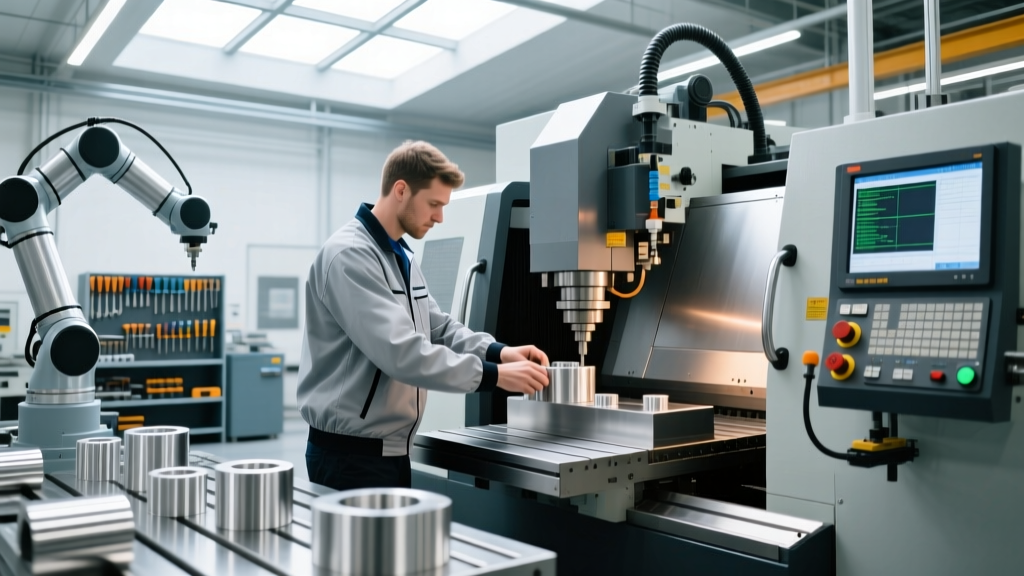
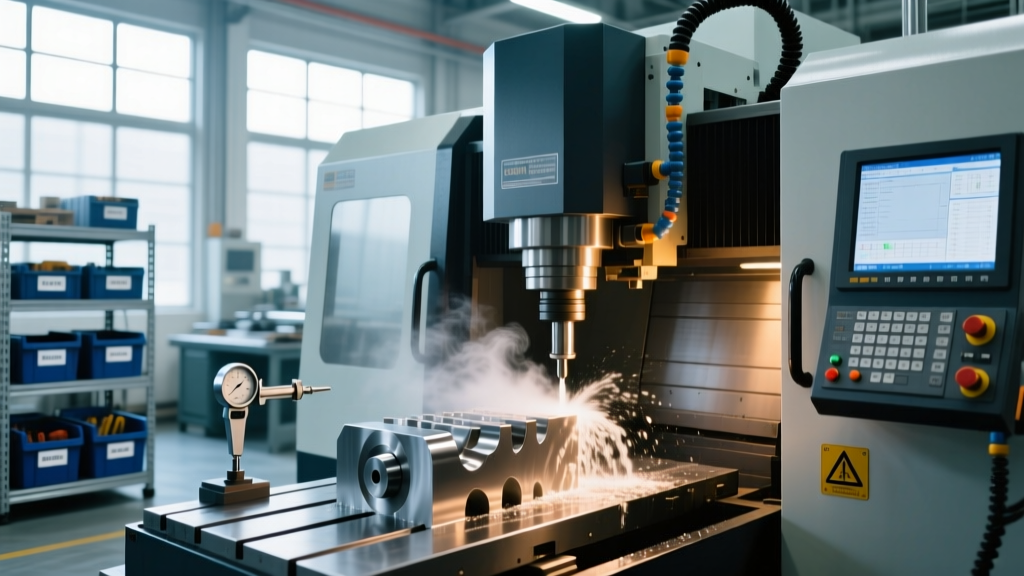
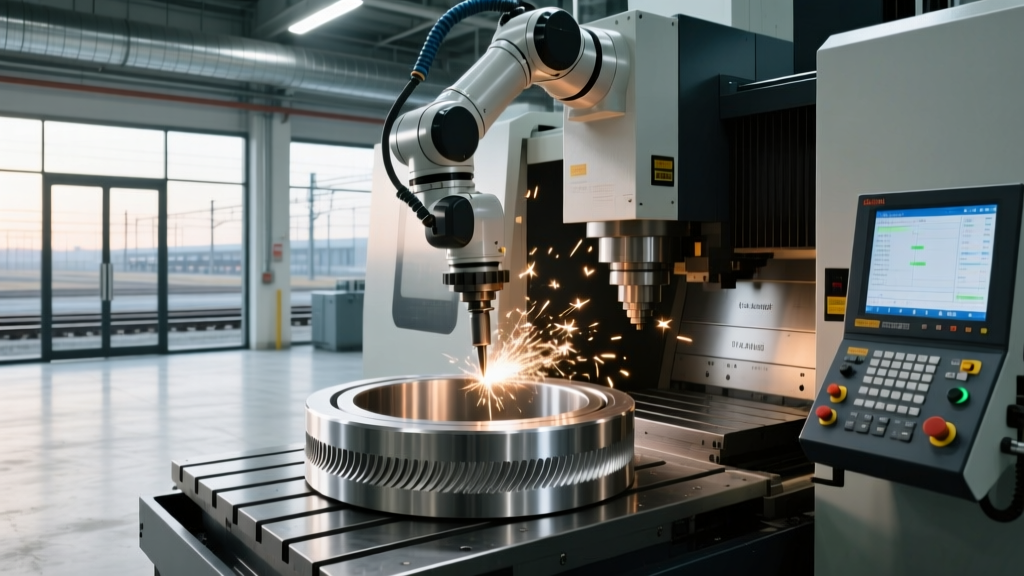
For fleets requiring railroads custom o-rings, CNC machining provides the exact dimensional control necessary for high-pressure pneumatic and diesel fuel systems. However, machining elastomers and polymers is fundamentally different from cutting steel or aluminum. Shops must deploy specialized techniques to maintain the tight tolerances required for dynamic sealing.
Cryogenic CNC Turning for Elastomers
Standard CNC turning of Nitrile (Buna-N) or Viton (FKM) O-ring cord stock is nearly impossible at room temperature; the material deflects under cutting forces, resulting in torn edges and out-of-tolerance diameters. To achieve production-grade tolerances on custom prototypes, advanced machine shops utilize cryogenic freezing.
- The Process: Elastomer stock is submerged in liquid nitrogen (-320°F / -196°C) until it reaches a glassy, rigid state.
- Machining Window: The frozen stock is loaded into a CNC lathe (such as a Haas ST-10) and machined using ultra-sharp, uncoated carbide inserts with high positive rake angles.
- Thaw & Relaxation: As the part returns to room temperature, it expands. Engineers must calculate the exact thermal contraction coefficient to machine the part undersized, ensuring it settles precisely at the target 4.500-inch inner diameter once thawed.
PTFE (Teflon) Seal Machining
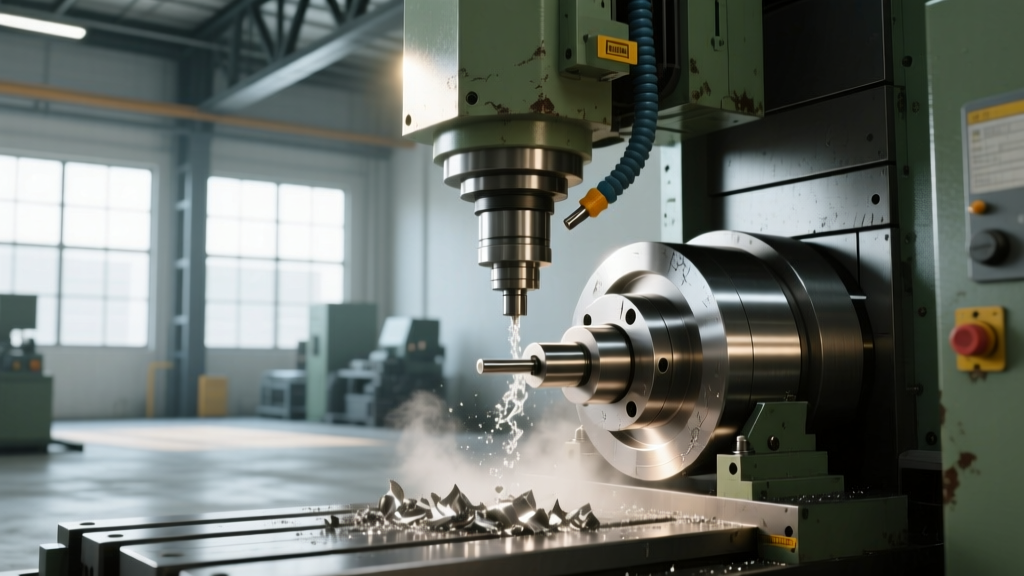
For low-friction dynamic seals in locomotive air compressors, PTFE is the material of choice. Unlike elastomers, PTFE can be CNC turned at room temperature but suffers from severe creep and memory. Machining PTFE requires spindle speeds exceeding 2,500 RPM and extremely slow feed rates (0.001 to 0.003 inches per revolution) to prevent the material from smearing rather than shearing. Production machining of PTFE O-rings and backup rings often utilizes Swiss-type lathes like the Tsugami S206-D, which support the slender polymer profiles with guide bushings to eliminate vibration.
Material Specifications for Locomotive Environments
Selecting the correct material is just as critical as the machining method. The Association of American Railroads (AAR) and OEM guidelines dictate specific elastomers based on the locomotive subsystem:
Material Selection Guide:- Viton (FKM): Mandatory for GE Evolution Series fuel injection lines and high-temperature turbocharger oil seals. Resists temperatures up to 400°F and aggressive biodiesel blends.
- Buna-N (Nitrile): The standard for general pneumatic brake valves and air reservoir seals. Excellent compression set recovery but degrades rapidly if exposed to ozone or UV light.
- EPDM: Used exclusively for exterior weather sealing, cab doors, and coolant system gaskets. Never use EPDM in petroleum-based lubricant or fuel environments.
- PTFE (Teflon): Used for pneumatic cylinder rod seals where low friction is required to prevent stick-slip during cold-weather brake applications.
Strategic Scheduling for Machine Shops and Maintenance Depots
To optimize maintenance schedules, railroad depots are increasingly adopting hybrid inventory strategies in 2026. Rather than relying solely on OEM backorders, Tier 1 maintenance facilities are partnering with local CNC job shops to establish 'digital inventories.' By storing the CAD files and CNC toolpaths for legacy O-ring glands and custom seals, shops can bypass the prototyping premium and immediately trigger short-run production machining the moment a 92-day inspection reveals a scoring defect.
This shifts the paradigm from reactive emergency prototyping to proactive, scheduled micro-production runs, aligning perfectly with predictive maintenance algorithms that forecast seal degradation based on locomotive mileage and ambient operating temperatures.
Frequently Asked Questions
Can CNC machining produce vulcanized O-ring splices?
No. CNC machining is used to cut O-rings from continuous extruded cord stock or turn them from solid billets (like PTFE). Vulcanized splicing requires heat and pressure molds. However, CNC knife-cutting systems are frequently used to precisely cut extruded cord to exact lengths before the ends are sent to a vulcanizing press.
What is the typical lifespan of a CNC-machined PTFE backup ring in a locomotive brake valve?
In a standard Wabtec 26-L brake valve operating at 130-140 PSI, a precision CNC-machined PTFE backup ring will typically last through two 5-year heavy repair cycles (approx. 10 years) before exhibiting the cold-flow deformation that necessitates replacement.
Why do machine shops charge a premium for cryogenic elastomer turning?
The premium covers the cost of liquid nitrogen, specialized insulated fixturing, and the engineering time required to calculate thermal expansion offsets. Furthermore, the machining window is limited to 3-5 minutes before the elastomer thaws and becomes uncuttable, requiring frequent stops and re-freezing.