Metals for CNC Machining Architectural Facades: A Technical Guide
Explore the technical specifications of metals for CNC machining architectural facades, including alloys, tolerances, and surface finish requirements.
Architectural metalwork and building facades represent one of the most demanding intersections of aesthetic design and structural engineering. When selecting metals for CNC machining architectural facades, fabricators must balance parametric design complexity with severe environmental durability requirements. Unlike standard precision enclosure parts, facade panels must interlock flawlessly across hundreds of square feet while managing thermal expansion, wind shear, and water ingress. This guide details the exact metallurgical specifications, toolpath strategies, and quality assurance protocols required for high-performance architectural CNC machining.
The Engineering Demands of Architectural CNC Metalwork
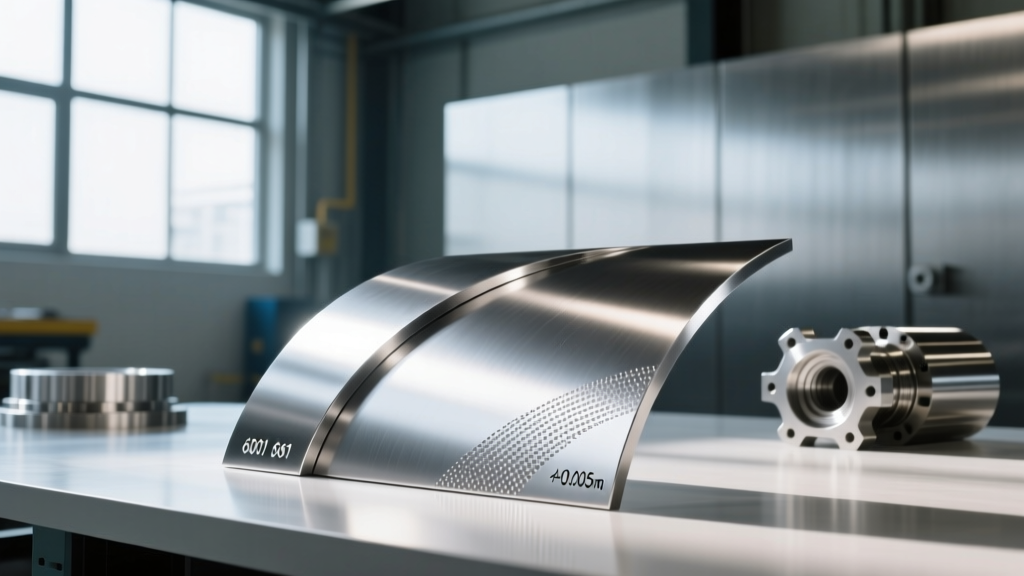
Facade systems are not merely decorative skins; they are dynamic building envelopes. A CNC-machined architectural panel must maintain strict flatness and profile tolerances to ensure weather-tightness at the joints. Standard machining tolerances of ±0.010 inches are often insufficient for large-format interlocking cladding. Instead, precision contract machine shops target ±0.005 inches on critical interlock nodes, while allowing controlled relaxation in non-mating aesthetic zones to manage machining costs.
⚠️ Thermal Expansion Warning: When programming G-code for large-format aluminum facade panels (e.g., 4x10 feet), machinists must account for ambient shop temperature. Aluminum expands at roughly 13 µin/in-°F. A 120-inch panel machined at 65°F will grow by nearly 0.040 inches if installed on a building exterior at 115°F. Advanced 5-axis CNC shops utilize probe-based thermal compensation routines to adjust toolpaths dynamically based on real-time material temperature.Top Metals for CNC Machining Architectural Facades
The choice of alloy dictates the machining strategy, tooling wear, and final exterior longevity. Below are the primary alloys specified by architectural firms for CNC routing and milling.
Aluminum 5005-H34 and 5052-H32 (The Anodizing Standard)
For facades requiring a Class I anodized finish, the 5000-series aluminum-magnesium alloys are the undisputed industry standard. According to The Aluminum Association designation system, 5005-H34 offers superior consistency in grain structure, which prevents the 'streaking' or 'banding' effect that plagues anodized 6061-T6 panels. From a machining perspective, 5005 is gummier than 6061. It requires solid carbide end mills with polished flutes and Zirconium Nitride (ZrN) coatings to prevent Built-Up Edge (BUE) and ensure mirror-like floor finishes on pocketed reveal details.
Stainless Steel 316L (Coastal and High-Corrosion Environments)
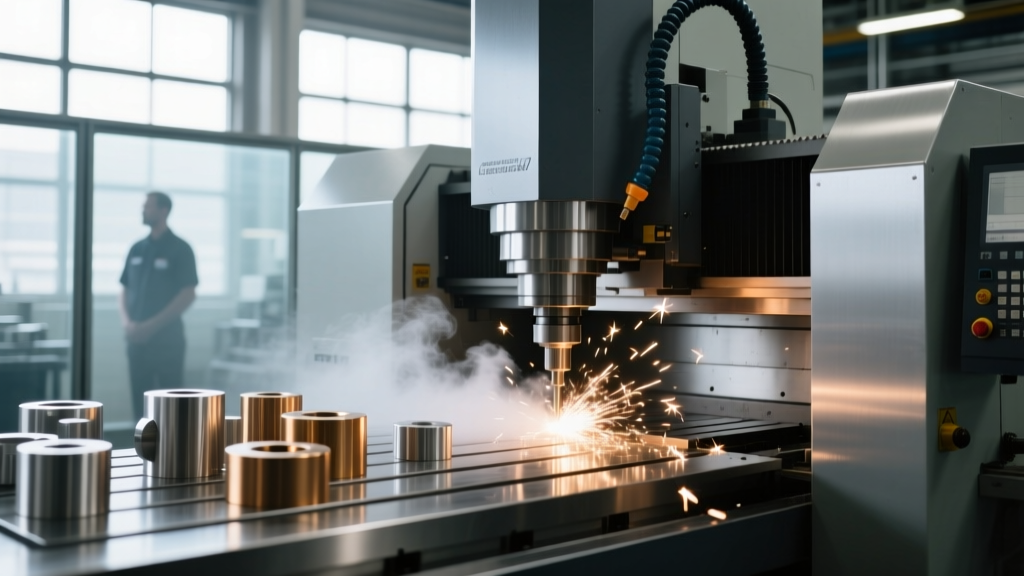
For projects within 1,500 meters of a coastline, 316L stainless steel is mandated due to its 2-3% molybdenum content, which drastically reduces pitting from chloride exposure. CNC machining 316L for architectural brackets and heavy-duty mullion components is notoriously difficult. The austenitic structure work-hardens rapidly under the cutting tool. Machinists must maintain surface speeds of 150-200 SFM and aggressive feed rates (0.002-0.004 IPR) to cut beneath the work-hardened layer, utilizing high-pressure through-spindle coolant (minimum 1,000 PSI) to evacuate stringy chips and prevent tool deflection.
Architectural Bronze (C38500) and Copper (C11000)
High-end luxury and heritage restorations frequently utilize living metals that develop a natural patina. The Copper Development Association notes that C38500 (architectural bronze) provides excellent machinability (rated at 90) due to its lead content, allowing for intricate 3D contouring of decorative facade nodes. However, C11000 (pure copper) is highly ductile and prone to smearing. Machining copper facades requires razor-sharp, uncoated carbide tools with high positive rake angles and mist lubrication to preserve the pristine surface required for uniform patina development.
Alloy Comparison Matrix for Facade Applications
| Alloy | Yield Strength (ksi) | Machinability | Optimal Finish | Est. CNC Cost / Sq Ft |
|---|---|---|---|---|
| 5005-H34 Al | 28 | Moderate (Requires ZrN) | Class I Anodize | $18 - $26 |
| 6061-T6 Al | 40 | Excellent | PVDF Fluorocarbon | $14 - $22 |
| 316L SS | 30 | Poor (Work Hardens) | Passivated / Brushed | $65 - $95 |
| C38500 Bronze | 20 | Excellent | Clear Coat / Patina | $85 - $120 |
Toolpath Strategies for Parametric Facade Contouring
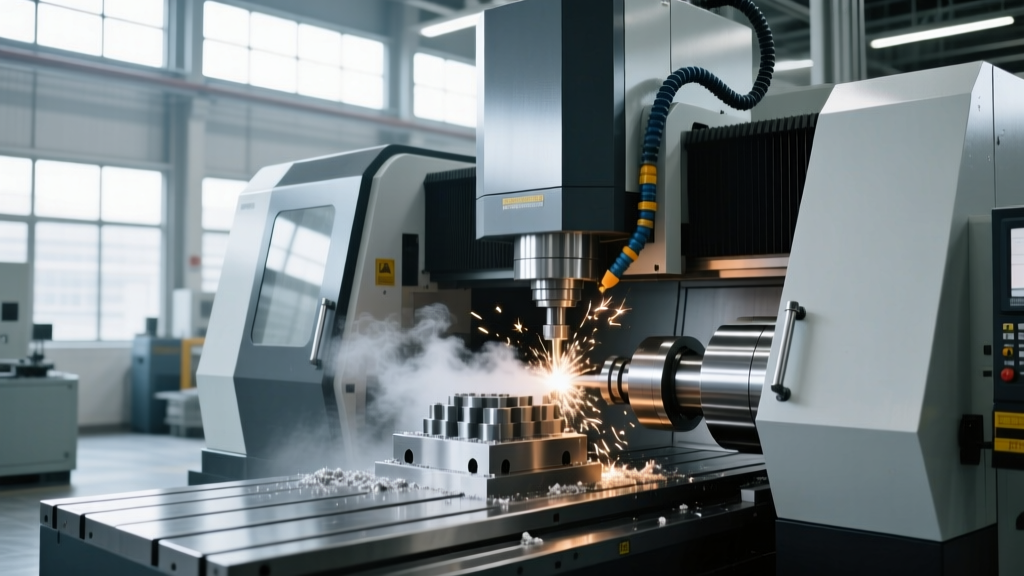
Modern architectural metalwork heavily relies on parametric design, resulting in doubly-curved, non-uniform rational B-spline (NURBS) surfaces. Machining these profiles on 5-axis CNC gantry routers requires specialized toolpath generation to avoid gouging and minimize cusp height.
- Swarf Machining for Flanges: For the interlocking edge flanges of facade panels, swarf cutting (using the side of the end mill in a 5-axis simultaneous move) is preferred over 3D contouring. This produces a perfectly straight, zero-cusp mating surface critical for EPDM gasket compression.
- Adaptive Trochoidal Clearing: When routing deep reveal pockets in 1/2-inch thick aluminum plates, adaptive clearing toolpaths maintain a constant radial engagement angle. This prevents the sudden spike in cutting forces that causes thin-wall deflection and chatter marks on the visible facade surface.
- Z-Level Finishing with Bull Nose Tools: For sweeping 3D curves, a bull nose (corner radius) end mill is utilized. The corner radius distributes cutting forces more evenly than a flat end mill, extending tool life and leaving a uniform scallop pattern that is easily blended during the vibratory finishing stage.
Surface Preparation for AAMA/FGIA Fluorocarbon Coatings
When aluminum facades are destined for PVDF (polyvinylidene fluoride) paint systems, the CNC machining marks directly impact coating adhesion and light refraction. The Fenestration and Glazing Industry Alliance (FGIA) governs these specifications under the AAMA 2604 and 2605 standards. AAMA 2605, the most stringent specification for exterior architectural coatings, requires a multi-stage chrome phosphate or zirconium oxide pretreatment.
"If a CNC machinist leaves directional tool marks deeper than 32 micro-inches (Ra) on a facade panel, the pretreatment chemicals will pool in the valleys. This causes localized coating thickness variations that lead to premature chalking and UV degradation in the field." — Senior Metallurgist, Architectural Cladding Division.
To achieve the required < 32 Ra surface finish directly off the CNC machine, fabricators must employ high-feed milling strategies with step-over rates not exceeding 4% of the tool diameter, followed by a standardized 120-grit orbital sanding protocol before the panels enter the wash line.
Quality Assurance: The Metrology Protocol for Facade Nodes
Inspecting large-scale architectural CNC components cannot be done with standard hand tools. Machine shops specializing in architectural metalwork implement a rigorous, multi-tier metrology framework to guarantee field fit-up.
- In-Situ Probing: While the panel is still fixtured on the CNC bed, a Renishaw touch probe maps the critical interlock datums. If thermal drift or tool wear has pushed a dimension beyond the ±0.005" tolerance, the control automatically updates the tool offset and executes a spring pass.
- Laser Tracker Verification: For panels exceeding 8 feet in length, a laser tracker (such as a Faro Vantage) is used to measure overall flatness and twist. This optical metrology captures thousands of data points across the panel surface, generating a color-mapped deviation report against the original CAD NURBS model.
- CMM for Hardware Nodes: The machined aluminum or stainless steel nodes that connect the facade panels to the structural steel subframe are inspected on a bridge-style Coordinate Measuring Machine (CMM). True Position tolerances on the 5/8-11 UNC mounting holes are verified to within 0.002" to ensure structural bolts align perfectly during high-rise installation.
- Go/No-Go Assembly Jigs: Before shipping, a representative sample of mating panels is assembled on a master precision-ground steel jig. Feeler gauges are used to verify that the continuous EPDM gasket channels maintain a uniform 0.125" compression gap across the entire 10-foot joint length.
Selecting the correct metals for CNC machining architectural facades is a complex optimization problem involving metallurgy, structural mechanics, and precision manufacturing. By adhering to strict alloy specifications, deploying advanced 5-axis toolpath strategies, and enforcing rigorous optical metrology, contract machine shops can deliver building envelopes that are both visually stunning and structurally impervious.