High Precision CNC Machining Parts in Medical Device Manufacturing
Discover how high precision CNC machining parts drive medical device manufacturing, featuring material specs, ISO 13485 compliance, and implant case studies.
The Tolerance Reality: Sub-Micron Demands in Implantable Devices
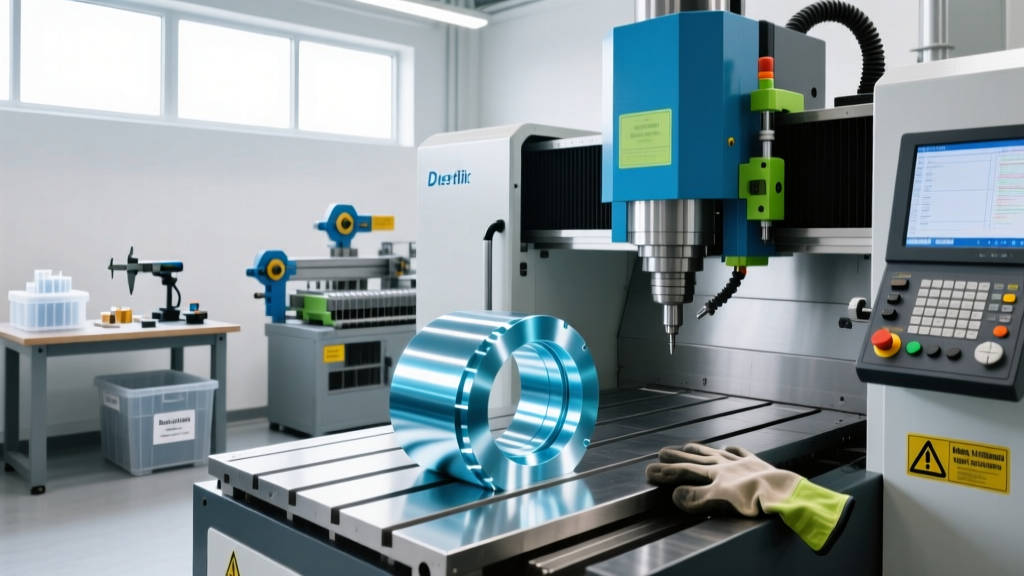
Manufacturing high precision CNC machining parts for the medical sector operates under a fundamentally different paradigm than commercial or aerospace machining. While a standard aerospace bracket might hold ±0.001-inch tolerances, implantable orthopedic devices—such as femoral stems and acetabular cups—routinely demand geometric tolerances of ±0.0002 inches (5 microns) to ensure proper load distribution and prevent premature wear in articulating surfaces. Achieving this requires not just high-end machinery, but a thermally stabilized production environment where ambient temperature fluctuations are held to ±1°C to prevent thermal expansion of the workpiece and machine castings.
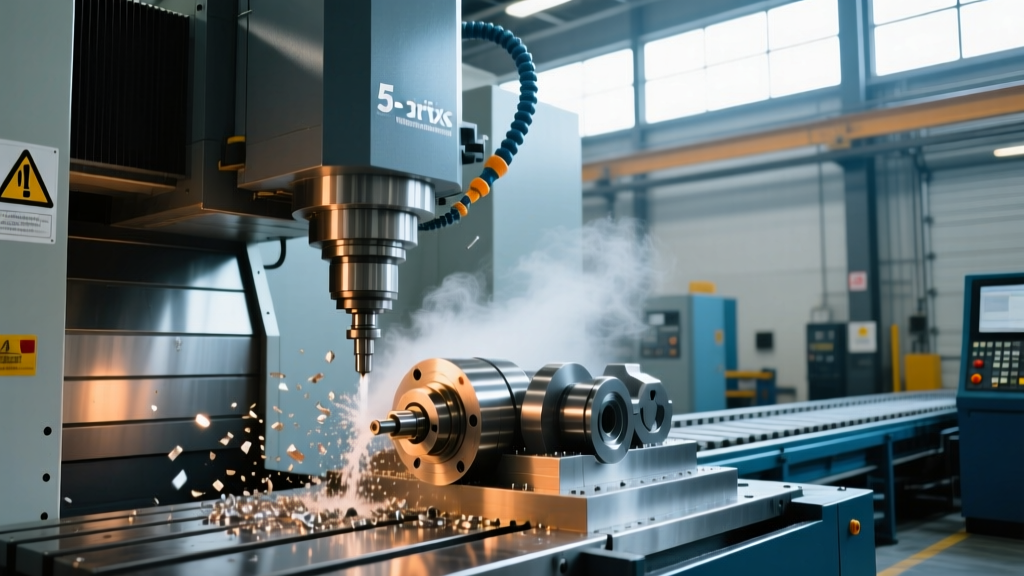
To maintain these sub-micron tolerances, top-tier medical machine shops deploy Swiss-type CNC lathes and 5-axis simultaneous milling centers equipped with direct-drive torque motors and glass scale feedback systems. For example, machining a 2.4mm orthopedic bone screw requires a machine like the Tsugami B0386-V, utilizing a high-pressure coolant system operating at 140 bar (2,000 PSI) to evacuate micro-chips from deep, small-diameter drilling operations without snapping the carbide micro-drills.
Critical Regulatory Note: Producing medical components requires strict adherence to FDA 21 CFR Part 820 Quality System Regulations. Machine shops must maintain Device History Records (DHR) that trace every cut, tool change, and inspection back to the specific operator and raw material lot.Material Selection Matrix for High Precision CNC Machining Parts
Material selection in medical machining is dictated by biocompatibility, fatigue strength, and sterilization resistance. Standard commercial alloys are unacceptable; medical-grade variants must meet specific ASTM or ISO standards to minimize inclusions and interstitial elements that could cause corrosion or tissue rejection in vivo.
| Material / Standard | Tensile Strength | Machinability Challenges | Primary Medical Application | Required Tooling Strategy |
|---|---|---|---|---|
| Ti-6Al-4V ELI (ASTM F136) | 860 MPa | Poor thermal conductivity; high chemical reactivity leading to Built-Up Edge (BUE). | Spinal rods, dental implants, joint replacements. | Uncoated or PVD-coated micro-grain carbide; high-pressure through-tool coolant. |
| 316LVM (ASTM F138) | 515 MPa | Work-hardens rapidly; stringy chip formation causes bird-nesting on Swiss lathes. | Surgical instruments, guide wires, bone plates. | Sharp, high-positive rake geometry; variable helix end mills to break harmonics. |
| PEEK (Victrex 450G) | 100 MPa | Abrasive carbon-fiber variants; low melting point requires aggressive chip clearing. | Spinal interbody cages, cranial implants. | Polycrystalline Diamond (PCD) or DLC-coated tools; compressed air blast instead of liquid coolant. |
| CoCr Alloy (ASTM F75) | 960 MPa | Extreme hardness and abrasiveness; rapid flank wear on standard carbide. | Dental crowns, femoral knee components. | Ceramic or CBN inserts; rigid setups to prevent chatter. |
Case Study: Scaling PEEK Spinal Interbody Fusion Cages
Project Parameters
- Component: Lordotic PEEK Interbody Spinal Fusion Cage
- Raw Material: Medical Grade PEEK (Unfilled, FDA compliant)
- Equipment: DMG MORI DMU 50 3rd Generation (5-Axis Mill)
- Target Cycle Time: Under 9 minutes per unit
Spinal cages require complex internal geometries to promote bone ingrowth (osteoconduction) while maintaining structural integrity under compressive spinal loads. A major contract manufacturer recently transitioned from a 3+2 axis indexing process to full 5-axis simultaneous machining to eliminate secondary setups and reduce handling-induced micro-scratches.
Overcoming Tool Wear and Surface Defects
The primary failure mode in machining PEEK is burr formation and poor surface finish caused by tool wear and material smearing. By switching from standard TiAlN-coated carbide end mills to Diamond-Like Carbon (DLC) coated tools with a 35-degree helix angle, the shop eliminated smearing. Furthermore, replacing traditional flood coolant with a targeted, chilled compressed air vortex tube system kept the cutting zone below the glass transition temperature of PEEK (143°C), ensuring dimensional stability and achieving a mirror-like Ra 0.4 µm surface finish directly off the machine, eliminating the need for secondary vibratory tumbling.
Navigating ISO 13485 and Traceability Frameworks
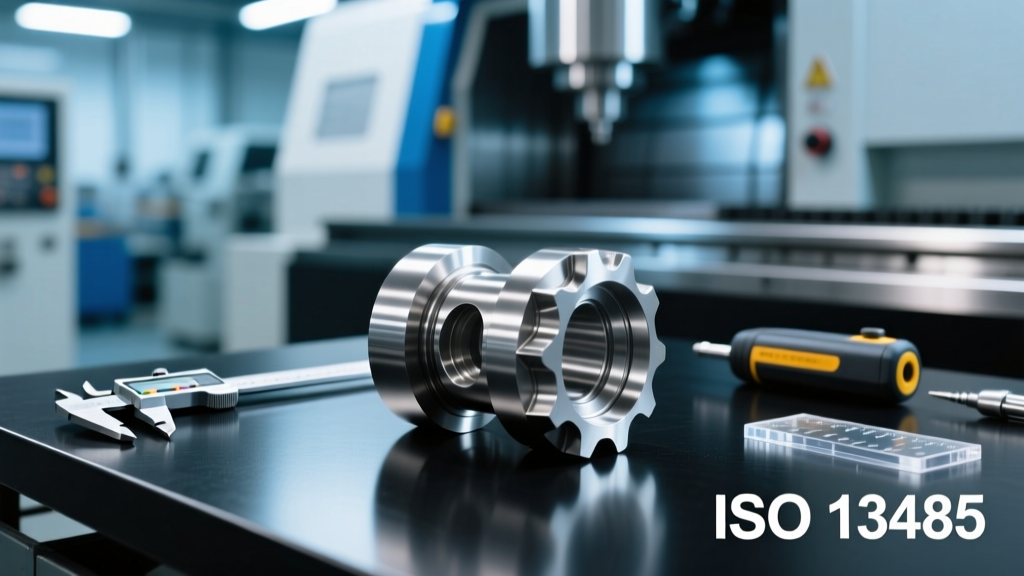
Unlike standard job shops, medical CNC facilities must operate under an ISO 13485:2016 certified Quality Management System. This certification mandates rigorous control over the entire supply chain. When sourcing high precision CNC machining parts for medical devices, buyers must verify that the machine shop utilizes automated material tracking. Every bar stock or billet must be laser-etched with a heat lot number upon receipt.
During the machining process, shop floor ERP systems enforce 'first-article' and 'in-process' inspection gates. If a CMM (Coordinate Measuring Machine) detects a deviation in a critical-to-quality (CTQ) dimension—such as the taper angle on a Morse taper hip stem—the system automatically locks the machine controller, preventing further production until a non-conformance report (NCR) is resolved by a quality engineer.
Cost Drivers and Quoting Framework for Medical CNC Parts
Quoting medical parts requires looking far beyond raw cycle time and material cost. The barrier to entry for medical manufacturing inflates the Non-Recurring Engineering (NRE) and validation costs significantly. Buyers should expect the following cost structures when transitioning a design to production:
- Design for Manufacturability (DFM) & Tooling Design ($2,500 - $8,000): Medical parts often require custom soft-jaw fixtures and specialized mandrels to hold thin-walled components without inducing clamping distortion.
- IQ/OQ/PQ Validation Protocols ($15,000 - $40,000+): Before full-scale production, the CNC process must undergo Installation Qualification (IQ), Operational Qualification (OQ), and Performance Qualification (PQ). This involves running 30 to 100 consecutive parts under worst-case process limits to statistically prove the process capability (Cpk > 1.33).
- Post-Processing & Passivation ($1.50 - $6.00 per part): Stainless steel and titanium parts require passivation per ASTM A967 to remove free iron and enhance the passive oxide layer. Citric acid passivation is increasingly preferred over nitric acid for environmental and safety reasons, but adds specific cycle times and validation requirements.
- Cleanroom Packaging ($2.00 - $10.00 per unit): Non-sterile components destined for the OR must be ultrasonically cleaned, inspected under UV light for particulate contamination, and sealed in ISO Class 7 or Class 8 cleanroom environments.
Frequently Asked Questions
What is the difference between 316L and 316LVM for surgical instruments?
While both are low-carbon austenitic stainless steels, 316LVM (Vacuum Melted) undergoes a secondary vacuum arc remelting (VAR) process. This drastically reduces non-metallic inclusions (like oxides and sulfides) and eliminates internal voids. For high precision CNC machining parts like surgical drills and guide wires, 316LVM provides superior fatigue life, better corrosion resistance, and a smoother surface finish after electropolishing compared to standard 316L.
Can high-precision medical parts be machined using standard flood coolant?
For titanium and stainless steel, yes, provided the coolant is meticulously maintained with automated tramp oil skimmers and concentration refractometers to prevent bacterial growth and corrosion. However, for polymers like PEEK or UHMWPE used in joint bearings, liquid coolant is generally avoided. Coolant can be absorbed into the polymer matrix, causing microscopic swelling that alters the final dimensions once the part dries in the metrology lab. Chilled air or specialized mist systems are preferred for medical polymers.
How do machine shops handle Unique Device Identification (UDI) requirements?
UDI compliance requires that the final device and its packaging bear a scannable barcode linking to a global database. For CNC machine shops producing intermediate high precision components, traceability is maintained via 2D Data Matrix codes laser-marked directly onto the part (Direct Part Marking or DPM). This 2D code survives passivation, electropolishing, and autoclave sterilization, allowing hospitals to scan the implant at the time of surgery and trace it back to the exact CNC machine, tooling batch, and raw material heat lot used in its creation.