Medical CNC Machining vs. Railroads Custom Pipe Fittings in Texas
Explore how Texas CNC shops balance micro-precision medical device manufacturing with heavy-duty railroad pipe fittings. Tolerances, costs, and tooling.
The Texas Manufacturing Dichotomy: Heavy Transport vs. Micro-Precision
The Texas manufacturing corridor is uniquely bifurcated. On one side, the Dallas-Fort Worth and Houston logistics hubs demand massive, high-torque components for heavy transport infrastructure. On the other, the Texas Medical Center in Houston drives an insatiable demand for ultra-precision surgical instruments and orthopedic implants. For contract machine shops operating in this ecosystem, mastering both ends of the spectrum requires radical operational flexibility.
When sourcing heavy-duty components like railroads custom pipe fittings, CNC machining in Texas provides access to robust 5-axis horizontal milling centers capable of chewing through ductile iron. However, pivoting those same facilities to produce FDA-regulated medical devices requires a complete overhaul of tooling, metrology, and quality management systems. This analysis breaks down the technical, metallurgical, and economic realities of operating a dual-purpose CNC facility in 2026.
Machine Tool Infrastructure: Swiss-Type vs. Horizontal Machining Centers
The physical footprint of a machine shop dictates its capability. Medical device manufacturing—particularly for spinal screws, bone plates, and laparoscopic tooling—relies heavily on Swiss-type automatic lathes. Conversely, high-pressure pneumatic manifolds and brake line fittings for freight rail require rigid, high-torque horizontal machining centers (HMCs).
Core Equipment Comparison Matrix
| Parameter | Medical Devices (e.g., Ti-6Al-4V Spinal Screws) | Railroad Pipe Fittings (e.g., 304SS Brake Manifolds) |
|---|---|---|
| Primary Machine | Citizen L20000 Swiss-Type Lathe | Okuma MU-8000H 5-Axis HMC |
| Tolerance Band | ±0.0002" (5 µm) | ±0.005" (127 µm) |
| Surface Finish | Ra 8 µin (Passivated/Electropolished) | Ra 64 µin (As-machined or Bead Blasted) |
| Coolant Pressure | 1,500+ PSI (Through-tool for Titanium) | 300 PSI (Standard flood coolant) |
| Spindle Speed | 10,000 - 20,000 RPM | 2,000 - 6,000 RPM (High Torque) |
| 2026 Avg. Shop Rate | $165 - $225 / hour | $95 - $130 / hour |
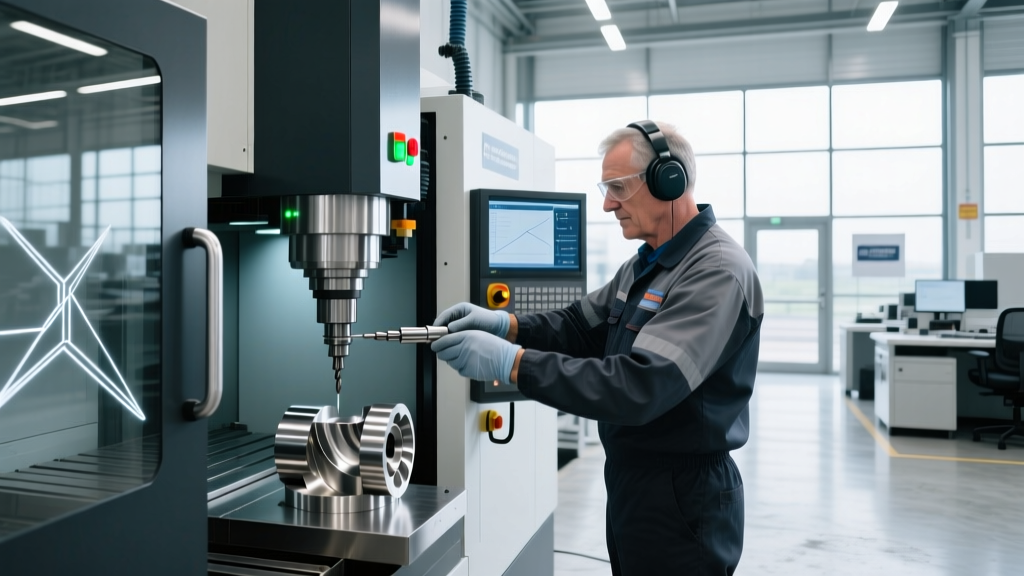
The Citizen L20000 utilizes a sliding headstock design that supports the material bar immediately next to the cutting tool, eliminating deflection when machining long, slender medical pins. In contrast, the Okuma MU-8000H leverages a massive pallet pool and high-torque spindle to aggressively rough out deep bores in heavy-wall stainless steel pipe fittings without stalling.
Metallurgy in Two Different Worlds: The 316L Stainless Steel Divide
316L stainless steel is a workhorse material in both medical device manufacturing and heavy transport, but the machining strategies differ drastically based on the end-use environment.
Medical Grade 316L (ASTM F138)
In surgical retractors and orthopedic trials, 316L must be machined to prevent carbide precipitation, which compromises corrosion resistance in the human body. Machinists use sharp, uncoated carbide inserts with high positive rake angles to shear the material cleanly rather than rubbing it. According to research published by the National Institutes of Health, surface integrity and the absence of embedded tooling particles are critical to preventing localized tissue inflammation and implant rejection.
Industrial Grade 316L (ASTM A182)
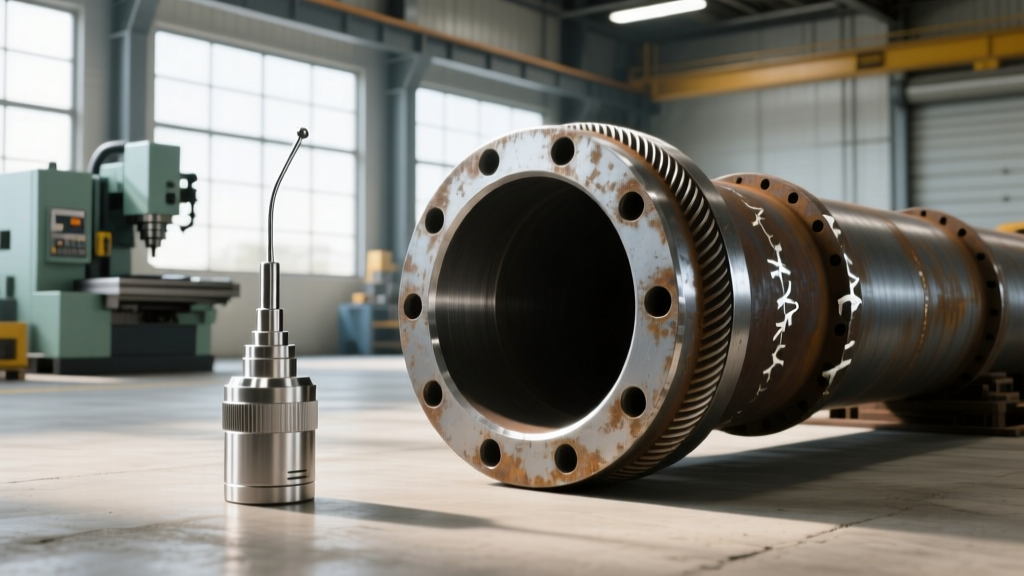
For railroad custom pipe fittings handling high-pressure pneumatic brake lines, the focus shifts from surface aesthetics to structural fatigue limits. Machinists utilize PVD-coated inserts (like the Sandvik Coromant GC1125 grade) with reinforced cutting edges to withstand the interrupted cuts of cast or forged blanks. The goal is aggressive metal removal rates (MRR) while maintaining the pressure-rating integrity of the threaded NPT or JIC ports.
⚠️ Facility Segregation Warning: Cross-Contamination Risks
If a Texas machine shop produces both railroad ductile iron fittings and medical titanium implants, strict physical segregation is mandatory. Ductile iron generates fine graphite dust during milling. If this airborne particulate settles on a medical part, it becomes embedded during the passivation process, leading to catastrophic FDA audit failures and potential patient harm. Shops must utilize negative-pressure cleanrooms for medical finishing and separate HVAC zones for heavy roughing.
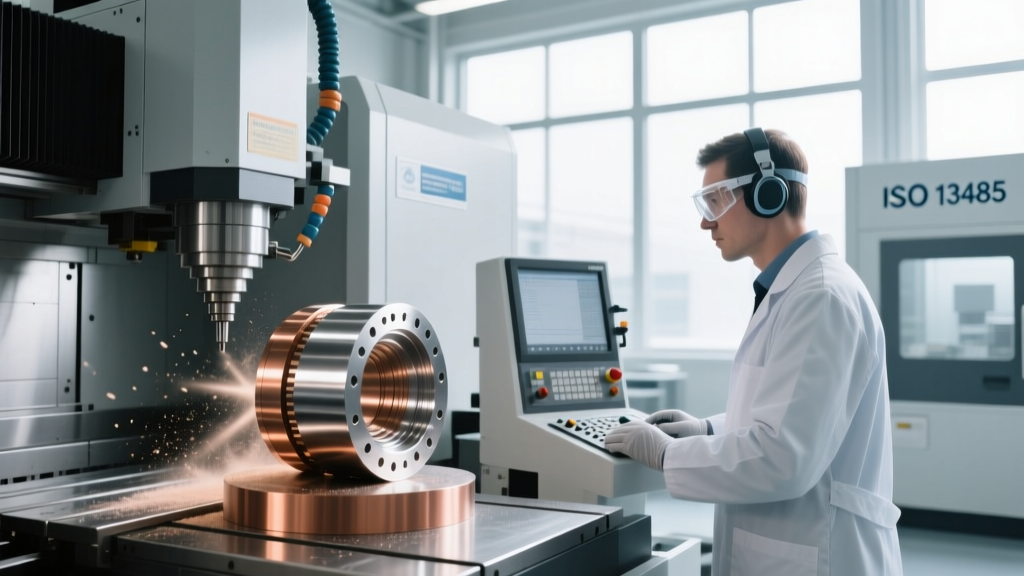
Quality Systems: ISO 13485 vs. AAR M-201
The paperwork and traceability requirements represent the highest barrier to entry for shops attempting to cross over between these industries.
- Medical Device Manufacturing: Governed by FDA 21 CFR Part 820 and ISO 13485:2016. Every single spinal screw must have a Device History Record (DHR) tracing the raw material back to the specific vacuum arc remelting (VAR) heat lot. Tooling life must be strictly monitored; a worn insert that alters a thread pitch by 0.0005" will trigger a non-conformance report (NCR) and a potential batch quarantine.
- Railroad Infrastructure: Governed by the Association of American Railroads (AAR) Quality Assurance Manual (M-201). Traceability is required, but statistical process control (SPC) is applied at the batch level rather than the individual part level. Hydrostatic testing and magnetic particle inspection (MPI) for micro-cracks take precedence over dimensional micro-tolerances.
Economic Realities: Margins, Batch Sizes, and Overhead
Transitioning a shop floor to accommodate medical CNC machining requires significant capital expenditure. A single automated ultrasonic cleaning line and Class 7 cleanroom packaging station can cost upwards of $250,000 in 2026. However, the economic payoff is substantial.
"In heavy transport and rail fittings, you are fighting for a 12% gross margin on high-volume, low-complexity parts. In medical micro-machining, the gross margins frequently exceed 45%, but you are paying for that margin with intense regulatory overhead and a 9-to-14-month vendor validation cycle."
— Director of Operations, Mid-Sized Houston Contract Machine Shop
The Decision Framework for OEMs
If you are an OEM sourcing components in the Texas market, use this framework to evaluate potential machine shop partners:
- For Railroad Pipe Fittings: Prioritize shops with large pallet-pool HMCs, in-house NPT/JIC thread gauging, and rapid raw material sourcing networks for heavy-wall forgings. Look for AAR certification and high spindle utilization rates.
- For Medical Devices: Demand proof of ISO 13485 certification, inquire about their Swiss-turning coolant filtration systems (must be sub-micron to prevent titanium fire hazards), and request a sample Device Master Record (DMR) during the RFQ phase to verify their documentation rigor.
Ultimately, while the geographic footprint of Texas supports both heavy industry and advanced medical technology, the operational DNA required to machine a 40-pound brake manifold is fundamentally incompatible with the DNA required to machine a 4-gram titanium bone screw. The most successful contract manufacturers in 2026 are those that recognize this divide, building dedicated, siloed business units rather than attempting to force a single production floor to serve two entirely different masters.