Medical Standards vs Precision CNC Machining for Automotive Fuel Cells
Compare ISO 13485 medical device compliance with IATF standards used in precision cnc machining for automotive fuel cells. Actionable transition guide.
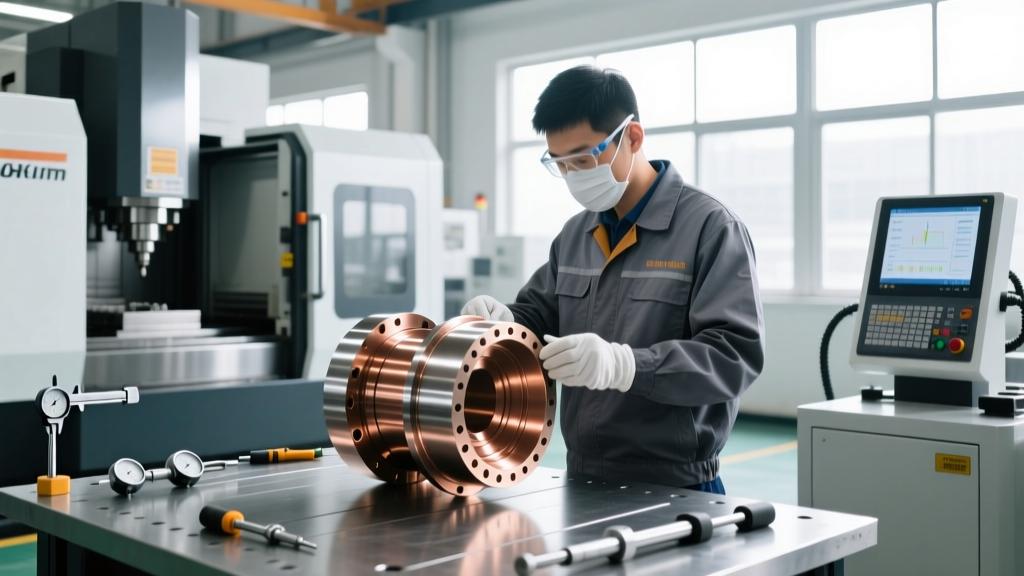
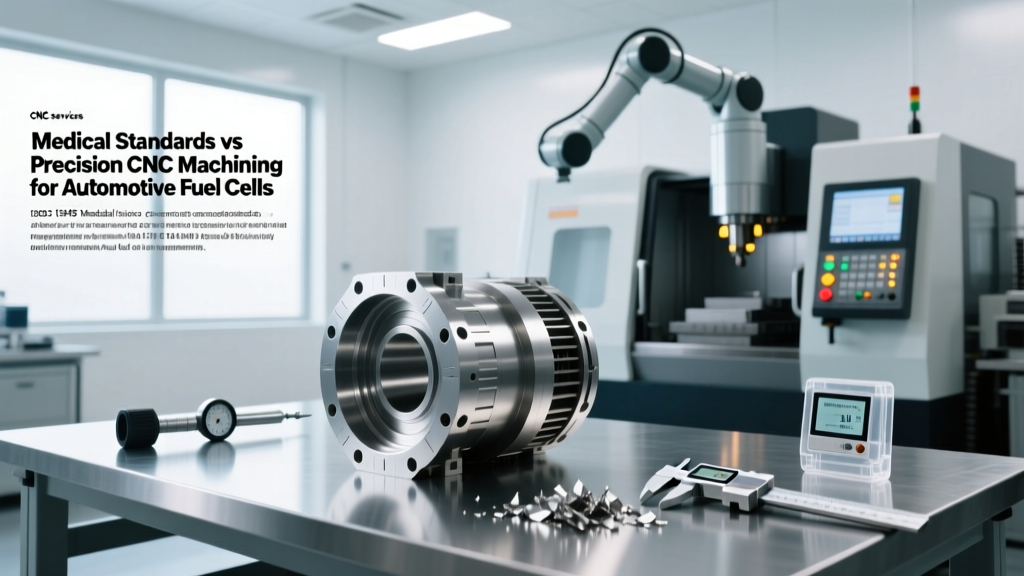
Machine shops that have mastered precision cnc machining for automotive fuel cells operate in an environment defined by extreme tolerances, hydrogen embrittlement prevention, and rigorous IATF 16949 quality management systems. Machining graphite bipolar plates or titanium hydrogen manifolds to ±0.0002-inch tolerances requires exceptional technical capability. However, when these shops pivot to CNC machining for medical device manufacturing, they frequently encounter a compliance wall. The transition from automotive propulsion to surgical implants and diagnostic equipment requires a fundamental rewiring of how a shop approaches safety standards, traceability, and risk management.
⚠️ The Traceability Trap: Automotive lot tracking (typically batch-level via ERP systems) is insufficient for medical device manufacturing. Under FDA 21 CFR Part 820, a single orthopedic bone screw must be traceable from the raw titanium melt lot to the specific CNC machine spindle, the exact cutting tool batch, and the final patient implantation. Relying on automotive-style batch tracking will result in an immediate failure during an ISO 13485 certification audit.Divergent Compliance Frameworks: IATF 16949 vs. ISO 13485
The core difference between automotive and medical compliance lies in the ultimate consequence of failure. Automotive fuel cell standards prioritize high-volume repeatability, thermal cycling durability, and supply chain velocity. Medical standards prioritize biocompatibility, absolute traceability, and patient risk mitigation. Below is a direct comparison of the governing frameworks.
| Compliance Parameter | Automotive Fuel Cells (IATF 16949) | Medical Devices (ISO 13485) |
|---|---|---|
| Primary Focus | Defect prevention, supply chain efficiency, PPAP | Patient safety, risk management, DHR (Device History Record) |
| Material Certification | Mill certs required; focus on mechanical properties | Melt-level traceability; strict biocompatibility (ISO 10993) |
| Process Validation | CpK / PpK statistical process control | IQ/OQ/PQ (Installation, Operational, Performance Qualification) |
| Non-Conformance | 8D problem solving, containment, root cause | CAPA, mandatory regulatory reporting (e.g., FDA MDR) |
According to the ISO 13485:2016 standard, medical device manufacturers must maintain a Device History Record (DHR) for every single unit produced. This is a stark contrast to the automotive sector, where IATF Global Oversight guidelines allow for statistical sampling and batch-level approvals via Production Part Approval Process (PPAP).
Material Handling and Biocompatibility Constraints
Both industries heavily utilize titanium, but the alloys and handling protocols differ drastically. In precision cnc machining for automotive fuel cells, Grade 2 or Grade 5 titanium is used for bipolar plates and end caps due to its corrosion resistance against hydrogen and coolant mixtures. In medical machining, Ti-6Al-4V ELI (Extra Low Interstitial) per ASTM F136 is the standard for load-bearing orthopedic implants.
The Coolant Contamination Problem
Automotive shops often use heavy-duty, sulfur-based or chlorinated cutting fluids to extend tool life when milling tough fuel cell alloys. In medical machining, these coolants are strictly prohibited. Sulfur and chlorine residues can become trapped in the micro-pores of a machined implant, leading to severe cytotoxic reactions in the human body.
- Automotive Standard: Castrol Alusol or similar semi-synthetic fluids optimized for high-pressure (1,000+ PSI) through-tool delivery.
- Medical Standard: Medical-grade synthetic coolants (e.g., Master Fluid Solutions TRIM MicroSol) that are free of biocides, heavy metals, and nitrites.
- Post-Machining Cleaning: Medical parts require multi-stage ultrasonic cleaning in DI (Deionized) water, followed by passivation per ASTM A967 using citric acid to remove free iron and enhance the passive oxide layer.
Facility Requirements: Cleanrooms vs. Explosion Proofing
Shops machining automotive fuel cell components invest heavily in explosion-proof environments, hydrogen gas detection systems, and specialized coolant filtration to handle graphite dust. Medical device manufacturing demands an entirely different facility architecture centered on particulate control.
2026 Facility Cost Data: ISO Class 7 Cleanrooms
For Class II and Class III medical devices (e.g., spinal implants, cardiovascular stents), final CNC deburring, cleaning, and packaging must occur in a controlled environment. Building an ISO Class 7 cleanroom in 2026 costs between $150 and $250 per square foot, excluding the HVAC and HEPA filtration maintenance contracts which run approximately $12,000 annually per 1,000 sq ft. Furthermore, operators must adhere to strict gowning protocols, which reduces labor efficiency by roughly 14% compared to standard shop floor operations.
Risk Management: AIAG/VDA FMEA vs. ISO 14971
Automotive shops are intimately familiar with Process Failure Mode and Effects Analysis (PFMEA) as dictated by the AIAG/VDA handbook. A failure mode in a fuel cell manifold might be categorized by its impact on vehicle emissions or propulsion loss. Medical risk management, governed by ISO 14971, requires a biological and clinical perspective.
Expert Insight: 'A burr left on a fuel cell plate causes a hydrogen leak and a vehicle fault code. A microscopic burr left on a titanium bone screw causes tissue necrosis, implant rejection, and a multi-million dollar FDA consent decree. The severity rating (1-10) in medical FMEA is almost always a 10, forcing shops to implement 100% automated optical inspection (AOI) rather than statistical sampling.' — Director of Quality Assurance, Tier 1 Medical Contract Manufacturer
To satisfy the FDA's Center for Devices and Radiological Health (CDRH), machine shops must map every CNC toolpath variable—spindle speed, feed rate, tool wear limits—to a specific biological risk. If a tool wears past 45 minutes of cut time and creates a surface finish rougher than 0.8 µm Ra, the risk file must prove whether that roughness harbors bacteria or impedes osseointegration.
Actionable Transition Roadmap for Machine Shops
Transitioning from automotive fuel cells to medical devices is a lucrative but capital-intensive pivot. Medical contract machining margins typically range from 35% to 50%, compared to 12% to 18% in high-volume automotive. Execute this 18-month roadmap to achieve compliance:
- Months 1-3: Gap Analysis & Quality Manual Rewrite ($8,000 - $12,000)
Hire an ISO 13485 consultant to audit your current IATF 16949 system. You will need to rewrite your quality manual to include Design Controls (Clause 7.3) and specific clauses for sterile barrier packaging and clinical risk management. - Months 4-8: IQ/OQ/PQ Validation ($25,000+)
Every 5-axis CNC mill, CMM, and ultrasonic cleaner must undergo Installation, Operational, and Performance Qualification. This requires machining master validation parts and destroying them to prove process capability under worst-case scenarios. - Months 9-12: UDI Software Integration ($15,000 - $30,000)
Implement Unique Device Identification (UDI) software compliant with GS1 standards. This software must integrate with your ERP to generate FDA-compliant barcode labels linking the raw material lot to the final serialized part. - Months 13-18: ISO 13485 Certification Audit ($20,000 - $35,000)
Undergo the Stage 1 (Documentation) and Stage 2 (On-site) audits by a recognized registrar (e.g., BSI, TÜV SÜD). Ensure your CAPA (Corrective and Preventive Action) log is populated with at least 3-5 closed-loop internal audits prior to the registrar's arrival.
Mastering the transition from automotive propulsion to life-saving medical devices requires more than just tight tolerances. It demands a cultural shift from optimizing for cycle time to optimizing for absolute, verifiable patient safety.