High-Volume CNC Machining Toronto: 2026 Equipment Guide
Discover high-volume CNC machining Toronto strategies for 2026. Compare HMCs, turn-mills, and automation to scale production and reduce cycle times.
The Greater Toronto Area Production Shift: Scaling Beyond 3-Axis VMCs
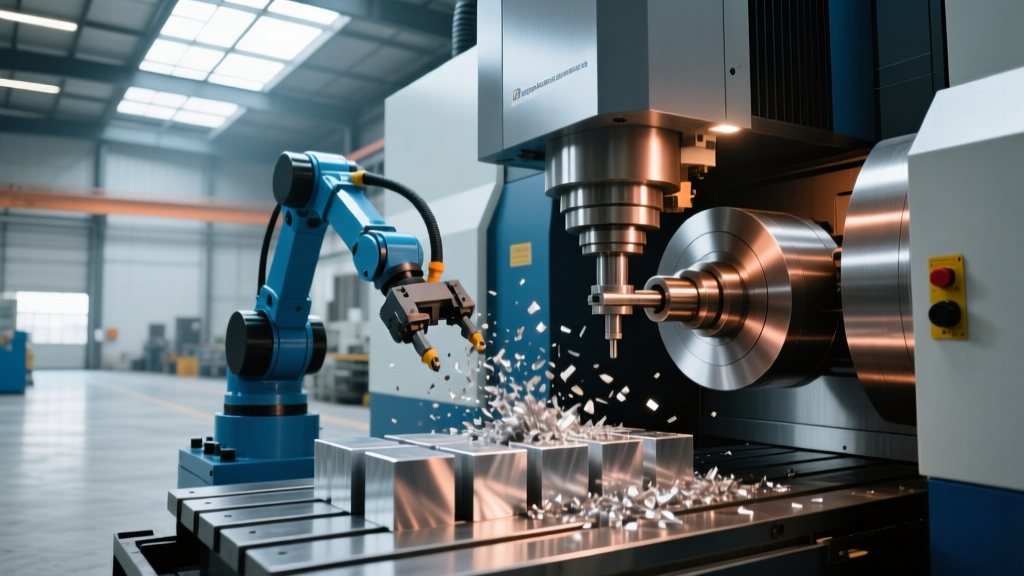
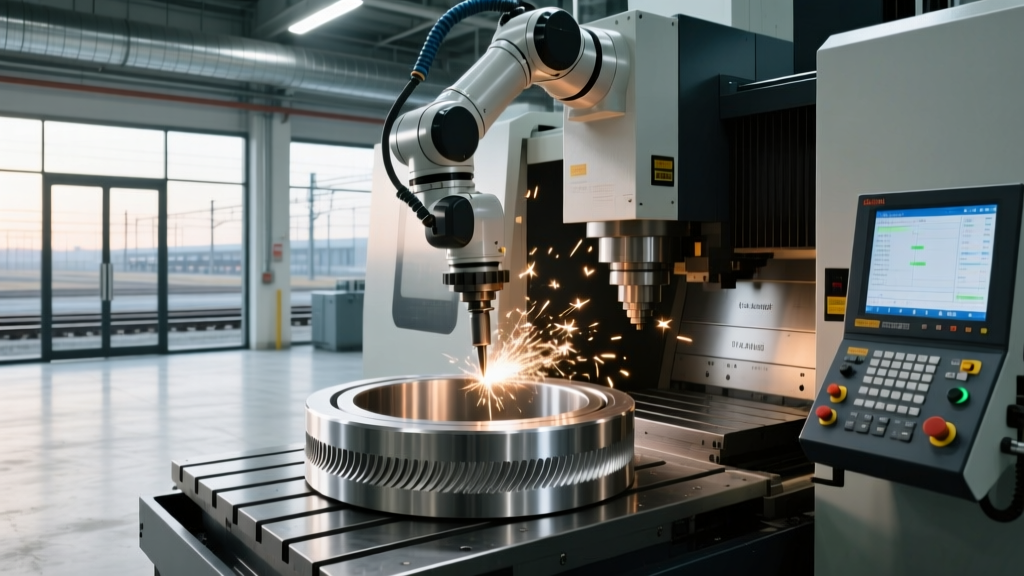
The landscape of cnc machining toronto has fundamentally shifted from low-volume job shop prototyping to high-mix, high-volume production scaling. As automotive, aerospace, and medical device manufacturing in the GTA (Greater Toronto Area) demand tighter tolerances and faster throughput, relying on standalone 3-axis Vertical Machining Centers (VMCs) is no longer mathematically viable. Manual loading, single-pallet constraints, and excessive non-cutting times destroy margins when production volumes exceed 5,000 parts annually.
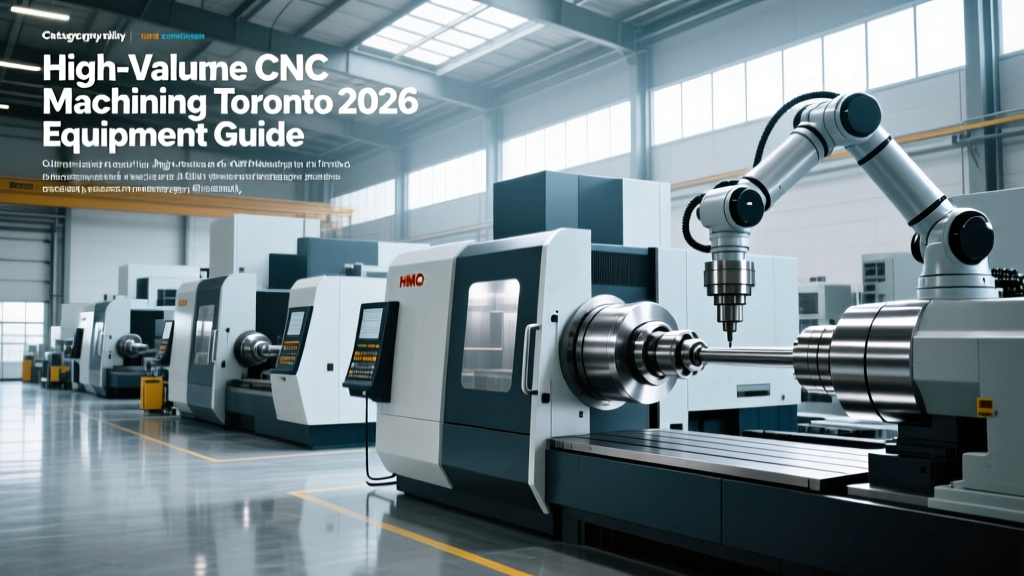
For facility managers and capital equipment buyers in Ontario, transitioning to high-volume production requires a strategic pivot toward Horizontal Machining Centers (HMCs) with integrated pallet pools, or multi-axis turn-mill centers equipped with gantry loaders. This guide breaks down the exact equipment specifications, automation architectures, and localized operational costs required to build a competitive high-volume CNC cell in 2026.
📊 Market Data Highlight: Non-Cutting Time
In a standard 3-axis VMC setup, the spindle is actively cutting metal for only 30% to 40% of the shift. By upgrading to a twin-pallet HMC or a 12-pallet automated pool, spindle utilization jumps to 85% or higher. For a shop billing at $125/hour, this utilization shift generates an additional $315,000 in annual revenue per machine without adding floor space.
Equipment Selection Matrix: HMCs vs. Multi-Axis Turn-Mill Centers
Choosing the right primary platform depends entirely on your part geometry family. Prismatic parts (housings, brackets, manifolds) demand HMCs for optimal chip evacuation and tombstone fixturing. Rotational parts with complex off-center features require turn-mill centers. Below is a comparison of the dominant high-volume platforms deployed in Southern Ontario machine shops as of 2026.
| Machine Platform | Model Benchmark | Pallet / Chuck Spec | Est. Price (CAD) | Ideal Part Family |
|---|---|---|---|---|
| 500mm HMC | Okuma MA-500HIII | 500x500mm Twin Pallet | $480k - $590k | Valves, pump housings |
| 630mm HMC | Mazak HCN-6800 | 630x630mm Twin Pallet | $650k - $820k | Aerospace structural brackets |
| Multi-Axis Turn-Mill | DMG MORI NTX 2000 | 8-inch Chuck / B-Axis | $850k - $1.1M | Medical bone screws, fittings |
| 5-Axis Simultaneous | Makino D500 | 500mm Table (No Pallet) | $720k - $900k | Impellers, complex turbine blades |
Automation Architecture: Pallet Pools and Gantry Loaders
Buying the machine is only 60% of the capital expenditure. To achieve true high-volume output, you must integrate material handling. In the Toronto market, where industrial floor space averages $12 to $18 per square foot, vertical footprint optimization is critical.
For HMCs, the Fastems FPC (Flexible Pallet Container) is the dominant standard. A two-level, 12-pallet FPC system costs between $280,000 and $380,000 CAD. It allows operators to fixture raw material on the outer load stations during the day, while the automated crane feeds pallets into the machine envelope overnight. For turn-mills, gantry loaders like the RoboJob TourMill or integrated bar feeders (e.g., Edge Technologies F80) are required to maintain continuous spindle engagement.
Calculating the Lights-Out ROI
Before signing a purchase order for automation, run this specific ROI framework to validate the investment:
- Calculate Current Spindle Hours: Multiply your current daily cutting hours by your shop rate (e.g., 6 hours * $135/hr = $810/day).
- Project Automated Spindle Hours: Add 8 hours of unattended night shift (14 total hours * $135/hr = $1,890/day).
- Determine Labor Reallocation: You aren't necessarily firing the night shift; you are moving them to deburring, CMM inspection, or preventative maintenance. Assign a soft savings value of $45,000/year in reclaimed labor efficiency.
- Subtract Automation Overhead: Factor in $15,000/year for compressed air, way lube, and increased tooling consumption.
- Final Payback Calculation: Divide the total automation hardware cost by the net annual revenue increase. A properly configured pallet pool typically yields a 14 to 22-month payback period in the current GTA economic climate.
Tooling and Coolant Infrastructure for Unattended Runs
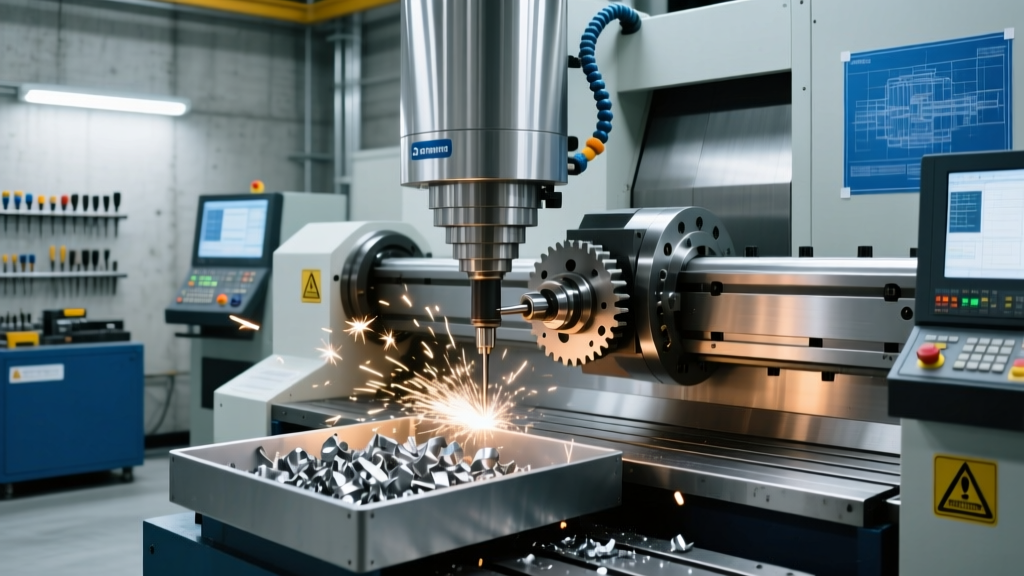
High-volume unattended machining fails when chips wrap around tooling or when a worn drill breaks deep inside a blind hole. You cannot run a 72-hour weekend shift with standard flood coolant and generic HSS tooling.
High-Pressure Coolant Specs
Your equipment must be ordered with a minimum 1,000 PSI (70 bar) through-spindle coolant (TSC) package. When machining Inconel 718 or 17-4 PH stainless steel, 1,000 PSI is required to break the chip at the shear zone, preventing bird-nesting. For high-silicon aluminum (e.g., A390), 300 PSI is sufficient, but the filtration system must include a paper-band filter rated to 20 microns to prevent abrasive silicon particles from destroying your spindle unions.
Tool Life Management and Breakage Detection
Implement RFID tool chips (like the Balluff system integrated into Mazak's Mazatrol controls). This allows the machine to track exact spindle minutes per tool. If a drill is rated for 400 holes, the control will automatically swap to the sister tool at hole 380, preventing catastrophic breakage on the final parts of the batch.
"The biggest mistake shops make when scaling to high-volume automation is underestimating chip management. If you don't invest in high-velocity hinge-belt conveyors and coolant-driven chip flushers in the machine base, your automation system will eventually jam on a stringy nest of 304 stainless chips, halting the entire cell at 3:00 AM."
— Senior Applications Engineer, DMG MORI Canada
Navigating Ontario Hydro Rates for Unattended Shifts
A unique advantage of operating a high-volume CNC facility in Toronto is leveraging the Ontario Energy Board's Time-of-Use (TOU) pricing structure. Industrial electricity costs fluctuate wildly based on the time of day.
As of early 2026, off-peak rates (nights and weekends) hover around $0.087 per kWh, while on-peak rates can spike above $0.284 per kWh. A 5-axis HMC cell drawing 45 kW under load will cost roughly $12.50 per hour to power during off-peak, compared to $40.70 per hour during on-peak. By scheduling your heaviest roughing cycles and high-volume batch runs exclusively during off-peak automated shifts, Toronto machine shops can reduce their direct energy overhead by up to 68%, directly padding the bottom line. According to sustainability frameworks outlined by Canadian Manufacturers & Exporters (CME), optimizing energy-intensive processes against TOU grids is now a primary pillar of modern lean manufacturing in Ontario.
High-Volume CNC Machining Toronto: Buyer FAQ
What is the realistic payback period for a 12-pallet HMC system?
For a shop running two shifts manually and transitioning to one manual shift plus unattended nights, the payback period for a $750,000 HMC and $350,000 pallet pool is typically 16 to 24 months. This assumes a minimum spindle utilization increase from 35% to 80% and a blended shop rate of $120-$140 CAD per hour.
Do I need a dedicated CMM for high-volume automated cells?
Yes. Relying on manual inspection creates a bottleneck that negates the speed of automated machining. Integrate a Renishaw Equator gauging system or a Zeiss shop-floor CMM with automated pallet loading. The machine tool should probe the first-off part, automatically update the work offsets via macro variables, and run the batch. The CMM then performs 100% statistical sampling without requiring a dedicated inspector.
How does the local talent shortage affect automation decisions?
The GTA faces a severe shortage of senior 5-axis programmers and setup technicians. By investing in automation and standardized tombstone fixturing, you reduce your reliance on highly skilled manual setup labor. The strategy shifts from hiring three veteran machinists to hiring one automation engineer and two junior operators to manage material staging, a model heavily supported by advanced manufacturing extension programs focusing on workforce transition.