Friction Welding Alternatives for CNC Aerospace Machining Maintenance
Explore friction welding alternatives for CNC aerospace machining. Compare maintenance schedules, service costs, and secondary post-processing upkeep.
Shop Floor Briefing: Secondary Joining Operations
Aerospace monolithic components machined from 7075-T6 or Al-Li 2099 often require secondary joining post-processes. While Friction Stir Welding (FSW) is a staple, its severe axial loads devastate standard CNC spindles. This guide audits the maintenance schedules and service intervals of alternative secondary operations to protect your machine shop's bottom line.
The Spindle Killer: Why Shops Seek Alternatives in Post-Processing
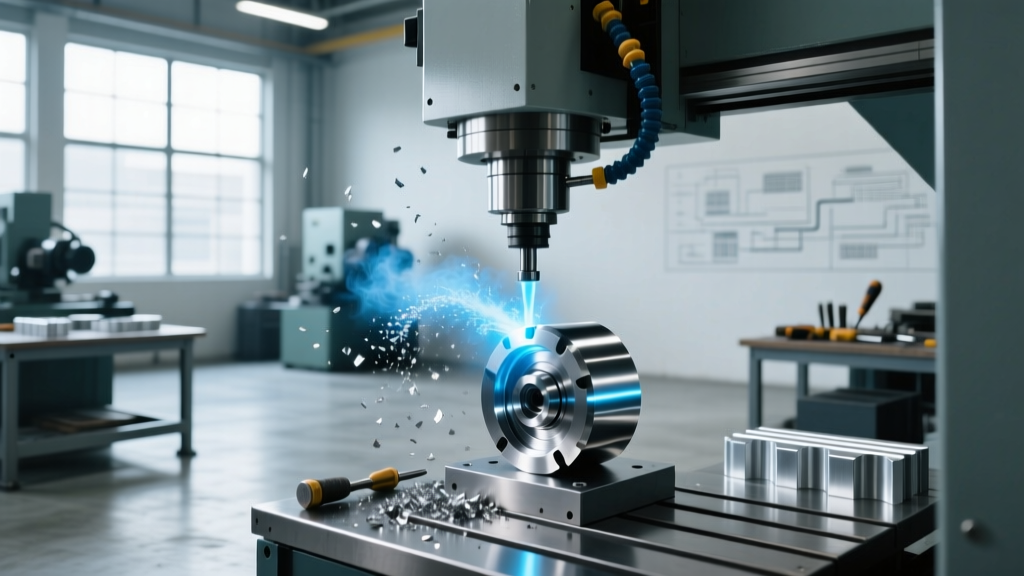
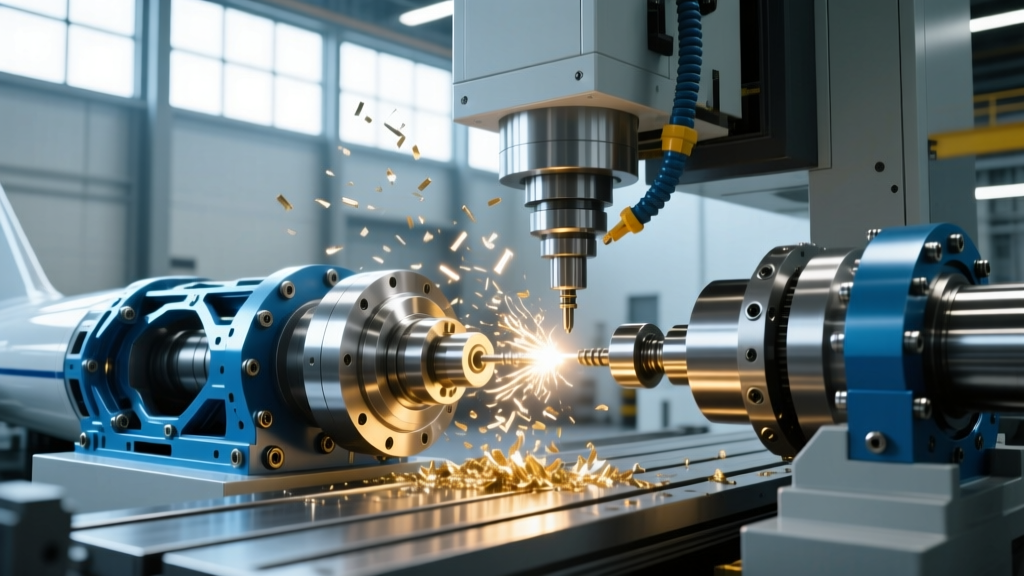
When a 5-axis CNC machining center is retrofitted or programmed for Friction Stir Welding, the machine is subjected to extreme continuous thrust loads. Welding high-strength aerospace aluminum-lithium alloys requires downward axial forces ranging from 10,000 to 15,000 lbs. Standard HSK-100 or CAT50 spindle assemblies found in high-end aerospace mills (such as the Mazak Variaxis or Haas UMC-1000 series) are engineered for high-speed radial cutting forces, not sustained, high-tonnage vertical pressing.
The result is rapid brinelling of the spindle's angular contact bearings. According to tool wear and machine degradation data indexed by the NASA Technical Reports Server, the H13 tool steel pins used in FSW also suffer catastrophic shoulder wear when processing abrasive Al-Li alloys, necessitating changeovers every 400 to 600 linear inches of weld. When you factor in the $25,000 to $45,000 cost of a premature spindle rebuild and the 8-to-12-week lead time for OEM service, it becomes clear why precision machine shops are aggressively evaluating friction welding alternatives for cnc aerospace machining secondary operations.
Maintenance Matrix: FSW vs. Alternative Joining Post-Processes
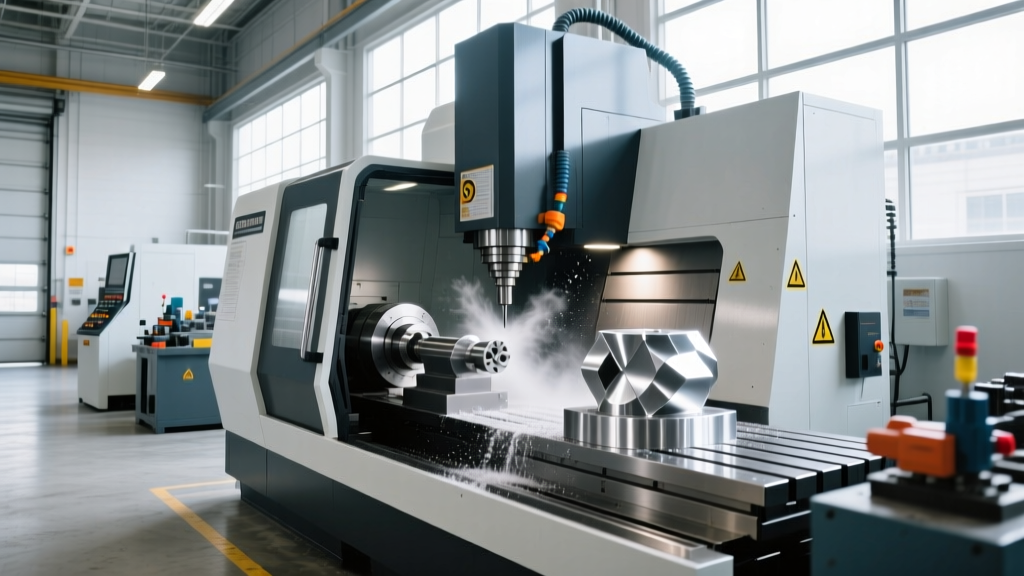
Transitioning to a dedicated secondary operation cell removes the joining burden from your primary 5-axis CNC assets. Below is a comparative maintenance matrix for aerospace joining alternatives.
| Secondary Process | Primary Maintenance Burden | Avg. PM Interval | Estimated Annual Upkeep Cost | Aerospace Alloy Suitability |
|---|---|---|---|---|
| Friction Stir Welding (FSW) | CNC Spindle bearings, H13 tool pins | Weekly (Tool), 6-Mo (Spindle) | $35,000 - $60,000 | Excellent (Al, Cu, Mg) |
| Electron Beam Welding (EBW) | Vacuum pumps, HV insulators, filaments | Daily (Pumps), 40-Hr (Filament) | $12,000 - $18,000 | Superior (Ti, Inconel, Refractory) |
| Laser Beam Welding (LBW) | Chiller loops, optics, cover slides | Daily (Slides), Annual (Coolant) | $8,000 - $14,000 | High (Stainless, Ti, Al with filler) |
| Vacuum Diffusion Bonding | Furnace elements, vacuum leak seals | Monthly (Leak test), 1-Yr (Elements) | $15,000 - $22,000 | Exceptional (Complex Ti assemblies) |
Electron Beam Welding (EBW): Vacuum and Filament Service Schedules
For aerospace shops machining titanium fan blades or Inconel 718 combustion casings, Electron Beam Welding is the premier secondary operation. Systems like the Sciaky EB60W or PTR models operate in high-vacuum environments to prevent beam scattering. The maintenance schedule for EBW is rigorous but highly predictable, completely isolating your CNC milling assets from joining stresses.
Vacuum System and High-Voltage Upkeep
- Roughing Pump Oil: Must be inspected weekly and replaced every 500 hours of operation. Using the incorrect ISO grade vacuum oil will cause backstreaming, contaminating the weld chamber and ruining aerospace-grade surface finishes.
- Diffusion Pump Fluid: Requires annual replacement. Operators must monitor the fluid level sight glass daily; running the diffusion pump dry will destroy the heating elements and cost upwards of $8,000 in immediate repairs.
- High-Voltage Insulator Cleaning: Every 30 days, the main HV insulator must be wiped with high-purity isopropyl alcohol. Micro-arcing caused by aerospace shop floor dust or metallic particulate buildup will trip the system's safety interlocks and halt production.
Tungsten Filament Replacement
The EBW gun utilizes a tungsten hairpin filament as the electron emitter. In high-duty-cycle aerospace production, these filaments degrade every 20 to 40 arc hours. Replacing the filament requires venting the chamber, a 15-minute physical swap, and a 20-minute pump-down cycle. Shops must maintain a Kanban inventory of OEM filaments to prevent secondary operation bottlenecks.
Warning: Never open the EBW gun assembly without verifying the high-voltage capacitor bank is fully discharged via the system's grounding stick. Residual charges in 150kV aerospace systems are lethal.
Laser Beam Welding (LBW): Optics and Thermal Management Maintenance
Fiber laser welding, utilizing systems from Trumpf (TruDisk series) or IPG Photonics (YLS series), is the go-to secondary operation for joining CNC-machined stainless steel hydraulic manifolds and thin-wall aluminum enclosures. LBW eliminates the mechanical tool wear of FSW but introduces strict optical and thermal maintenance requirements.
Cover Slides and Collimator Optics
The most frequent maintenance task in an LBW cell is replacing the protective cover slide (the sacrificial quartz window protecting the focusing optics). When welding aluminum or stainless steel, vaporized metal spatter coats the slide.
- High-Spatter Operations: Replace cover slides every 4 to 8 hours.
- Clean-Spatter Operations (with cross-jet air knives): Replace slides weekly.
- Collimator Inspection: Every quarter, the internal collimator and focusing lenses must be inspected using a specialized laser optic microscope. A single microscopic pit on the lens will cause thermal lensing, shifting the focal point and resulting in a lack-of-fusion defect in critical aerospace seams.
Chiller Loop and Thermal Management
Laser resonators demand exact thermal stability. The closed-loop chiller must be serviced annually. This involves flushing the system and replacing the deionized (DI) water and propylene glycol mixture. Neglecting the DI water resin cartridge allows conductivity to rise above 5 µS/cm, which will trigger the laser's internal safety relays and shut down the post-processing cell.
Vacuum Diffusion Bonding: Furnace Service Intervals
When CNC machining complex, multi-channel heat exchangers or conformal cooling molds from titanium or superalloys, mechanical welding is impossible. Vacuum diffusion bonding is the required secondary operation. This process relies on high heat, pressure, and time within a vacuum furnace (such as those manufactured by Solar Mfg or Ipsen).
The maintenance focus here shifts from machine spindles to thermal and vacuum integrity. Molybdenum heating elements degrade over time due to thermal cycling and must be surveyed for sagging or brittleness every 12 months. More critically, the vacuum leak rate must be tested monthly. Aerospace Nadcap standards dictate that the furnace must maintain a leak rate of less than 10 microns per hour. A failing door seal or degraded thermocouple feedthrough will introduce oxygen at 1700°F, instantly oxidizing and scrapping a $50,000 CNC-machined titanium assembly.
Post-Process Validation: NDT and Nadcap Calibration Schedules
Regardless of the alternative chosen, aerospace secondary operations require stringent Non-Destructive Testing (NDT) validation. Phased Array Ultrasonic Testing (PAUT) and Digital Radiography (DR) are standard for verifying joint integrity in EBW and LBW parts.
'Aerospace machine shops must remember that secondary joining processes are audited independently of CNC machining. Compliance with Performance Review Institute (PRI) Nadcap checklists, specifically AC7114 for welding, requires documented, time-based calibration of all NDT reference standards and joining equipment sensors.'
NDT calibration blocks must be verified against baseline dimensional data every six months. Furthermore, the Society of Manufacturing Engineers (SME) recommends that laser beam profilers and EBW deflection coils be recalibrated bi-annually to ensure the energy density matches the certified Weld Procedure Specification (WPS). By offloading joining tasks to dedicated, properly maintained secondary cells, aerospace CNC shops preserve their multi-million-dollar milling assets while delivering fully assembled, flight-ready components.