Why Electronics Enclosures Need an Aerospace CNC Machining Supplier
High-reliability electronics enclosures demand strict EMI/RFI shielding and tight tolerances. Learn why an aerospace CNC machining supplier is essential.
The Compliance Gap in Standard Electronics Enclosures
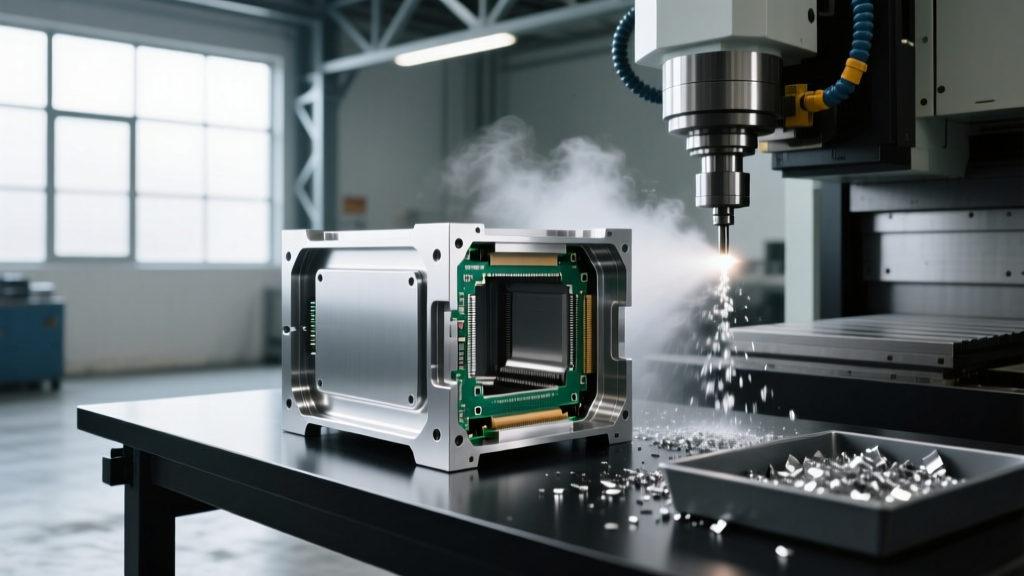
Designing high-reliability electronics enclosures for defense, medical imaging, or avionics applications introduces a severe tolerance bottleneck. Standard commercial machine shops typically hold tolerances of ±0.005 inches. However, when an enclosure must meet MIL-STD-461G for electromagnetic interference (EMI) and radio frequency interference (RFI) shielding, a 0.005-inch variance in the mating surfaces between the chassis and the lid can compromise the conductive gasket, resulting in catastrophic signal leakage.
This is where sourcing from an aerospace CNC machining supplier becomes a technical necessity rather than a luxury. Aerospace machine shops operate under AS9100 Rev D quality management systems and are equipped to hold true position tolerances of ±0.0005 inches or tighter. For engineers designing enclosures that house sensitive RF transceivers or high-voltage radar components, the compliance infrastructure of an aerospace supplier is the only way to guarantee that machined features align perfectly with stringent EMI shielding requirements.
Warning: The Cost of EMI Gasket Over-CompressionWhen mating surfaces are machined out of spec, technicians often over-torque enclosure fasteners to force a seal. Over-compressing conductive elastomers, such as Parker Chomerics CHO-SEAL 1287, destroys the internal silver-plated copper matrix, permanently ruining the gasket's shielding effectiveness and voiding the manufacturer's warranty.
AS9100 Rev D and the Traceability Mandate
The primary differentiator between a standard job shop and an aerospace CNC machining supplier is the rigor of material and process traceability. Under SAE International's AS9100 Rev D standard, every piece of raw material must be tracked from the mill to the finished part. For electronics enclosures deployed in harsh environments, this traceability is non-negotiable.
If an enclosure fails in the field due to galvanic corrosion or material fatigue, an aerospace supplier can provide a complete First Article Inspection (FAI) report per AS9102, including the original material test reports (MTRs) verifying the exact alloy composition. Standard shops rarely maintain this level of documentation, leaving OEMs exposed during compliance audits or failure investigations.
'In high-reliability electronics, the enclosure is not just a box; it is an active component of the electrical grounding and thermal management circuit. Treating its machining as a secondary, non-critical process is a fundamental design error.' — Advanced Manufacturing Engineering Review
Tolerance Comparison: Standard vs. Aerospace Machining
The table below illustrates the operational differences that directly impact the functionality of tight-tolerance electronics enclosures.
| Feature / Metric | Standard Machine Shop | Aerospace CNC Supplier | Impact on Enclosure Compliance |
|---|---|---|---|
| Linear Tolerances | ±0.005" | ±0.0005" | Ensures uniform EMI gasket compression. |
| True Position (Connector Cutouts) | ±0.010" | ±0.001" | Prevents binding on MIL-DTL-38999 circular connectors. |
| Surface Finish (Mating Surfaces) | 64-125 Ra (µin) | 16-32 Ra (µin) | Required for proper IP67 O-ring sealing. |
| Inspection Documentation | Basic Caliper/Micrometer | CMM with AS9102 FAI | Mandatory for defense and medical audits. |
5-Axis Milling for AS568 O-Ring Glands
Achieving IP67 or IP68 ingress protection ratings requires precision-machined O-ring glands. The AS568 standard dictates exact gland widths, depths, and corner radii to ensure the elastomer seal compresses correctly without extruding under pressure.
The Single-Setup Advantage
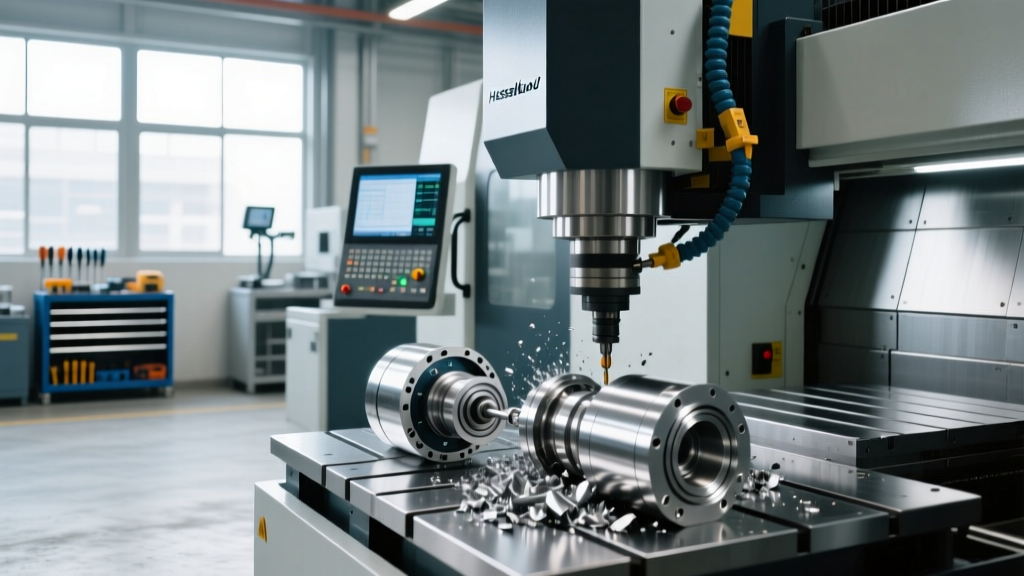
Standard 3-axis machine shops must flip the part multiple times to machine complex enclosures with glands on multiple planes. Each part flip introduces a potential stacking error of 0.002 to 0.004 inches. Aerospace CNC machining suppliers utilize 5-axis simultaneous milling centers (such as the DMG MORI DMU 50 3rd Generation or Haas UMC-750SS) to machine the entire exterior envelope, including complex O-ring glands and angled connector ports, in a single setup. This eliminates cumulative flip errors and guarantees the geometric dimensioning and tolerancing (GD&T) profile requirements are met.
Material Selection and MIL-DTL-5541F Conductivity
The choice of aluminum alloy and subsequent surface treatment dictates both the thermal dissipation and the EMI shielding capabilities of the enclosure.
- Aluminum 6061-T6: The industry standard for enclosures requiring high thermal conductivity and excellent corrosion resistance. It machines cleanly and accepts chemical conversion coatings uniformly.
- Aluminum 7075-T6: Selected for enclosures subject to high mechanical shock or vibration. However, its high copper content makes it susceptible to galvanic corrosion if not properly sealed.
If your enclosure requires EMI shielding, do not specify standard Type II or Type III hard anodizing. Anodizing creates an aluminum oxide layer that is highly dielectric (non-conductive). Instead, specify MIL-DTL-5541F Type II, Class 3 chemical conversion coating (commonly known as Alodine or Iridite). This coating provides corrosion resistance while maintaining the surface conductivity required for grounding and RFI shielding. Aerospace suppliers with Nadcap accreditation for chemical processing are uniquely qualified to apply these coatings to exact military specifications.
Navigating Connector Cutouts and GD&T
Electronics enclosures are rarely just empty boxes; they are heavily populated with cutouts for D-sub connectors, RF bulkheads, and circular MIL-SPEC connectors. The alignment of these cutouts is critical. If a MIL-DTL-38999 connector cutout is machined out of true position, the connector will bind against the aluminum chassis during installation, stripping the threads or cracking the solder joints on the internal PCB.
Aerospace CNC suppliers apply strict GD&T callouts, utilizing datum reference frames (DRFs) tied to the enclosure's primary mating surface. By probing the part in-process using Renishaw OMP600 spindle touch probes, the machine automatically updates tool offsets to account for thermal expansion during long 5-axis runs, ensuring the final connector cutouts remain within a ±0.001-inch true position tolerance.
Cost vs. Compliance: Real-World Pricing Expectations
Procurement teams often experience sticker shock when transitioning from commercial to aerospace-grade machining. Understanding the cost drivers is essential for accurate project budgeting.
A standard, commercially machined 6061-T6 enclosure (approx. 8" x 6" x 3") produced in volumes of 500 units typically costs between $85 and $140 per unit. This price assumes standard tolerances, basic deburring, and no specialized surface treatments.
Conversely, the same enclosure geometry machined by an aerospace CNC machining supplier to meet AS9100, IP67, and MIL-STD-461G requirements will cost between $320 and $480 per unit at the same volume. The price delta is driven by:
- CMM Programming and Inspection: 15-20% of the total cost is tied up in writing and executing CMM inspection routines for AS9102 FAI and batch sampling.
- 5-Axis Machine Time: Single-setup machining requires more expensive equipment and slower, highly optimized toolpaths to maintain tight surface finishes on O-ring glands.
- Nadcap-Certified Processing: Outsourcing chemical conversion coatings to a certified facility adds significant logistical and processing costs compared to standard in-house anodizing.
While the upfront piece-part cost is higher, the total cost of ownership (TCO) is often lower. The elimination of field failures, scraped PCB assemblies due to misaligned connectors, and failed EMI compliance testing easily justifies the premium paid for aerospace-grade CNC machining services.