CNC Machining Vietnam: Defense Sector Tech Trends 2026
Explore how CNC machining Vietnam is adopting 5-axis tech and AS9100 standards to produce non-ITAR defense aerospace components in 2026.
The Friendshoring of Defense Sub-Tiers
The global defense supply chain is undergoing a structural realignment. As Western prime contractors seek to mitigate geopolitical risks and reduce bottlenecks, CNC machining Vietnam has emerged as a critical node for non-restricted, dual-use military and aerospace components. Historically known for commercial electronics and textiles, Vietnam's precision manufacturing sector has aggressively pivoted toward high-tolerance, multi-axis machining. By 2026, top-tier Vietnamese machine shops are no longer just alternatives to China; they are strategic partners in the "friendshoring" of defense logistics, producing everything from radar heat sinks to armored vehicle transmission housings.
According to the U.S. International Trade Administration, foreign direct investment in Vietnam's advanced manufacturing sector has compounded annually, driven by joint ventures with South Korean, Japanese, and American aerospace sub-tier suppliers. This capital influx has fundamentally upgraded the technological baseline of the country's CNC capabilities.
2026 Data Highlight: CapEx in Vietnamese Machine ShopsInvestments in 5-axis CNC machining centers and mill-turn lathes across Vietnam's primary industrial zones (Bac Ninh, Binh Duong, and Da Nang) grew by 34% between 2023 and 2025. Today, over 45 mid-to-large-scale Vietnamese contract machinists hold AS9100 Rev D certifications, a prerequisite for entering the global aerospace and defense supply chain.
Technological Upgrades: 5-Axis and Mill-Turn Integration
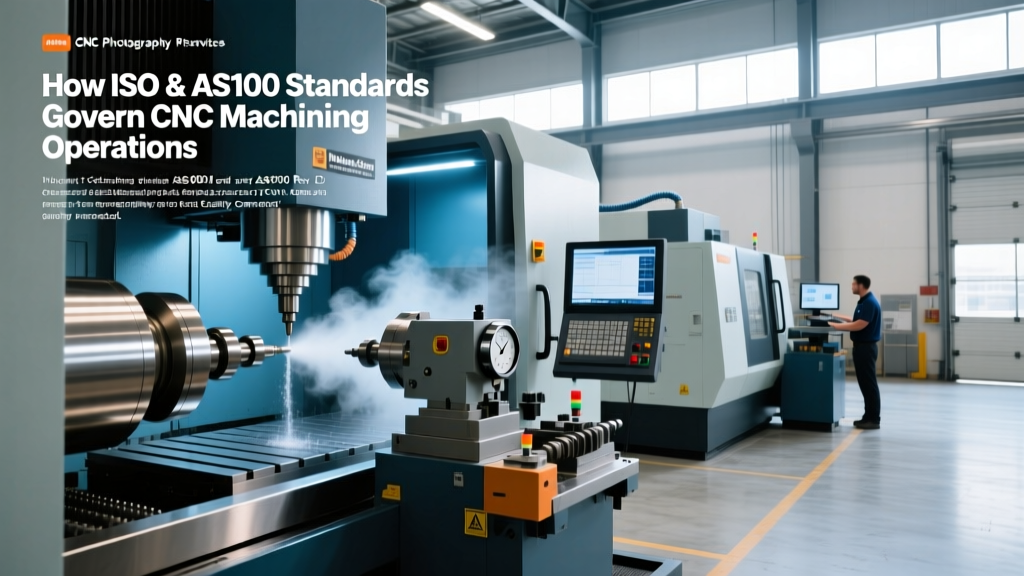
The narrative that Southeast Asian machine shops rely on outdated, manual, or low-end 3-axis equipment is obsolete. Leading Vietnamese facilities are standardizing on advanced equipment from DMG MORI, Mazak, and Okuma to meet the stringent geometric tolerances required by military aerospace applications.
Simultaneous 5-Axis Milling for Complex Geometries
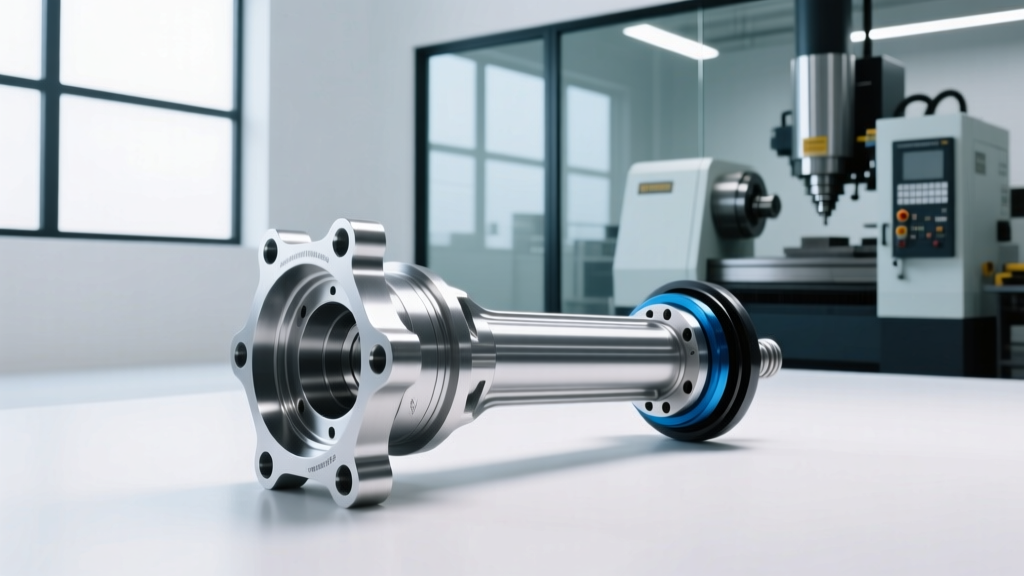
Defense components, such as turbine blades for auxiliary power units (APUs) and waveguide flanges for military communications, require continuous 5-axis simultaneous milling. Vietnamese shops have heavily invested in machines like the DMG MORI DMU 50 3rd Generation and the Mazak VARIAXIS i-800 NEO. These machines feature direct-drive torque motors and advanced thermal compensation, allowing operators to hold true position tolerances within 0.0005 inches (12.7 microns) on complex aerospace mating surfaces, even during 24/7 production runs in Vietnam's humid climate.
In-Process Metrology and Closed-Loop Verification
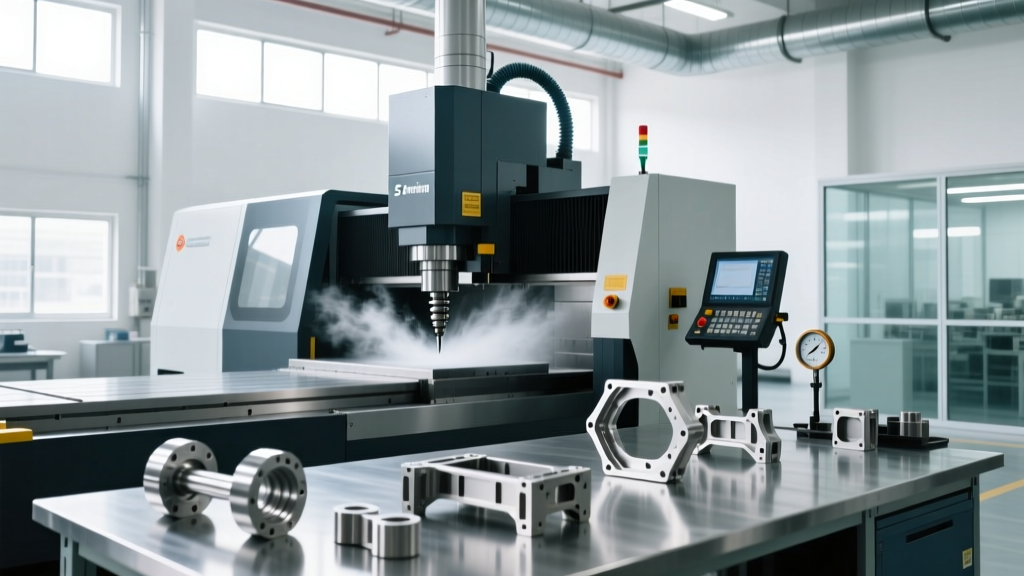
Scrap rates in military-grade titanium and Inconel are financially devastating. To combat this, advanced Vietnamese facilities have integrated Renishaw Equator gauging systems and Heidenhain TNC 640 controllers with closed-loop probing. This allows the CNC machine to automatically update tool offsets in real-time based on thermal growth and tool wear, ensuring that a batch of 500 radar array housings remains within the ±0.001-inch specification from the first part to the last.
Capability Matrix: Traditional vs. Advanced Vietnamese Shops
| Capability Metric | Tier 2 / Traditional Shops | Tier 1 / Defense-Ready (2026) |
|---|---|---|
| Standard Tolerances | ±0.005" (127 µm) | ±0.0002" (5 µm) |
| Primary Equipment | 3-Axis VMCs, Manual Lathes | 5-Axis VMCs, 9-Axis Mill-Turns |
| Coolant Systems | Flood Coolant (300 PSI) | Through-Spindle (1000+ PSI) |
| Quality Standards | ISO 9001:2015 | AS9100 Rev D, ITAR-aware protocols |
| CAD/CAM Software | Basic 2.5D CAM | Siemens NX, Mastercam (5-Axis) |
Navigating Export Controls: ITAR vs. EAR in Vietnam
A common misconception is that U.S. defense contractors can freely offshore any military component to Vietnam. This is legally false. The intersection of CNC machining Vietnam and defense applications is strictly governed by export control frameworks.
"Vietnam's role in the defense supply chain is highly specialized. They are not machining classified USML (United States Munitions List) items like guidance system housings or encrypted radio chassis. Their sweet spot is high-volume, non-controlled dual-use goods and COTS (Commercial Off-The-Shelf) components that fall under the EAR (Export Administration Regulations) or are entirely unregulated."
— Supply Chain Analyst, Deloitte Aerospace & Defense Outlook
What CAN Be Machined in Vietnam?
- Vehicle & Logistics Components: Suspension parts, engine blocks, and transmission housings for non-combat tactical vehicles (e.g., JLTV variants).
- Aviation Sub-Tiers: Seat frames, cargo handling systems, and non-flight-critical aluminum brackets (7075-T6) for military transport aircraft.
- Munitions Casings: Non-guided, practice, or training ordnance bodies machined from ductile iron or steel forgings.
- Base Infrastructure: Radar pedestal mounts, communication tower joints, and field-hospital structural components.
Material Innovations: Taming Titanium and Inconel
Military applications demand extreme strength-to-weight ratios and thermal resistance. Vietnamese machine shops have developed specific process engineering strategies to handle these exotic alloys efficiently, overcoming the historical hurdle of rapid tool wear in Southeast Asian manufacturing.
Ti-6Al-4V (Grade 5 Titanium) Strategies
Titanium is notorious for work-hardening and retaining heat in the cutting zone. Advanced Vietnamese facilities utilize trochoidal milling paths via Siemens NX CAM to maintain a constant tool engagement angle. This prevents the heat spikes that destroy standard carbide end mills. Furthermore, shops are mandating 1000 PSI through-spindle coolant (TSC) to break chips and evacuate them from deep pockets, a critical requirement for machining titanium structural ribs.
Inconel 718 and High-Temperature Alloys
For exhaust components and turbine housings, Inconel 718 is the standard. Machining Inconel requires rigid setups and specialized tooling. Shops in the Binh Duong industrial hub are increasingly adopting ceramic insert turning for roughing operations, allowing surface speeds (SFM) upwards of 800-1000 SFM, compared to the 150 SFM limit of standard carbide. For finishing, they rely on PVD-coated AlTiN carbide inserts with a honed edge to prevent the micro-chipping that leads to catastrophic part failure.
Data Security and Air-Gapped Networks
Even when machining non-ITAR components, defense primes require stringent cybersecurity protocols. In 2026, top-tier Vietnamese CNC facilities have implemented ISO 27001 certified information security management systems. For sensitive dual-use aerospace blueprints, shops utilize air-gapped local servers for CAD/CAM programming. DNC (Direct Numerical Control) networks are physically isolated from external internet access, ensuring that G-code and 3D STEP files for military logistics components cannot be intercepted or exfiltrated. This commitment to digital sovereignty has been a major factor in winning contracts from Japanese and South Korean defense primes, who are actively diversifying away from single-country supply chains, as noted by the Stockholm International Peace Research Institute (SIPRI) arms transfer databases.
Frequently Asked Questions (FAQ)
Can a U.S. defense contractor audit a CNC machine shop in Vietnam?
Yes. Leading Vietnamese machine shops regularly host on-site audits from U.S., European, and Asian defense primes. These audits focus on AS9100 Rev D compliance, First Article Inspection (FAI) documentation (AS9102), and raw material traceability (mill certs). Many shops employ bilingual Quality Assurance directors specifically to bridge the communication gap during Western audits.
How does Vietnam handle raw material traceability for military alloys?
Defense-ready shops in Vietnam source certified aerospace-grade bar and billet from approved global mills (e.g., Alcoa, TIMET, Carpenter Technology). They maintain strict ERP-driven lot tracking, ensuring that every 7075-T6 aluminum bracket or Ti-6Al-4V fitting can be traced back to the original heat lot and melt certificate, satisfying military pedigree requirements.
What is the lead time advantage of machining in Vietnam versus domestic US shops?
While domestic US shops offer faster turnaround for emergency, low-volume prototypes (1-2 weeks), Vietnamese shops provide a massive cost and capacity advantage for production runs of 500 to 10,000+ units. Once the initial First Article is approved, production lead times typically range from 6 to 10 weeks, with landed costs (including ocean freight and tariffs) often 30% to 45% lower than domestic machining, freeing up US capacity for highly classified, ITAR-restricted work.