CNC Machining for Aerospace vs. Architectural Facades
Compare CNC machining for aerospace and architectural facades. Analyze tolerances, 5-axis machine costs, alloys, and shop rates for 2026 projects.
The Precision Paradox: When Architecture Demands Aerospace Tolerances
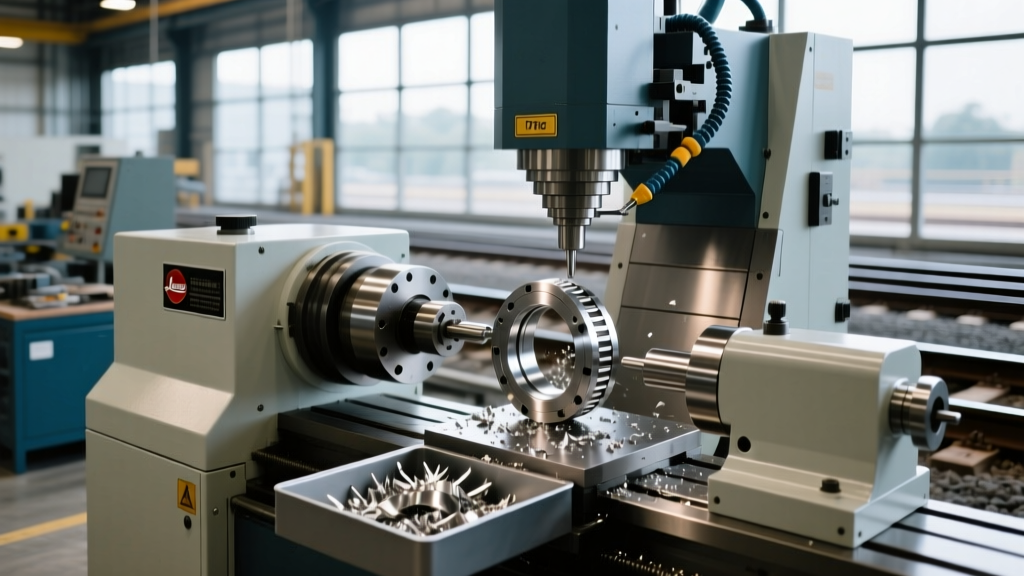
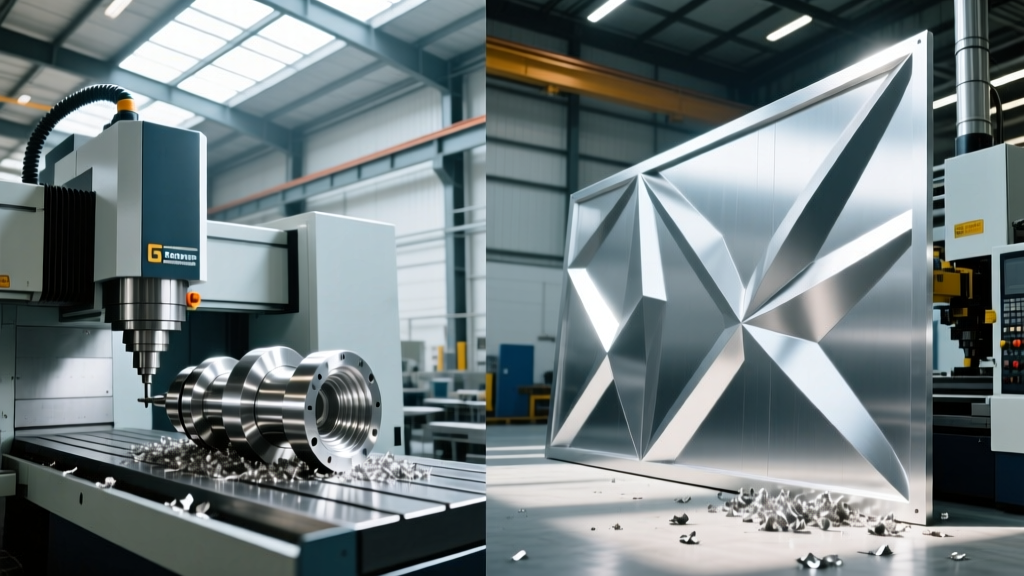
Modern parametric architecture—characterized by fluid, non-repeating geometries seen in airport terminals, stadium roofs, and kinetic facades—has fundamentally altered the demands placed on contract machine shops. Structural nodes, custom mullions, and seismic isolation brackets now require complex 5-axis simultaneous milling. Consequently, architectural firms are increasingly looking toward the gold standard of precision manufacturing: cnc machining for aerospace. However, applying aerospace-grade manufacturing protocols to architectural metalwork often results in severe budget overruns without delivering proportional structural benefits.
This analysis breaks down the technical, economic, and operational differences between aerospace and high-end architectural CNC machining, providing a decision framework for engineers, architects, and machine shop owners navigating these overlapping markets in 2026.
Executive Summary: The Core Divergence
Aerospace Machining: Driven by fatigue life, weight reduction, and extreme thermal/kinetic loads. Prioritizes exotic alloys (Ti-6Al-4V, Inconel), ultra-tight GD&T (±0.0005 in.), and exhaustive AS9100 traceability.
Architectural Machining: Driven by aesthetic continuity, weather resistance, and structural fit-up. Prioritizes large-format envelopes, standard alloys (6061-T6, 316L SS), and looser tolerances (±0.005 in. to ±0.020 in.).
Tolerance, GD&T, and Quality Assurance Matrix
The most common mistake architectural specifiers make is copy-pasting aerospace tolerance callouts onto facade drawings. A turbine blade root requires a profile tolerance of 0.001 in. to maintain aerodynamic efficiency and prevent high-cycle fatigue. A structural glazing node, however, typically accommodates 0.015 in. of variance via silicone weather seals and slotted bolt holes.
| Manufacturing Parameter | Aerospace (AS9100 Rev D) | Architectural (AISC / Custom) |
|---|---|---|
| Standard Linear Tolerance | ±0.0005 in. to ±0.001 in. | ±0.005 in. to ±0.020 in. |
| Surface Finish (Ra) | 16 - 32 µin (often hand-polished) | 64 - 125 µin (or post-anodized) |
| True Position / Profile | 0.001 in. to 0.003 in. | 0.010 in. to 0.030 in. |
| First Article Inspection (FAI) | Mandatory (AS9102), 100% CMM | Rare, sample-based visual/manual |
| Material Traceability | Full heat-lot cert, ultrasonic testing | Mill certs upon request |
According to the Society of Manufacturing Engineers (SME), enforcing aerospace-level CMM (Coordinate Measuring Machine) inspection on architectural parts can increase Non-Recurring Engineering (NRE) costs by 40% to 60%, as machinists must slow down feed rates to guarantee surface finishes that will ultimately be hidden behind aluminum composite panels or painted over.
Material Selection and Machinability Realities
The material palette for architectural facades is heavily skewed toward corrosion resistance and weldability, whereas aerospace prioritizes strength-to-weight ratios at extreme temperatures.
The Architectural Workhorses
- Aluminum 6061-T6: The undisputed king of architectural CNC work. It machines beautifully with standard carbide end mills, allows for clear or color anodizing, and costs roughly $3.50 to $5.00 per pound (2026 market average).
- 316L Stainless Steel: Used for coastal or high-humidity facade brackets. Requires rigid setups, lower RPMs, and high-pressure coolant to prevent work hardening.
- Corten (A588 Steel): Rarely CNC milled due to scale and rust, but occasionally 5-axis profiled for heavy structural nodes.
The Aerospace Exotics
- Titanium Ti-6Al-4V (Grade 5): Requires specialized tooling (AlTiN coated carbides), low cutting speeds (80-120 SFM), and high-pressure coolant through the spindle to prevent tool ignition and edge chipping.
- Inconel 718: A nickel-chromium superalloy that destroys standard tooling. Used in architectural applications only in extreme environments (e.g., exhaust routing for building-integrated turbines).
- Aluminum 7075-T6: Stronger than 6061 but highly susceptible to stress corrosion cracking. The Aluminum Association explicitly advises against using 7075 for exterior architectural cladding due to long-term atmospheric degradation.
Machine Tool Economics: 5-Axis Envelopes vs. Thermal Stability
The capital expenditure required to service these two markets diverges sharply based on the physical size of the parts and the required spindle dynamics.
Aerospace 5-Axis Setup
Typical Models: DMG Mori duoBLOCK 125, Makino MAG4.
Key Features: Direct-drive torque motors, active thermal compensation, 15,000+ RPM spindles, high damping for titanium chatter suppression.
Capital Cost: $1.5M - $3.2M.
Shop Rate: $185 - $280 / hour.
Architectural 5-Axis Setup
Typical Models: Haas UMC-1600-H, Fidia GTF/M, CMS Brembana.
Key Features: Massive X/Y travels (up to 64x40 in.), high torque for steel, integrated vacuum tables or modular grid fixturing for large panels.
Capital Cost: $450k - $850k.
Shop Rate: $95 - $160 / hour.
For architectural metalwork, the primary bottleneck is the Z-axis clearance and table load capacity. A 600 lb steel structural node requires a machine with a heavy-duty platen and robust way systems, whereas aerospace shops prioritize high-speed kinematics for thin-walled monolithic aluminum airframe components.
CAM Programming and Workflow Divergence
The software pipelines feeding these CNC machines are fundamentally different, reflecting the end-use design intent.
In aerospace, CAM programming (typically Mastercam or hyperMILL) focuses on trochoidal milling, chip thinning, and maintaining constant tool engagement to maximize tool life in hard metals. In architecture, the workflow often begins in Rhino 3D with Grasshopper parametric scripts, exporting complex NURBS surfaces to CAM software where the priority is maintaining aesthetic surface continuity (G2/G3 curvature) across 5-axis toolpaths.
Architectural machinists must frequently deal with 'dirty' 3D models provided by architects, requiring extensive surface healing and toolpath boundary manipulation. Aerospace models, governed by strict Model-Based Definition (MBD) and PMI (Product Manufacturing Information) standards, arrive at the machine shop with explicit GD&T callouts embedded directly in the STEP AP242 file.
Decision Framework: When Should Architecture Pay for Aerospace Machining?
While defaulting to architectural machine shops will save 30% to 50% on fabrication costs, there are specific architectural scenarios where the rigor of aerospace-grade advanced manufacturing is strictly necessary.
Justify the Aerospace Premium When:
- Kinetic Facades: Moving architectural elements (e.g., automated sun-shading louvers) require aerospace-level bearing journals and true-position tolerances to prevent binding over thousands of articulation cycles.
- Seismic Isolation Nodes: Base-isolation brackets for buildings in high-seismic zones experience extreme shear forces. The fatigue-life guarantees and material traceability of an AS9100-certified shop mitigate catastrophic structural liability.
- Optical / Telescope Mounts: Architectural structures housing sensitive scientific equipment require vibration-dampening mounts machined to aerospace flatness and parallelism specs (e.g., 0.0002 in. over 24 inches).
Stick to Architectural Shops When:
- Producing static curtain wall mullions and custom extrusion end-caps.
- Fabricating decorative interior metalwork, elevator cabs, and lobby sculptures.
- Machining aluminum composite material (ACM) routing templates and formwork for cast concrete.
Final Procurement Strategy for 2026
For general contractors and architectural firms issuing RFQs, the key to cost control is tolerance rationalization. Audit your drawings to ensure that only critical interface surfaces (e.g., the bore for a spherical bearing) carry tight tolerances (±0.001 in.), while non-critical aesthetic profiles are opened up to standard CNC defaults (±0.010 in.). By consciously decoupling architectural design intent from aerospace manufacturing dogma, project budgets can be optimized without compromising structural integrity or visual impact.