Troubleshooting CNC Drift: Railroads Custom Pipe Fittings & Defense Machining Houston
Diagnose CNC tolerance drift when switching from heavy railroad pipe fittings to precision defense components. Expert troubleshooting for Houston machine shops.
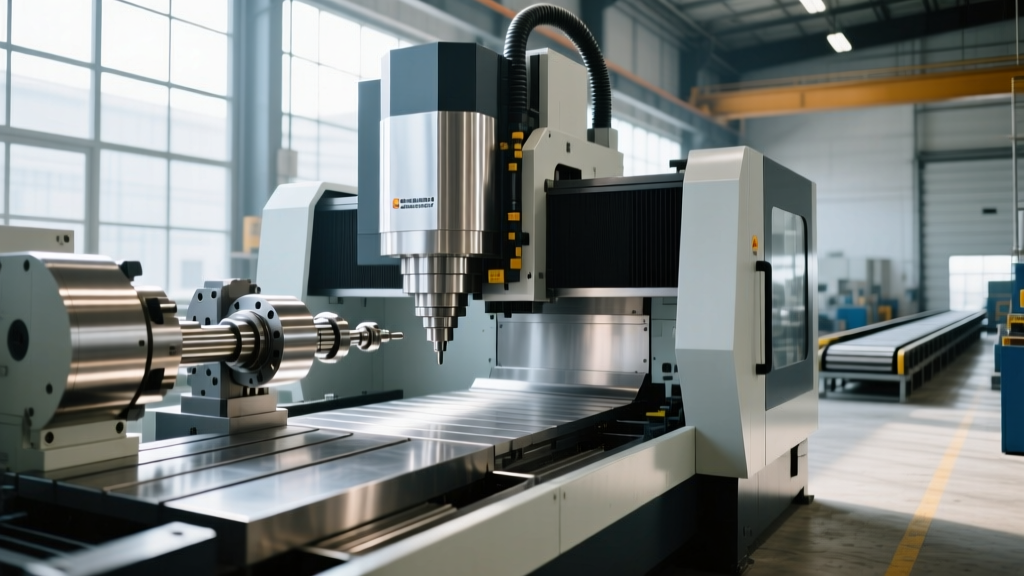
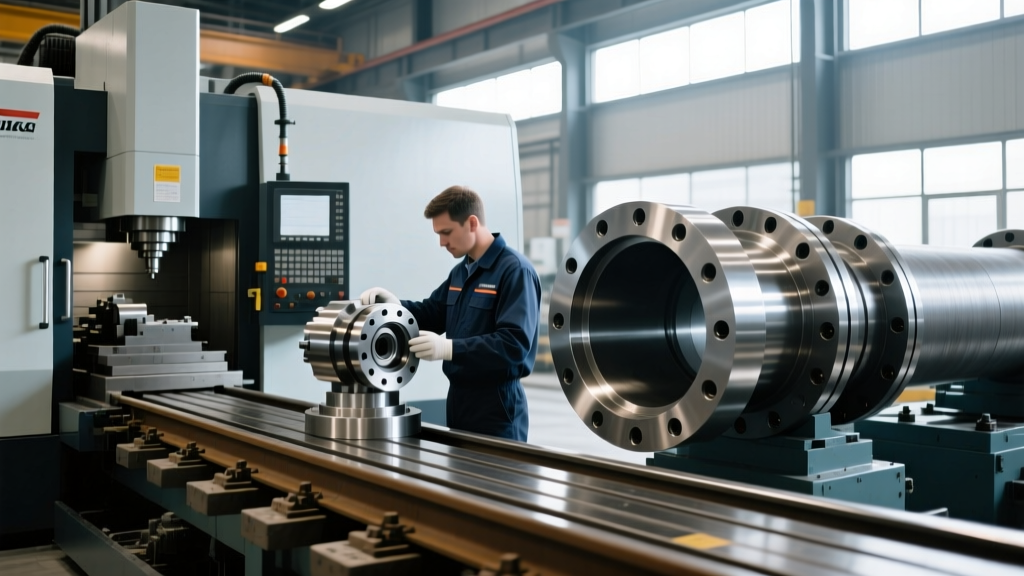
Houston’s manufacturing sector operates under a unique set of industrial demands. Many facilities handling railroads custom pipe fittings CNC machining Houston contracts also hold AS9100D certifications for aerospace and defense work. While this diversification is excellent for revenue, it creates a severe operational headache on the shop floor: transitioning a single 5-axis CNC mill from high-material-removal-rate (MRR) heavy industrial parts to ultra-precise military components.
When you switch a machine like a Haas UMC-750SS or Mazak INTEGREX i-200S from hogging out 1045 carbon steel railroad flanges to finish-machining Ti-6Al-4V titanium missile fin actuators, you introduce massive thermal and mechanical variables. Defense components routinely demand true position tolerances of ±0.0002 inches. If you fail to troubleshoot and compensate for the thermal drift and backlash generated during heavy railroad fitting production, your defense parts will scrap out on the CMM (Coordinate Measuring Machine).
This guide provides a senior-level troubleshooting protocol for diagnosing and eliminating tolerance drift when bridging the gap between heavy transit infrastructure and DoD Manufacturing Technology (ManTech) precision requirements.
The Physics of Workload Transitioning
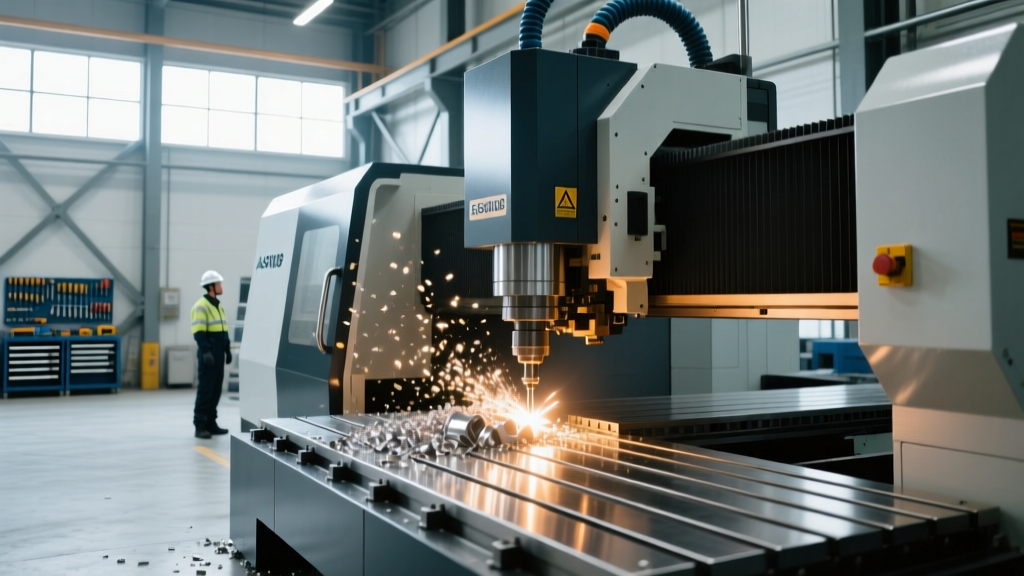
The root cause of tolerance failure in mixed-use machine shops is thermal hysteresis. Machining heavy railroad custom pipe fittings requires aggressive feeds and speeds, generating immense friction. This heat transfers into the spindle bearings, the Z-axis ballscrew, and the cast-iron frame.
⚠️ Critical Data Point: After 4 hours of heavy roughing in 1045 steel, the Z-axis ballscrew on a standard vertical machining center can expand by up to 0.0015 inches. If a defense manifold job is loaded immediately after, the Z-axis will gradually retract as the machine cools, resulting in undersized bores and out-of-tolerance profile milling.Conversely, defense machining often involves light finishing passes in exotic alloys, which generate localized tool-tip heat but minimal overall machine-frame thermal growth. The troubleshooting challenge lies in stabilizing the machine's thermal baseline between these two extremes.
Diagnostic Matrix: Symptom vs. Root Cause
Before tearing into the machine's way covers, use this diagnostic matrix to isolate whether the drift is thermal, mechanical, or control-based.
| Observed Symptom on Defense Part | Probable Root Cause | Verification Tool |
|---|---|---|
| Z-axis depth features consistently shallow by 0.001" - 0.002" | Spindle/Ballscrew thermal contraction post-heavy roughing | Renishaw QC20-W Ballbar / Dial Indicator |
| True position shift on X/Y bore patterns | Axis reversal backlash from heavy side-milling loads | Laser interferometer / Ballbar circular test |
| Surface finish degradation (chatter) in titanium | Way lube starvation or gib looseness from heavy vibration | Way lube flow meter / Feeler gauge on gibs |
Step-by-Step Troubleshooting Protocol
To maintain compliance with NIST Advanced Manufacturing standards for precision machining, implement the following calibration and compensation steps when transitioning workloads.
Step 1: Spindle Thermal Growth Compensation
Modern CNC controls offer software-based thermal compensation, but they are often left at factory defaults. On a Haas control, Parameter 304 (Spindle Thermal Growth) and the associated macro variables must be tuned to your specific shop environment.
- Map the Growth: Mount a dial indicator on the table pointing to the spindle nose. Run a heavy roughing cycle (simulating railroad fitting production) for 2 hours.
- Record Drift: Log the Z-axis growth every 15 minutes. You will typically see a logarithmic curve peaking around 0.0012" to 0.0018".
- Input Offsets: Enter these specific growth values into the control's thermal compensation table. This forces the Z-axis to automatically offset downward as the spindle heats up, and retract as it cools during light defense finishing passes.
Step 2: Ballscrew Backlash & Preload Verification
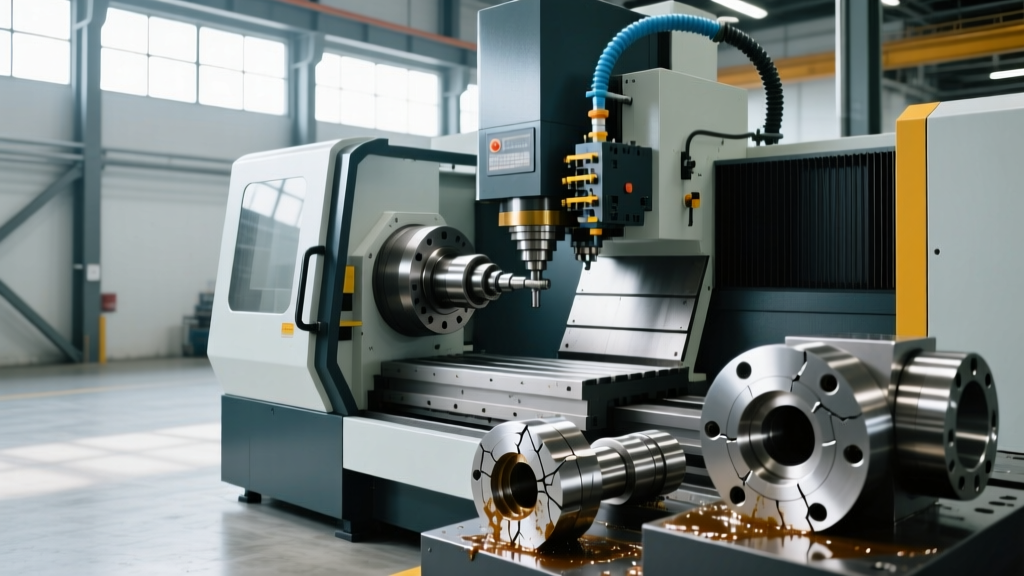
Heavy interrupted cuts on cast iron or thick-walled steel pipe fittings can shock the ballscrew thrust bearings, causing microscopic preload loss. This manifests as reverse backlash, destroying the ±0.0002" true position required for military hydraulic manifolds.
- Test: Run a 12-inch circular ballbar test at 40 IPM. Look for spikes at the axis reversal points.
- Fix: If backlash exceeds 0.0003", you must mechanically adjust the ballscrew locknuts. On a Mazak INTEGREX, this requires removing the way covers and using a torque wrench to re-tension the thrust bearing locknut to the manufacturer's exact specification (typically 180-220 ft-lbs depending on the axis), followed by updating the backlash compensation parameters in the servo drive.
Step 3: Coolant Temperature Stabilization
Coolant acts as the primary heat-transfer medium for the machine casting. If your coolant temperature fluctuates, the cast iron expands and contracts.
💡 Pro Tip: Install an inline coolant chiller rated for your sump volume. For a 200-gallon sump running Blaser Swisslube Synergy 915, a 1.5-ton chiller set to 68°F (± 1°) will virtually eliminate casting-induced geometric drift, ensuring your defense parts remain in spec regardless of the Houston summer ambient shop temperature.Material-Specific Tooling Wear & Edge Cases
When transitioning from railroad steel to defense alloys, the tooling requirements shift dramatically. Using the same toolholder strategy for both will result in catastrophic failure on the CMM.
Toolholder Runout and Pull-Out
Railroad fittings often utilize Weldon flat endmills in standard set-screw holders to handle high torque. However, set-screw holders introduce up to 0.0005" of TIR (Total Indicator Runout). When you switch to machining Ti-6Al-4V defense components, this runout causes uneven flute engagement, leading to immediate tool deflection and scrapped parts.
- Action: Mandate the use of hydraulic or shrink-fit toolholders (e.g., Haimer Power Shrink) for all defense titanium work. These holders guarantee < 0.0001" TIR, ensuring even chip load and extending tool life by up to 40% in exotic alloys.
Coolant Pressure and Chip Evacuation
Heavy steel pipe fittings can often be machined with standard flood coolant (300 PSI). Defense components, particularly those with deep, small-diameter bores in Inconel or Titanium, require high-pressure through-spindle coolant (TSC) at 1,000+ PSI to break the stringy chips inherent to these alloys. Failing to upgrade the pump or clear the spindle union will result in chip recutting, which alters the bore diameter by up to 0.0008" due to thermal expansion of the workpiece.
Calibration Equipment ROI for Mixed-Use Shops
Investing in diagnostic equipment is non-negotiable for shops holding both heavy industrial and defense contracts. Below is a realistic 2026 capital expenditure breakdown for establishing a reliable troubleshooting baseline.
| Equipment | Approx. Cost (2026) | Primary Function | ROI Justification |
|---|---|---|---|
| Renishaw QC20-W Ballbar | $16,500 | Circular contouring & backlash diagnosis | Prevents scrapping $4,000+ titanium defense forgings due to reverse backlash. |
| 1.5-Ton Inline Coolant Chiller | $5,200 | Thermal stabilization of machine casting | Eliminates Z-axis drift without relying solely on software compensation. |
| Haimer Power Shrink Holders (x20) | $6,800 | Minimizing TIR for finishing passes | Reduces finishing tool costs by 30% and guarantees surface finish specs. |
By treating thermal growth and mechanical backlash as dynamic variables rather than static machine flaws, Houston machine shops can seamlessly pivot between the robust demands of transit infrastructure and the unforgiving tolerances of military manufacturing. Regular ballbar testing and strict thermal management protocols are the dividing line between a shop that scraps expensive defense forgings and one that maintains a flawless PPM (Parts Per Million) defect rate.