Medical Device Compliance: Sourcing China CNC Machining Parts Safely
Navigate FDA and ISO 13485 compliance when sourcing China CNC machining parts for medical devices. Learn material, traceability, and audit standards.
The Regulatory Reality of Offshore Medical Machining
Sourcing China CNC machining parts for Class II and III medical devices presents a high-reward, high-risk scenario for OEMs. While offshore manufacturing can reduce unit costs by 30% to 45%, the regulatory burden for biocompatibility, material traceability, and quality management systems (QMS) remains entirely on the legal manufacturer. A single non-conforming batch of surgical implants or diagnostic enclosures can trigger FDA Form 483 observations, mandatory recalls, and severe market access delays.
The compliance landscape is shifting dramatically. With the FDA's Quality Management System Regulation (QMSR) harmonization taking full effect in February 2026, the historical gap between US and international standards has closed. OEMs can no longer rely on outdated supplier audit checklists. Sourcing precision medical components from Chinese machine shops now requires a unified approach that satisfies the FDA QMSR Final Rule, the ISO 13485:2016 Standard, and the EU Medical Device Regulation (MDR) simultaneously.
⚠️ 2026 Compliance Alert: FDA QMSR Harmonization
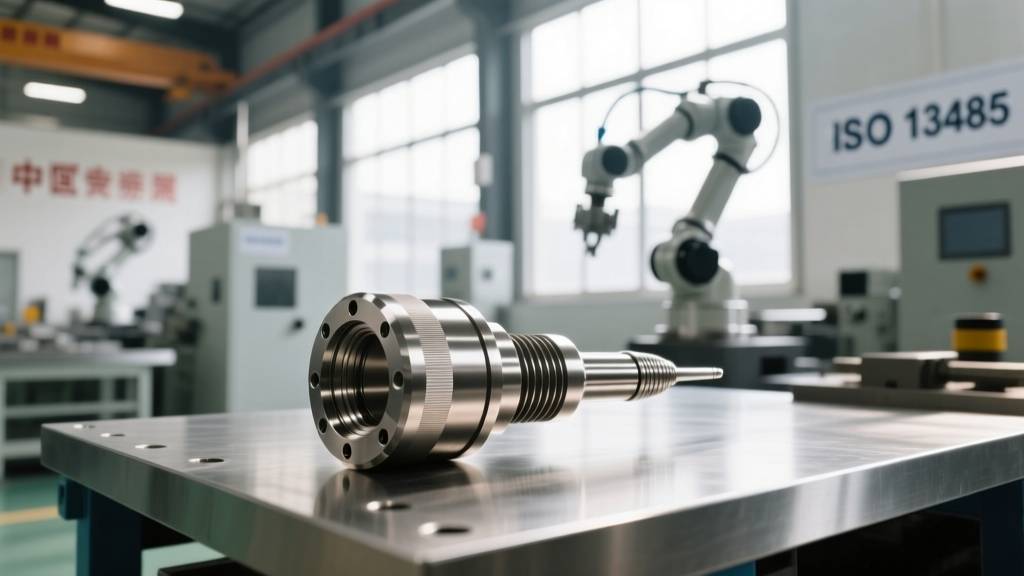
As of February 2026, the FDA officially aligns its 21 CFR Part 820 requirements with ISO 13485. If your Chinese CNC supplier holds an ISO 13485 certificate but operates with a 'quality manual' that ignores specific FDA design control and risk management (ISO 14971) documentation, your components will be flagged during an FDA supplier audit. You must verify that the shop's QMS explicitly incorporates FDA-specific post-market surveillance and CAPA (Corrective and Preventive Action) workflows.
Navigating the Material Traceability Matrix
The most critical failure mode when importing China CNC machining parts for medical applications is material substitution. Standard commercial alloys are frequently swapped for medical-grade equivalents by unauthorized brokers to protect margins. To prevent this, procurement teams must specify exact ASTM standards and require mill-level traceability.
| Material | Medical Grade Standard | Common (Non-Compliant) Substitute | Clinical Risk of Substitute |
|---|---|---|---|
| Stainless Steel | 316LVM (ASTM F138) | 303 SS or Standard 316L | Pitting corrosion during autoclave sterilization due to sulfur inclusions. |
| Titanium Alloy | Ti-6Al-4V ELI (ASTM F136) | Aerospace Ti-6Al-4V (AMS 4911) | Higher oxygen/iron content causes cytotoxicity and implant fatigue failure. |
| PEEK Polymer | Implantable PEEK (ASTM F2026) | Industrial PEEK (e.g., Victrex 450G) | Lack of bioburden control; unverified heavy metal trace contaminants. |
Enforcing the CMTR Chain of Custody
Do not accept generic 'Certificate of Compliance' documents from the CNC shop. You must mandate Certified Material Test Reports (CMTR) originating directly from the raw material mill. For top-tier Chinese medical machinists, require that the CMTR includes the specific heat/lot number that maps directly to the serialized batch of finished parts. Implement a QR-code laser marking system on the raw stock upon receipt at the machine shop to prevent the mixing of aerospace and medical-grade bar stock in the shop's automated bar feeders.
Cleanroom Machining and Surface Finishing Standards
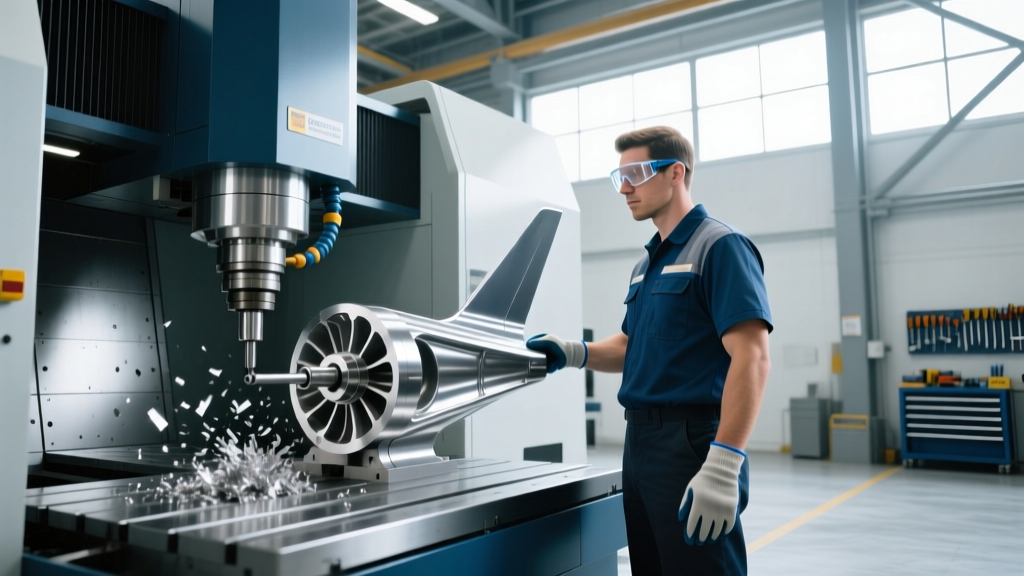
Precision CNC milling and turning generate microscopic particulate and coolant residue. For medical devices that contact the bloodstream or are implanted, the machining environment and subsequent finishing processes are heavily regulated.
- ISO 14644-1 Cleanroom Requirements: Final deburring, ultrasonic cleaning, and packaging of Class III implants must occur in a certified ISO Class 7 (Class 10,000) cleanroom. Verify that the Chinese facility conducts annual airborne particle counts and maintains positive pressure differentials.
- Passivation (ASTM A967): Machined stainless steel components must undergo nitric or citric acid passivation to remove free iron from the cutting process and restore the chromium oxide layer. Demand copper sulfate testing reports per ASTM A967 to prove the absence of free iron.
- Electropolishing: For surgical instruments requiring ultra-low surface roughness (Ra < 0.4 µm) to prevent bacterial biofilm adhesion, electropolishing must be validated. Ensure the shop uses medical-dedicated electrolyte baths, as shared industrial baths can embed cross-contaminants into the part surface.
Supplier Audit Insight: 'When auditing a Chinese CNC facility for medical work, bypass the showroom and walk straight to the scrap and quarantine bins. A shop with a rigorous QMS will have clearly segregated, locked quarantine cages for non-conforming medical parts, complete with physical tags detailing the exact ASTM deviation. If medical scrap is mixed with general commercial aluminum chips, their ISO 13485 certification is merely a paper exercise.'
— Director of Supplier Quality, Tier-1 Orthopedic OEM
Step-by-Step Framework for Qualifying Offshore Medical Suppliers
Qualifying a supplier for China CNC machining parts in the medical sector requires a phased, evidence-based approach. Use this framework to filter out generalist machine shops from true medical contract manufacturers.
- Phase 1: Document Audit (Weeks 1-2)
Request the ISO 13485 certificate and verify its authenticity via the issuing registrar's database (e.g., BSI, TÜV SÜD, SGS). Review their Quality Manual specifically for Section 7.5.1 (Control of Production and Service Provision) to ensure they have defined protocols for medical device traceability. - Phase 2: Process Validation Run (Weeks 3-6)
Order a pilot batch of 50 non-critical Class I components (e.g., surgical tray brackets). Evaluate their First Article Inspection (FAI) report. Did they use calibrated CMM (Coordinate Measuring Machines) with NIST-traceable certification? Did they provide a full dimensional report mapping every GD&T callout on your drawing? - Phase 3: Bioburden & Packaging Test (Weeks 7-10)
Require the supplier to package the parts in medical-grade Tyvek pouches and seal them using validated heat-sealers. Send the packaged samples to an independent third-party lab (e.g., Nelson Labs) for initial bioburden testing to verify the shop's cleaning and handling protocols. - Phase 4: On-Site QMS Audit (Month 4)
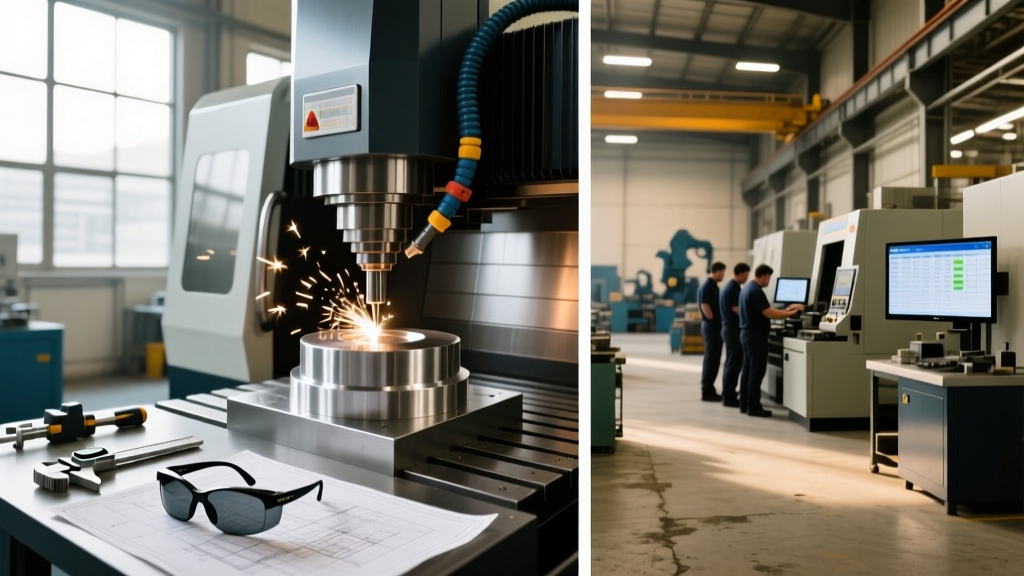
Deploy a bilingual auditor fluent in both manufacturing engineering and Chinese business practices. Focus on the shop floor's execution of CAPA, tool life management (critical for maintaining surface finishes on titanium), and coolant concentration logging.
Cost vs. Compliance: The True Economics
OEMs often assume sourcing China CNC machining parts automatically guarantees a 50% cost reduction. In the medical sector, the reality is more nuanced. While raw machining labor and material costs in regions like Suzhou or Dongguan are significantly lower, the cost of compliance infrastructure narrows the gap.
Expect to pay a 15% to 25% premium over standard commercial CNC rates within China for medical-grade manufacturing. This premium covers the amortization of cleanroom maintenance, dedicated medical CMM inspection time, CMTR documentation management, and ISO 13485 audit fees. However, compared to US-based medical machine shops—which often charge $120 to $180 per hour for 5-axis medical milling—a compliant Chinese partner operating at $65 to $90 per hour still yields a landed cost advantage of roughly 35%, even after factoring in air freight, customs duties, and third-party stateside receiving inspections.
Final Procurement Directive
Never issue a blanket PO for medical components without a signed, mutually agreed-upon Quality Assurance Agreement (QAA). The QAA must explicitly state that no process changes, material substitutions, or sub-tier supplier shifts can occur without 90 days prior written notice and formal FDA/MDR regulatory re-validation. Protect your regulatory standing by treating your offshore CNC partner not as a vendor, but as an extension of your own regulated manufacturing floor.