3D CNC Machine Carving vs 5-Axis Milling & Laser Alternatives
Compare 3-axis CNC machine carving, 5-axis milling, and laser alternatives. Analyze costs, CAM software, and tooling for woodworking and sign shops.
The Baseline: 3-Axis CNC Machine Carving
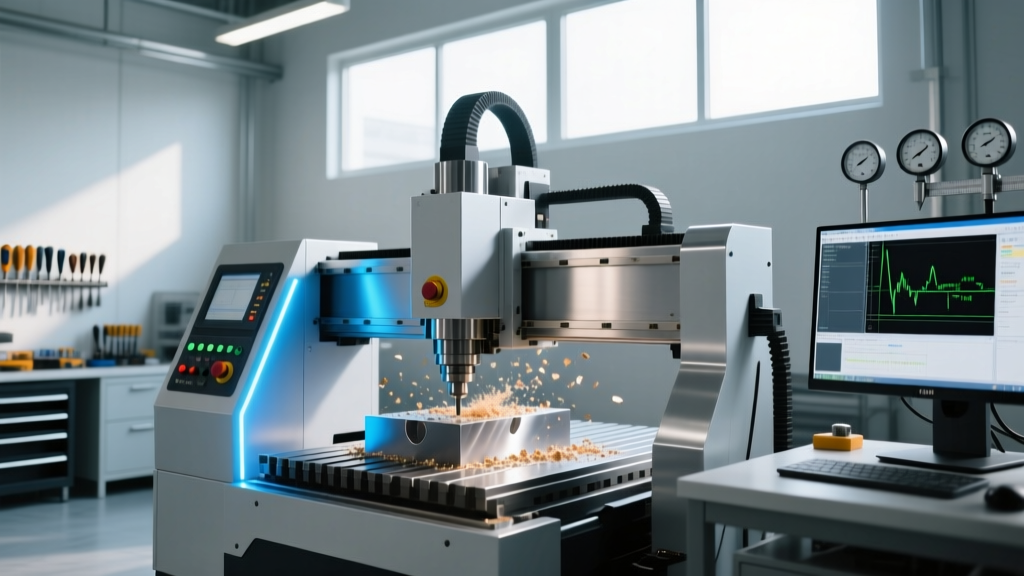
For the majority of custom furniture makers, luthiers, and sign shops, 3-axis CNC machine carving remains the foundational method for relief work. This process relies on a standard X, Y, and Z-axis gantry system paired with specialized V-bit tooling to simulate 3D depth. The machine removes material in a 2.5D manner, meaning the Z-axis only moves vertically while the X and Y axes trace the profile.
Entry-level and mid-tier production machines dominate this space. The ShopBot Desktop MAX (starting around $8,995) handles intricate 24x36-inch sign panels, while the CAMaster Stinger II ($18,500 to $24,000) accommodates full 4x8-foot sheets of hardwood or HDU (High-Density Urethane) foam. The primary limitation of 3-axis carving is the inability to machine undercuts. If your 3D model features a deep relief where the geometry folds back under itself, a standard 3-axis router will gouge the model or fail to reach the underside entirely.
Software and Toolpath Generation
3-axis carving relies heavily on specialized CAM software to calculate the complex V-carve toolpaths. Vectric Aspire ($1,499) is the industry standard for generating 3D relief toolpaths from STL files, while VCarve Pro ($799) suffices for standard 2D V-carving and basic prismatic sign making. The software calculates the exact depth the V-bit must plunge to achieve the desired line width, creating the illusion of hand-carved depth without requiring simultaneous multi-axis interpolation.
Comparison Matrix: Carving Technologies
| Technology | Z-Axis Depth & Undercuts | Typical Entry Cost (2026) | Primary CAM Software | Best Material Application |
|---|---|---|---|---|
| 3-Axis V-Carving | Max depth limited by bit length; No undercuts | $8,000 - $25,000 | Vectric Aspire / VCarve | HDU Foam, Hardwoods, MDF |
| 5-Axis Simultaneous | Unlimited Z; Full undercut capability | $85,000 - $150,000+ | Mastercam 5-Axis / RhinoCAM | Complex 3D Statues, Mold Making |
| CO2 Laser Engraving | Surface level (0.01' - 0.1'); No undercuts | $8,000 - $30,000 | LightBurn / Epilog CAM | Acrylic, Thin Veneers, Leather |
The Premium Alternative: 5-Axis Simultaneous Milling
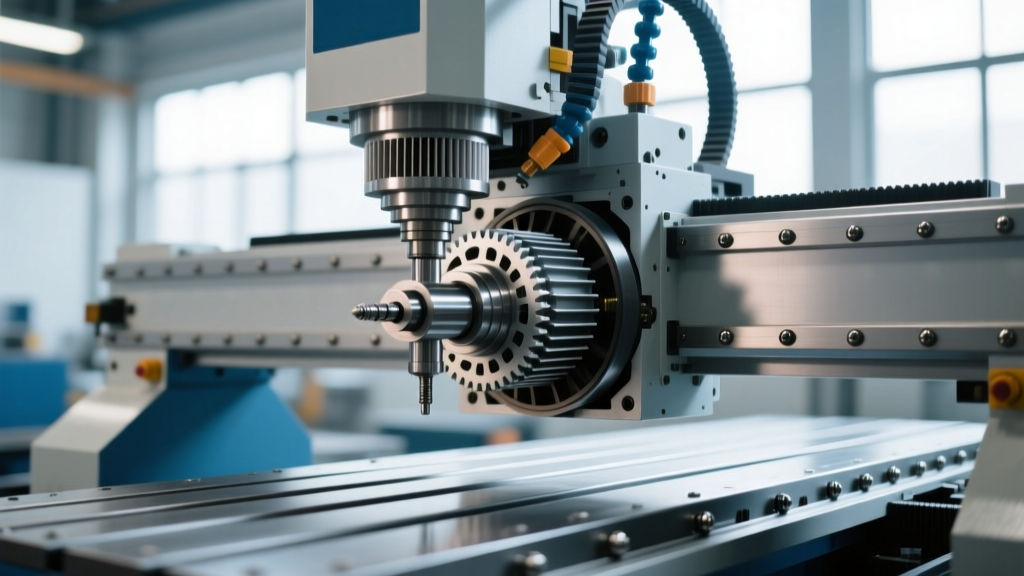
When a project demands true 3D geometry—such as sculptural architectural elements, complex pattern molds for casting, or compound-curved guitar tops—shops must upgrade to 5-axis simultaneous milling. Machines like the Thermwood CS-73 or AXYZ Infinity 5-Axis series utilize two additional rotational axes (typically A and C) to tilt the spindle, allowing the cutting tool to approach the workpiece from compound angles.
Capital & Overhead Reality Check: A production-ready 5-axis CNC router will cost between $85,000 and $150,000. Beyond the hardware, the software overhead is substantial. Mastercam Mill 5-Axis licenses exceed $7,000, and the programming time for collision-free toolpaths can be 5x to 10x longer than standard 3-axis V-carving. Furthermore, 5-axis carving requires high-precision tool length measurement (such as a Renishaw touch probe) to maintain tight tolerances across rotational shifts.The primary advantage here is the elimination of hand-finishing. A 5-axis machine can carve deep undercuts and smooth compound curves in a single setup, drastically reducing the manual sanding and chiseling required after a 3-axis roughing pass.
The 2D/2.5D Alternative: CO2 Laser Engraving
For shops focused strictly on flat sign making, photo-engraving, or rapid prototyping, CO2 lasers offer a non-contact alternative to mechanical CNC machine carving. Systems like the Epilog Fusion Edge 48 ($15,000 to $25,000) use a focused beam of light to vaporize material.
Where Lasers Fail in Carving Applications
- The Charring Problem: When engraving resinous hardwoods like cherry or walnut, the thermal process leaves severe scorch marks that require aggressive chemical cleaning or sanding, destroying crisp edges.
- Slope Limitations: Lasers cannot carve true vertical walls or deep 3D reliefs. The beam naturally creates a V-shaped kerf, resulting in sloped edges on deep engravings.
- Material Restrictions: While excellent for acrylics and thin veneers, lasers struggle with thick HDU foam and solid hardwoods over 0.5 inches thick due to focal depth limitations and fire risks.
Critical Variable: Spindle Runout and Tooling
Regardless of whether you choose 3-axis or 5-axis mechanical carving, the physical limitation of your shop will be spindle runout. Runout is the microscopic wobble of the spindle shaft. A standard hobbyist or entry-level router might exhibit 0.002 to 0.003 inches of runout. In 3D relief carving, this wobble translates directly into visible chatter marks on the final finishing pass.
For high-end CNC machine carving, you must spec a machine with an HSD or Colombo electrospindle rated for less than 0.0005 inches of runout. Pair this with precision-ground tooling. Onsrud and Whiteside manufacture solid carbide V-bits with strict concentricity tolerances. Using a cheap, unbranded V-bit with a 0.001-inch shank variance will ruin a 40-hour 3D carving job on the final 0.010-inch cleanup pass.
Feed & Speed Recipe for Hardwood Relief: When carving Black Walnut with a 1/4-inch shank, 60-degree solid carbide V-bit on a 3-axis machine, set your spindle to 18,000 RPM. Use a feed rate of 40 IPM (inches per minute) and a plunge rate of 15 IPM. For the final finishing pass, reduce the stepover to 8% of the bit diameter and drop the feed rate to 25 IPM to burnish the wood fibers rather than tearing them.Decision Framework: Routing Your Capital
Selecting the right carving technology requires aligning your machine's mechanical capabilities with your shop's actual output. Use this framework to finalize your purchasing decision:
- Choose 3-Axis CNC Carving if: Your primary output is 2.5D signage, cabinet door panels, flat relief art, and HDU foam signs. The ROI on an $18,000 machine is easily achieved within 12 months of standard commercial sign production, and the CAM learning curve is manageable for a single operator.
- Choose 5-Axis Milling if: You are manufacturing complex architectural millwork, compound-curved aerospace interiors, or deep 3D sculptural elements where hand-finishing labor costs exceed the machine's hourly operational cost. You must have a dedicated, highly skilled CAM programmer on staff.
- Choose Laser Engraving if: Your work is strictly 2D, involves high volumes of thin material processing (leather, paper, acrylic), or requires photographic detail on flat surfaces where mechanical tooling cannot achieve sub-millimeter resolution.
Ultimately, CNC machine carving is not a monolith. By matching the exact geometric requirements of your 3D models to the mechanical limitations of the Z-axis and rotational capabilities of the spindle, you can avoid over-investing in 5-axis technology or under-equipping your shop with inadequate 2D laser alternatives.