Top CNC Machine Control Unit Alternatives Compared (2026)
Compare top CNC machine control unit alternatives for 2026. We analyze FANUC, Siemens, and Heidenhain specs, pricing, and 5-axis capabilities.
The Core Architecture: What Defines a Modern CNC Machine Control Unit?
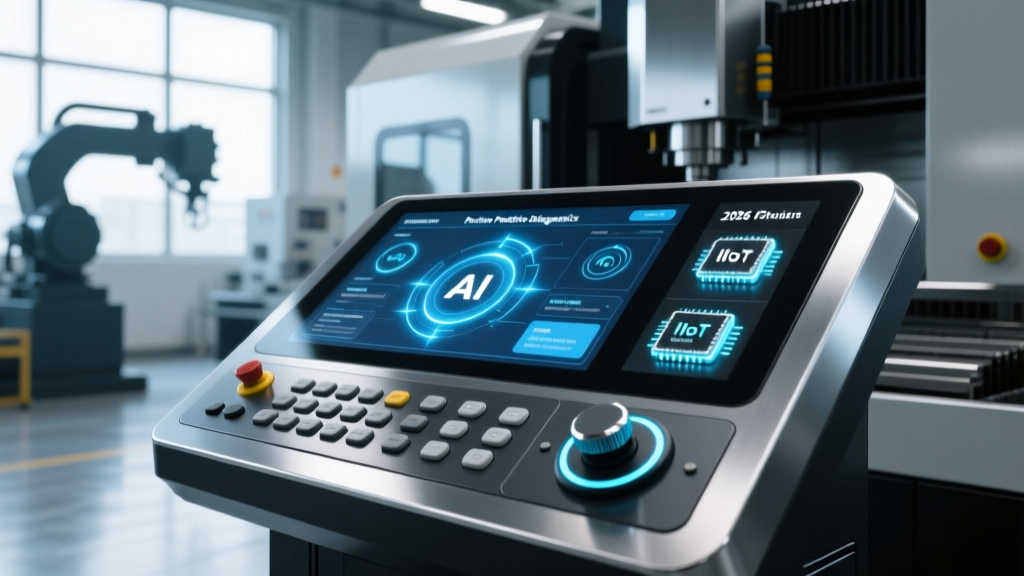
Selecting the right CNC machine control unit (MCU) dictates the absolute ceiling of your shop's productivity, precision, and integration capabilities. In 2026, the MCU is no longer just a G-code interpreter and servo commutator; it is an edge-computing node responsible for real-time collision avoidance, digital twin synchronization, and IoT data harvesting. Whether you are specifying a new 5-axis machining center or retrofitting a legacy VMC, the control architecture you choose will lock you into specific servo ecosystems, programming workflows, and maintenance cost structures for the next decade.
This analysis breaks down the dominant Tier 1 and aftermarket CNC machine control unit alternatives, providing exact pricing ranges, protocol support, and hardware limitations to guide your capital equipment decisions.
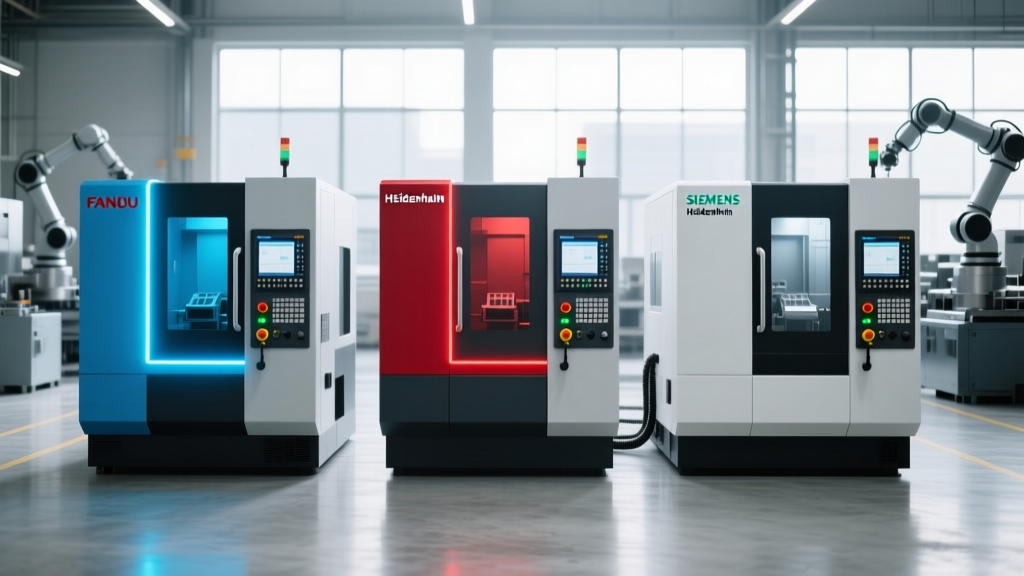
Head-to-Head Matrix: Tier 1 CNC Machine Control Unit Alternatives
| Manufacturer | Model | Ideal Application | Native IoT Protocol | Est. Base Hardware Cost |
|---|---|---|---|---|
| FANUC | 0i-F Plus | High-volume production, turning/milling | MTConnect, OPC UA | $14,000 - $22,000 |
| Siemens | SINUMERIK ONE | Aerospace, digital twin integration | OPC UA, umati | $18,000 - $35,000 |
| Heidenhain | TNC7 | Complex 5-axis, mold & die | OPC UA, MTConnect | $20,000 - $40,000 |
| Centroid | Allin1DC | Retrofits, custom router builds | Ethernet/Modbus | $3,500 - $8,000 |
FANUC 0i-F Plus: The High-Volume Workhorse
The FANUC 0i-F Plus remains the default specification for high-volume production environments and standard 3-axis to 4-axis VMCs. Its primary advantage is nano-interpolation, which smooths toolpaths at the micro-level, yielding superior surface finishes on mold work without requiring external CAM post-processor tweaks.
Hardware and Ecosystem Realities
The 0i-F Plus typically ships with a 15-inch LCD and the iHMI interface. However, shop owners must understand the closed-loop nature of FANUC's architecture. The control relies heavily on proprietary absolute pulse coders (APC). You cannot easily pair a 0i-F Plus with third-party Yaskawa or Panasonic drives without expensive analog/digital interface modules, effectively locking you into FANUC Alpha-i series amplifiers and motors.
- Pros: Unmatched reliability (MTBF often exceeds 100,000 hours); massive pool of available operators and technicians; native MTConnect support for shop-floor monitoring.
- Cons: High cost of replacement servo motors; rigid ecosystem limits custom machine builder flexibility; 5-axis simultaneous kinematics require expensive add-on licenses.
Siemens SINUMERIK ONE: The Digital Twin Standard
Siemens has positioned the SINUMERIK ONE as the premier control for aerospace and advanced manufacturing cells where virtual commissioning is mandatory. The standout feature is 'Create MyVirtualMachine', which allows the exact NC kernel to run on a standard PC. This means CAM programmers can verify toolpaths, test cycle times, and check for kinematic singularities using the actual control software, not a third-party emulator.
Safety Integrated Architecture
From an electrical engineering perspective, SINUMERIK ONE's 'Safety Integrated' feature is a massive time-saver. It supports SIL 3 / PL e safety functions directly over the DRIVE-CLiQ network. This eliminates the need for external safety relays, hardwired E-stop chains, and dual-channel contactors, significantly reducing cabinet footprint and wiring labor during machine build or retrofit.
- Pros: True digital twin capability; advanced safety logic built into the drive network; highly flexible for custom 5-axis kinematics and gantry systems.
- Cons: Steeper learning curve for shop-floor operators accustomed to FANUC; higher initial software licensing costs for virtual machine features.
Heidenhain TNC7: The 5-Axis and Complex Contouring Specialist
For mold, die, and aerospace shops running complex 5-axis simultaneous toolpaths, the Heidenhain TNC7 is the industry benchmark. The TNC7 features an 18.5-inch multi-touch display and a highly optimized conversational programming language (Klartext) that allows operators to write and edit complex 3D contours directly at the machine without a CAD/CAM station.
Collision Monitoring and State Awareness
The TNC7's 'Collision Monitoring' feature uses a digital 3D model of the machine, fixtures, and tool assembly to prevent crashes in real-time. Unlike basic software limit switches, the TNC7 calculates the exact spatial envelope of the tilted tool holder and spindle nose relative to the clamped workpiece, dynamically stopping the axis drives milliseconds before a physical intersection occurs.
- Pros: Best-in-class conversational programming; superior 5-axis tool center point control (TCP); advanced graphical simulation and collision avoidance.
- Cons: Premium pricing (often adding $25,000+ to a machine's base cost); less common in high-volume, simple turning applications.
The Retrofit Route: Aftermarket Alternatives
If you are upgrading a manual mill, a legacy 3-axis VMC with a dead control, or building a custom plasma/router table, Tier 1 controls are often financially unjustifiable. In these scenarios, aftermarket units like the Centroid Allin1DC or PC-based systems running Mach4 are the standard.
Centroid's Allin1DC packages typically range from $3,500 to $8,000 and include the MPU, servo drives, and power supply in a single integrated cabinet. They support standard quadrature encoders and open-loop steppers, making them highly adaptable to mismatched mechanical hardware. However, they lack the sub-micron interpolation and high-speed lookahead algorithms required for aerospace 5-axis work.
Decision Framework: Specifying the Right Control for Your Shop
Use this conditional logic tree to finalize your CNC machine control unit specification:
- IF your primary workload is high-volume production turning or 3-axis milling with a focus on uptime and easy operator hiring THEN specify FANUC 0i-F Plus. The ROI is realized through reduced downtime and a deep labor pool.
- IF you are building an automated manufacturing cell requiring digital twin validation, robotic integration, and advanced safety logic THEN specify Siemens SINUMERIK ONE. The upfront software cost is offset by eliminated physical commissioning time.
- IF your shop specializes in 5-axis mold and die work, titanium aerospace structural components, or requires heavy shop-floor conversational editing THEN specify Heidenhain TNC7. The collision monitoring alone will save you from a single $50,000 spindle crash.
- IF you are retrofitting a 1990s VMC on a sub-$10,000 budget THEN bypass Tier 1 entirely and use a Centroid or Mach4 integrated package.
Ultimately, the control unit is the brain of your capital investment. Align the MCU's kinematic capabilities and software ecosystem with your specific part geometry and production volume to ensure maximum spindle utilization in 2026 and beyond.