Total Cost of Ownership for CNC Controlled Machines in 2026
Discover the true cost of CNC controlled machines in 2026. We break down control unit upgrades, CAM software, post-processors, and 5-year TCO metrics.
Procuring CNC controlled machines requires a financial strategy that extends far beyond the base price of the cast iron, spindle, and axis motors. Manufacturing executives frequently allocate 80% of their capital expenditure budget to the physical hardware, only to face severe operational bottlenecks when the software, control ecosystems, and programming infrastructure are underfunded. In 2026, the true Total Cost of Ownership (TCO) for a production-ready CNC setup is heavily weighted toward the digital thread—the control unit, CAM licensing, post-processor development, and kinematic simulation.
WARNING: The 'Bare Machine' FallacyQuoting a CNC controlled machine without specifying the control software version, look-ahead block capacity, and required CAM post-processor support will result in hidden change orders that typically inflate the final invoice by 12% to 18%.
The Control Unit Ecosystem: Fanuc vs. Siemens vs. Heidenhain
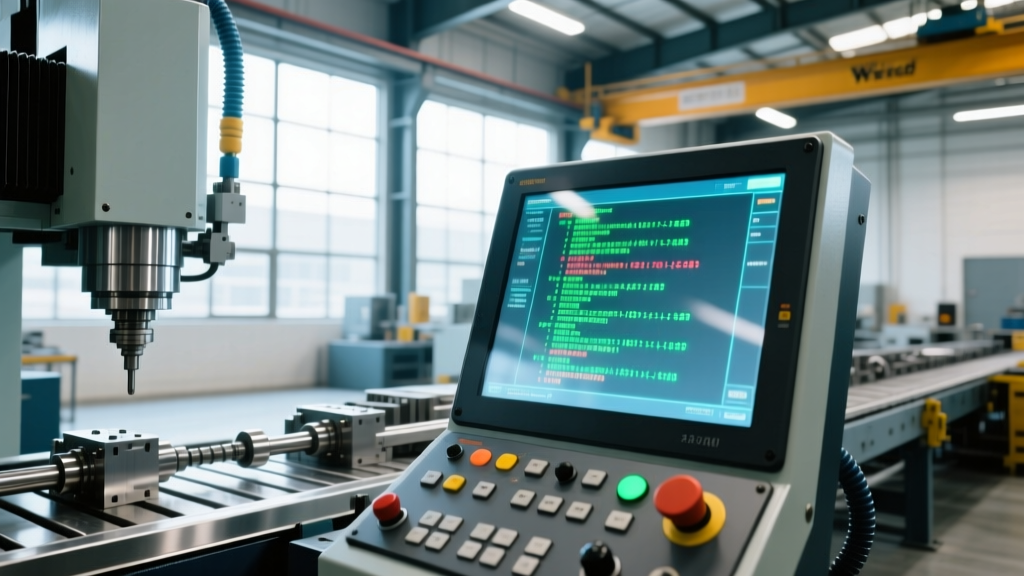
The CNC control is the brain of the machine. While base machines from builders like Haas or Doosan often come with standard proprietary or Fanuc controls, upgrading to advanced controllers for complex 4-axis or 5-axis machining drastically alters the budget. The choice of control dictates your downstream CAM software compatibility and programming workflow.
| Control System | Typical Upgrade Cost (5-Axis) | Programming Ecosystem Impact | Best Application |
|---|---|---|---|
| Fanuc 31i-B5 | $12,000 - $16,000 | Universal CAM support; requires robust post-processor for RTCP (Rotary Tool Center Point). | High-volume production, mold making. |
| Siemens Sinumerik 840D sl | $18,000 - $25,000 | Native NX CAM integration; supports advanced spline interpolation and collision avoidance. | Aerospace, complex 5-axis contouring. |
| Heidenhain TNC 640 | $20,000 - $28,000 | Conversational programming at the machine; excellent for shops doing heavy manual G-code edits. | Job shops, tool and die, prototype work. |
According to data tracked by the NIST Manufacturing Extension Partnership, shops that align their CAM software natively with their chosen control architecture reduce programming setup times by up to 34%. Selecting a Siemens controller but forcing it to run Fanuc-style G-code via a poorly configured CAM post-processor negates the premium paid for the Siemens hardware.
CAM Software and Post-Processor Budgeting
You cannot operate CNC controlled machines efficiently without robust Computer-Aided Manufacturing (CAM) software. In 2026, CAM pricing models have largely shifted toward subscription or hybrid perpetual-plus-maintenance structures.
Capital vs. Operational CAM Costs
- Mastercam (Mill 3D / Multiaxis): Expect an initial perpetual license cost of roughly $7,500 to $9,000 per seat, plus an annual maintenance fee of $1,400 to $1,800. Mastercam remains the industry standard for general milling, supported by an massive ecosystem of third-party post-processors.
- Siemens NX (Mach 3 / Mach 4): A premium tier solution. Budget $14,000 to $22,000+ per seat. NX is highly recommended if you are running Siemens-controlled CNC machines, as the digital twin integration between NX CAM and the Sinumerik virtual controller is seamless.
- Autodesk Fusion (Advanced Manufacturing Extensions): While the base cloud platform is accessible (~$1,800/year), unlocking advanced 5-axis toolpaths and machine simulation requires premium extensions that push the annual cost closer to $4,500 per user.
The Post-Processor Reality Check
A post-processor translates your CAM toolpaths into machine-specific G-code. For 3-axis CNC controlled machines, generic posts are often sufficient. For 4-axis and 5-axis machines, a generic post-processor is a liability that will cause axis over-travel errors or gimbal lock crashes.
Budget Line Item: Custom 5-Axis Post DevelopmentAllocate $2,500 to $4,500 per machine for a certified, custom 5-axis post-processor from providers like Postability or the machine OEM. Factor in a 3-to-6-week lead time for development, kinematic testing, and integration. Do not attempt to run 5-axis aerospace profiles on a generic post.
Verification and Simulation: Preventing the $50,000 Crash
As CNC controlled machines become faster and operate with tighter tolerances, the cost of a spindle crash increases exponentially. Replacing a high-frequency 20,000 RPM spindle on a DMG Mori or Makino machine can cost between $35,000 and $60,000, not including the downtime and scrapped aerospace forgings.
Machine builders offer basic toolpath verification on the control pendant, but this only checks the G-code syntax, not the physical kinematics of the machine in real-time. Independent, kinematic-aware simulation software is mandatory for multi-axis budgeting.
CGTech VERICUT and NCSIMUL are the industry leaders in this space. A single seat of VERICUT, complete with the machine builder's digital twin (the exact 3D kinematic model of your specific CNC controlled machine), will cost between $10,000 and $15,000 upfront, with an annual maintenance contract of roughly 20%. While this is a steep capital outlay, preventing a single major crash on a 5-axis trunnion table pays for the software immediately.
5-Year TCO Matrix: Entry-Level vs. Production CNC Setup
To illustrate the software and control overhead, compare the 5-year TCO of a standard 3-axis job shop setup versus a 5-axis aerospace production cell. Both scenarios assume the purchase of one physical CNC machine.
| Cost Category | 3-Axis Job Shop (Haas VF-2SS) | 5-Axis Aerospace (DMG Mori CMX 600V) |
|---|---|---|
| Base Machine Hardware | $78,000 | $165,000 |
| Control Upgrades (High-Speed/Look-ahead) | $4,500 | $22,000 (CELOS / Siemens) |
| CAM Software (1 Seat, 5-Yr Cost) | $14,000 (Mastercam + Maint.) | $25,000 (NX Mach + Maint.) |
| Custom Post-Processors | $500 (Generic/Minor tweak) | $4,000 (Custom 5-Axis Kinematic) |
| Simulation Software (5-Yr Cost) | $0 (Control verification only) | $18,000 (VERICUT + Maint.) |
| Programmer Training & Certification | $2,000 | $8,500 (OEM 5-axis training) |
| Estimated 5-Year Software/Control TCO | $99,000 | $242,500 |
As the matrix demonstrates, the software and control infrastructure for the 5-axis CNC controlled machine represents nearly 32% of the total 5-year investment. Budgeting solely for the $165,000 hardware footprint guarantees failure when it comes time to actually generate and verify the toolpaths.
Strategic Budgeting Framework for 2026
To ensure your capital expenditure yields a profitable return, implement the following framework when requesting quotes for CNC controlled machines:
- Mandate the Control Specification: Never accept a quote that simply lists 'CNC Control'. Require the exact model (e.g., Fanuc 0i-F Plus vs. 31i-B), the block look-ahead capacity (minimum 200 blocks for 3D contouring), and the specific software options enabled (e.g., A-axis/B-axis TCP support).
- Bundle the Post-Processor: Force the machine tool builder or distributor to include a fully tested, custom 5-axis post-processor in the initial hardware quote. Leverage the hardware purchase to absorb the software integration cost.
- Verify Digital Twin Availability: Before signing the PO, confirm with your simulation software vendor (e.g., VERICUT or NCSIMUL) that a verified digital twin exists for the exact machine model and control combination you are buying. If it does not exist, you will have to pay $3,000+ to have the kinematics built from scratch.
- Audit CAM Seat Utilization: According to Mastercam licensing data, many shops over-purchase premium multiaxis seats. Utilize network licensing or cloud-based token systems to allow 3-axis programmers to use basic seats while reserving expensive multiaxis licenses for senior engineers.
By shifting the focus from pure hardware acquisition to a holistic view of the programming and control ecosystem, manufacturing leaders can accurately forecast the true cost of deploying CNC controlled machines and avoid the hidden margins that erode shop floor profitability.