2026 CNC Tool Cutter Grinding Machine Tech & ROI Guide
Discover how 2026 CNC tool cutter grinding machine innovations like AI wheel compensation and 6-axis automation reduce cycle times and boost shop ROI.
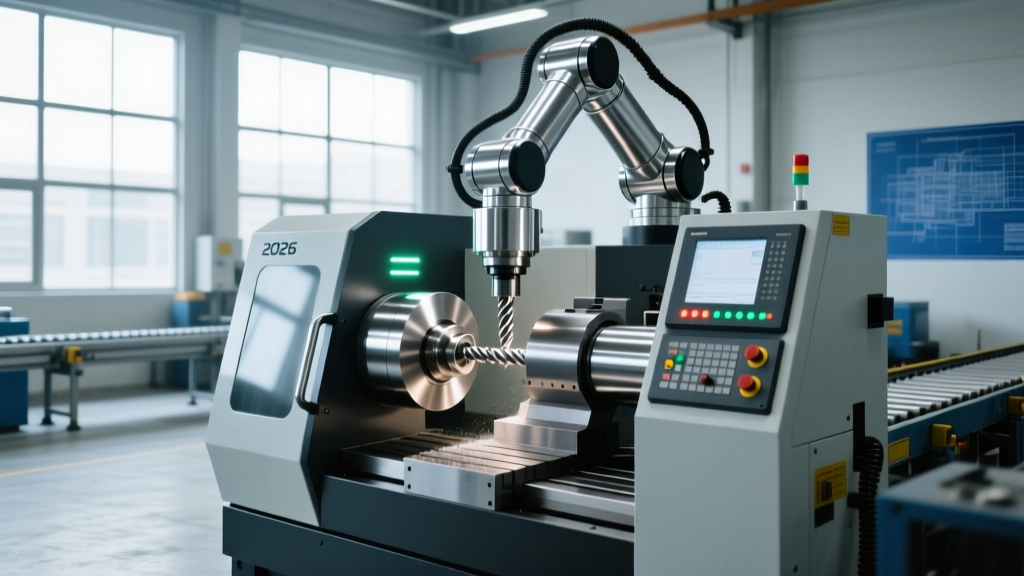
The transition from legacy 3-axis CNC grinders to fully integrated 6-axis CNC tool cutter grinding machine platforms has fundamentally altered cutting tool manufacturing and regrinding economics in 2026. Modern machine shops and dedicated toolrooms are no longer just buying grinders; they are investing in automated, data-driven manufacturing cells capable of holding sub-2-micron geometric tolerances while running lights-out. This guide dissects the current technological landscape of CNC tool cutter grinding machines, detailing the shift to linear motor kinematics, AI-driven wheel wear compensation, and the exact financial models required to justify in-house grinding operations.
Kinematic Evolution: Linear Motors and Direct-Drive Spindles
The most significant hardware shift in the CNC tool cutter grinding machine sector over the last 24 months is the widespread adoption of linear motor drives on the X, Y, and Z axes, replacing traditional ball screws. Linear motors eliminate backlash, reduce maintenance requirements, and provide frictionless movement that is critical for achieving mirror-finish surface grinds on carbide substrates.
Data Highlight: Linear vs. Ball Screw Performance- Contouring Error: Reduced from 4.5 µm (ball screw) to < 0.8 µm (linear motor) during complex helical flute generation.
- Thermal Growth: Near-zero thermal displacement on linear axes, eliminating the need for 45-minute morning warm-up cycles.
- Acceleration: Up to 2G acceleration on the X-axis, slashing non-cutting air time by up to 30%.
Pairing linear motors with direct-drive torque motors on the A and B rotary axes ensures that the workhead and wheelhead maintain absolute positional rigidity under heavy grinding loads. According to engineering specifications from Walter Machines CNC Tool Grinding platforms, direct-drive spindles now routinely deliver 40 kW of peak power while maintaining runout tolerances below 0.0001 inches (2.5 µm) at the tool tip, a requirement for machining micro-endmills under 1mm in diameter.
AI-Driven Wheel Wear Compensation and Acoustic Probing
In 2026, manual wheel dressing and offsetting are obsolete in high-volume environments. The latest CNC tool cutter grinding machine software suites utilize machine learning algorithms paired with in-cycle acoustic emission (AE) sensors and Renishaw or Blum touch probes to manage wheel degradation in real-time.
The Automated Compensation Workflow
- Acoustic First-Contact: An AE sensor mounted on the workhead detects the exact microsecond the grinding wheel touches the carbide blank or the master ring gauge, establishing a true zero-point without crushing the wheel.
- In-Cycle Probing: After the roughing and semi-finishing passes, an integrated 3D touch probe measures the tool's core diameter and flute depth directly in the grinding zone.
- Algorithmic Offset: The CNC controller compares the probed dimensions against the CAD model. If wheel wear has caused a 4 µm deviation, the system automatically adjusts the finishing pass depth and updates the wheel radius compensation table for the next tool in the batch.
This closed-loop feedback ensures that the 500th tool in a batch is dimensionally identical to the 1st, effectively eliminating scrap caused by progressive wheel breakdown.
2026 Flagship CNC Tool Cutter Grinding Machine Comparison
Selecting the right platform depends heavily on your shop's specific tooling mix, volume requirements, and automation readiness. Below is a technical and financial comparison of three dominant platforms currently defining the market.
| Feature / Model | ANCA MX7 Linear | Walter Helitronic G 200 | Rollomatic Nano6 |
|---|---|---|---|
| Primary Application | High-volume production & complex geometries | Mid-to-high volume standard & custom tooling | Micro-tooling & ultra-precision medical/dental |
| Estimated Base Price (2026) | $480,000 - $550,000 | $390,000 - $450,000 | $520,000 - $610,000 |
| Axis Configuration | 6-Axis (Linear X/Y/Z) | 5-Axis (Ball screw X/Y/Z) | 6-Axis (Linear X/Y/Z) |
| Spindle Power (Peak) | 38 kW | 24 kW | 15 kW (High-RPM optimized) |
| Automation Integration | RoboMate (Fanuc integrated) | Mini Power LoadMatic | SmartLoad (Stäubli integrated) |
| Min. Tool Diameter | 0.1 mm (with specialized software) | 1.0 mm | 0.05 mm (sub-micron capability) |
Thermodynamics of Grinding: High-Pressure Programmable Coolant
Grinding carbide generates intense localized heat. If thermal energy is not evacuated instantly, it causes micro-cracking in the carbide substrate and leaches the cobalt binder, severely reducing tool life. The 2026 standard for CNC tool cutter grinding machines includes programmable, high-pressure coolant nozzles operating between 70 bar (1000 PSI) and 100 bar (1450 PSI).
'The ability to programmatically reposition coolant nozzles via the CNC code ensures that the grinding fluid is always injected precisely into the nip angle, regardless of the wheel's current Z-height or the tool's helix angle. This alone has improved surface finish Ra values by 40% on deep-flute endmills.' — Lead Tooling Engineer, Aerospace Cutting Tool Division
Furthermore, modern chillers integrated into these systems maintain coolant temperature at exactly 20°C (68°F) ± 0.5°C, preventing the thermal expansion of the machine castings and the workpiece during long, unattended shifts.
ROI Framework: In-House Grinding vs. Outsourcing
Many machine shops hesitate to purchase a CNC tool cutter grinding machine due to the high capital expenditure. However, the economics of in-house regrinding versus outsourcing have shifted dramatically. Use the following decision framework to calculate your break-even point.
The Break-Even Calculation
Scenario: Regrinding a standard 1/2' 4-flute AlTiN coated solid carbide endmill.
- Cost to Buy New: $85.00
- Cost to Outsource Regrind: $22.00 (including shipping and 5-day turnaround time)
- Cost to Regrind In-House: $3.80 (calculated via diamond wheel wear, coolant consumption, and 4 minutes of machine time at $45/hr burden rate)
Savings per tool: $18.20
Break-Even Volume: If the machine costs $450,000, you need to regrind approximately 24,725 tools to pay off the capital cost. However, if you factor in the hidden costs of outsourcing—specifically the 5-day downtime where a CNC milling center is running sub-optimal, worn tooling, resulting in scrapped parts and extended cycle times—the real break-even point often drops below 12,000 tools annually.
When to Keep it In-House
- You consume more than 1,500 solid carbide endmills or drills per month.
- You require proprietary, custom geometry tools that external vendors cannot turnaround in under 3 weeks.
- You operate lights-out CNC machining centers and need a continuous, on-demand supply of fresh tooling fed via AGVs.
IoT Integration and the MTConnect Standard
A standalone CNC tool cutter grinding machine is a liability in a modern smart factory. In 2026, seamless integration with factory-wide ERP and MES systems is mandatory. Leading manufacturers are adopting the MTConnect Institute standard and OPC-UA protocols to stream real-time telemetry from the grinder to the shop floor dashboard.
Key data points streamed include:
- Spindle Load Telemetry: Monitoring the grinding spindle load curve to detect wheel glazing or loading before it affects tool surface finish.
- Wheel Inventory Tracking: RFID tags embedded in the wheel packs allow the machine to automatically log wheel life, prompting the toolroom manager to reorder diamond or CBN wheels before stockouts occur.
- OEE (Overall Equipment Effectiveness): Automated tracking of spindle-on time versus loading/unloading time to identify bottlenecks in the robotic automation cell.
For shops specializing in micro-tooling for the medical and electronics sectors, platforms like those detailed in Rollomatic CNC Grinding Solutions offer native integration with cleanroom environmental controls, ensuring that grinding particulate is managed without disrupting ISO-certified air quality standards.
Strategic Takeaways for 2026 Purchasers
Investing in a CNC tool cutter grinding machine today requires looking past basic axis travels and spindle speeds. The true value lies in the software ecosystem, the rigidity of the linear drive systems, and the automation peripherals. Prioritize machines that offer open-architecture CNC controls, native MTConnect support, and integrated acoustic probing. By doing so, you transform tool grinding from a secondary, cost-center operation into a primary driver of machining profitability and quality control.