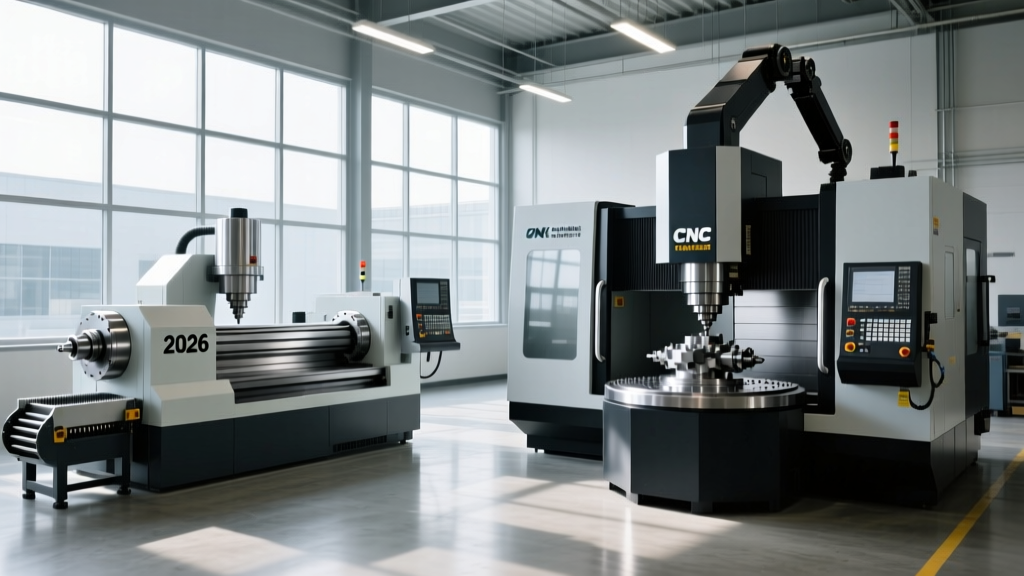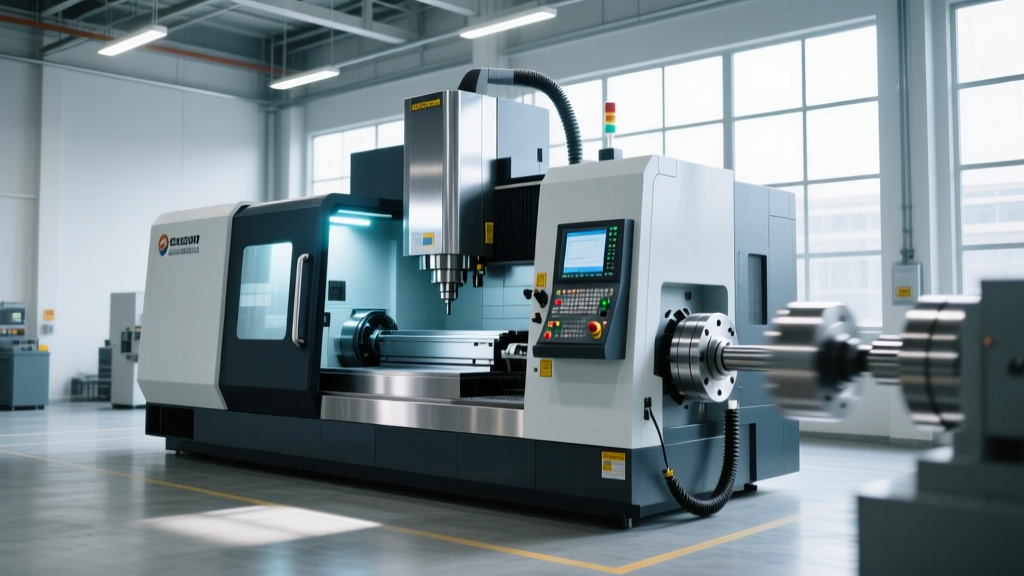
CNC Machining Industry News: Smart Maintenance Schedules for 2026
Explore the latest CNC machining industry news on 2026 predictive maintenance schedules, IoT sensor integration, and OEM service intervals for top brands.
The Shift from Calendar-Based to Condition-Based Servicing
The most significant development in recent CNC machining industry news is the rapid obsolescence of rigid, calendar-based preventive maintenance (PM). Historically, shop floors relied on arbitrary hourly milestones—such as changing spindle chiller filters every 1,000 hours or flushing way lube every six months—regardless of actual machine utilization or environmental conditions. In 2026, the industry standard has decisively shifted toward condition-based monitoring (CBM) and predictive maintenance schedules driven by real-time IoT telemetry.
📊 Industry Data Highlight: According to recent manufacturing analytics, shops transitioning from reactive to predictive maintenance schedules report a 38% reduction in unplanned downtime and a 22% decrease in annual consumable fluid costs. The average cost of unplanned downtime for a 5-axis CNC machine now exceeds $1,850 per hour when factoring in scrapped aerospace-grade titanium parts and delayed supply chain deliveries.Core Maintenance Schedule Updates for Major CNC Brands
To optimize uptime, maintenance managers must align their schedules with the latest OEM engineering bulletins and integrate smart sensor overrides. Below is a breakdown of updated service protocols for three dominant machine platforms.
Haas Automation (VF-2SS & UMC-500)
For high-speed spindles (12,000 RPM and above) in the VF-2SS, the traditional 2,000-hour spindle chiller filter replacement (Part #93-0105) is being replaced by differential pressure monitoring. By installing a $45 inline pressure transducer across the chiller circuit, shops can extend filter life to 2,800 hours if the pressure drop remains below 15 psi and ambient shop temperature is maintained under 22°C. Furthermore, way lube (Mobil Vactra #2, ISO VG 68) top-offs should no longer be purely volume-based. Maintenance teams must test viscosity at 40°C monthly; if it drops below 60 cSt or water contamination exceeds 500 ppm, an immediate flush is required to prevent stick-slip friction on the linear guideways.
Mazak (INTEGREX i-200S)
Spindle taper maintenance on the INTEGREX series has evolved. The legacy daily manual taper wipe is insufficient for 2026 production speeds. The updated schedule mandates an automated air-blast taper cleaning cycle programmed into the M-code after every 50 tool changes. Additionally, the grease-packed spindle bearings require thermal imaging inspections quarterly. If the spindle housing temperature delta exceeds 8°C above the machine casting during a 15-minute run-up at 10,000 RPM, the grease degradation cycle has accelerated, necessitating a mid-cycle regreasing service that typically costs $2,400 if outsourced.
DMG MORI (NLX 2500)
The direct-drive torque motors in the NLX 2500 turrets generate immense localized heat. The 2026 service schedule shifts focus from simple coolant level checks to strict thermal stability protocols. The motor cooling circuit fluid must be maintained at 20°C ± 0.5°C. Maintenance staff must calibrate the chiller's PID controller bi-annually and replace the proprietary dielectric coolant every 4,000 hours, as its thermal conductivity degrades by 12% beyond that threshold, risking motor winding insulation failure.
OEM Baseline vs. 2026 Predictive Schedule Matrix
The following matrix illustrates the financial and operational impact of upgrading from static OEM baselines to dynamic, sensor-driven schedules.
| Component / System | OEM Baseline Interval | 2026 Predictive Interval | Est. Annual Savings / Machine |
|---|---|---|---|
| Spindle Chiller Filter | 1,000 Hours | Condition-based (Avg 2,200 Hrs) | $180 |
| Way Lube System Flush | 6 Months | Viscosity/PPM Triggered | $450 |
| Coolant Concentration | Daily Manual Check | Inline Refractometer IoT | $820 |
| Spindle Bearing Regrease | 12 Months | Thermal/Vibration Triggered | $1,200 |
Integrating IoT Sensors for Real-Time Schedule Adjustments
Implementing a predictive schedule requires hardware that translates physical degradation into actionable data. For spindle health, the industry has standardized around vibration velocity measurements governed by ISO 20816-1 standards. Mounting triaxial accelerometers, such as the SKF Multilog IMx or Banner Engineering QM42VT, directly to the spindle housing allows continuous monitoring.
Under ISO 20816 guidelines, a vibration velocity exceeding 4.5 mm/s RMS indicates early-stage bearing wear or imbalance, triggering an automated work order for inspection. If velocity crosses 11.2 mm/s RMS, the machine's PLC should be programmed to initiate a controlled shutdown to prevent catastrophic spindle seizure. Pairing these sensors with edge-computing gateways enables the integration of data into platforms like the NIST Smart Connected Manufacturing frameworks, ensuring that maintenance schedules are dynamically updated based on actual cutting forces and thermal loads rather than arbitrary calendar dates.
"The shops that will dominate the next decade are those treating their maintenance schedule as a living algorithm, not a static PDF on the shop wall. Every hour of spindle rotation under heavy titanium roughing loads ages the bearings exponentially faster than an hour of light aluminum finishing. Predictive telemetry is the only way to capture that nuance."
— Dr. Aris Thorne, Director of Advanced Manufacturing Analytics
Financial Impact: Proactive vs. Reactive Service Costs
The economic argument for overhauling your maintenance schedule is undeniable when examining specific failure costs. A reactive response to a seized 12,000 RPM CAT40 spindle involves a complete rebuild or replacement, costing between $14,000 and $19,500, plus 3 to 5 days of downtime. Conversely, deploying a comprehensive IoT sensor network (vibration, temperature, and pressure) costs approximately $2,800 in initial hardware per machine, plus a $120/month SaaS subscription for the analytics dashboard. The break-even point for a single avoided spindle failure is less than two months of operation.
Actionable Checklist for Updating Your 2026 PM Schedule
To transition your facility to a modern, condition-based maintenance schedule, execute the following protocol:
- Audit Fluid Specifications: Verify all way lube and hydraulic fluids match exact ISO VG grades. For synthetic coolants (e.g., Master Fluid Solutions TRIM MicroSol 585XT), install inline digital refractometers to maintain a strict 6-8% concentration, eliminating manual daily checks and preventing bacterial bloom.
- Deploy Ballbar Testing: Schedule Renishaw QC20-W wireless ballbar tests every 500 operating hours (rather than annually) to map circularity errors. If the bidirectional repeatability exceeds 5 microns, schedule immediate ballscrew preload adjustment before the next production run.
- Install Differential Pressure Sensors: Fit all primary hydraulic and coolant filtration circuits with analog pressure transducers. Set PLC alarms for a 20% delta increase over baseline clean-filter pressure to dictate exact filter change intervals.
- Establish Thermal Baselines: Run a standardized 15-minute warm-up cycle on all 5-axis machines. Use a FLIR thermal camera to record baseline temperatures on the spindle nose, Z-axis motor, and rotary table drive. Log these in your CMMS; future deviations of >4°C will trigger a mechanical inspection.
- Integrate CMMS with Machine Data: Connect your shop's DNC/MTConnect network to your maintenance software (e.g., Fiix or UpKeep). Ensure that actual spindle-on hours, not just 'machine powered-on' hours, dictate the consumption rate of your maintenance schedules.