Top CNC Milling Machine Brands Pioneering AI and IoT in 2026
Discover how top CNC milling machine brands are integrating AI, IoT, and digital twins in 2026 to revolutionize precision manufacturing and uptime.
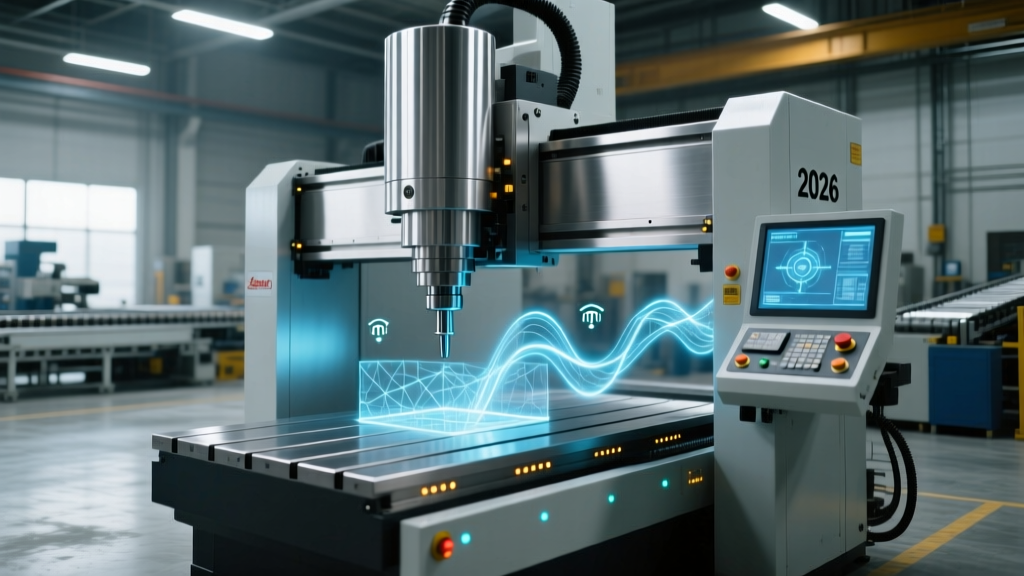
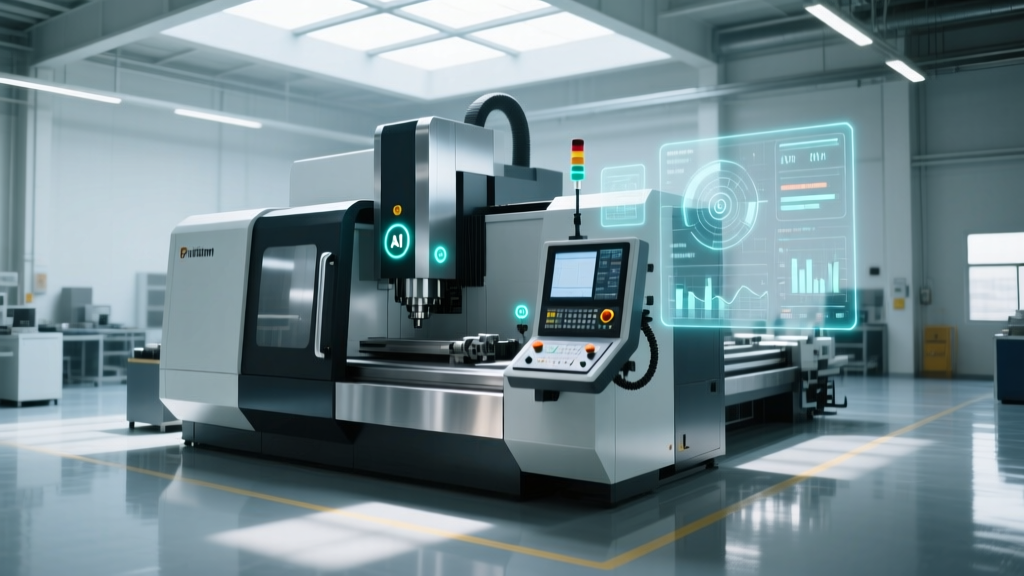
The criteria for evaluating CNC milling machine brands have fundamentally shifted. In 2026, cast-iron rigidity, spindle RPM, and rapid traverse rates are merely baseline expectations. The true competitive differentiator among top-tier manufacturers is cyber-physical integration—specifically, how effectively a machine leverages artificial intelligence, Internet of Things (IoT) sensor fusion, and digital twin architectures to eliminate unplanned downtime and guarantee micron-level volumetric accuracy.
When shop owners and manufacturing engineers evaluate CNC milling machine brands for capital equipment upgrades, the focus is now on closed-loop feedback systems. Modern 5-axis machining centers no longer just execute G-code; they actively monitor thermal displacement, tool wear acoustics, and spindle vibration in real-time, adjusting feed rates autonomously to prevent chatter and tool breakage.
2026 Smart Manufacturing Adoption Snapshot
- 78% of Tier-1 aerospace and medical machine shops now require native MTConnect or OPC UA compatibility when purchasing new 5-axis mills.
- 42% reduction in scrap rates reported by facilities utilizing AI-driven thermal compensation algorithms over standard manual offsetting.
- $1.2M+ average annual savings per facility attributed to predictive spindle maintenance via IoT vibration telemetry.
The 2026 Innovation Matrix: Comparing Top CNC Milling Machine Brands
Below is a technical comparison of how the industry's leading CNC milling machine brands are packaging their proprietary smart technologies into flagship 5-axis and horizontal platforms.
| Brand | Flagship Model (2026) | Core AI / IoT Technology | Est. Price Range (USD) | Best Application |
|---|---|---|---|---|
| DMG MORI | NTX 2000 2nd Gen | CELOS X / Digital Twin | $450,000 - $850,000 | Complex aerospace structural components |
| Mazak | VARIAXIS i-800 NEO | MAZATROL SmoothAi | $350,000 - $600,000 | High-mix, low-volume job shops |
| Haas | UMC-750SS | NGC / HaasConnect | $130,000 - $175,000 | Cost-effective 5-axis prototyping |
| Makino | a61nx | Pro6 / Thermal AI | $280,000 - $420,000 | High-volume automotive & medical |
DMG MORI: CELOS X and the ISO-Compliant Digital Twin
DMG MORI continues to push the boundary of what constitutes a machine tool by positioning their hardware as a node within a broader smart factory ecosystem. The introduction of the CELOS X control system has fundamentally changed how operators interact with the machine. Rather than relying solely on manual offsets, CELOS X integrates deeply with CAD/CAM software to create a fully functional digital twin of the machining process before a single drop of coolant is applied.
This approach aligns directly with the ISO 23247 digital twin framework for manufacturing, ensuring that data flows seamlessly between the physical NTX 2000 milling center and the virtual simulation environment. The system utilizes machine learning algorithms trained on thousands of previous cutting cycles to predict tool deflection in deep-cavity milling, automatically adjusting the toolpath to maintain tolerances within ±3 microns over extended 40-hour unattended runs.
Mazak: MAZATROL SmoothAi and Autonomous Machining
Mazak has aggressively integrated artificial intelligence directly into the CNC control via their MAZATROL SmoothAi platform. The VARIAXIS i-800 NEO, equipped with a 12,000 RPM spindle and roller gear cam table, leverages this AI to perform real-time chatter detection and suppression.
When the machine's accelerometers detect harmonic vibrations that precede chatter, the SmoothAi system autonomously alters the spindle speed and feed rate within milliseconds to break the harmonic resonance. Furthermore, Mazak has introduced AI-assisted voice recognition for shop-floor querying, allowing operators to ask the machine for tool life estimates or maintenance schedules without touching the screen. According to NIST's smart manufacturing guidelines, this level of human-machine interface (HMI) integration is critical for reducing cognitive load and preventing input errors during complex 5-axis simultaneous operations.
Haas Automation: Democratizing MTConnect via NGC
While European and Japanese brands often dominate the ultra-high-end smart manufacturing space, Haas Automation remains the undisputed leader in democratizing IoT connectivity for mid-tier machine shops. The Next Generation Control (NGC) on the UMC-750SS natively supports the MTConnect standard, eliminating the need for expensive third-party hardware gateways to extract machine data.
Through the HaasConnect platform, shop managers can monitor spindle load, axis positions, and alarm states remotely via secure cloud dashboards. The true innovation for 2026 lies in Haas's integration of dynamic tool center point control (RTCP) with real-time thermal growth compensation. By embedding temperature sensors directly into the ballscrew assemblies and the spindle housing, the NGC mathematically models thermal expansion and shifts the work coordinate system (WCS) dynamically, ensuring that a part milled at 6:00 AM in a cold shop matches the exact dimensions of a part milled at 3:00 PM when ambient temperatures have risen by 15°F.
Makino: Pro6 Control and Algorithmic Thermal Stability
Makino approaches the innovation race with a hyper-focus on absolute rigidity and thermal stability, recognizing that AI cannot compensate for poor mechanical foundations. The a61nx horizontal machining center utilizes the Pro6 control, which features advanced geometric error compensation. During assembly, Makino engineers use laser interferometry to map the exact volumetric errors of the specific machine, uploading a unique compensation matrix to the Pro6 controller.
The Pro6 control pairs this static map with dynamic Core Coolant technology. By circulating temperature-controlled coolant not just to the spindle, but through the center of the ballscrews and the machine casting itself, Makino effectively eliminates the thermal gradients that cause geometric twisting in heavy-duty milling operations. This makes the a61nx the preferred choice for automotive transmission housings where bore-to-bore parallelism must be held to under 10 microns across high-volume production runs.
Decision Framework: Matching Brand Innovation to Your Shop Floor
Selecting among these CNC milling machine brands requires aligning their specific technological strengths with your operational bottlenecks. Use this framework to guide your 2026 capital expenditure:
- If your primary bottleneck is unattended machining reliability: Choose Mazak. The SmoothAi chatter suppression and autonomous feed optimization allow you to confidently run Inconel and Titanium parts overnight without fear of catastrophic tool failure.
- If you require full digital twin integration for ITAR aerospace work: Choose DMG MORI. The CELOS X ecosystem provides the auditable, closed-loop data trail required by modern aerospace primes, ensuring every toolpath deviation is logged and justified.
- If you are a job shop needing rapid ROI and ERP integration: Choose Haas. The native MTConnect support on the UMC-750SS allows you to plug the machine directly into shop management software like ProShop or E2 Manufacturing for real-time costing and scheduling without a $30,000 IT integration project.
- If you are machining high-volume automotive or medical implants: Choose Makino. The Pro6 thermal stability algorithms and volumetric compensation guarantee that the 10,000th part in a run is dimensionally identical to the first, minimizing CMM inspection bottlenecks.
Frequently Asked Questions on Smart CNC Integration
Do I need a dedicated IT team to manage IoT data from these CNC milling machine brands?
No. In 2026, brands like Haas and Mazak offer edge-computing solutions where data is processed locally on the machine's control and only summarized insights (like OEE and spindle health scores) are sent to the cloud. This minimizes network bandwidth requirements and eliminates the need for an on-site server infrastructure.
Can AI toolpath optimization replace skilled CAM programmers?
AI does not replace the CAM programmer; it optimizes the output. The programmer still defines the strategy, tool selection, and tolerances. The machine's AI (such as Mazak's SmoothAi) handles micro-adjustments to feeds, speeds, and engagement angles in real-time based on actual cutting forces, which a static CAM file cannot predict.
What is the typical ROI timeline for upgrading to a smart 5-axis mill?
Shops transitioning from legacy 3-axis setups to smart 5-axis machines with IoT monitoring typically report an ROI within 14 to 18 months. This is driven by a 40% reduction in setup times, elimination of secondary operations, and a 25% increase in spindle utilization due to predictive maintenance alerts preventing catastrophic downtime.