CNC Lathe Milling Machine vs Standalone Setups: 2026 Analysis
Compare CNC lathe milling machines against standalone setups. Explore 2026 ROI data, CAM costs, and exact models like the Mazak INTEGREX.
The Core Dilemma: Multitasking vs. Dedicated Machining
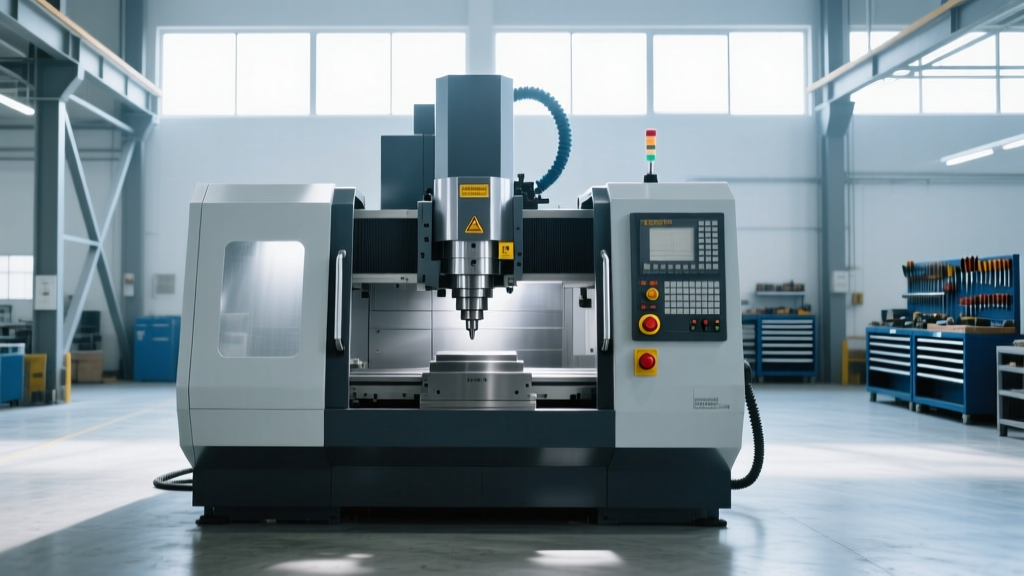
The term CNC lathe milling machine typically refers to a multitasking mill-turn center—a machine combining the bed, spindle, and tailstock of a lathe with the multi-axis milling capabilities of a vertical or horizontal machining center. While the promise of "done-in-one" machining is highly attractive to shop owners looking to reduce floor space and setup times, the reality of integrating these machines involves complex financial and technical trade-offs. In 2026, the gap between high-end mill-turn centers and synchronized standalone cells has narrowed, forcing manufacturers to critically evaluate their part profiles before committing capital.
Quick Decision Framework
- Choose a CNC Lathe Milling Machine (Mill-Turn) if: You machine complex aerospace or medical components (e.g., titanium landing gear parts, orthopedic implants) requiring 5-axis contouring on cylindrical stock, and your batch sizes justify the $450k+ capital investment.
- Choose Standalone VMC + CNC Lathe if: Your shop handles high-volume prismatic parts and simple shafts, requires flexible capacity scaling, or operates with a capital budget under $250,000.
- Choose a Y-Axis Turn-Mill Lathe if: You need off-center milling and drilling on rotational parts but do not require full B-axis simultaneous 5-axis contouring.
The Kinematic Divide: B-Axis vs. Live Tooling
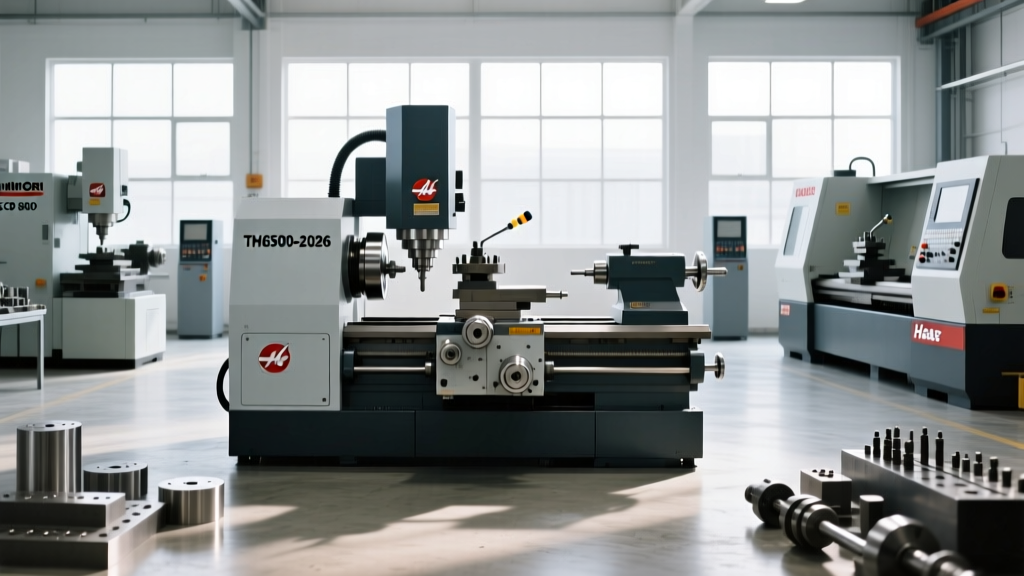
Understanding the mechanical architecture is critical before comparing alternatives. A standard CNC lathe with live tooling relies on a C-axis (spindle orientation) and radial/axial driven tools. This limits milling to basic flats, keyways, and cross-holes.
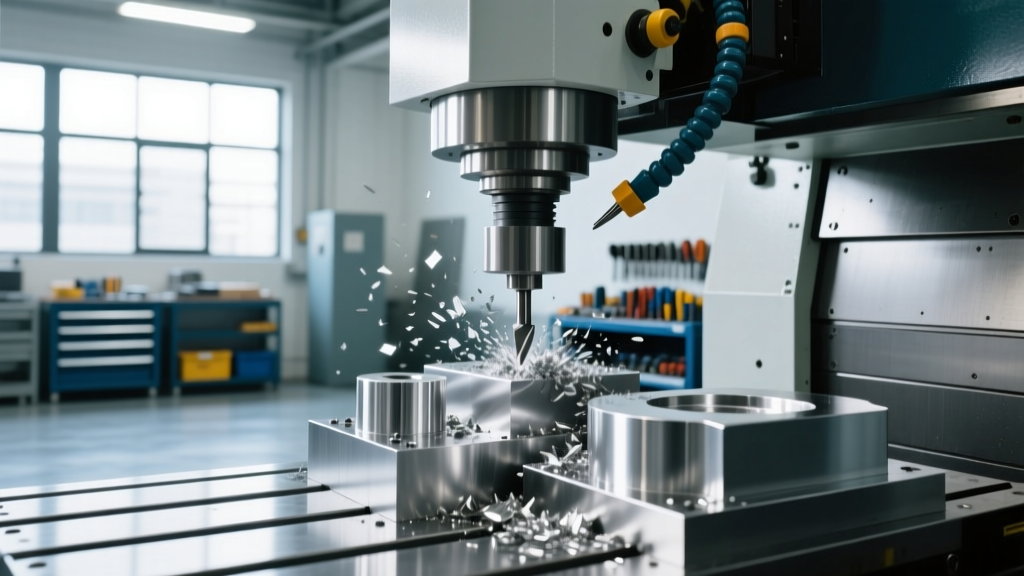
A true CNC lathe milling machine, such as the Mazak INTEGREX i-200S or DMG MORI NTX 1000 2nd Generation, utilizes a full B-axis milling head. The B-axis allows the milling spindle to tilt and lock at any angle, enabling continuous 5-axis simultaneous machining directly on the rotating or clamped bar stock. Furthermore, these machines feature a lower turret and a sub-spindle, allowing the machine to perform rough turning on the main spindle while simultaneously finish-milling the back side of the part on the sub-spindle. According to Mazak's multi-tasking architecture guidelines, this dual-path machining can reduce total cycle times by up to 40% compared to sequential standalone operations.
Capital Expenditure and ROI Breakeven Analysis
The most common error shops make when evaluating a CNC lathe milling machine is underestimating the total cost of ownership. Below is a realistic 2026 financial breakdown comparing a high-end mill-turn center against a modern standalone cell.
| Cost Category | Mill-Turn Center (e.g., Mazak INTEGREX) | Standalone Cell (e.g., Haas VF-2SS + ST-20) |
|---|---|---|
| Base Machine Cost | $550,000 - $650,000 | $180,000 - $210,000 |
| Advanced Options (Chip conveyors, high-pressure coolant) | $45,000 | $15,000 |
| CAM Software (Mill-Turn Module) | $12,000 - $18,000 | $4,000 (Standard Mill/Lathe) |
| Custom Post-Processors | $8,000 - $15,000 | $1,500 |
| Total Estimated Investment | ~$640,000 | ~$210,000 |
Calculating the Breakeven Point
Assume a capital delta of $430,000. The primary financial advantage of the CNC lathe milling machine is the elimination of secondary setups. If moving a complex aerospace valve body from a standalone lathe to a standalone VMC takes 3.5 hours of fixturing, indicating, and tool-probing, and your shop rate is $150/hour, you save $525 per part in setup labor alone.
Breakeven Calculation: $430,000 / $525 = 819 parts. If your average batch size is 50 parts, the machine will pay for its premium in roughly 16 production runs. If you primarily run batches of 2 to 5 prototypes, the standalone cell with quick-change pallet systems will likely yield a faster ROI.
The Hidden Bottleneck: CAM Programming and Verification
Operating a multitasking CNC lathe milling machine requires a fundamental shift in programming. Standard 2.5D CAM is insufficient. You must utilize advanced Mill-Turn environments like Mastercam Mill-Turn or Hexagon ESPRIT. As noted by industry analysts at Modern Machine Shop, the synchronization of the main spindle, sub-spindle, and upper/lower turrets requires meticulous G-code channel management to prevent catastrophic collisions.
⚠️ Warning: Collision Detection is Non-NegotiableBecause mill-turn centers operate with multiple tooling stations in a confined envelope simultaneously, manual G-code verification is impossible. Budget an additional $15,000 to $25,000 for machine simulation software like CGTech VERICUT or rely on the CAM provider's native digital twin modules. A single unverified crash on a B-axis head can result in $40,000+ in spindle repairs and weeks of downtime.
Viable Alternatives to Full Mill-Turn Centers
If the $600k+ price tag or the steep CAM learning curve of a true B-axis CNC lathe milling machine does not align with your shop's operational profile, consider these highly capable alternatives.
1. Y-Axis Turn-Mill Lathes
Machines like the Haas DS-20Y or Doosan Lynx 2100LYB (priced between $110,000 and $160,000) offer a Y-axis travel (typically ±2.0 inches to ±4.0 inches) combined with live tooling. This allows for off-center drilling, milling flats, and cutting complex polygon shapes without unclamping the part. While they lack the B-axis contouring required for 3D aerospace surfaces, they handle 85% of standard hydraulic fittings and medical bone screws with exceptional efficiency.
2. 5-Axis VMC with Automated Pallet Pools
For shops producing prismatic parts that happen to have cylindrical features, a 5-axis VMC (like the DMG MORI DMU 50 3rd Gen) equipped with a pallet pool can out-produce a mill-turn center. By utilizing advanced tombstone fixturing and hydraulic chucks mounted to the pallet, a 5-axis mill can machine multiple sides of a part in a single setup. This alternative shifts the complexity from the machine kinematics to the fixture design, which is often easier for traditional milling programmers to manage.
Application Profiling: Where Each Setup Wins
To finalize your purchasing decision, map your current and projected 2026 order book against these application profiles:
- Profile A: Long, Complex Shafts (e.g., Turbine Rotors, Drive Shafts)
Winner: CNC Lathe Milling Machine. The ability to support the part with a programmable tailstock or steady rest while simultaneously performing 5-axis milling on the OD is impossible on a standalone VMC. - Profile B: High-Volume Automotive Brackets and Housings
Winner: Standalone Horizontal Machining Center (HMC) or VMC cell. Mill-turn centers are too slow at chip-to-chip transitions for high-volume prismatic work, and the bed length is wasted on short parts. - Profile C: Small-Diameter Swiss-Type Medical Components
Winner: CNC Swiss-Type Lathe. For parts under 1.25 inches in diameter requiring extreme L:D (length-to-diameter) ratios, a sliding-headstock Swiss machine outperforms standard mill-turn centers in both cycle time and surface finish.
"The shops that fail with multitasking machines are the ones that buy them to replace a standard lathe, but continue programming them like a standard lathe. A CNC lathe milling machine is only profitable if you redesign your fixturing and CAM strategies to exploit simultaneous main/sub-spindle synchronization."
— Manufacturing Engineering Lead, SME Technical Papers
Final Verdict: Aligning Capability with Capacity
A CNC lathe milling machine represents the pinnacle of rotational part manufacturing, offering unmatched geometrical flexibility and setup reduction. However, it is not a universal replacement for traditional machining cells. If your shop specializes in low-to-medium volume, high-complexity rotational parts with tight concentricity tolerances across multiple planes, the investment in a Mazak INTEGREX or DMG MORI NTX series is mathematically sound. Conversely, if your revenue relies on high-volume, simpler geometries, deploying a synchronized cell of a Y-axis lathe and a 3-axis VMC will deliver superior ROI, lower maintenance risk, and greater programming agility in the current manufacturing landscape.