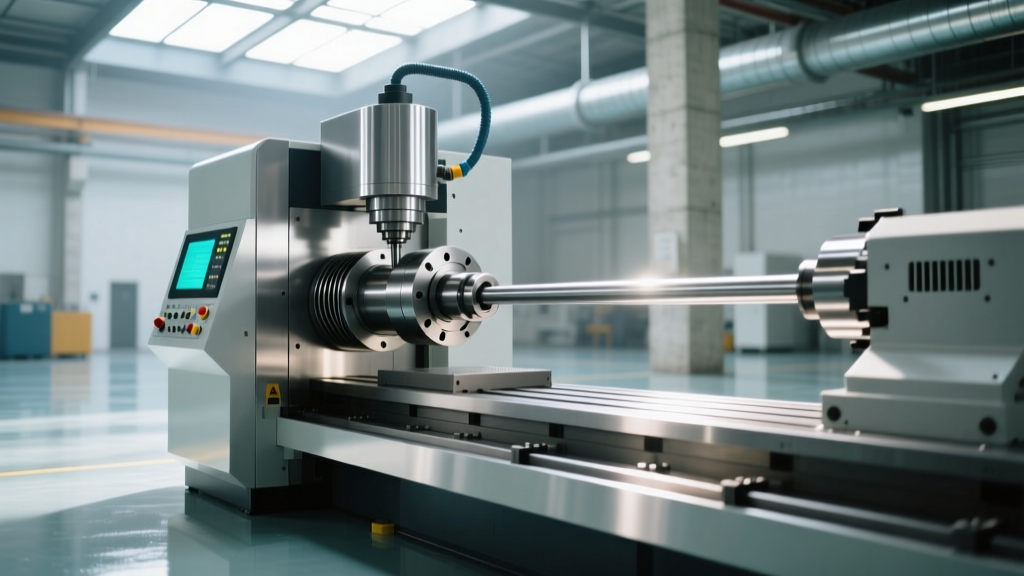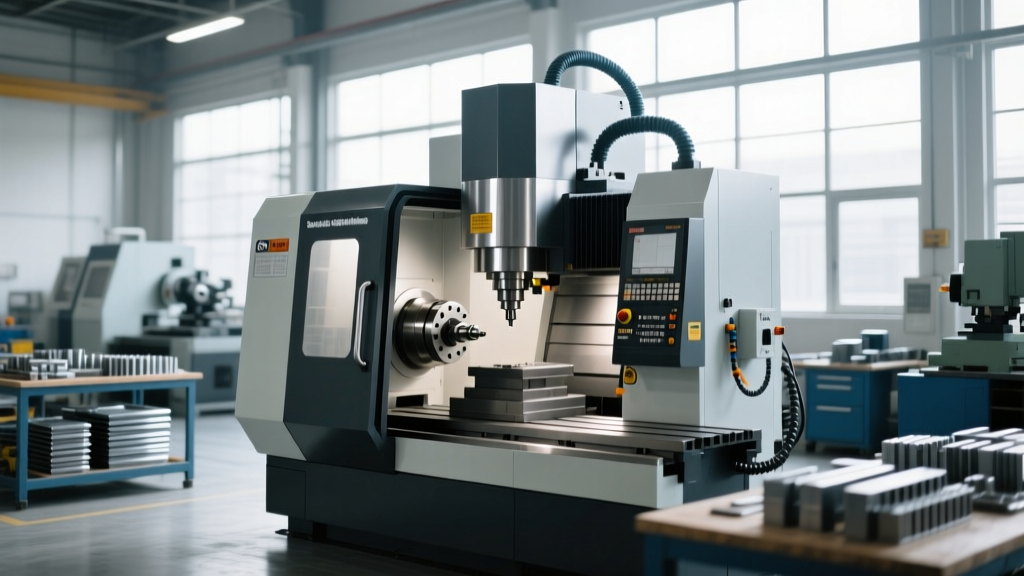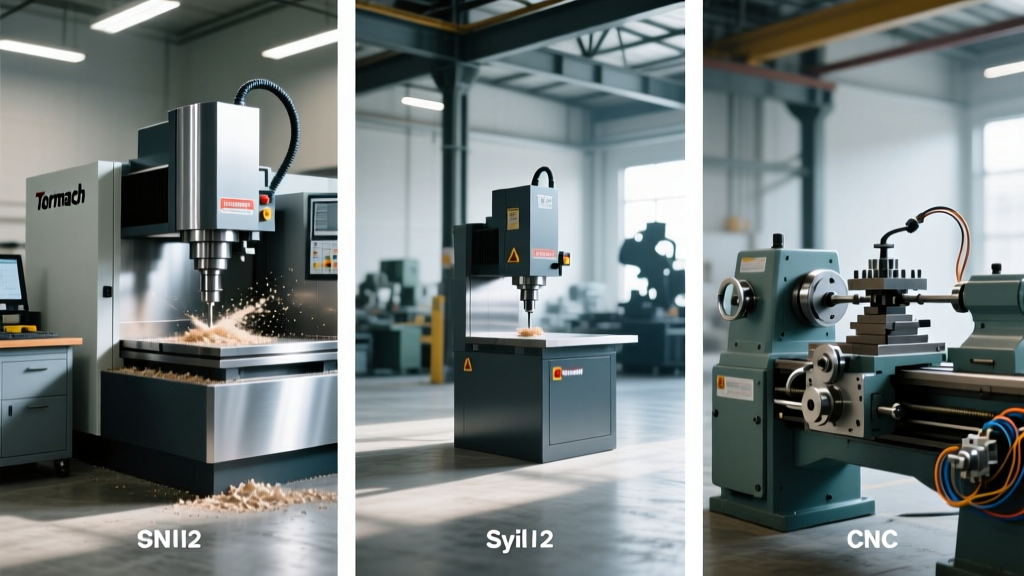
Best Budget CNC Milling Machine Alternatives Compared for 2026
Compare top budget CNC milling machines and retrofits for 2026. We analyze Tormach, Syil, and manual-to-CNC conversions with real cost breakdowns.
When sourcing a budget CNC milling machine in 2026, buyers face a fragmented market. True industrial entry-level machines, like the Haas Mini Mill, start around $45,000, pushing hobbyists, prototyping labs, and small job shops into the sub-$10,000 'budget' tier. However, 'budget' in CNC milling does not mean cheap; it requires navigating severe trade-offs between rigidity, axis travel, spindle taper, and controller reliability.
This comparison analysis breaks down the three dominant paths for budget CNC milling: purpose-built desktop mills, heavy-duty benchtop imports, and manual-to-CNC retrofits. We evaluate exact specifications, real-world hidden costs, and failure modes to help you select the right platform for your specific machining needs.
The 2026 Budget CNC Decision Framework
- Choose Desktop (Tormach) if: You machine aluminum/plastics, need a plug-and-play ecosystem, and have strict space/noise limits.
- Choose Benchtop (Syil) if: You need BT30 tooling, linear guideways, and are machining steel or titanium in a garage with reinforced floors.
- Choose Retrofit (PM-25MV) if: You have 40+ hours of mechanical/electrical troubleshooting skills, need a large work envelope on a strict cash budget, and accept the risk of stepper motor stalls.
Contender 1: Tormach PCNC 440 (The Purpose-Built Desktop)
The Tormach PCNC 440 remains the benchmark for prosumer desktop milling. Engineered specifically for CNC operation rather than adapted from a manual mill, it features a rigid cast-iron frame and a proprietary TTS (Tormach Tooling System) spindle taper.
Specifications & Pricing
- Base Price: ~$4,499 (Stand and enclosure add ~$1,600)
- Travel (X/Y/Z): 10.0' x 6.25' x 10.0'
- Spindle: 1.5 HP, 10,000 RPM max, Poly-V belt drive
- Controller: Tormach PathPilot (LinuxCNC-based)
Real-World Performance & Limitations
The PathPilot controller is arguably the best out-of-the-box software in the budget tier, featuring conversational programming and excellent probing routines. However, the PCNC 440's 10-inch Z-axis travel is a hard constraint. If you mount a 3-inch vise and a 2-inch toolholder, you are left with only 5 inches of Z-clearance, severely limiting tall part capabilities. Furthermore, the TTS tooling system, while affordable, is known to pull out of the spindle taper under heavy Z-axis axial loads (like aggressive drilling or deep slotting). For aggressive roughing, users must rely on ER32 collets or Weldon flats.
Contender 2: Syil X7 (The Heavy-Duty Benchtop)
The Syil X7 CNC mill bridges the gap between desktop toys and industrial VMCs. Weighing over 1,500 lbs, it utilizes linear guideways on all axes and high-torque servo motors, eliminating the lost-step issues common with stepper-driven budget machines.
Specifications & Pricing
- Base Price: ~$6,800 (Shipping and rigging add ~$800)
- Travel (X/Y/Z): 23.6' x 11.8' x 13.8'
- Spindle: 8,000 RPM, BT30 Taper (150mm gauge line)
- Controller: Syil custom LNC or Siemens-based touch panels
Real-World Performance & Limitations
The inclusion of a true BT30 spindle is the X7's killer feature. BT30 allows for rigid tapping, high-speed machining (HSM) toolpaths, and rapid tool changes without the drawbar manipulation required by R8 or TTS systems. The linear guides provide exceptional surface finishes in aluminum. The primary drawback is infrastructure: the X7 requires a 220V single-phase or 3-phase power supply, and its sheer mass requires an engine hoist and a reinforced concrete slab for installation. It is not a machine you can move once it is placed.
Contender 3: Precision Matthews PM-25MV + CNC Retrofit
For those willing to sweat, converting a manual benchtop mill into a CNC machine offers the largest work envelope per dollar. The Precision Matthews PM-25MV is a popular donor machine due to its beefy dovetail ways and 2 HP motor.
Specifications & Pricing
- Machine Cost: ~$1,900
- Retrofit Kit (Masso G3 Touch + Steppers + Ball Screws): ~$2,200
- Total System Cost: ~$4,100 (Plus 40+ hours of labor)
- Travel (X/Y/Z): 16' x 9.5' x 16' (Quill) / 11' (Knee)
Real-World Performance & Limitations
The PM-25MV utilizes an R8 spindle, which requires a manual drawbar for tool changes unless you install a complex pneumatic drawbar automation kit. Most budget retrofits rely on the knee for Z-axis movement, which is heavy and prone to losing steps if the Z-axis stepper motor is undersized. Upgrading the X and Y axes to ballscrews is mandatory to eliminate backlash; leaving the factory lead screws will result in unacceptable circular interpolation errors (ovals instead of circles). This path demands deep knowledge of tramming, way alignment, and controller tuning.
Head-to-Head Comparison Matrix
| Feature | Tormach PCNC 440 | Syil X7 | PM-25MV Retrofit |
|---|---|---|---|
| Total Ready-to-Cut Cost | ~$6,100 | ~$7,600 | ~$4,100 |
| Spindle Taper | TTS / ER32 | BT30 | R8 |
| Drive System | Steppers / Belts | Servos / Linear Guides | Steppers / Dovetail Ways |
| Rigid Tapping Capable? | No (Spindle lacks encoder sync) | Yes | No (Without expensive spindle swap) |
| Setup Time | 4 Hours | 12 Hours (Rigging) | 40+ Hours (Fabrication/Wiring) |
| Steel Machining Viability | Light DOC only | Excellent | Good (if feeds/speeds managed) |
The Used Industrial Alternative: Bridgeport Series I Retrofit
Before buying a new budget machine, many shops consider buying a used Bridgeport Series I manual mill ($1,200 - $2,000) and applying a Centroid Acorn CNC retrofit kit (~$2,500). While this yields a massive 9' x 49' table and immense rigidity, the hidden costs are severe. Bridgeports require 3-phase power (necessitating a $600+ VFD or rotary phase converter), take up a 6x8 foot footprint, and weigh 2,000 lbs. Furthermore, automating the quill vs. the knee on a Bridgeport is a notorious engineering headache. Unless you already own a loading dock and 3-phase power, the Syil X7 is a vastly superior alternative for modern CNC workflows.
The Hidden $3,000: Tooling and Workholding Budget
A budget CNC milling machine is useless without the ecosystem to hold the workpiece and cut the material. First-time buyers frequently blow their budget on the machine and starve the tooling. Allocate funds for the following mandatory items:
- Workholding ($400 - $800): A Kurt DX4 or high-end import 4-inch CNC vise. Manual milling vises lack the pull-down mechanism required to keep parts seated during CNC climb-milling.
- Toolholders ($300 - $600): If using BT30, you need retention knobs (pull studs) and a torque wrench to seat them properly. Improperly torqued BT30 retention knobs will shatter the spindle bearings.
- Edge Finders & Probes ($150 - $400): A Haimer 3D Sensor or a reliable electronic edge finder is mandatory for establishing work offsets (G54) accurately.
- Cutting Tools ($200): Carbide endmills (AlTiN coated for steel, ZrN for aluminum), spotting drills, and chamfer mills.
Final Verdict: Which Path Should You Take?
If you are an educational institution, a robotics team, or a prototype shop machining mostly 6061 aluminum and Delrin, the Tormach PCNC 440 is the safest investment. The PathPilot software and Tormach's tech support eliminate the downtime associated with machine tweaking.
If you are a small job shop producing steel fittings, titanium aerospace brackets, or parts requiring rigid tapping and high-speed machining toolpaths, the Syil X7 is the only budget machine capable of holding industrial tolerances over long production runs.
Reserve the PM-25MV Retrofit path exclusively for makers who view the machine-building process as the primary hobby, and who possess the electrical and mechanical aptitude to diagnose stepper driver faults and ballscrew backlash issues without manufacturer support.