OSHA & ISO Safety Compliance Guide for CNC Machining Steel
Master OSHA and ISO safety compliance for CNC machining steel. Learn LEV ventilation specs, swarf fire prevention, and MWF exposure limits.
The Hidden Hazards of Steel Machining Environments
When CNC machining steel, the intersection of high-velocity tooling, metalworking fluids (MWFs), and microscopic particulate creates a complex compliance matrix. Unlike aluminum or plastics, steel introduces specific metallurgical hazards—ranging from combustible carbon dust to hexavalent chromium in stainless alloys. As of 2026, OSHA enforcement regarding aerosolized MWFs and combustible dust has intensified, making rigorous adherence to safety standards a financial and operational imperative for machine shops.
This guide details the exact engineering controls, exposure limits, and ISO frameworks required to maintain compliance while machining carbon, alloy, and stainless steels.
⚠️ Critical Alert: Machining 12L14 free-machining steel introduces lead exposure risks. Under OSHA Standard 1910.1025, the permissible exposure limit (PEL) for lead is 50 µg/m³. Standard MWF mist collectors do not filter heavy metal particulates efficiently without HEPA secondary stages.Machine Guarding and ISO 16090 Compliance
ISO 16090-1 dictates the safety requirements for milling and boring machines. The primary failure point in CNC machining steel is the degradation of polycarbonate viewing shields. Steel chips ejected at 300+ surface feet per minute (SFM) carry immense kinetic energy.
Polycarbonate Shield Specifications
Most OEM enclosures from manufacturers like Haas and Makino utilize Lexan Margard polycarbonate. However, shops must monitor for Environmental Stress Cracking (ESC). Certain extreme pressure (EP) additives in MWFs, particularly those containing sulfurized esters, chemically attack polycarbonate chains.
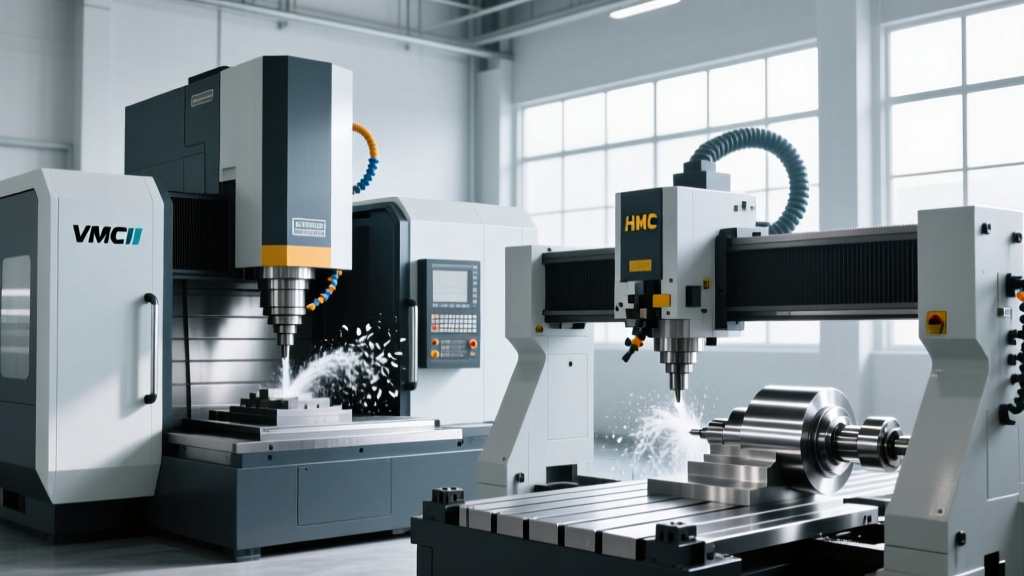
- Standard VMCs (BT40/CAT40): Minimum 5mm (0.20 in) thickness for impact resistance up to 40 Joules.
- Heavy Duty Lathes & HMCs: Minimum 10mm (0.39 in) thickness to withstand heavy steel workpiece ejection.
- Replacement Interval: Mandated every 5 years, or immediately if micro-crazing (spider-web cracking) is visible.
"Safety interlocks on CNC enclosures must be categorized as Type 4 under ISO 14119 to prevent defeat or defeat-by-pass, ensuring the spindle halts before the door unlatches during heavy steel cutting cycles."
Local Exhaust Ventilation (LEV) and MWF Mist Control
Aerosolized metalworking fluids are a primary target for OSHA inspections. The OSHA Metalworking Fluids Guidelines highlight the respiratory risks of mineral oil mists, which can cause occupational asthma and hypersensitivity pneumonitis. While OSHA's current PEL for mineral oil mist is 5 mg/m³ (8-hour TWA), the ACGIH recommends a stricter Threshold Limit Value (TLV) of 5 mg/m³ for inhalable particles, with many modern shops targeting < 0.5 mg/m³ for optimal safety.
💡 Shop Floor Tip: Maintain semi-synthetic MWF concentrations strictly between 5% and 8%. Dropping below 4% promotes the growth of Pseudomonas bacteria, which releases endotoxins into the mist that are far more hazardous to operators than the base fluid itself.To achieve compliance, enclosures must be paired with correctly sized Local Exhaust Ventilation (LEV) systems. The capture velocity at the enclosure opening must be maintained between 200 and 250 feet per minute (fpm) to prevent mist escape when doors are opened.
| Steel Machining Operation | Mist Generation Rate | Required LEV Capture Velocity | Recommended Filtration Setup |
|---|---|---|---|
| High-Speed Milling (Carbon Steel) | High (Fine Aerosol) | 250 fpm | Centrifugal Pre-filter + 95% ASHRAE + HEPA |
| Heavy Turning (Alloy Steel) | Medium (Coarse Droplets) | 200 fpm | Mist Eliminator Pads + Electrostatic Precipitator |
| Thread Tapping / Rigid Tapping | Low (Localized) | 150 fpm (at tool tip) | Source-capture flexible arm with HEPA |
For comprehensive exposure data, refer to the NIOSH Criteria for a Recommended Standard: Occupational Exposure to Metalworking Fluids, which remains the foundational text for designing MWF ventilation systems.
Swarf Management and Combustible Dust (NFPA 652)
While steel is generally considered non-combustible in bulk form, fine carbon steel dust and dried MWF swarf can present a severe deflagration hazard. Under NFPA 652 (Standard on the Fundamentals of Combustible Dust), any particulate smaller than 500 microns that can pass through a U.S. No. 35 standard sieve must be tested for explosibility.
Preventing Swarf Ignition
When CNC machining steel, especially dry or with minimum quantity lubrication (MQL), broken inserts or tool crashes can generate sparks. If these sparks land in a chip conveyor filled with fine, oil-coated carbon steel dust, a fire can rapidly propagate.
- Chip Conveyor Interlocks: Install thermal sensors (set to trip at 150°F / 65°C) inside the chip conveyor trough to halt the conveyor and trigger the MWF flood coolant if smoldering swarf is detected.
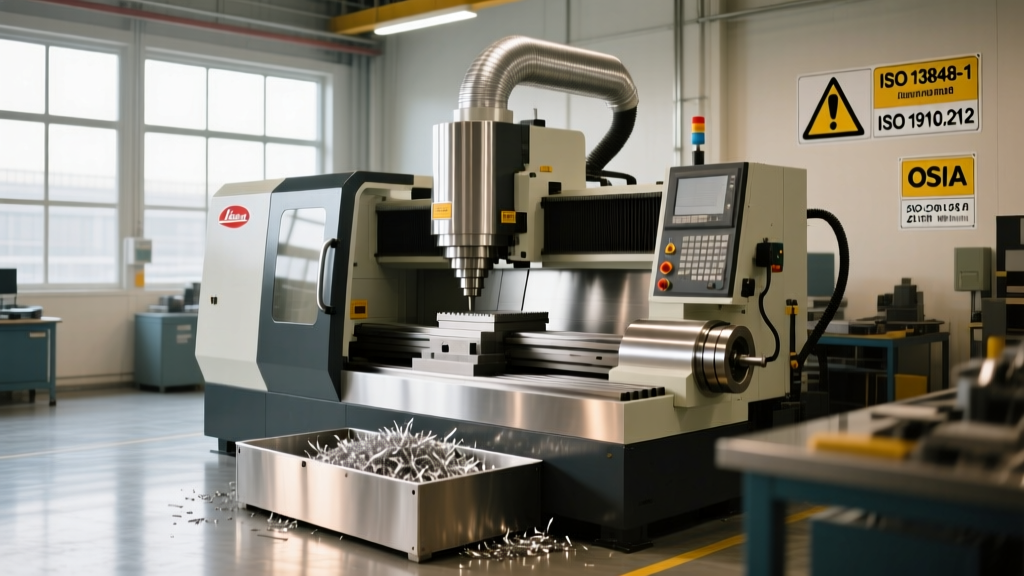
- Vacuuming Protocols: Never use standard shop vacuums for fine steel dust. Static discharge from plastic vacuum wands can ignite carbon fines. Use only ATEX-rated or NFPA-compliant intrinsically safe vacuums with conductive hoses and grounded collection bins.
- Chip Wringing: Utilize centrifugal chip wringers to recover MWFs and reduce the combustible fuel load (the oil) in the scrap hopper.
Hexavalent Chromium in Stainless Steel Machining
Machining 300-series and 400-series stainless steels introduces the risk of hexavalent chromium (Cr(VI)) exposure. The heat generated at the shear zone during CNC machining steel alloys can oxidize trivalent chromium into the highly toxic hexavalent state. OSHA Standard 1910.1026 sets the PEL for Cr(VI) at an extremely low 5 micrograms per cubic meter (µg/m³) as an 8-hour TWA, with an action level of 2.5 µg/m³.
Dry machining stainless steel is virtually prohibited in modern compliant facilities due to the massive airborne Cr(VI) generation. High-pressure flood coolant (minimum 70 bar / 1000 psi) is required to suppress the thermal oxidation process and encapsulate the heavy metal particulate in the liquid phase.
⚠️ Fluid Disposal Compliance: Once Cr(VI) is captured in your MWF, the spent fluid and the swarf are classified as hazardous waste under RCRA (Resource Conservation and Recovery Act). You must manifest this waste through a licensed hazardous waste transporter; it cannot be sold to standard scrap metal recyclers without prior chemical treatment and de-listing.For exact regulatory thresholds and medical surveillance requirements, consult the OSHA Hexavalent Chromium Standards documentation.
Weekly Safety Compliance Checklist for Steel Machining
Maintaining compliance requires systematic verification. Implement this checklist on the shop floor to ensure continuous adherence to OSHA and ISO standards:
- MWF Refractometer Check: Verify concentration (Target: 5-8%) and pH (Target: 8.8-9.2) to prevent bacterial endotoxin generation and corrosion.
- LEV Static Pressure Test: Check manometer readings on mist collectors. A drop in static pressure indicates filter bypass or duct leakage.
- Polycarbonate Inspection: Wipe down viewing shields and inspect for ESC micro-cracking or deep gouges exceeding 1mm.
- Interlock Defeat Audit: Verify that no operators have bypassed door interlocks with zip-ties or magnets—a common violation in high-volume steel production runs.
- Emergency Stop (E-Stop) Validation: Trigger the E-stop during a non-critical cycle to ensure the spindle brakes engage within the ISO-mandated stopping time (typically < 2 seconds for standard VMCs).
By treating safety compliance as an engineered process rather than an administrative afterthought, machine shops can drastically reduce liability, minimize operator turnover, and maintain uninterrupted production schedules in demanding steel machining environments.