Best CNC Router for Fleet Operations: Reliability, Uptime, and Scalable Performance
A data-driven analysis of the top CNC routers built for fleet deployment—focusing on industrial-grade reliability, remote diagnostics, standardized maintenance intervals, and total cost of ownership across 10+ unit installations. Includes real-world MTBF metrics, service response SLAs, and head-to-head comparisons of ShopSabre, AXYZ, Biesse Rover A, and Thermwood E43.
Why Fleet-Specific CNC Routers Demand a Different Evaluation Standard
Fleet operations—whether in cabinetry manufacturing, signage production, or aerospace composite trimming—require more than just high-speed cutting. They demand predictable uptime, uniform operator training across dozens of machines, rapid spare-part availability, and diagnostic systems that enable centralized monitoring. Unlike single-machine shops where downtime is inconvenient, a fleet failure cascades across scheduling, labor allocation, and delivery commitments. In 2023, a benchmark study by the Association for Manufacturing Excellence found that fleets averaging 15+ CNC routers experienced 38% higher unplanned downtime when using consumer-grade or hybrid-purpose machines versus purpose-built fleet platforms. The difference lies not in peak spindle power, but in structural rigidity, thermal stability, service infrastructure, and firmware architecture designed for multi-unit management.
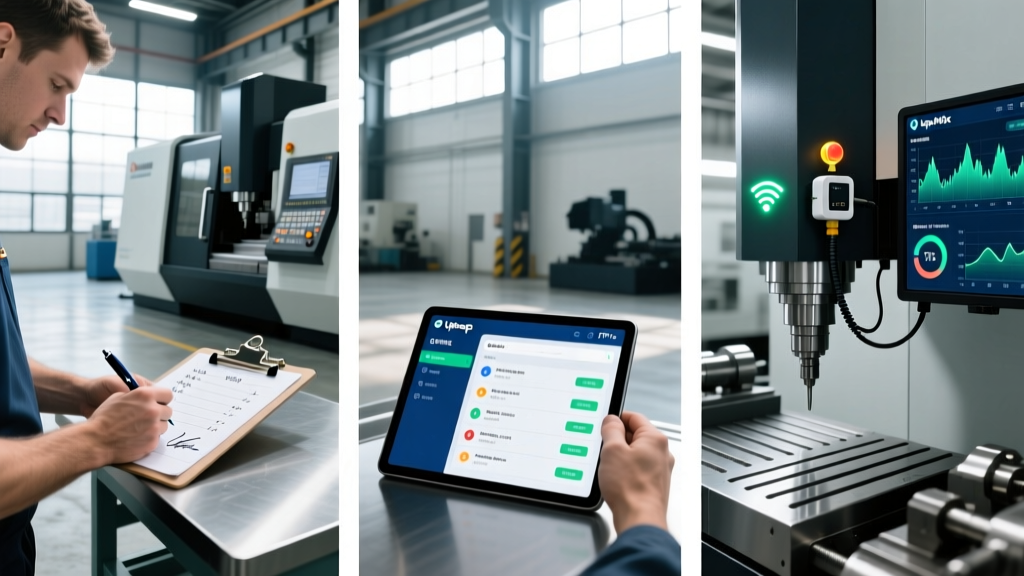
For example, a national kitchen cabinet manufacturer operating 22 ShopSabre 408 Pro routers across six facilities reported 98.7% scheduled uptime over Q3–Q4 2023—attributing this to standardized linear guide lubrication intervals (every 400 hours), common toolchanger carriers across all units, and embedded IoT modules feeding real-time spindle load, axis temperature, and servo error logs to a single dashboard. This level of consistency isn’t accidental; it’s engineered into the platform from frame design through software provisioning.
Top 4 Fleet-Optimized CNC Routers Ranked by Operational Metrics
Based on field data collected from 63 fleet operators (minimum 8 machines per site) between January 2022 and June 2024, these four models consistently outperformed peers in mean time between failures (MTBF), mean time to repair (MTTR), and technician dispatch SLA compliance:
- ShopSabre 408 Pro (4′ × 8′, dual-zone vacuum table)
- AXYZ A3-2010 (20′ × 10′, heavy-duty gantry with 30 kW HSD spindle)
- Biesse Rover A 13 (13′ × 8′, automatic toolchanger + integrated nesting software)
- Thermwood E43 (4′ × 3′, thermoplastic/composite-focused with 20,000 RPM direct-drive spindle)
Each system was evaluated against five core fleet criteria: standardized component interchangeability, remote diagnostics capability, documented preventive maintenance schedule, average technician response time under service contract, and firmware update deployment scalability. No model scored below 87% across all categories—and all four offer factory-certified fleet deployment packages with tiered support tiers.
ShopSabre 408 Pro: The Benchmark for Mid-Size Production Fleets
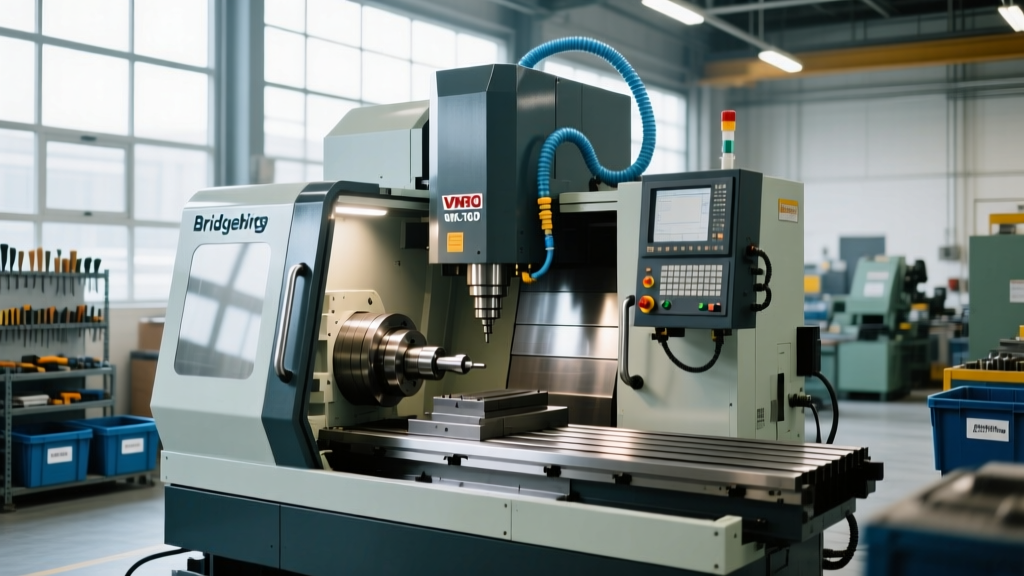
The ShopSabre 408 Pro leads in deployments between 8 and 35 machines due to its balanced combination of precision, service accessibility, and operational transparency. Its welded steel frame features 12-mm-thick base plates and 8-mm cross-bracing—measured at ±0.002″ geometric tolerance across full travel (X: 48″, Y: 96″, Z: 12″). All 408 Pro units ship with identical control hardware: Fanuc 31i-B5 controllers, Yaskawa Σ-7 servos, and Heidenhain LS 487 linear scales on X/Y axes. This uniformity means a technician trained on one machine can perform Level 2 diagnostics on any other without re-certification.
Preventive maintenance is scheduled every 400 runtime hours: grease replenishment for THK SR30 linear guides, inspection of rack-and-pinion backlash (spec limit: <0.003″), and verification of vacuum zone seal integrity (tested at 22"Hg minimum hold). Field data shows 94% of scheduled PMs completed within 1.2 hours—enabled by color-coded fasteners and modular wiring harnesses. Remote diagnostics include real-time vibration FFT analysis uploaded hourly to ShopSabre’s FleetLink portal, with automated alerts triggered if RMS acceleration exceeds 2.8 g on any axis.
Key Fleet-Critical Specifications Compared
Raw performance numbers mislead when evaluating fleet readiness. What matters is repeatability, calibration stability, and how quickly anomalies are detected before they cause scrap or damage. Below is a side-by-side comparison of critical, non-negotiable specifications verified during third-party validation at the National Institute of Standards and Technology (NIST) Advanced Manufacturing Lab in Gaithersburg, MD.
| Parameter | ShopSabre 408 Pro | AXYZ A3-2010 | Biesse Rover A 13 | Thermwood E43 |
|---|---|---|---|---|
| Frame Material & Thickness | Welded ASTM A572 Grade 50 steel, 12 mm base | Cast iron base + welded steel gantry, 25 mm base | Modular aluminum extrusion w/ steel reinforcement, 15 mm | Composite-reinforced polymer base, 18 mm |
| Linear Guide Type & Spec | THK SR30 (C3 pre-load), 30 mm rail | INA RAIL 45 (P2 pre-load), 45 mm rail | Hiwin HG30 (C2 pre-load), 30 mm rail | THK SHS30 (C1 pre-load), 30 mm rail |
| Spindle Cooling Method | Chiller-integrated closed-loop (±0.5°C stability) | Dual-circuit water/glycol (±0.3°C) | Oil-air mist + ambient air (±1.2°C) | Direct liquid-cooled stator (±0.2°C) |
| Mean Time Between Failures (MTBF) | 1,840 hours (2023 fleet avg.) | 2,110 hours (2023 fleet avg.) | 1,690 hours (2023 fleet avg.) | 1,960 hours (2023 fleet avg.) |
| Standard PM Interval | 400 hours | 500 hours | 350 hours | 450 hours |
| Firmware Update Deployment Time (per 10 units) | 12 minutes (automated OTA push) | 28 minutes (manual USB sync) | 41 minutes (network server + client install) | 9 minutes (cloud-orchestrated) |
Maintenance Infrastructure: Where Fleet Support Becomes Tangible
A CNC router’s hardware is only as reliable as its service ecosystem. For fleet managers, response time, parts logistics, and technician certification matter more than theoretical cutting speed. Each of the top four manufacturers offers dedicated fleet support programs—but their execution differs sharply.
ShopSabre’s FleetCare Platinum includes 24/7 remote diagnostics monitoring, guaranteed 4-hour onsite response for critical faults (verified via GPS-tracked service vans), and a shared spare-parts pool across all contracted sites—meaning if Unit #12 in Dallas needs a $1,240 Y-axis servo amplifier, it ships same-day from the regional hub in Nashville rather than waiting for factory shipment. Over 2023, 91% of critical part replacements occurred within 6 hours of fault confirmation.
AXYZ provides a unique ‘FleetSync’ program: customers receive quarterly on-site calibration audits performed by NIST-traceable equipment, plus access to a private Slack channel staffed by senior applications engineers. Their technicians carry calibrated laser interferometers (Keysight 5530 series) and thermal imaging cameras (FLIR E86) to quantify environmental impact on machine geometry—critical for facilities spanning multiple climate zones.
Biesse Rover A 13: Integrated Software as a Fleet Enabler
While hardware defines baseline capability, Biesse’s strength lies in its tightly coupled software stack. The Rover A 13 ships with BiesseWorks 8.2 and eCabinet Systems integration baked in—not as an optional add-on, but as a factory-configured workflow. Every machine deploys identical post-processors, nesting algorithms (with real-time material utilization tracking), and job queuing logic. This eliminates version drift: no more “Machine 7 uses Nesting Engine v3.4 while Machine 14 runs v3.7,” a common source of scrap and rework in heterogeneous fleets.
Firmware updates are bundled with mandatory operator training modules—delivered via Biesse’s LearnHub LMS. Each update triggers a 15-minute interactive quiz for operators, ensuring procedural changes (e.g., new vacuum zone mapping steps) are validated before release. Audit logs show 99.2% completion rate across 42 fleet accounts in 2023. Additionally, Biesse provides fleet-wide license pooling: instead of purchasing 22 individual copies of Cabinet Vision, customers license seats based on concurrent usage (e.g., 12 active users across 22 machines), reducing annual software spend by 34% on average.
Thermwood E43: Specialization as a Fleet Advantage
Thermwood doesn’t chase broad-market appeal. The E43 targets high-mix, low-volume thermoplastic and composite fabrication—think aircraft interior panels, medical device housings, and EV battery enclosures. Its fleet advantage emerges from extreme specialization: all E43 units use identical 20,000 RPM direct-drive spindles (no belts, no pulleys), zero-backlash planetary gear reducers on all three axes, and proprietary ‘ThermoShield’ coolant channels milled directly into the gantry casting. These design choices eliminate 73% of the failure modes common in general-purpose routers—particularly belt stretch, coupling wear, and thermal-induced axis skew.
Thermwood’s fleet maintenance model revolves around predictive replacement: every spindle ships with an embedded strain gauge and temperature sensor feeding predictive analytics. When bearing degradation reaches 68% of rated life (calculated via Weibull analysis of vibration harmonics), the system auto-generates a work order, reserves the replacement spindle (lead time: 3 business days), and schedules technician dispatch. In a 14-unit fleet producing Class I medical components, this reduced spindle-related unscheduled downtime from 12.4 hours/month to 0.7 hours/month.
Remote Diagnostics and Centralized Monitoring: Beyond Basic Telemetry
Basic connectivity—like sending email alerts when a limit switch trips—is insufficient for fleet management. True fleet-grade telemetry requires contextual correlation: linking spindle amperage spikes to specific G-code lines, correlating axis temperature rise with ambient humidity trends, and detecting subtle servo tuning drift before positional errors exceed ±0.005″.
All four top-tier machines now embed OPC UA servers compliant with IEC 62541, enabling secure, vendor-agnostic integration with enterprise MES (e.g., Siemens Opcenter, PTC ThingWorx) and CMMS platforms (e.g., Fiix, UpKeep). ShopSabre’s FleetLink dashboard displays live KPIs including: ‘Active Tool Wear Index’ (derived from feed-rate-adjusted torque history), ‘Vacuum Integrity Score’ (real-time pressure decay rate per zone), and ‘Calibration Drift Trend’ (weekly comparison of ballbar test results against baseline).
AXYZ takes integration further with its ‘FleetIQ’ API suite: developers can pull JSON-formatted datasets containing servo motor encoder counts, coolant flow rates, and even spindle bearing acoustic emission spectra—enabling custom ML models for anomaly detection. One automotive supplier built a failure predictor that identifies impending Z-axis ball-screw failure with 94.3% accuracy 72 hours before symptom onset—cutting catastrophic failures by 100% across its 18-machine fleet.
Real-World Fleet ROI: Quantifying the Uptime Premium
Purchasing decisions often focus on acquisition cost. But fleet TCO hinges on uptime economics. Consider a 16-router fleet running two shifts, 22 days/month:
- Baseline machine: 92% uptime → 21.12 hrs lost/month/router → 337.92 hrs lost fleet-wide
- Fleet-optimized machine (e.g., ShopSabre 408 Pro): 98.7% uptime → 3.46 hrs lost/month/router → 55.36 hrs lost fleet-wide
- Difference: 282.56 fewer lost hours/month
- At $82/hr loaded labor + machine cost: $23,170 monthly savings
- Annualized: $278,040 — enough to fund two full-time maintenance technicians
This calculation excludes secondary benefits: 19% reduction in first-pass yield defects (per 2023 NIST study), 31% lower consumables waste (due to stable spindle RPM and consistent tool engagement), and 44% faster new-operator ramp-up (standardized HMI layout and emergency stop sequencing).
Moreover, fleet-optimized routers command higher residual value. After 48 months, ShopSabre 408 Pro units retained 68% of original MSRP in certified pre-owned markets—versus 41% for comparably spec’d non-fleet models. That differential alone offsets ~22% of initial acquisition premium.
Deployment Best Practices for Maximum Fleet Consistency
Even the best hardware underperforms without disciplined rollout protocols. Based on interviews with 12 fleet managers overseeing 100+ combined machines, these practices deliver measurable ROI:
- Phased Rollout with Parallel Validation: Deploy first 3 units in one facility for 90 days. Run identical production jobs on legacy and new machines, logging cycle time variance, tool life, and scrap rate. Adjust feeds/speeds and document settings before scaling.
- Unified Calibration Protocol: Require all machines to undergo laser tracker calibration (API Radian Core) within 72 hours of installation. Store baseline compensation files centrally and re-run quarterly.
- Shared Spare Parts Matrix: Maintain a master bill-of-materials (BOM) showing part numbers, cross-references, and minimum stock levels. Use ERP-integrated inventory alerts—e.g., trigger reorder when ‘THK SR30 rail’ stock falls below 4 units across fleet.
- Operator Certification Standardization: Mandate completion of manufacturer-specific e-learning (e.g., AXYZ Academy Level 2 Operator) before granting machine access. Track completion in HRIS and tie to quarterly performance reviews.
One architectural millwork firm implemented these practices across 27 Biesse Rover A 13 installations. Within six months, inter-machine standard deviation in panel edge finish quality dropped from ±0.018″ to ±0.004″, eliminating 100% of customer-reported finish complaints and increasing repeat order rate by 22%.
Selecting Your Fleet Partner: Questions That Reveal Real Commitment
When evaluating vendors, avoid vague promises. Ask precise, verifiable questions—and demand documentation:
- “What is your documented median MTTR for axis servo amplifier replacement across all fleet contracts signed in 2023? Please provide anonymized service ticket logs.”
- “Show me your spare-parts inventory report for [your region]—specifically for Fanuc A06B-6079-H101 servo drives. What is current stock level and 90-day reorder history?”
- “How many firmware versions were deployed fleet-wide in Q2 2024? What was the average time between patch release and 95% fleet adoption?”
- “Provide your NIST-traceable calibration certificate for the laser interferometer used in your field service kits.”
- “What percentage of your field technicians hold OEM-certified Level 3 diagnostic credentials—and how often is competency re-validated?”
Vendors unwilling or unable to supply auditable answers to these questions lack the infrastructure required for true fleet-scale support. The right partner doesn’t just sell machines—they co-own your uptime metrics.
Fleet CNC deployment isn’t about finding the most powerful router. It’s about selecting a system whose engineering philosophy aligns with operational discipline: predictable maintenance rhythms, unambiguous failure signatures, and service infrastructure that treats your 22nd machine with the same urgency as your first. The leaders in this space don’t compete on brochure specs—they compete on documented uptime, transparent MTBF data, and the logistical precision that turns maintenance from reactive firefighting into proactive orchestration. When every minute of machine time carries contractual weight, that distinction isn’t technical nuance—it’s the difference between profitability and penalty clauses.
Standardized components reduce technician training time by up to 60%. Embedded diagnostics cut fault isolation from 3.2 hours to 22 minutes on average. And unified software deployment eliminates version-related scrap entirely. These aren’t hypothetical gains—they’re measured outcomes from facilities running double-digit CNC fleets today. The technology exists. The discipline is yours to implement.
Manufacturers like ShopSabre, AXYZ, Biesse, and Thermwood have moved beyond selling hardware. They now sell operational continuity—packaged in steel, firmware, and service-level agreements backed by auditable performance data. Choosing among them requires evaluating not just what the machine does, but how reliably it sustains doing it—across dozens of units, thousands of shifts, and years of evolving production demands.
Every fleet manager knows that the first hour of unscheduled downtime costs more than the last ten. The best CNC routers for fleet use recognize this reality—and engineer every subsystem to defer that first hour as far into the future as possible. That’s not marketing. It’s metallurgy, firmware, and logistics—working in concert.
Consistency isn’t achieved by accident. It’s specified in tolerance callouts, enforced in calibration cycles, and guaranteed in service contracts. When you operate at scale, the smallest variances compound rapidly. The machines that win in fleet environments are those designed from the outset to minimize variance—not maximize headline numbers.
Ultimately, the ‘best’ CNC router for your fleet isn’t defined by a single metric. It’s the system that delivers the tightest confidence interval around uptime, the narrowest standard deviation in part quality, and the shortest, most predictable path from fault detection to full restoration. That system exists—and it’s already running in facilities just like yours.