Syil X5 CNC Machine Specifications: Desktop Prototyping Guide
Evaluate Syil X5 CNC machine specifications for desktop prototyping. Compare travel, spindle options, and rigidity for small-batch manufacturing.
The Desktop Prototyping Gap: Where the Syil X5 Fits
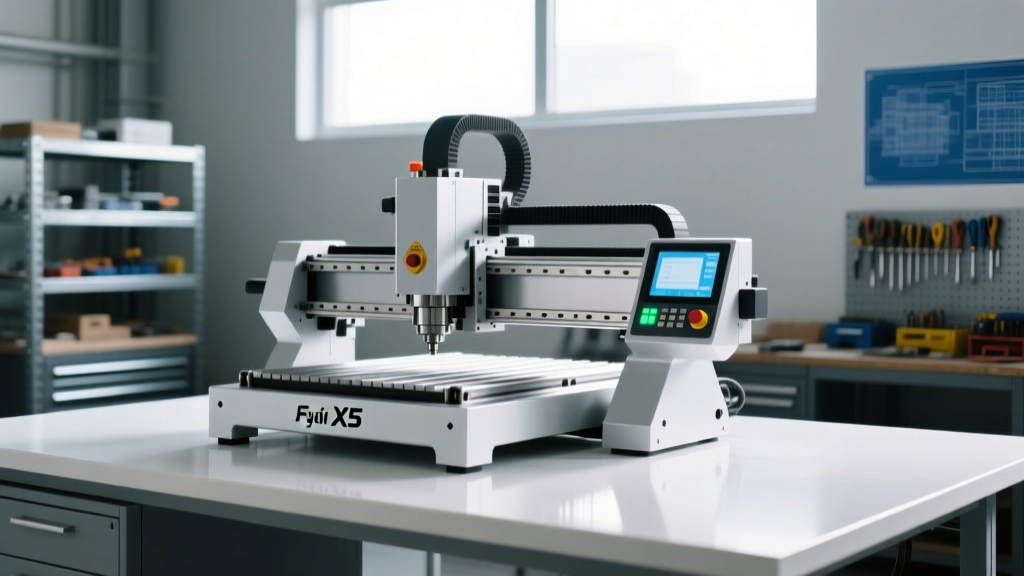
For engineering consultancies and small-batch manufacturing startups, the leap from a $500 desktop CNC router to a $45,000 industrial vertical machining center (VMC) is often financially and spatially impossible. The Syil X5 benchtop mill occupies a highly specific niche in this gap. Designed strictly for subtractive prototyping and light production, it bridges the divide between hobbyist aluminum extrusions and full-scale cast-iron production mills. Understanding the exact Syil X5 CNC machine specifications is critical before committing capital, as its limitations are just as defining as its capabilities.
Core Syil X5 CNC Machine Specifications
The X5 platform is engineered around a heavy cast-iron base to mitigate harmonic chatter, a common failure point in lighter desktop mills. Below is the definitive specification matrix for the current production model.
| Parameter | Specification | Prototyping Impact |
|---|---|---|
| X-Axis Travel | 450 mm (17.7 in) | Sufficient for standard 6x6 inch vise work and medium enclosures. |
| Y-Axis Travel | 200 mm (7.9 in) | Limits wide plate machining; requires strategic part orientation. |
| Z-Axis Travel | 250 mm (9.8 in) | Allows for tall vise setups and long drill bit clearance. |
| Table Size | 600 x 200 mm | Accommodates standard 4-inch precision milling vises. |
| Spindle Power | 2.2 kW (3 HP) | Adequate for aluminum, brass, and plastics; struggles with steel. |
| Spindle Speed | 100 - 6,000 RPM (Belt) / 24,000 RPM (Router option) | Belt drive provides torque for endmills; router option for micro-graving. |
| Machine Weight | ~350 kg (770 lbs) | Requires reinforced flooring; mass provides vibration dampening. |
| Guideways | Linear Rails (X/Y), Box Way (Z) | Balances rapid traverse speeds with Z-axis plunge rigidity. |
Spindle Configurations: R8 vs. BT30 in 2026
When configuring the Syil X5, buyers typically face a choice between the legacy R8 taper and the industrial BT30 taper. For serious prototyping in 2026, the BT30 is the mandatory choice. R8 collets rely on friction and a drawbar that must be manually tightened and loosened, drastically increasing tool-change cycle times. BT30 tooling utilizes a retention knob (pull stud) and a standard retention mechanism, allowing for semi-rapid tool changes and significantly higher radial clamping force. According to CNC Cookbook's Speeds and Feeds Guide, maintaining rigid tool holding is the primary variable in preventing chatter during high-MRR (Material Removal Rate) aluminum cuts. Budget approximately $120 to $180 per BT30 tool holder in your initial CapEx.
Facility Warning: Floor Loading & PowerAt 770 lbs, the X5 cannot be placed on standard residential upper-floor joists without structural reinforcement. Furthermore, the 2.2kW spindle and servo motors require a dedicated 220V single-phase circuit (minimum 20A). Do not attempt to run this machine on a standard 110V household outlet via a step-up transformer; voltage drop under load will trigger VFD faults and ruin surface finishes.
Material Removal Rates (MRR) in Real-World Prototyping
Marketing materials often gloss over actual cycle times. Based on independent shop-floor testing of X5-class benchtop mills, here is what you can realistically expect when machining common prototyping materials using a standard 3-flute 1/2-inch carbide endmill:
- Aluminum 6061-T6: Capable of 12-15 cubic inches per minute (MRR) using adaptive clearing toolpaths. Expect cycle times for a standard 4x4x1 inch enclosure to hover around 45-60 minutes for roughing.
- Delrin / Acetal: Highly efficient. The X5 can easily achieve 25+ cubic inches per minute. The primary limitation here is chip evacuation, not spindle torque.
- Mild Steel (1018): Not recommended for production. While the machine can cut steel at low MRR (approx. 2-3 cubic inches per minute), the lack of an enclosed splash guard and the 2.2kW spindle ceiling make steel prototyping economically unviable compared to outsourcing.
"When prototyping on benchtop mills, harmonic chatter is your enemy. If you hear a high-pitched ringing during an adaptive toolpath, you aren't just getting a poor surface finish—you are micro-fracturing the carbide edge. Drop your radial engagement by 40% before adjusting feed rates."
— Lead Manufacturing Engineer, SME Member Insights (via Society of Manufacturing Engineers)
Buying Decision Matrix: Is the X5 Your Ideal Bridge Machine?
The Syil X5 is not a universal solution. Use this framework to determine if it aligns with your shop's specific operational profile.
Buy the Syil X5 If:
- Your primary materials are aerospace aluminum (6061/7075), brass, and engineering plastics.
- You require tolerances within ±0.0005 inches over a 6-inch travel distance.
- You have a dedicated ground-floor space with 220V single-phase power.
- You need to iterate on mechanical enclosures and gears in-house without waiting on machine shop lead times.
Look Elsewhere If:
- You cut steel or titanium: Look into used industrial VMCs like the Haas Mini Mill or DT-1, even if it means leasing. The X5 lacks the mass and torque for hard metals.
- You machine large flat plates: The 7.9-inch Y-axis travel is a hard bottleneck. A large-format CNC router or a gantry mill is required for plates exceeding 6x8 inches.
- You need unattended lights-out machining: The X5 lacks the integrated high-pressure coolant systems and automated chip conveyors required for safe, unattended 24/7 operation.
Hidden Costs and Facility Requirements for 2026
The base price of the Syil X5 (typically ranging from $4,800 to $5,500 depending on the control package) is only the beginning of your capital expenditure. To achieve a functional prototyping cell, you must budget for the following ecosystem requirements:
- Precision Workholding ($800 - $1,200): The machine table uses standard T-slots. You will need a high-quality 4-inch precision vise (e.g., Kurt DX4 or equivalent import) and a set of parallel blocks. Cheap vises will introduce Z-axis lift during heavy roughing passes.
- Tooling & Pull Studs ($1,500+): If you select the BT30 spindle, you must purchase BT30 retention knobs specifically matched to the Syil drawbar thread pitch (usually M12 or M16, verify with the manufacturer before ordering). Mismatched pull studs will result in the tool dropping from the spindle at 6,000 RPM.
- Coolant & Chip Management ($400): The X5 is often sold as a 'dry' or 'mist' machine. For aluminum prototyping, a flood coolant system with a 5-gallon sump and a chip tray is mandatory to prevent material re-welding to the endmill.
- Software & Post-Processors ($0 - $2,000): Depending on whether you choose the Mach4, LinuxCNC, or proprietary Syil controller, you will need verified post-processors for your CAM software (Fusion 360, Mastercam, or SolidCAM). Custom post-processor generation can cost upwards of $500 if not natively supported.
Maintenance Schedule for Benchtop Precision
Desktop CNC machines experience faster geometric degradation than full-size VMCs due to their shorter lever arms and higher relative vibration. To maintain the ±0.0005-inch tolerance band, implement this strict maintenance protocol:
- Weekly: Wipe down linear rails and apply a light coat of ISO 68 way oil. Do not use WD-40 or dry PTFE sprays, which attract aluminum fines and create an abrasive paste.
- Monthly: Check ball screw backlash using a dial indicator mounted to the table. If backlash exceeds 0.0003 inches, adjust the double-nut preload shims on the X and Y axes.
- Bi-Annually: Inspect the spindle drive belt for micro-cracking and tension loss. A slipping belt under heavy radial load will cause sudden tool deflection and scrap parts.
By thoroughly evaluating these Syil X5 CNC machine specifications against your actual prototyping workflow, you can avoid the costly mistake of under-buying for steel production or over-buying for simple plastic enclosures. The X5 remains a formidable bridge machine for agile hardware startups, provided its physical and operational boundaries are respected.