Steel CNC Machine Costs: Budgeting for Stainless 2026
Plan your 2026 shop budget with our stainless steel CNC machine cost analysis. Covers capital expenses, tooling, high-pressure coolant, and ROI metrics.
The 'Stainless Tax': Why Budgeting for Austenitic Alloys Requires a Different Model
Machining 304, 316, or 17-4PH stainless steel is fundamentally different from milling 6061 aluminum or 1018 cold-rolled steel. The austenitic crystalline structure of common stainless alloys results in severe strain hardening, high shear strength, and notoriously low thermal conductivity. For context, 316 stainless steel has a thermal conductivity of roughly 16.3 W/m-K, compared to 50 W/m-K for 1018 carbon steel. This means nearly 80% of the heat generated during the shear zone remains in the cutting tool rather than dissipating into the chip.
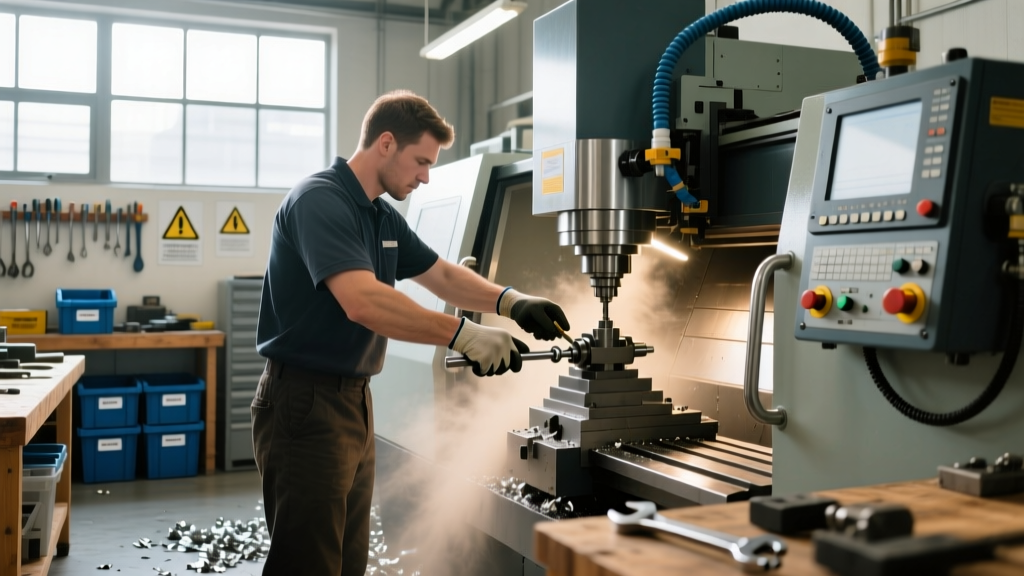
When evaluating a steel CNC machine specifically for stainless production in 2026, shops cannot simply apply standard mild-steel budgeting formulas. The capital equipment must possess extreme static rigidity, high low-end spindle torque, and advanced coolant delivery systems. Failure to budget for these specific requirements results in catastrophic tooling costs, spindle bearing degradation, and unacceptable cycle times.
Capital Equipment Tiering: 2026 Machine Pricing Matrix
Selecting the right machine tier depends entirely on your annual part volume, geometric complexity, and tolerance requirements. Below is a breakdown of the true capital investment required for stainless-capable CNC vertical machining centers (VMCs) in the current market.
| Machine Tier | Representative Model | Base Price (2026) | Stainless-Ready Configured Price | Critical Spindle Specs |
|---|---|---|---|---|
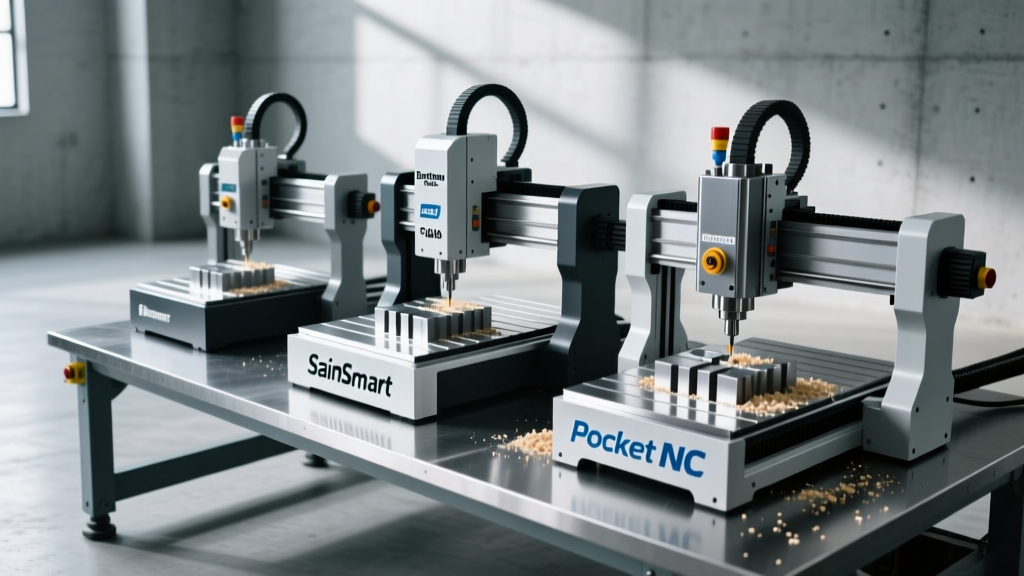
| Tier 1: Prototyping / Light Duty | Tormach 15L | $13,500 | $16,500 (w/ power drawbar & flood) | 1.5 HP, 6,000 RPM (Belt drive) |
| Tier 2: Mid-Volume Production | Haas VF-2SS | $72,000 | $94,500 (w/ TSC, chip conveyor, probe) | 30 HP Vector, 12,000 RPM (Direct drive) |
| Tier 3: Aerospace / Medical 5-Axis | Mazak VARIAXIS i-500 | $185,000 | $240,000+ (w/ high-pressure & automation) | 35 HP, 12,000 RPM, 5-axis trunnion |
Note: The 'Stainless-Ready Configured Price' includes mandatory options like Through-Spindle Coolant (TSC), heavy-duty chip conveyors, and thermal compensation packages required for reliable stainless machining.
⚠️ Warning: The Danger of Dwell Times
When programming toolpaths for stainless, never allow the tool to dwell in the cut. Austenitic stainless steels work-harden rapidly. If a tool pauses or rubs without taking a distinct chip, the localized surface hardness can spike from 200 HB to over 400 HB in seconds, instantly destroying the cutting edge of subsequent passes. Ensure your CAM software utilizes trochoidal milling and maintains constant chip thickness.
The Coolant Mandate: Budgeting for High-Pressure TSC
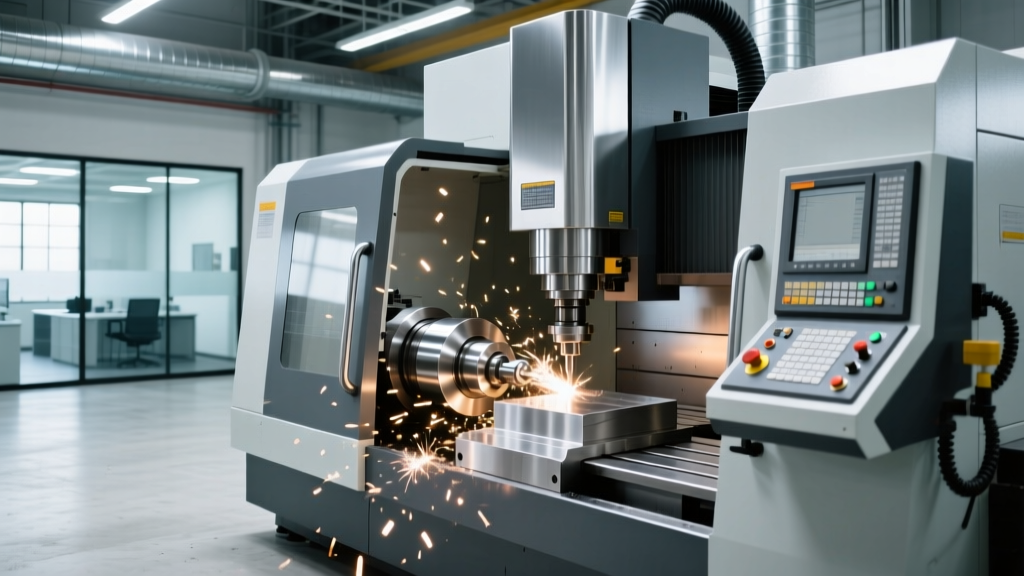
Standard 200 PSI flood coolant is virtually useless for deep pocketing or heavy roughing in stainless steel. The low thermal conductivity prevents the coolant from reaching the actual shear zone, resulting in built-up edge (BUE) and premature tool failure. According to Sandvik Coromant's material machining guidelines, effective stainless machining requires high-velocity coolant directed precisely at the cutting edge to break the chip and lubricate the flank face.
Through-Spindle Coolant (TSC) Cost Breakdown
- 1000 PSI TSC Pump Upgrade: $4,500 - $6,500 (Factory installed on most mid-tier VMCs).
- High-Pressure Coolant Filtration: Stainless chips are fine and abrasive. A standard paper band filter will clog and fail. Budget $2,500 for a centrifugal or drum filtration system capable of filtering down to 20 microns to protect the TSC pump seals.
- Rotary Unions & Spindle Maintenance: Running 1000 PSI coolant accelerates rotary union wear. Budget $1,200 annually for union seal replacements and spindle bearing grease purges.
Tooling Budgets: The Cost of Micro-Grain Carbide
Do not budget for standard TiN-coated high-speed steel (HSS) or generic carbide end mills when machining stainless. You must specify micro-grain carbide substrates with specialized coatings like AlTiN (Aluminum Titanium Nitride) or ZrN (Zirconium Nitride), which maintain red-hardness at the extreme temperatures generated by 316SS.
Furthermore, tool geometry is critical. Kennametal and other leading tooling manufacturers recommend variable helix and unequal index designs to interrupt harmonic vibrations (chatter), which is a primary failure mode when machining gummy stainless alloys.
| Tooling Type | Average Cost per Tool (1/2" Dia) | Expected Tool Life (Heavy Roughing) | Cost Per Part (at 15 min cycle) |
|---|---|---|---|
| Generic 4-Flute TiN Carbide | $35 | 12 minutes (Fails via BUE) | $2.91 (Requires constant swapping) |
| Premium AlTiN Variable Helix (e.g., Helical HEV-S) | $115 | 145 minutes | $0.79 |
| Indexable Carbide Button Mill | $180 (Holder) + $18/insert | 400+ minutes (per insert edge) | $0.35 |
Hidden Operational Costs: Chip Evacuation and Workholding
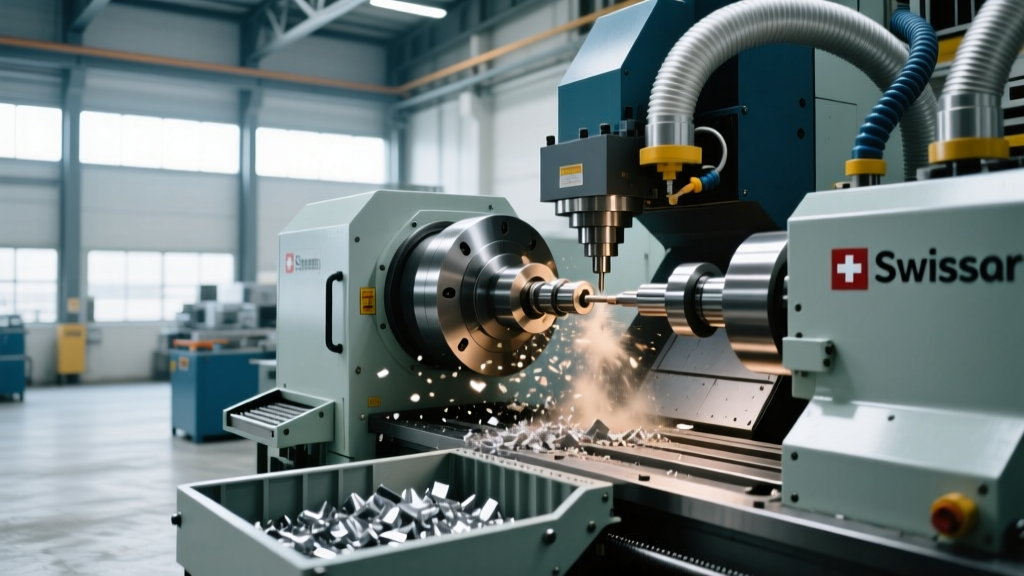
When drafting your 2026 CapEx request, facility managers frequently overlook the downstream costs of stainless swarf. Stainless steel produces long, stringy, and highly work-hardened chips. These chips will wrap around standard auger-style chip conveyors, jamming the motor and potentially snapping the auger flighting.
The Hinge-Belt Conveyor Requirement
You must upgrade from a standard auger conveyor to a heavy-duty hinge-belt conveyor with a cleated belt and high-torque drive motor. This upgrade typically costs between $3,200 and $4,800 on a standard VMC. Additionally, stringy chips tend to nest in the machine casting; budget for an automated wash-down system or allocate 30 minutes of daily operator labor for manual chip clearing.
Workholding Upgrades
Roughing 316 stainless generates cutting forces that easily exceed 300 lbs at the spindle nose. Standard manual Kurt-style vises, even when torqued to 90 ft-lbs, will experience micro-movements that ruin surface finishes and break taps. For production runs exceeding 50 parts, budget $8,000 to $12,000 for hydraulic clamping systems or pneumatic double-acting visos to ensure consistent clamping pressure and reduce operator load times.
Decision Framework: Sizing Your Stainless Investment
2026 Stainless CNC Purchasing Matrix
- If Annual Volume is < 500 Parts (Job Shop / Prototyping): Do not buy a Tier 2 machine. Utilize Tier 1 equipment with aggressive pecking cycles, or outsource to a dedicated medical/aerospace machine shop. The ROI on a $95k Haas cannot be justified at this volume.
- If Annual Volume is 500 - 10,000 Parts (Contract Manufacturing): Invest in a Tier 2 VMC (e.g., Haas VF-2SS or DMG MORI CMX 600V). Mandatory configuration: 1000 PSI TSC, hinge-belt conveyor, and Renishaw OMMI probe for in-cycle part verification to prevent scrap.
- If Annual Volume is > 10,000 Parts or Complex 5-Axis Medical (Bone Screws/Implants): Invest in Tier 3 5-Axis machinery with integrated bar feeders or pallet pools (e.g., Mazak INTEGREX or VARIAXIS). The goal here is lights-out machining; stainless cutting forces require the massive mass of a Tier 3 casting to dampen vibrations during unattended nighttime operations.
Calculating True Hourly Machine Rate for Stainless
To accurately quote stainless steel parts in 2026, you must calculate a specific 'Stainless Hourly Rate' that accounts for the accelerated depreciation and consumable burn rate. Standard shop rates often fail to capture this.
Formula: (Base Machine Rate) + (Stainless Tooling Amortization) + (Premium Coolant Consumables) + (Rigidity Depreciation Factor)
Example: If your base VMC rate is $85/hour, add $12/hour for premium micro-grain carbide wear, $4/hour for high-pressure coolant fluid degradation and filtration media, and a 1.2x multiplier to the spindle depreciation schedule due to the heavy radial loads of stainless roughing. Your true internal cost basis for a stainless CNC machine operation should be modeled at $115 to $125 per hour before applying your gross margin.
Accurately budgeting for a steel CNC machine tailored to stainless steel requires looking past the base price tag on the brochure. By factoring in the non-negotiable requirements of high-pressure coolant delivery, specialized chip management, and premium metallurgical tooling, shops can protect their margins and prevent the silent erosion of profitability that plagues under-configured machine shops.