Portable CNC Machine Mist Extraction: Field Safety Compliance
Ensure OSHA compliance on job sites. Learn how to implement effective CNC machine mist extraction for portable field work, flange facers, and mobile mills.
The Hidden Hazard: Airborne Coolant Mist in Field CNC Operations
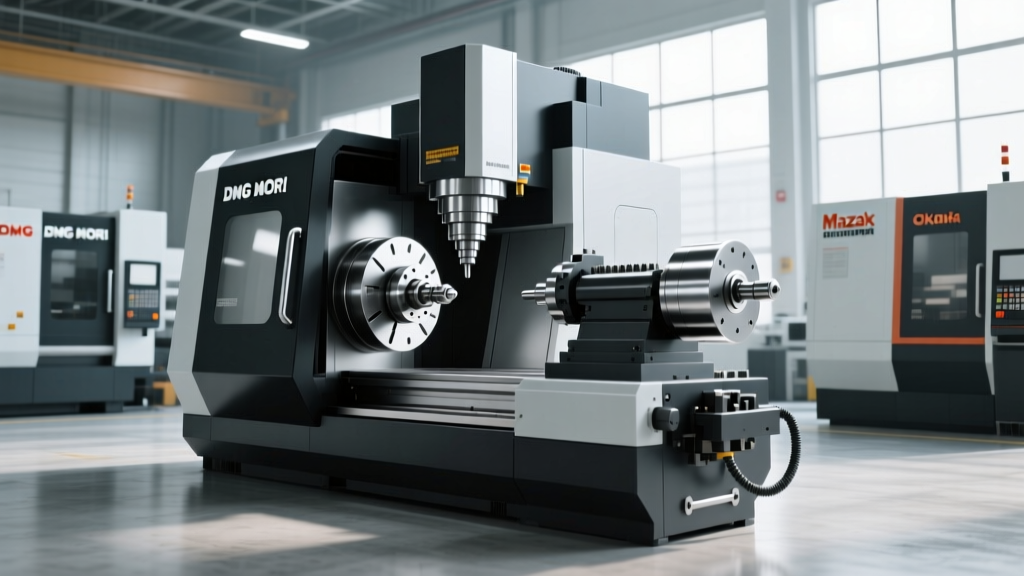
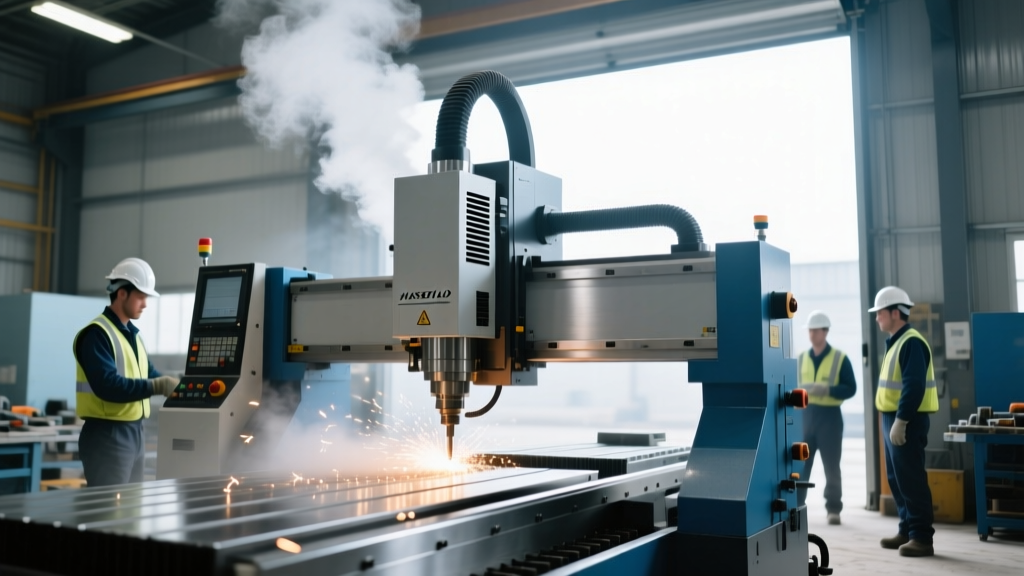
Portable CNC machines—including flange facers, line boring rigs, and mobile 3-axis mills from manufacturers like Climax Portable Machine Tools and Mirage Machining—are indispensable for in-situ repairs in oil and gas, marine, and heavy construction. However, unlike shop-floor vertical machining centers (VMCs) equipped with sealed enclosures and integrated flood coolant systems, portable rigs operate in open-air environments. This lack of physical containment makes CNC machine mist extraction a critical, frequently mismanaged safety compliance issue on field job sites.
When a portable CNC mill cuts Inconel or stainless steel using semi-synthetic coolants, the mechanical energy atomizes the fluid into sub-micron aerosols. Without immediate capture, these aerosols drift into the breathing zones of operators and nearby trades, violating occupational health standards and exposing companies to severe regulatory penalties.
⚠️ Regulatory Exposure Limits to Monitor- OSHA PEL (Permissible Exposure Limit): 5 mg/m³ for mineral oil mist; 15 mg/m³ for total particulate (Particulates Not Otherwise Regulated).
- NIOSH REL (Recommended Exposure Limit): 0.4 mg/m³ for total particulate; 0.5 mg/m³ for mineral oil mist (Time-Weighted Average).
Safety Note: Modern 2026 site safety plans increasingly default to the stricter NIOSH REL guidelines to prevent Hypersensitivity Pneumonitis (HP) and occupational asthma, as OSHA PELs are widely considered outdated for long-term respiratory protection.
Why Standard Extraction Fails in Open-Air Field Environments
Safety officers often attempt to mitigate field mist by placing standard shop vacuums or generic drum-top collectors near the portable CNC work zone. This approach consistently fails due to the physics of airflow and the nature of metalworking aerosols.
The Inverse Square Law of Airflow
Air velocity drops exponentially as distance from the extraction hood increases. To capture aerosolized coolant at the source, the capture velocity at the cutting edge must be a minimum of 150 to 250 feet per minute (fpm). If a standard 4-inch extraction hose is placed just 12 inches away from a flange facing cutter, the capture velocity drops below 50 fpm—allowing cross-drafts from wind, site ventilation, or operator movement to push the mist into the ambient air. For comprehensive site compliance, refer to the OSHA Metalworking Fluids guidance regarding localized ventilation requirements.
Filter Blinding and Static Pressure Collapse
Field CNC operations generate a mix of fine mist, micro-swarf, and tramp oils. Standard vacuums lack the static pressure (measured in inches of water gauge, or in. w.g.) required to pull this dense mixture through long corrugated flex hoses. Furthermore, standard HEPA filters instantly 'blind' (clog) when exposed to wet semi-synthetic coolants, causing the motor to overheat and the hose to collapse under vacuum.
Compliant Mobile Extraction Solutions for Portable Rigs
Achieving compliance requires purpose-built mobile Local Exhaust Ventilation (LEV) systems designed for wet extraction and high static pressure.
1. Mobile Wet/Dry Industrial Extractors
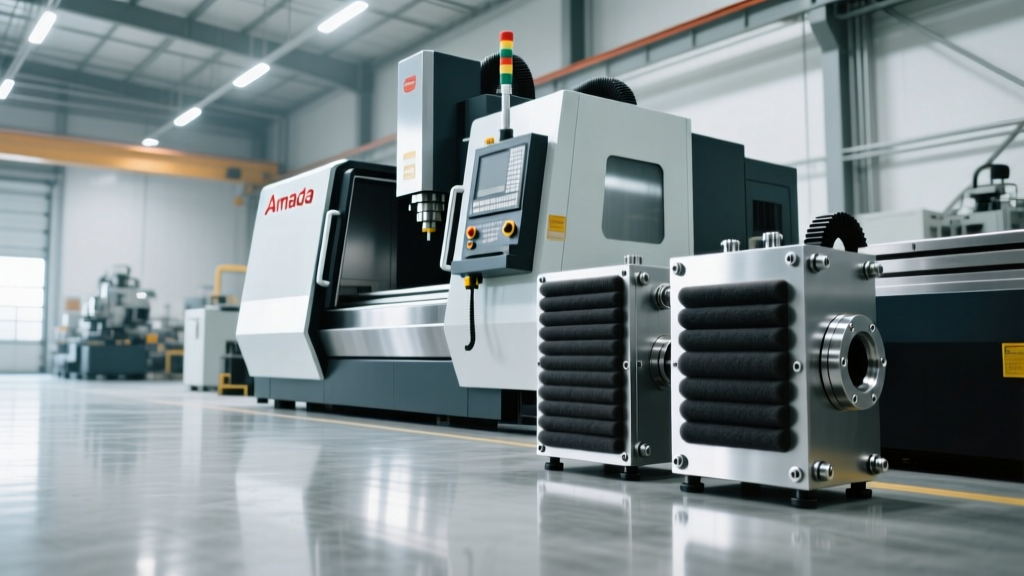
For field deployments, utilize mobile industrial extractors such as the Ruwac M200-V or the Nilfisk CFM series. These units feature:
- High Static Pressure: Capable of sustaining 60 to 100 in. w.g., allowing for 15-foot hose runs without velocity loss.
- Multi-Stage Filtration: A primary cyclonic separator or wire-mesh demister pad to strip liquid coolant and heavy swarf before the air reaches the secondary HEPA filter.
- Continuous Duty Motors: Bypass cooling systems that prevent motor burnout during 12-hour continuous flange facing or line boring shifts.
Cost Expectation: Budget between $6,500 and $12,000 per compliant mobile LEV unit, depending on ATEX/IECEx certification requirements for hazardous locations (e.g., offshore oil rigs).
2. Slotted Hood Positioning for Portable Mills
Bell-shaped hoods are ineffective on portable CNC mills because they interfere with the tool path and X/Y axis travel. Instead, fabricate custom slotted hoods that mount magnetically or via clamps to the portable machine's base ring. A 2-inch wide slotted hood positioned 4 inches behind the cutting tool creates a directional 'sweep' of air (approx. 250 fpm) that pulls mist away from the operator without obstructing the spindle.
Compliance Matrix: Extraction Requirements by Field Task
Use the following matrix to specify extraction parameters based on the portable CNC equipment deployed on your site.
| Field Task | Machine Type | Mist Generation Profile | Required CFM / Velocity | Recommended Hood Type |
|---|---|---|---|---|
| In-Situ Flange Facing | Mirage MF1000 / Climax FF | High volume, low velocity (rotary mist) | 300 CFM / 150 fpm | Flexible magnetic shroud with dual exhaust ports |
| Portable 3-Axis Milling | York Portable CNC Mill | Directional, high velocity (spindle driven) | 150 CFM / 250 fpm | Slotted hood, trailing the tool path |
| Line Boring / Weld Prep | Climax BB5000 | Confined space, heavy particulate | 200 CFM / 200 fpm | Annular ring hood around the boring bar |
Source Reduction: Transitioning to MQL for Field Compliance
The most effective way to manage CNC machine mist extraction is to eliminate the mist at the source. In 2026, leading field machining contractors are replacing flood coolant systems on portable rigs with Minimum Quantity Lubrication (MQL).
MQL System Integration on Portable CNCs
Systems like the Unist Coolubricator apply a micro-dose of biodegradable vegetable-based ester (typically 10 to 30 ml per hour) directly to the cutting edge via compressed air. Because the fluid is entirely consumed by the heat of the cut, zero liquid mist is generated. This eliminates the need for heavy mobile LEV units, prevents coolant runoff containment issues on environmental sites, and drastically reduces respiratory hazards. The only extraction required is a standard dry particulate vacuum for the remaining metal swarf.
Real-World Failure Modes in Field Extraction Setups
Even with capital investment in high-end mobile extractors, safety audits frequently cite contractors for improper deployment. Avoid these common failure modes:
- Hose Sag and Liquid Pooling: If the flex hose sags below the extraction hood, liquid coolant pools in the low point, restricting airflow and eventually causing the vacuum motor to ingest liquid. Fix: Suspend hoses using spring balancers or bungee rigging to maintain a continuous upward slope to the collector.
- Cross-Draft Interference: On offshore platforms or shipyards, ambient wind or site ventilation fans easily exceed 100 fpm, blowing mist away from the capture zone. Fix: Deploy temporary welding screens or windbreaks around the portable CNC perimeter to create a dead-air zone for the LEV to function.
- Filter Saturation Ignorance: Operators run the extraction unit until suction drops to zero, assuming the motor is failing, when in fact the demister pad is saturated with tramp oil. Fix: Install inline manometers (pressure gauges) across the filter bank. Mandate filter cleaning when the differential pressure exceeds 4 inches w.g.
Administrative Controls and PPE Fallbacks
When engineering controls (LEV and MQL) cannot reduce airborne mist below the NIOSH REL of 0.4 mg/m³ due to extreme environmental constraints, administrative controls and PPE become the mandatory compliance fallback.
- Respiratory Protection: Half-mask elastomeric respirators equipped with P100 particulate filters and organic vapor cartridges (e.g., 3M 6000 series) must be fit-tested and worn by the operator and anyone within a 15-foot radius of the portable CNC.
- Skin Protection: Nitrile gloves (minimum 8-mil thickness) and barrier creams are required to prevent contact dermatitis from alkaline semi-synthetic coolants settling on the skin.
- Shift Rotation: Limit individual operator exposure time to 4 hours per shift, utilizing dosimetry badges to track cumulative TWA (Time-Weighted Average) exposure.
Summary Action Plan for Site Safety Officers
Before mobilizing a portable CNC machine to a field site, the safety plan must explicitly detail the mist capture strategy. Specify the exact CFM requirements based on the tool's material removal rate (MRR), select a mobile extractor with adequate static pressure and wet-filtration capabilities, and mandate daily differential pressure checks on the filters. By treating open-air field machining with the same ventilation rigor as enclosed shop-floor operations, contractors can eliminate respiratory liabilities and maintain unbroken OSHA compliance.